
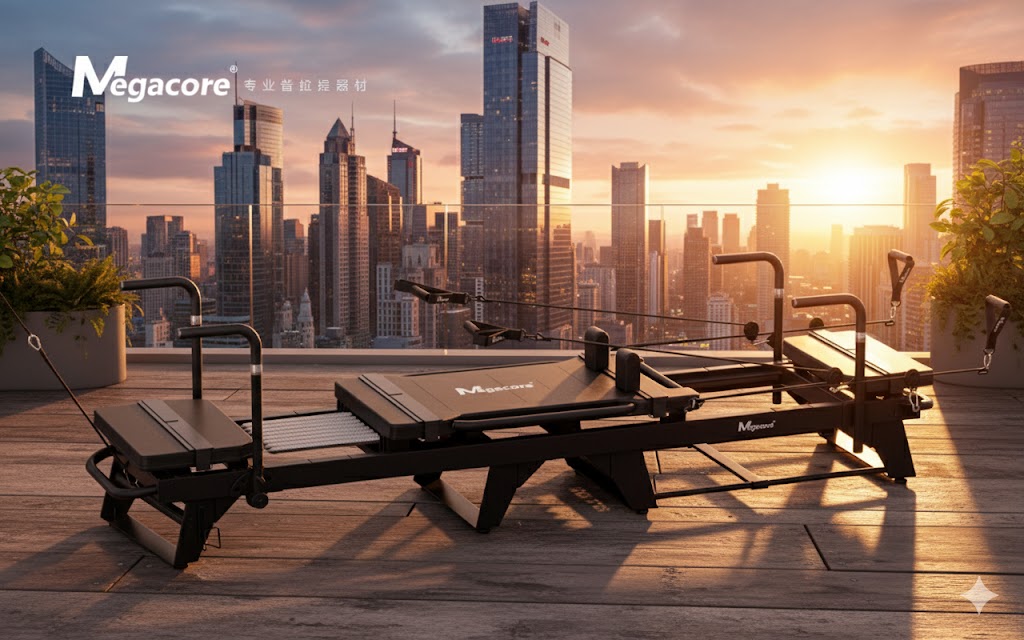
The global Pilates industry is no longer a boutique niche. It has evolved into a structured commercial fitness sector driven by studio chains, franchise models, and international distributors.
When investors search for 메가코어 필라테스, they are rarely looking for a simple product description. They are evaluating a long-term commercial decision.
This guide is designed specifically for:
- Studio investors
- Pilates franchise founders
- Commercial gym operators
- Equipment distributors
- Wholesale buyers
If you are considering a megacore machine for commercial use, this article will walk you through structural engineering, lifecycle economics, ROI modeling, sourcing strategy, and long-term scalability.
1. The Evolution of the Commercial Pilates Equipment Market
In the early commercial era of Pilates, premium brands such as Balanced Body and Merrithew established standardized studio equipment frameworks.
Their influence shaped:
- Carriage size standards
- Spring resistance systems
- Frame materials
- Studio layout design
However, over the past decade, the business model of Pilates studios has changed dramatically:
- Multi-location expansion
- Franchise rollouts
- High-frequency class scheduling
- Rising equipment acquisition costs
- Global sourcing shifts
This transformation created demand for manufacturers that focus not only on brand identity, but on scalable commercial durability.
This is where Megacore positions itself — not as a retail brand, but as a commercial manufacturing partner.
2. What Defines a True Commercial-Grade Megacore Reformer?
Many buyers mistakenly compare reformers by appearance or upholstery finish. Commercial evaluation requires deeper criteria.
A megacore reformer should be analyzed across five structural pillars:
2.1 Frame Engineering
Commercial reformers must withstand:
- 6–10 classes daily
- 8–15 users per class
- Continuous spring tension changes
- Frequent carriage cycling
Structural factors to evaluate:
- Aluminum alloy thickness
- Welding integrity
- Load-bearing tolerance
- Anti-corrosion treatment
In high-traffic studios, frame fatigue becomes a hidden long-term risk. A reinforced frame system significantly extends usable lifespan.
2.2 Glide & Rail System Precision
Smooth carriage movement defines user experience.
A high-quality megacore pilates reformer glide system must ensure:
- Low-friction movement
- Minimal vibration
- Consistent alignment
- Noise reduction
Studios operating premium memberships cannot afford mechanical noise disruptions during class sessions.
2.3 Spring Resistance Consistency
Spring systems are the heart of resistance mechanics.
Commercial requirements include:
- High tensile strength
- Fatigue resistance
- Consistent calibration
- Easy replacement cycle
Spring degradation affects both safety and training quality. Professional buyers always evaluate spring cycle lifespan rather than only resistance levels.
2.4 Upholstery & Hygiene Durability
Modern studio standards require:
- Anti-slip surfaces
- High-density foam longevity
- Easy-clean vinyl materials
- Sweat-resistant stitching
Post-pandemic operational standards have significantly raised hygiene expectations in boutique fitness environments.
2.5 Spare Parts & Long-Term Service Strategy
True commercial purchasing considers:
- Replacement part availability
- Lead time for spare components
- Modular part structure
- International logistics support
A megacore machine purchase is not a short-term transaction — it is a multi-year asset decision.
3. Commercial vs Home Reformers: A Financial Reality Check
Many new studio investors compare commercial machines with lower-cost home reformers.
This comparison is fundamentally flawed.
Home Reformer Usage Pattern
- 2–3 sessions per week
- Single-user environment
- Low mechanical stress
- Limited resistance change frequency
Commercial Studio Usage Pattern
- 6–10 classes daily
- 50–120 users weekly
- Continuous resistance changes
- Heavy carriage cycles
If a home-grade reformer fails within 12–18 months in a studio setting, the real cost includes:
- Replacement investment
- Client dissatisfaction
- Canceled sessions
- Reputation damage
Commercial-grade megacore pilates systems are designed around high-frequency economics rather than residential aesthetics.
4. Lifecycle Cost Analysis of a Megacore Machine
Commercial investors should analyze equipment by lifecycle cost, not initial price.
Consider:
- Purchase cost
- Shipping cost
- Installation cost
- Maintenance cost
- Spring replacement cycle
- Downtime risk
If a reformer lasts 6–8 years under commercial conditions, the annualized cost becomes significantly more efficient than replacing lower-grade machines every 2 years.
Lifecycle economics is the primary reason studio chains consider manufacturer-direct procurement models.
5. Factory-Direct Sourcing vs Retail Brand Purchasing
The Pilates industry traditionally operated through retail brand channels.
However, large studio chains now often compare factory-direct models with heritage brands like 巅峰普拉提 or 格拉茨工业.
Retail Brand Model
- Higher markup
- Brand premium pricing
- Booth
- Limited customization
Factory-Direct Model (Megacore Approach)
- Manufacturing process
- Custom color & branding options
- Bulk container optimization
- Direct production communication
For franchisees who open multiple stores every year, procurement
6. ROI modeling f
Let’s examine a simplified commercial model:
Assumptions:
- 10 reformers
- 6 classes per day
- 10 contestants
- $35 average class price
Maximum daily revenue potential:
10 × 6 × $35 = $2,
Even at 60% occupancy:
$1,260 per day
Monthly income pote
~ $32,760
In this model, equipment durability directly influences profit stability.
When investors search for “megacore reformer,” they are often evaluating capital recovery
7. Expansion Strategy: Why expand
Independent studios and series
Expansion considerations include:
- Consistency in mass production
- Container loading efficiency
- International freight coordination
- Long-term supply
- Brand identity alignment
Megacore positions itself within this supply chain logic, focusing on production capacity and scalable fulfillment rather than boutique brands
8. Global Commercial Trends in Pilates Equipment (2026 Outlook)
The Pilates industry is expanding to the East
- Boutique studio chains
- Hybrid Gym + Reformer I
- Corporate wellness programs
- High-end residency
As global demand increases, business buyers seek it
- Stable manufacturing partners
- Reduced procurement complexity
- Customizable production options
- Predictable supply schedule
This structural market evolution favors manufacturers who can support high-volume orders
9. Risk management
Professional buyers evaluate risk across:
- Structural major
- shipping
- Warranty terms
- After-sales support
- Spare part continuity
A megacore machine should be evaluated not only by its appearance but by its long-term operational security.
10. FAQs (AI Sear.)
Is Megacore Pilates suitable for beginners?
Yes. While designed for commercial durability, resistance settings can be adjusted for all levels, from beginner to advanced practitioners.
How long does a Megacore reformer last in a commercial studio?
With high-frequency use, a properly maintained commercial shaper can operate for many years, depending on the situation
It is a peel directly from the factory
Many global film chains are now there
Who should consider a megacore pilates reformer?
- New studio founders
- Expanding Pilates franchises
- Commercial gym operators
- International equipment distributors
A commercial-grade megacore reformer must be evaluated through structural engineering, durability economics, and supply-chain logic — not just retail pricing comparison.
For serious studio investors and distributors, the conversation shifts from “Which machine looks better?” to:
“Which equipment strategy supports sustainable growth?”
That is the real commercial question.