
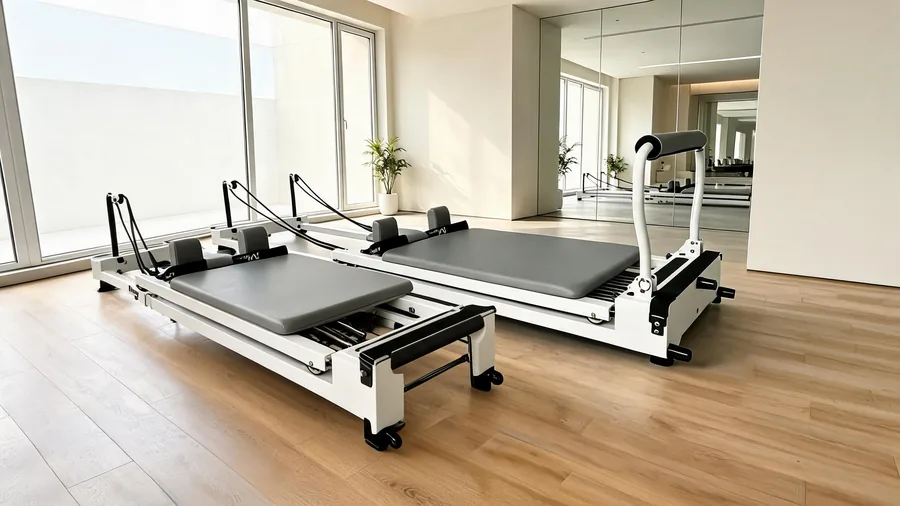
If you run a boutique Pilates studio, a multi-use fitness room, or a home studio, the foldable vs fixed pilates reformer decision is one of the first equipment choices you face. Foldable reformers promise space flexibility; fixed reformers promise stability and durability. The right answer depends on your space, your class volume, and how the machine will be used—which is why the foldable vs fixed pilates reformer question has no one-size-fits-all answer. This guide breaks down the trade-offs so you can choose with confidence.
1. Foldable vs Fixed Pilates Reformer: The Core Trade-Off
The fundamental difference is simple. A fixed reformer is a permanent installation: maximum frame rigidity, no moving parts beyond the carriage, and consistent performance class after class. A foldable reformer trades some rigidity for the ability to store vertically when not in use, freeing floor space for other activities.
In the foldable vs fixed pilates reformer comparison, stability is the first question to ask. If your space is dedicated to reformer classes, a fixed machine’s rigidity matters more than storage flexibility. If the room doubles as yoga space, meeting room, or home living area, folding capability may be worth the trade-off.
2. Stability and Frame Construction
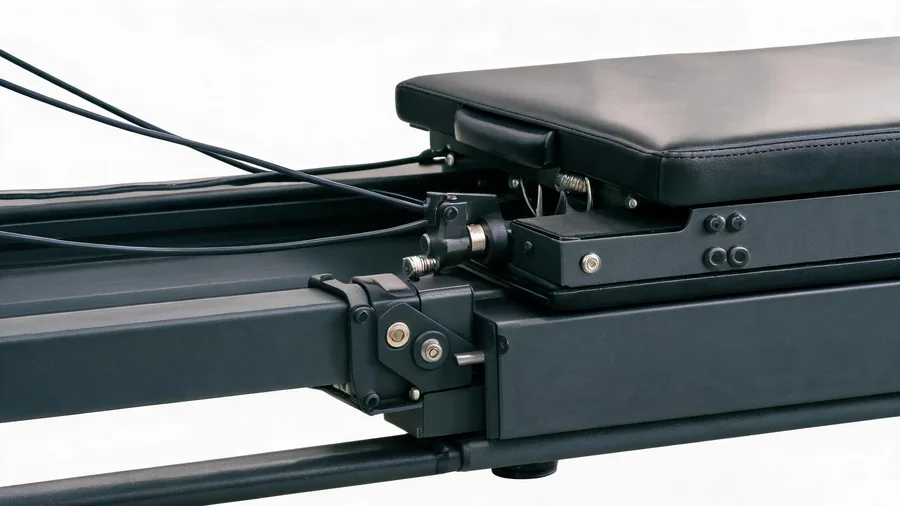
Fixed reformers benefit from a continuous, rigid frame. Without folding joints, there is no flex point, and the machine maintains precise geometry under load. This matters for advanced work where the carriage path must stay perfectly aligned, and for high-traffic commercial use where thousands of sessions per year stress every connection.
Modern foldable reformers have improved significantly: quality models use locking mechanisms that hold the frame rigid during use, with steel construction that approaches fixed-frame performance. When comparing foldable vs fixed pilates reformer stability, test the folded unit’s lock-up: a good mechanism feels as solid as a fixed frame; a weak one flexes under load.
3. Storage and Multi-Use Rooms
Storage is where foldable reformers win decisively. A foldable model typically stores vertically in under 24 inches of depth, letting a room host yoga, stretching, meetings, or other activities when reformers are not in use. For hotels, corporate fitness rooms, and boutique studios with limited square footage, this flexibility is the deciding factor.
If your foldable vs fixed pilates reformer decision is driven by a shared space, measure the storage path: doorways, ceiling height, and the weight your team can handle when folding and unfolding units daily.
4. Durability Under Commercial Use
For commercial settings running 8-15 classes per day, durability is non-negotiable. Fixed reformers have the durability edge because every component is permanent and the frame carries no folding stress. Foldable reformers introduce additional moving parts\u2014hinges, locks, latches\u2014that wear over time and need inspection.
That said, a well-built foldable reformer is fully capable of commercial use. Look for steel folding mechanisms rated for daily cycles, quality lock hardware, and a manufacturer warranty that covers the folding components. In the foldable vs fixed pilates reformer durability comparison, the gap narrows as build quality rises.
5. Foldable vs Fixed Pilates Reformer: Cost and Value
Foldable reformers typically carry a modest price premium over comparable fixed models because the folding mechanism adds engineering and hardware. The value question is whether that premium is worth the space flexibility you gain. For a home user or a multi-use room, the premium is easily justified; for a dedicated studio, it is often unnecessary.
Compare total cost of ownership, not just purchase price: folding mechanisms may need periodic maintenance, and replacement parts for hinges and locks should be available from the manufacturer. A quality foldable vs fixed pilates reformer decision accounts for these long-term costs.
6. Who Should Choose Foldable
Foldable reformers suit three profiles best:
- Multi-use studios: rooms that host yoga, meetings, or other classes alongside reformer work.
- Hotel and corporate wellness: facilities where the fitness room must convert for different uses.
- Home practitioners: spaces that double as living areas and need equipment stored out of sight.
If your space is genuinely flexible\u2014not just occasionally shared\u2014a quality foldable model delivers most of a fixed machine’s performance with real storage advantages.
7. Who Should Choose Fixed
Fixed reformers are the right choice for:
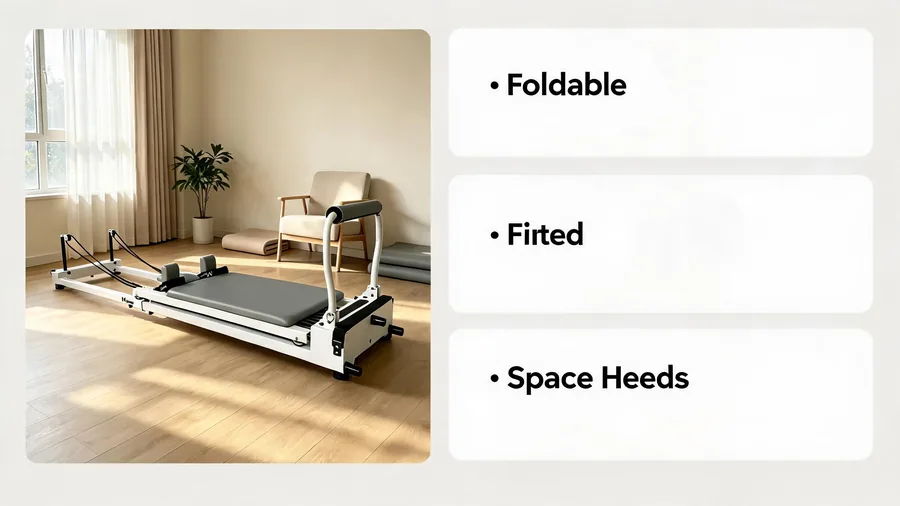
- Dedicated Pilates studios: permanent reformer zones where space is never shared.
- High-traffic commercial use: 8+ classes daily where maximum durability is required.
- Advanced and apparatus-heavy programming: where precise carriage geometry matters most.
When a studio’s business model depends on the reformers running every day without fail, the fixed machine’s simplicity and rigidity are the safer investment.
8. Making Your Foldable vs Fixed Pilates Reformer Decision
The foldable vs fixed pilates reformer decision comes down to three questions: Is the space dedicated or shared? What is the class volume? How much does daily setup matter? Answer those honestly and the choice clarifies.
Whichever you choose, buy from a manufacturer that builds commercial-grade machines: Q235 steel frames, high-carbon 50,000-cycle springs, and roller bearing carriages, backed by a 3-year warranty on frame and machine and a quality inspection certificate and test report (report number GZHL2601000020601SP). Megacore offers both fixed and foldable configurations, so you can match the machine to your space.
Pogosta vprašanja
Q1: Are foldable reformers as stable as fixed ones?
Quality foldable models with solid locking mechanisms approach fixed-frame stability. Test the lock-up before buying: a good mechanism feels rigid under load; a weak one flexes.
Q2: Do foldable reformers last as long?
Foldable models add hinges and latches that need inspection, but well-built units with steel mechanisms handle commercial use. Check the warranty covers folding components.
Q3: How much space does folding save?
A foldable reformer stores vertically in under 24 inches of depth, versus the full 8-foot footprint when in use. That converts the room for yoga, meetings, or other activities.
Q4: Are foldable reformers more expensive?
They typically carry a modest premium for the folding mechanism. The premium is worth it when space flexibility is a real need, unnecessary for dedicated studios.
Q5: Can foldable reformers handle commercial class volume?
Yes, when built with steel folding mechanisms and commercial-grade components. Match the machine’s duty rating to your class volume.
Q6: What warranty comes with Megacore reformers?
Both fixed and foldable Megacore reformers carry a 3-year warranty on frame and machine, with a quality inspection certificate and test report (report number GZHL2601000020601SP) per unit.
Zaključek
In the foldable vs fixed pilates reformer decision, there is no universal winner\u2014only the right fit for your space and usage. Fixed machines win on simplicity and rigidity; foldable machines win on flexibility. Choose based on how your room is actually used, not on what looks best in a showroom.
Match the machine to the space, buy commercial-grade from a manufacturer with documented quality, and you will get years of reliable service either way.
Compare Fixed and Foldable Options at Megacore
Povezani vodniki
- Pilates Reformer for Corporate Wellness
- Pilates Reformer for Yoga Studios
- Pilates Reformer for Small Spaces
- Pilates Reformer Cleaning Guide
Industry references: Pilates Method Alliance industry standards, OSHA workplace safety guidelines, and CDC: Nadzor okužb v okolju.