

The spring tension on a Pilates reformer is the foundation of every exercise. Unlike weight stack machines where resistance is measured in pounds or kilograms, reformer springs provide variable resistance that increases as the springs stretch. A Pilates reformer spring tension chart helps instructors and studio owners prescribe precise resistance levels for each exercise, ensuring clients work at the appropriate intensity without compromising form.
This guide covers spring rating systems, a detailed spring tension chart for standard commercial reformers, and recommended spring combinations for different exercises and fitness levels. For studio owners, understanding spring tension directly affects equipment longevity, class programming, and the overall client experience.
1. Pilates Reformer Spring Tension Chart: How Springs Are Rated

Reformer springs are rated by their spring rate, typically expressed as pounds per inch of compression. A standard commercial reformer comes with five springs: two light (10–15 lbs each), two medium (20–25 lbs each), and one heavy (30–40 lbs). However, these numbers vary between manufacturers. The key specification is the spring rate at full extension — measured when the carriage is at the stopper position.
Premium commercial reformers use heavy-duty springs manufactured from high-tensile steel with consistent spring rates across all units. This consistency is crucial for studios running multiple reformers in the same class. Factory-direct manufacturers typically offer replacement springs that match the original tension precisely, which is not always the case with third-party spring suppliers. The quality inspection certificate GZHL2601000020601SP documents spring tension consistency across production batches, confirming each spring meets the rated specification within a 3% tolerance., which is not always the case with third-party spring suppliers.
2. Standard Spring Tension Chart for Commercial Reformers
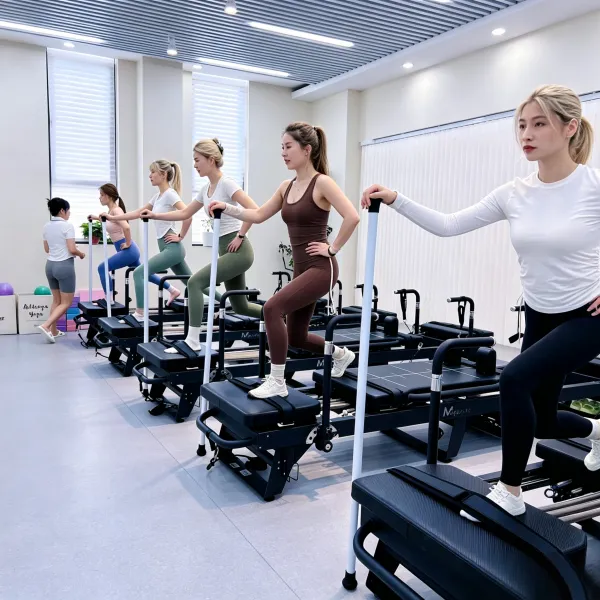
Below is a reference Pilates reformer spring tension chart for standard five-spring commercial reformers:
| Spring Color | Tension Rating | Best For |
|---|---|---|
| Light red | 10–15 lbs | Footwork, warm-up, beginner exercises |
| Medium blue | 20–25 lbs | Core work, leg springs, intermediate exercises |
| Heavy green | 30–40 lbs | Arm work, jump board, advanced exercises |
| Extra heavy | 40–50 lbs | Standing work, rehabilitation resistance |
When creating your spring tension chart, include the spring color, tension rating in pounds, recommended exercises for each setting, and notes on client level. Post the chart near each reformer station or print laminated cards that attach to the frame. This makes it easy for new instructors to learn your spring system and ensures consistent tension selection across all classes.
Using this Pilates reformer spring tension chart as a reference, instructors can quickly determine the correct spring combination for any exercise. For beginners, use only light springs (1–2). For intermediate clients, use medium springs with one light. For advanced clients, use heavy springs or a combination of medium and heavy for maximum resistance.
3. Spring Tension for Different Reformer Exercises
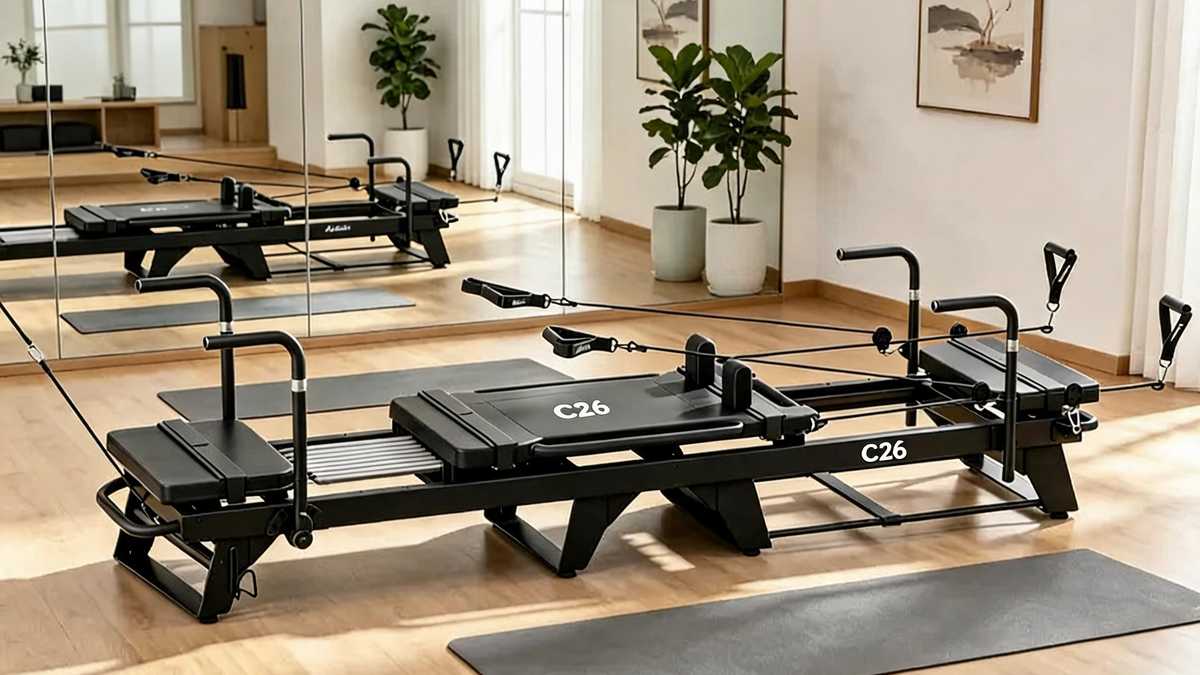
Footwork typically uses 1–2 light springs. Abdominal work and the hundred use 2 medium springs. Leg springs and forward lunges require 1 medium plus 1 light. Back extensions use 1–2 medium springs depending on client strength. Arm work and jump board exercises use the heaviest spring settings (1 heavy or heavy + medium). The spring tension chart should also account for body weight — heavier clients may need one additional light spring for footwork and core exercises to achieve the same relative resistance as lighter clients. (1 heavy or heavy + medium). Standing work on the platform typically uses 1 heavy spring for stability.
Studio owners should create a laminated reference card based on this spring tension chart and attach it to each reformer. This allows instructors to quickly verify their spring selections during class setup and reduces the risk of incorrect tension settings that compromise exercise safety or effectiveness.
4. Customizing Spring Tension for Studio Programming
Different class formats require different spring tension approaches. Classical Pilates uses standardized spring combinations that have remained consistent for decades. Contemporary reformer flow classes often use heavier spring loads for increased resistance training. Rehabilitation classes use lighter springs with controlled movement tempos.
A well-documented Pilates reformer spring tension chart tailored to your class formats saves instructors time and ensures consistency across all classes. Include spring settings by exercise category, client level, and class type. Update the chart as you add new exercises or class formats. A digital version stored on the studio tablet or phone makes it easy to update and share with all instructors. Review spring settings quarterly to ensure they still match your class offerings and client demographics.
For instructors seeking reference materials on spring tension programming, the Pilates Method Alliance (PMA) offers exercise programming resources. Additional guidance on equipment setup is available through ACE Fitness program design guidelines.
5. Frequently Asked Questions
What do the different spring colors mean on a Pilates reformer?
Spring colors typically indicate tension levels: light (red, 10–15 lbs), medium (blue, 20–25 lbs), heavy (green, 30–40 lbs), and extra heavy (yellow, 40–50 lbs). Always verify with your manufacturer as color coding varies between brands.
How many springs should I use for footwork?
Beginners should use 1–2 light springs for footwork. Intermediate clients can use 1 medium spring. Advanced clients may use 2 medium springs or 1 medium plus 1 light for increased resistance.
How often should I replace reformer springs?
Commercial springs should be replaced every 12–18 months with daily use. Signs of wear include visible stretching, inconsistent resistance, audible clicking during use, or reduced spring tension compared to a new spring.
6. Related Guides
- دليل شراء جهاز بيلاتيس ريفورمر لعام 2026
- Best Pilates Reformer for Studio Use
- Pilates Reformer Carriage Friction Guide
الخاتمة
A well-designed Pilates reformer spring tension chart is an essential tool for every studio. It ensures consistent instruction across multiple instructors, helps clients understand their workout intensity, and extends spring life by preventing incorrect spring combinations. Use the spring tension chart in this guide as a starting point and customize it for your studio’s specific equipment and class formats.