

تجهيز جهاز Reformer للبيكاتس في المساحات الصغيرة أمر ممكن تمامًا متى خططت للغرفة بشكل صحيح. فالطرازات المطوية المدمجة، والتوزيعات الذكية، وبعض القياسات العملية كفيلة بتحويل غرفة نوم إضافية أو زاوية في مكتب منزلي أو مساحة بوتيك بمساحة 500 قدم مربع إلى استوديو كامل الوظائف. والمفتاح هو معرفة المساحة التي يحتاجها كل جهاز بدقة قبل أن يصل إلى بابك.
يستعرض هذا الدليل كل ما يتصل بتهيئة مساحتك: قياس الغرفة، واختيار جهاز Reformer موفّر للمساحة، وحماية الأرضية، وتخطيط الإضاءة والتهوية، وتوزيع الاستوديو بحيث يتحرك العملاء والمدربون بسهولة. وسواء كنت تحوّل غرفة نوم أو تفتتح استوديو تجاريًا صغيرًا، فإن استراتيجيات جهاز Reformer للبيكاتس في المساحات الصغيرة هذه تُبقي التجهيز آمنًا ومريحًا واحترافيًا.
المساحة نادرًا ما تكون العقبة الحقيقية. فبخطة واضحة ومعدات مناسبة، يمكن لغرفة بمساحة 100 قدم مربع أن تستضيف استوديو Reformer عاملًا. وتتبع الأقسام التالية الترتيب نفسه الذي ينبغي أن تسير عليه في غرفتك: القياس أولًا، ثم اختيار الجهاز، ثم تهيئة الأرضية والخدمات والتوزيع. وكل خطوة قصيرة وعملية وتهدف إلى غاية واحدة: تحقيق أقصى استفادة من كل قدم مربع متاح.
١. ابدأ بقياس الغرفة
قبل شراء أي معدات، قِس الغرفة بشريط قياس معدني وسجّل ثلاثة أرقام: مساحة الأرضية، وعرض المدخل، وارتفاع السقف. ويحتاج جهاز Reformer النموذجي إلى مساحة خالية بنحو 6 × 8 أقدام حول الجهاز للدخول والخروج الآمن وأداء التمارين بكامل مداها. وتشمل هذه المساحة البالغة 48 قدمًا مربعًا بصمة الجهاز إضافة إلى المساحة التي يشغلها جسمك أثناء تمارين القدمين وتمارين الصندوق الطويل وتمارين الذراعين بالنوابض. والقياس الدقيق هو الخطوة الأولى في أي مشروع لجهاز Reformer للبيكاتس في المساحات الصغيرة، لأن كل قرار لاحق — حجم الجهاز والتوزيع والتخزين — يعتمد على هذه الأرقام الثلاثة.
عرض المدخل أهم مما يتوقعه معظم المشترين، وهو الذي يحدد ما إذا كان جهاز Reformer للبيكاتس في المساحات الصغيرة قادرًا على دخول الغرفة أصلًا. فأجهزة Reformer التجارية بالحجم الكامل يبلغ طولها نحو 90-100 بوصة ولا تستدير عند الزوايا بسهولة. أما جهاز Reformer المطوي المدمج فيتفكك أو يُقلب عموديًا ليناسب المداخل القياسية بعرض 30 بوصة والممرات الضيقة. قِس كل مدخل وكل بسطة درج ومدخل مصعد بين نقطة التسليم والغرفة النهائية قبل الطلب.
ارتفاع السقف هو القياس الثالث. تحتاج معظم أجهزة Reformer إلى خلوص لا يقل عن 8 أقدام، ويكون 9 أقدام مريحًا للعملاء طوال القامة الذين يؤدون تمارين الوصول العلوي وتمارين البرج. وإذا كانت غرفتك أقل من 8 أقدام، فتجنّب ملحقات البرج وتمارين الصندوق الطويل، وخطط لمجموعة التمارين حول تمارين القدمين والحركات القريبة من الحصيرة.
دوّن هذه الأرقام الثلاثة على ورقة واحتفظ بها معك أثناء التسوق. فعندما تقول صفحة بيع إن طول جهاز Reformer هو 86 بوصة، يمكنك مقارنته فورًا بالمساحة التي قستها وعرض المدخل لديك. وهذه العادة تمنع أكثر ندم شرائي شيوعًا: جهاز بالحجم الصحيح نظريًا لكن يستحيل فيزيائيًا إدخاله إلى موضعه.
٢. اختيار جهاز Reformer مدمج
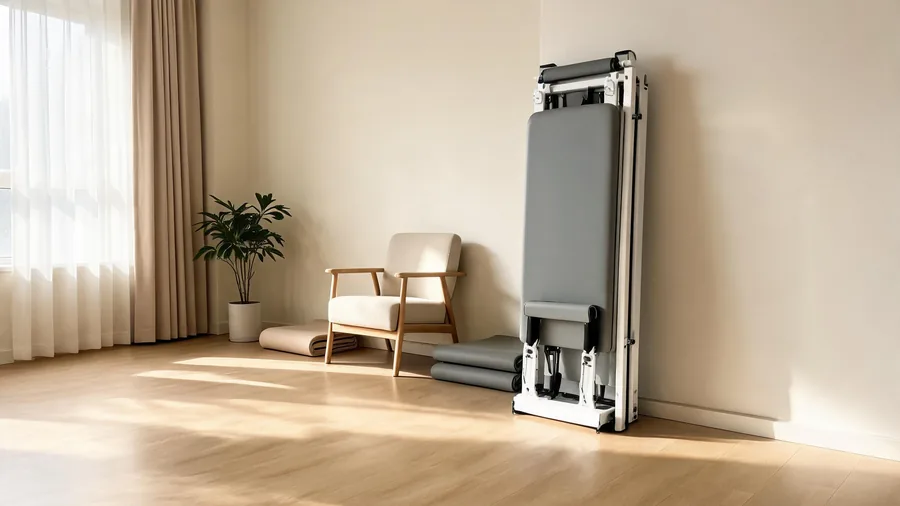
الجهاز نفسه هو المتغير الأكبر في تجهيز الغرف الصغيرة. فجهاز Reformer الثابت بالحجم الكامل يحتاج نحو 8 × 9 أقدام ولا يمكن طيّه بين الجلسات. أما جهاز Reformer المطوي فينطوي إلى جزء صغير من هذه البصمة، وبعض الطرازات تُقلب عموديًا على الجدار فتستهلك أقل من قدمين مربعين من الأرضية عند التخزين. وللمنازل والبوتيكات الصغيرة، فإن فئة الطي هي نقطة البداية الصحيحة في الغالب عند اختيار جهاز Reformer للبيكاتس في المساحات الصغيرة.
مادة الهيكل تؤثر أيضًا في تخطيط المساحة. فأجهزة Reformer المصنوعة من الألومنيوم أخف وأسهل في النقل من التخزين وإليه، بينما تضيف الهياكل الفولاذية ثباتًا للاستخدام الأثقل. والفولاذ التجاري بقدرة تحمّل 250 كغم يمنح الاستوديوهات المتانة التي تحتاجها، لكن إذا كنت تنوي طيّ الجهاز وتخزينه يوميًا، فتأكد من أن المفصلات وآلية القفل مصممة للدورات المتكررة.
اختبار عملي: اطوِ الجهاز وافتحه بنفسك قبل الشراء، أو شاهد فيديو العرض. فبالنسبة لجهاز Reformer للبيكاتس في المساحات الصغيرة، جهد الطي لا يقل أهمية عن الحجم المطوي. راقب فيديو العملية. وتتفاوت أجهزة Reformer كثيرًا في سهولة حركة الطي، وإحكام قفل الهيكل، ومقدار الخلوص الذي تحتاجه الوحدة المطوية مقابل الجدار. وجهاز Reformer المطوي الذي يحتاج إلى شخصين وخمس دقائق للتجهيز سيتوقف عن الطي بصمت بعد الأسبوع الأول، وهذا يبطل الغاية من شراء جهاز مدمج من الأساس.
بالنسبة لجهاز Reformer للبيكاتس في المساحات الصغيرة، أعطِ الأولوية لثلاثة عناصر: آلية طي موثوقة، وقضيب قدمين ومسندان للكتفين قابلان للتعديل، وقدرة تحمّل تناسب قاعدة عملائك. فجودة البناء التجاري مهمة حتى في الاستوديو المنزلي، لأن الجهاز سيُطوى ويُنقل ويُخزن مرارًا.
٣. الأرضيات وتهيئة السطح
تحتاج أجهزة Reformer إلى سطح مستوٍ وثابت. فالأرضية غير المستوية تجعل العربة تنزلق بشكل غير متساوٍ وتُسرّع تآكل النوابض. افحص الأرضية بميزان ماء بطول 4 أقدام، وإذا وجدت فجوة تزيد على ربع بوصة في أي مكان، فاستخدم حشوات أو مركب تسوية ذاتي قبل وضع الجهاز. والأرضية هي حيث تفشل كثير من تجهيزات جهاز Reformer للبيكاتس في المساحات الصغيرة، لا لأن المادة خاطئة، بل لأن السطح لم يُفحص للتأكد من استوائه من البداية.
الخشب الصلب والخرسانة المختومة قاعدتان ممتازتان لجهاز Reformer. وفي الغرف المنزلية المفروشة بالسجاد، ضع لوحًا من الخشب الرقائقي تحت الجهاز لتوزيع الوزن والحفاظ على ثبات الهيكل. أما الأرضيات المطاطية بسماكة 3/8 بوصة فهي الخيار الأفضل للاستوديوهات التجارية: تحمي الأرضية، وتمتص الصوت، وتمنح العملاء سطحًا مريحًا للعمل واقفًا. تجنّب السجاد السميك الفاخر والبلاط، فكلاهما إما يزعزع ثبات الجهاز أو قاسٍ جدًا تحت القدم.
الوزن نادرًا ما يكون مصدر قلق إنشائي: فجهاز Reformer فولاذي مع مستخدم بالغ يركّز نحو 500-650 رطلاً في بصمة صغيرة، وهي أحمال تتحملها الأرضيات السكنية القياسية بسهولة. وإذا كنت تخطط لأكثر من 15-20 جهازًا في طابق علوي، فاستشر مهندسًا إنشائيًا في مرحلة التخطيط.
قبل تركيب أي أرضية، تأكد من حالة الأرضية السفلية. فالخرسانة المستوية هي القاعدة المثالية. والأرضيات الخشبية السفلية تفي بالغرض عندما تكون سليمة إنشائيًا وخالية من الصرير؛ وإذا كانت الألواح تتخلخل تحت القدم، فقوّها قبل وصول الجهاز. والبلاط المطاطي فوق السطح القائم ترقية بسيطة تحسّن الثبات وتقلل الضجيج وتحمي الجهاز والأرضية تحته.
٤. الإضاءة والتهوية والخلوص العلوي
تولّد تمارين البيكاتس حرارة وتعرقًا، لذا فالتهوية ليست خيارًا. فأفضل توزيع لجهاز Reformer للبيكاتس في المساحات الصغيرة يصبح غير قابل للاستخدام عندما تتحول الغرفة إلى جو خانق في منتصف الجلسة. والمكيف المنفصل أو وحدة التكييف عبر الجدار تحافظ على راحة الغرف الصغيرة على مدار العام، ونافذة قابلة للفتح أو مروحة سقف تضيف حركة هواء. ضع الجهاز بحيث تكون النوافذ على الجانب لا خلفه أو أمامه مباشرة، لتجنب الوهج أثناء التمارين المستلقية. وخطة تهوية بسيطة لغرفة جهاز Reformer للبيكاتس في المساحات الصغيرة تمنع الإحساس بالخنق والحرارة الذي يدفع العملاء إلى تقصير الجلسات.
يجب أن تكون الإضاءة ساطعة لكن غير قاسية. ووضع جهاز Reformer للبيكاتس في المساحات الصغيرة قرب نافذة يقلل استهلاك الطاقة نهارًا ويُبقي الغرفة تبدو رحبة. ووحدات LED كاملة الطيف بحرارة 4000K-5000K تحاكي ضوء النهار وتساعد العملاء على رؤية إشارات المحاذاة في المرايا. استهدف 30-50 قدم شمعة عند مستوى الأرضية. أما الخلوص العلوي، فقِسه من العربة في أعلى موضع لها إلى السقف؛ فأنت تحتاج إلى 12 بوصة على الأقل فوق الجهاز لتغيير النوابض وتمارين الوصول بالذراعين.
المقابس الكهربائية يسهل إغفالها. فأجهزة Reformer نفسها لا تحتاج إلى طاقة، لكن الغرفة تحتاج مقابس للإضاءة والمراوح والموسيقى وشحن الأجهزة. خطط لما لا يقل عن أربعة مقابس في الاستوديو المنزلي وأكثر في الغرفة التجارية، بحيث لا تعبر أسلاك التمديد أي ممر. ويقوم شريط طاقة صغير مثبت قرب مقعد المدرب بالمهام اليومية الأساسية دون خلق مخاطر تعثر.
٥. توزيعات ذكية لجهاز Reformer للبيكاتس في المساحات الصغيرة
التوزيع هو الذي يحدد ما إذا كانت الغرفة الصغيرة تبدو رحبة أم ضيقة. وفي أي ترتيب لجهاز Reformer للبيكاتس في المساحات الصغيرة، يحدد موضع الجهاز مدى قابلية بقية الغرفة للاستخدام. ضع الجهاز مقابل جدار أو بزاوية 45 درجة في الركن، بحيث يتجه قضيب القدمين إلى داخل الغرفة. اترك 3-4 أقدام أمام الجهاز للانتقالات والعمل على الحصيرة، وقدمين على الأقل على كل جانب. وإذا كانت الغرفة تُستخدم أيضًا مكتبًا أو غرفة ضيوف، فإن جهاز Reformer المطوي المخزن عموديًا يحوّل المساحة في أقل من دقيقة.
للاستوديوهات التي تشغّل عدة أجهزة Reformer في غرفة مدمجة، أبقِ الأجهزة متوازية بمسافة 4-5 أقدام بين المراكز. واحتفظ بـ 6-8 أقدام في مقدمة الغرفة لمقعد المدرب ودخول العملاء، و3-4 أقدام خلف الأجهزة ليتابع المدربون من الخلف. والمرايا على جدار كامل تجعل الغرفة تبدو أكبر وتمنح العملاء تغذية بصرية؛ والمرايا بارتفاع 6-7 أقدام المثبتة على 6-12 بوصة عن الأرضية هي الأفضل.
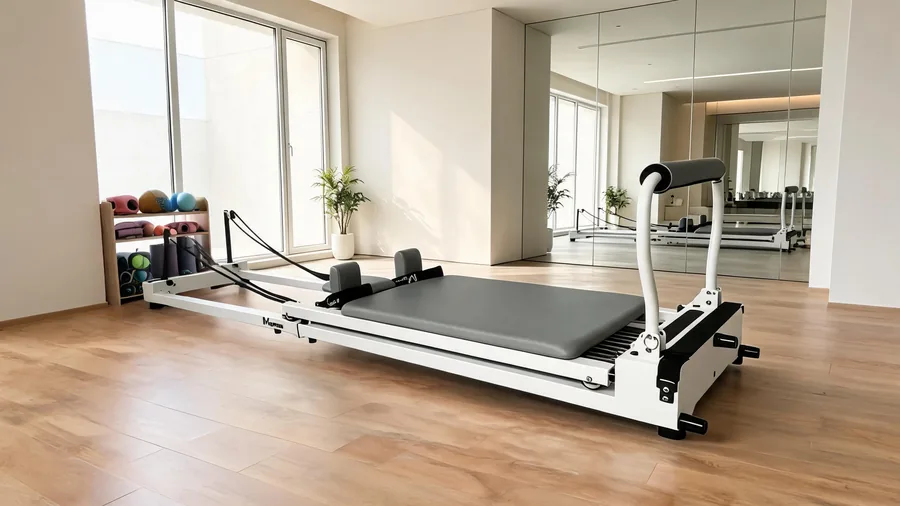
تستوعب غرفة بمساحة 500 قدم مربع من 6 إلى 8 أجهزة Reformer عندما تتبع المسافات هذه الإرشادات. وبمساحة 750 قدم مربع، خطط لـ 10-12 جهازًا. وأيًا كان حجم الغرفة، احسب 50 قدمًا مربعًا على الأقل لكل جهاز Reformer بما في ذلك الخلوص، وأبقِ الممرات خالية من الأدوات والحقائب والأثاث.
لجهاز Reformer واحد للبيكاتس في المساحات الصغيرة في المنزل، ينجح الترتيب على شكل حرف L أو في الركن بشكل مفاجئ. أمل الجهاز 45 درجة في الركن بحيث يتجه قضيب القدمين إلى الغرفة، وضع مرآة صغيرة على الجدار المجاور. هذا يفتح وسط الغرفة للعمل على الحصيرة ويجعل المساحة تبدو أكبر بما لا تحققه أي وضعية مستقيمة على الجدار.
٦. حلول التخزين عندما تُحسب كل قدم
الغرف الصغيرة تتطلب تخزينًا منظمًا. ويحتاج جهاز Reformer للبيكاتس في المساحات الصغيرة إلى مكان محدد للحصائر والأشرطة والأدوات ليبقى المكان جاهزًا للجلسة التالية. والأرفف المثبتة على الجدار للحصائر والمكعبات والأشرطة تُبقي الأدوات بعيدًا عن الأرض، بينما تحمل عربة صغيرة قرب الباب مواد التنظيف لمسح سريع بين الحصص.
إذا كانت الغرفة ضيقة فعليًا، فإن جهاز Reformer المطوي المخزن عموديًا يمثل الحل الموفر للمساحة، وتكتمل التجهيزة ببضعة خطافات جدارية للأشرطة والملحقات. واستراتيجية تخزين محكمة الإعداد تُنهي تركيب جهاز Reformer للبيكاتس في المساحات الصغيرة وتُبقي كل قدم مربع قابلة للاستخدام.
بالنسبة للاستوديوهات، رف أدوات لكل صف من أجهزة Reformer يقلل الفوضى ويُسرّع انتقالات الحصص. أبقِ المنطقة خلف كل جهاز خالية لوصول المدرب، ولا تسد أبدًا مخرج الطوارئ أو لوحة الكهرباء عند ترتيب أثاث التخزين.
٧. أخطاء شائعة في التجهيز يجب تجنبها
أكثر الأخطاء تكرارًا في تجهيز الغرف الصغيرة يسهل منعه، ومعظمها يعود إلى الشراء قبل التخطيط. فجهاز Reformer للبيكاتس في المساحات الصغيرة لا ينجح إلا إذا حُدد التوزيع أولًا. أولًا، إغفال قياس المدخل، ما يؤدي إلى جهاز لا يستطيع الوصول إلى الغرفة. ثانيًا، وضع جهاز Reformer على أرضية غير مستوية دون فحص، ما يسبب تآكلًا مبكرًا للنوابض وإحساسًا بعدم الثبات. ثالثًا، نسيان التهوية، ما يحول الغرفة إلى ساونا غير مريحة في منتصف الجلسة.
رابعًا، حشو الغرفة بإفراط. فالمزيد من أجهزة Reformer لا يعني إيرادات أكبر إذا شعر العملاء بالازدحام ولم يستطع المدربون المتابعة بأمان. خامسًا، تجاهل الصوتيات: فالنوابض والعربات تولّد 60-70 ديسيبل في استوديو مزدحم، لذا أضف ألواحًا عازلة للصوت على جدار واحد وأرضية مطاطية للحفاظ على مستوى ضجيج احترافي. والتخطيط لهذه التفاصيل الخمسة مسبقًا يوفر إعادة عمل مكلفة لاحقًا.
ثمة خطأ آخر يستحق الانتباه: شراء جهاز Reformer قبل القياس. فهو السبب الجذري لمعظم الإرجاعات وعمليات الشراء النادمة. قِس الغرفة والمداخل والسقف، وحدد الصيغة المطوية أو الثابتة، وبعد ذلك فقط قارن الطرازات. وعندما يناسب الجهاز المساحة، يبدو تجهيز جهاز Reformer للبيكاتس في المساحات الصغيرة بأكمله سهلًا؛ وعندما لا يناسب، تبدأ كل جلسة بالإحباط.
الأسئلة الشائعة
هل يمكنني وضع جهاز Reformer في غرفة نوم صغيرة؟
نعم. يحتاج جهاز Reformer المطوي المدمج إلى مساحة خالية بنحو 6 × 8 أقدام أثناء الاستخدام، و2 × 2 قدم فقط عند التخزين عموديًا. قِس الغرفة أولًا، واحمِ الأرضية بحصيرة أو لوح خشب رقائقي، واترك 3-4 أقدام خالية أمام الجهاز للتمارين. وهذا أكثر سؤال يصلنا من المشترين الذين يخططون لجهاز Reformer للبيكاتس في المساحات الصغيرة، والجواب دائمًا تقريبًا نعم مع الطراز المطوي المناسب.
ما الحد الأدنى لمساحة الغرفة لجهاز Reformer للبيكاتس؟
غرفة 8 × 8 أقدام (64 قدمًا مربعًا) هي الحد الأدنى العملي لجهاز Reformer واحد بخلوص أساسي. والمساحات الأصغر تعمل مع الطرازات المطوية، لكنك ستحتاج إلى نقل الأثاث أو تخزين الجهاز بين الجلسات.
هل أحتاج أرضية خاصة لجهاز Reformer؟
السطح المستوي والثابت ضروري. الخشب الصلب أو الخرسانة المختومة أو الأرضية المطاطية بسماكة 3/8 بوصة كلها مناسبة. تجنّب السجاد السميك الفاخر والبلاط؛ وعلى السجاد، ضع لوح خشب رقائقي تحت الجهاز أولًا.
كم مساحة أحتاج بين أجهزة Reformer؟
أبقِ الأجهزة متوازية بمسافة 4-5 أقدام بين المراكز، واترك 6-8 أقدام في مقدمة الغرفة للمدرب، و3-4 أقدام خلف الأجهزة للمتابعة. هذا يمنح العملاء مساحة شخصية ويُبقي الحصص آمنة.
هل يمكنني طي جهاز Reformer وتخزينه يوميًا؟
نعم، إذا اخترت طرازًا مطويًا مصممًا للدورات المتكررة. ابحث عن مفصلات معززة وآليات قفل محكمة وبناء تجاري. وأجهزة Reformer المطوية من Megacore مصممة للطي والتخزين اليومي في الغرف متعددة الاستخدامات.
ما ارتفاع السقف الذي أحتاجه؟
يُنصح بـ 8 أقدام على الأقل، و9 أقدام مثالية. قِس من العربة في أعلى موضع لها إلى السقف، مع ترك 12 بوصة على الأقل من الخلوص لتمارين الوصول وتغيير النوابض.
خطط لمساحتك قبل وصول جهاز Reformer
تهيئة الغرفة بشكل صحيح هي الفرق بين استوديو يبدو احترافيًا وآخر يبدو ضيقًا. ولهذا السبب تحديدًا يحتاج جهاز Reformer للبيكاتس في المساحات الصغيرة إلى قائمة تحقق خاصة به، لا نسخة مصغرة من خطة استوديو كبير. قِس أولًا، واختر طرازًا مطويًا مدمجًا للغرف الضيقة، واحمِ الأرضية، وخطط للتهوية والإضاءة، ووزّع الأجهزة بخلوص سخي. وباتباع هذه الخطوات، يصبح جهاز Reformer للبيكاتس في المساحات الصغيرة إضافة عملية ومربحة لأي منزل أو استوديو بوتيك.
إذا كنت ما زلت تقارن الأجهزة، فركّز على فئة الطي والميزات الأهم في غرفة مدمجة: آلية طي سلسة، وقضيب قدمين قابل للتعديل، وقدرة تحمّل متينة، وهيكل يمكنك تحريكه وحدك. صُمم جهاز Reformer المطوي T07 من Megacore حول هذه الاحتياجات بالضبط، ويمكن لفريقنا أن يوصي بتوزيع يناسب أبعاد غرفتك. فبضع دقائق من التخطيط الآن توفر أشهرًا من إعادة الترتيب المرهقة لاحقًا.
أدلة ذات صلة
- Pilates Reformer Dimensions & Space Requirements
- دليل أرضيات استوديو البيلاتس
- حلول تخزين الـ Reformer
- المطوي مقابل الثابت: أجهزة Reformer لاستوديوهات البوتيك الصغيرة
- Group Reformer Classes: Layout & Setup
تتوفر معايير الصناعة بشأن المسافات بين المعدات وسلامة الاستوديو من Pilates Method Alliance. وللإرشادات المتعلقة بنظافة المنشآت والتهوية، راجع إرشادات الصحة البيئية من CDC.
Compact models sit inside the commercial grade range too, so you keep a studio-grade frame in a smaller footprint.