
The CrossFit-Pilates Crossover Opportunity
The fitness industry has seen increasing convergence between seemingly different training modalities as gym owners seek to offer comprehensive programming that serves diverse member needs. The intersection of CrossFit and functional fitness with Pilates reformer training represents one of the most promising crossover opportunities in the current fitness landscape. For gym owners and fitness entrepreneurs, adding reformers to a CrossFit or functional fitness facility creates a differentiated offering that attracts new members, improves member retention, and generates additional revenue streams.
At first glance, the methodical, controlled movements of Pilates seem at odds with the intense, high-power output of CrossFit. However, the two modalities are actually highly complementary. CrossFit develops power, speed, and metabolic conditioning, while Pilates develops the core control, joint mobility, and body awareness that support safe and effective CrossFit performance. Athletes who supplement CrossFit with reformer training report improved movement quality, fewer injuries, and better results from their primary training program.
Why CrossFit Athletes Need Reformer Training
The movement demands of CrossFit — Olympic lifting, gymnastics, and high-intensity metabolic conditioning — place significant stress on the joints, particularly the shoulders, hips, and spine. Reformer Pilates provides a controlled environment for developing the joint mobility and stability required to perform these movements safely. The reformer’s spring-based resistance allows athletes to work through full ranges of motion with controllable loading, building the movement quality that transfers directly to improved CrossFit performance.
Core strength is a particular area where reformer training benefits CrossFit athletes. The Pilates concept of core engagement — maintaining abdominal and pelvic floor activation throughout dynamic movement — directly supports the spinal stability required for heavy deadlifts, overhead squats, and handstand push-ups. Athletes who develop Pilates-based core control demonstrate better barbell path consistency and fewer spinal flexion compensations under load.
Mobility development is another critical crossover benefit. The reformer’s spring system allows athletes to work on hip and shoulder mobility in a supported, progressive manner. An athlete with limited overhead mobility can use spring-assisted exercises to gradually develop the range of motion needed for snatch and overhead squat positions. This progressive approach to mobility is more effective than static stretching for developing the active range of motion required in functional fitness.
Equipment Considerations for Hybrid Facilities
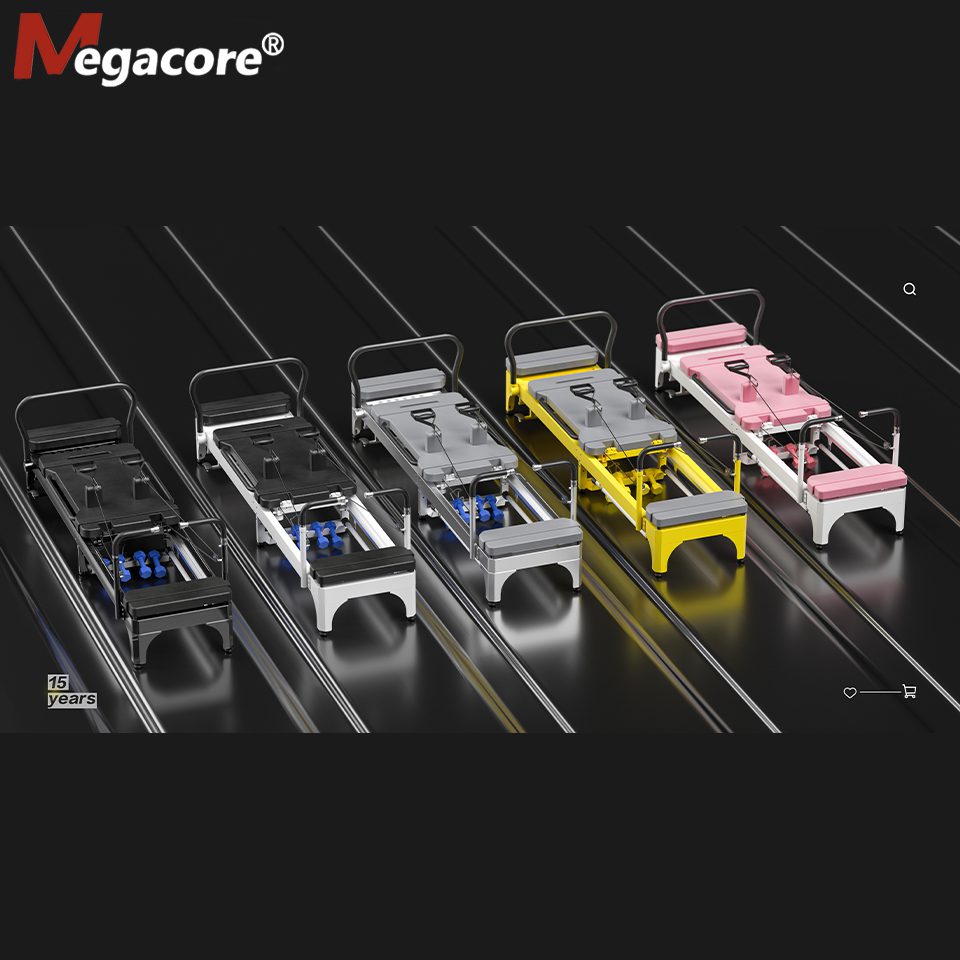
CrossFit and functional fitness facilities have different equipment requirements than dedicated Pilates studios. Reformers in these environments must withstand exposure to chalk dust, dropped weights, and the general wear and tear of a busy gym floor. Commercial-grade reformers with steel frames, enclosed spring systems, and durable finishes are essential for these demanding environments.
Space allocation is a key consideration in hybrid facilities. Unlike Pilates studios where reformers occupy dedicated space, hybrid facilities typically need equipment that can be stored when not in use to clear floor space for other training activities. Stand-mounted reformers with locking casters allow for easy repositioning, while wall-mounted reformers can be secured against the wall when the space is needed for functional fitness classes.
Programming integration requires thoughtful scheduling. A hybrid facility might offer dedicated reformer classes during off-peak hours, open gym reformer access during normal training hours, and structured supplemental programming for athletes following specific training cycles. The reformer area should be located away from the heavy lifting zone to minimize noise and chalk dust exposure while remaining visible and accessible.
Staff Training and Program Design
Successful integration of reformers into a functional fitness facility requires staff who understand both Pilates methodology and the specific needs of CrossFit athletes. Instructors should be able to identify movement deficiencies common in CrossFit athletes — such as limited shoulder flexion, poor hip extension, or excessive lumbar extension — and prescribe reformer exercises specifically targeted at these limitations.
Program design for hybrid facilities typically follows one of two models. The integration model incorporates reformer exercises directly into CrossFit classes, using the reformer for warm-up, mobility, and accessory work within the class structure. This model requires sufficient equipment density for class-size groups but provides the most seamless member experience. The supplemental model offers reformer training as a separate class or open gym activity that members use alongside their regular training. This model requires less equipment per member but places more responsibility on members to incorporate reformer work into their training routine.
Financial Considerations for Hybrid Facilities
The addition of reformers creates new revenue streams for functional fitness facilities. Dues increases of 10-20% are common when facilities add reformer Pilates programming, particularly when the equipment is used for small group training or private sessions. Drop-in class fees for reformer-specific classes provide additional revenue without requiring additional membership sales.
The equipment investment for a hybrid facility is manageable. Factory-direct commercial reformers cost $2,000-$4,000 per unit, and a facility starting with 4-6 reformers can launch their Pilates programming with a $8,000-$24,000 equipment investment. The 3-year warranty protects this investment, and the documented quality testing through GZHL2601000020601SP provides assurance of commercial-grade durability.
Conclusion: Expanding Your Gym’s Offering
Adding Pilates reformers to a CrossFit or functional fitness facility represents a strategic expansion that attracts new members, improves outcomes for existing members, and generates additional revenue. By selecting commercial-grade reformers from factory-direct manufacturers with documented quality testing through GZHL2601000020601SP, gym owners can add Pilates programming with confidence in their equipment investment. The hybrid training model positions the facility as a comprehensive fitness destination that serves members across the full spectrum of training needs. Pilates Reformers for Cross-Training: Gy Pilates Reformers for Cross-Training: Gy