
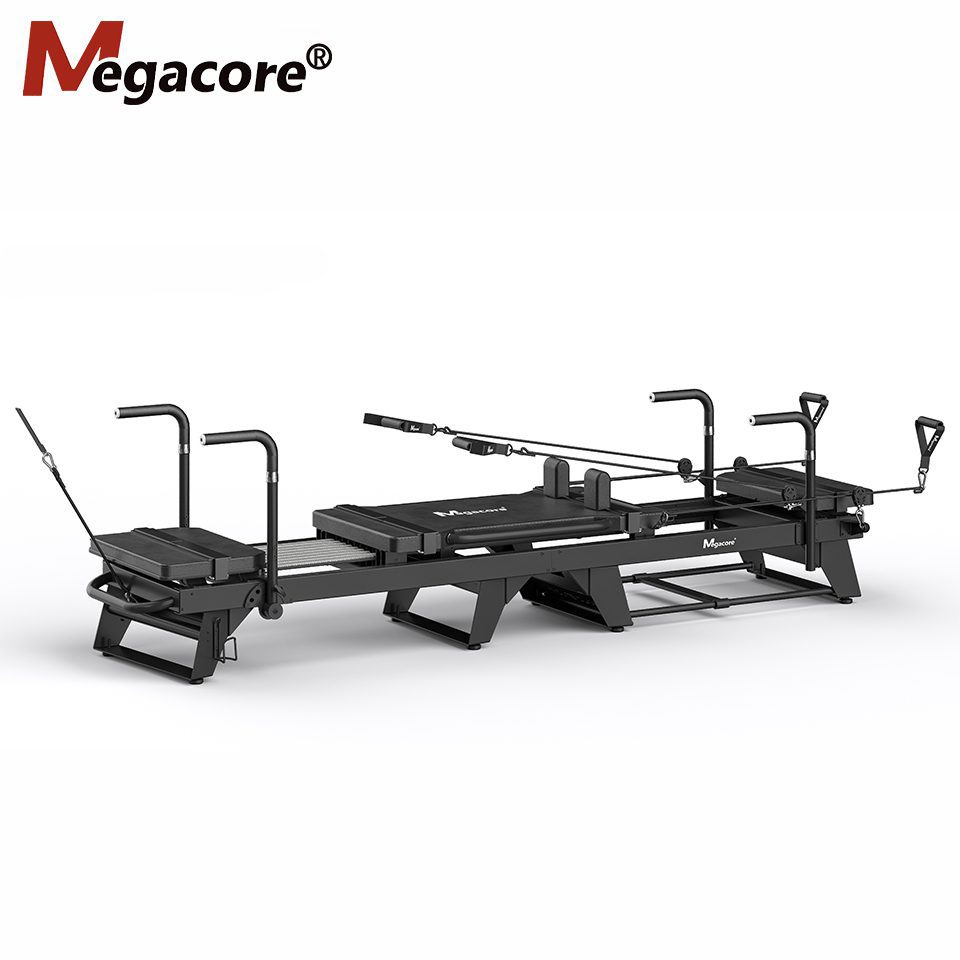
1. Pilates Reformer ROI Calculator: Break-Even Analysis
Opening or expanding a Pilates studio requires a clear understanding of the financial dynamics behind each réformateur on the floor. Every machine represents a capital cost that must be recovered through client sessions, and the break-even point — the number of monthly sessions needed to cover that machine’s cost — is a fundamental metric for studio financial planning. This article provides a structured methodology for calculating reformer ROI and determining the client volume needed for sustainable profitability.

2. Pilates Reformer ROI Calculator: Cost of Ownership
The real cost of a reformer extends far beyond the purchase price. A complete total cost of ownership (TCO) analysis includes the acquisition cost, shipping and customs fees, installation and setup expenses, ongoing maintenance, and eventual replacement costs. For a typical commercial reformer imported from China, the breakdown looks like this:
Purchase price: $1,500–$3,200 per unit depending on model and volume. Shipping per unit (sea freight, containerized): $170–$330. Customs duties and broker fees: $100–$250 per unit depending on destination country rates. Installation and assembly labor: $50–$100 per unit if outsourced. Annual maintenance (spring replacement, bearing lubrication, upholstery cleaning): $80–$150 per unit per year. The total first-year investment per reformer is typically $1,900–$3,800, with ongoing annual costs of $80–$150 for maintenance.
3. Pilates Reformer ROI Calculator: Revenue Per Machine
Revenue per reformer depends on three variables: the number of sessions the machine can support per week, the average session price, and the utilization rate. A reformer in a well-managed studio can handle 5–7 sessions per day across a 12-hour operating day, or approximately 25–35 sessions per week at peak capacity. Realistic utilization — accounting for gaps between classes, instructor breaks, and quieter time slots — is typically 60–75 percent of maximum capacity, yielding 15–25 paying sessions per week per machine.
At an average session price of $30–$50 (depending on market, package discounts, and session type), a single reformer generates $450–$1,250 per week in gross revenue at 60–75 percent utilization. This translates to $23,400–$65,000 in annual gross revenue per machine, before subtracting instructor compensation, rent allocation, and other operating expenses.
4. Pilates Reformer ROI Calculator: Break-Even Method
The break-even point in sessions is calculated as: Total machine cost / (Average session price – Variable cost per session). Variable costs include the instructor’s per-session pay, cleaning supplies, and any consumables. If your reformer costs $2,800 landed and installed, your average session price is $40, and your variable cost per session is $18 (instructor pay plus supplies), then each session contributes $22 toward covering the fixed machine cost. The break-even point is $2,800 / $22 = 127 sessions.
At 18 sessions per week per machine (moderate utilization), the break-even occurs in approximately 7 weeks. At 12 sessions per week (lower utilization typical of new studios), it takes about 10.5 weeks. This relatively short break-even window explains why reformer-based studios can be highly profitable once they establish a steady client base — the machine cost is recovered quickly, and all subsequent revenue contributes to operating margins.
5. Pilates Reformer ROI Calculator: Studio Projections
Scaling from a single machine to a full studio requires a more comprehensive model. For a 10-reformer studio with a total equipment investment of $28,000 (including shipping, customs, installation), the monthly fixed costs include: rent ($4,000–$8,000 depending on location), utilities ($500–$1,000), insurance ($300–$600), marketing ($1,000–$3,000), and loan repayment or equipment depreciation ($2,300 per month if financed over 12 months). Total fixed monthly costs: approximately $8,100–$14,900.
At 180 sessions per week (18 per machine × 10 machines × 75 percent utilization) at $40 average price, the studio generates $7,200 in weekly gross revenue and $28,800 per month. Variable costs (instructor pay at 40 percent of session revenue, plus supplies) total approximately $12,000 per month. This leaves $16,800 in gross margin to cover fixed costs. Even at the top end of fixed costs ($14,900), the studio operates at a positive margin of $1,900 per month from month one, assuming full utilization is achieved immediately — which typically takes 3–6 months for a new studio.
6. Pilates Reformer ROI Calculator: Cost Management
The most direct lever for improving per-reformer ROI is reducing the acquisition cost. Factory-direct sourcing from Chinese manufacturers typically saves 30–50 percent compared to domestic distributors. For a 10-reformer studio, this difference translates to $9,000–$28,000 in savings — enough to cover the first 6–12 months of rent in many markets.
Another significant factor is the warranty provided by the manufacturer. A 3-year structural warranty means three years of zero-cost frame repair costs, which improves the TCO picture considerably. Equipment that requires out-of-pocket frame repairs after 12–18 months can add $200–$500 per machine in unexpected costs over the studio’s first 24 months.
7. Pilates Reformer ROI Calculator: Multi-Location
For operators planning multiple locations, the per-machine economics become even more favorable when buying in volume. A 50-unit order (across 3–5 locations) typically qualifies for volume pricing of 20–30 percent below single-studio pricing. Shipping costs per unit drop by 40–50 percent because the entire order fills a 40-foot container. Standardized equipment across locations also reduces training costs, maintenance inventory requirements, and the complexity of staff transfers between locations.
Multi-location operators should negotiate a supply agreement that locks in pricing for a defined period — typically 12–18 months with a fixed per-unit cost and optional volume for additional units. This protects against price increases due to raw material fluctuations and allows accurate financial modeling for locations that are still in the planning phase.
8. Pilates Reformer ROI Calculator: Instructor Costs
Instructor compensation is the largest variable cost affecting per-machine profitability. The most common models are: percentage-based (instructor receives 40–50 percent of session revenue), per-session flat rate ($25–$45 per class taught), and salary-plus-commission (base salary plus a smaller per-session bonus). The model you choose directly affects the break-even calculation.
Percentage-based models incentivize instructors to fill classes (more clients = more revenue for both parties) but reduce per-session margins for the studio. Flat-rate models make financial planning simpler but can leave instructors under-compensated in fully booked classes, leading to turnover. A tiered model — a base flat rate plus a small percentage when class attendance exceeds a threshold — aligns both parties’ interests while maintaining predictable cost structures.
9. Pilates Reformer ROI Calculator: Financial Tools
A Pilates reformer ROI calculator is most effective when updated regularly with real studio data including actual class attendance, pricing changes, and equipment maintenance costs.
Once your studio is operational, track per-machine utilization monthly. Divide the total sessions delivered by the number of available machines and class slots available. If a reformer consistently operates below 50 percent utilization, evaluate whether the machine is in the right location within the studio, whether the class times it serves match client demand, or whether the machine’s condition or features are deterring use. Regular monitoring of per-machine ROI allows for data-driven decisions about equipment allocation, scheduling, and future purchasing. Pilates Reformer Wholesale Pricing: Fact How Many Reformers Do You Need to Open a
Pilates reformer ROI calculator: Frequently Asked Questions
What makes a reformer high quality?
Frame material (all-metal), bearing system (sealed bearing with nylon raceway), spring consistency (calibrated stainless steel), rope quality, and overall build weight. Quality reformers feel solid, glide smoothly, and provide consistent resistance across all exercises.
How long should a reformer last?
Commercial-grade: 5-10+ years with daily use. Home-grade: 2-5 years with regular use. Proper maintenance extends lifespan significantly. The frame and carriage system are the most durable components; springs and ropes are consumables that need regular replacement.
What warranty should I look for?
Look for at least 2 years on the frame for commercial use, 1 year for components. Extended warranties are available from some manufacturers. Factory-direct manufacturers often offer better warranty terms because they control the entire production process.
Pilates reformer ROI calculator: Conclusion
Using a Pilates reformer ROI calculator helps studio owners make data-driven equipment investment decisions. A Pilates reformer ROI calculator is the first step toward profitable equipment planning.
Using a Pilates reformer ROI calculator helps studio owners make data-driven equipment investment decisions for their business.
Choosing the right Pilates equipment and understanding how to use and maintain it makes a real difference in your practice. Quality equipment from a trusted manufacturer provides the reliability and performance you need for consistent, effective training.
Get a quote from Megacore for factory-direct pricing, meeting Alliance de la méthode Pilates standards, on commercial-grade Pilates equipment.
Use a Pilates reformer ROI calculator to evaluate your equipment investment before purchasing.