
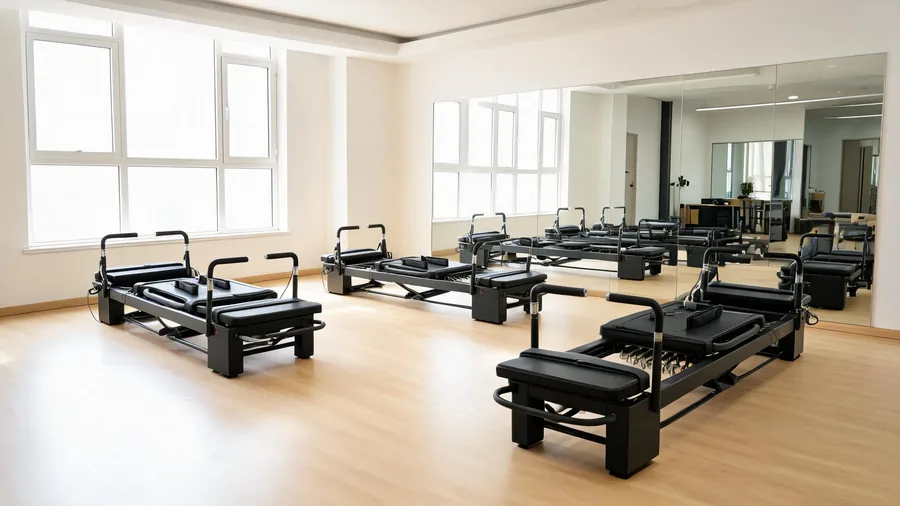
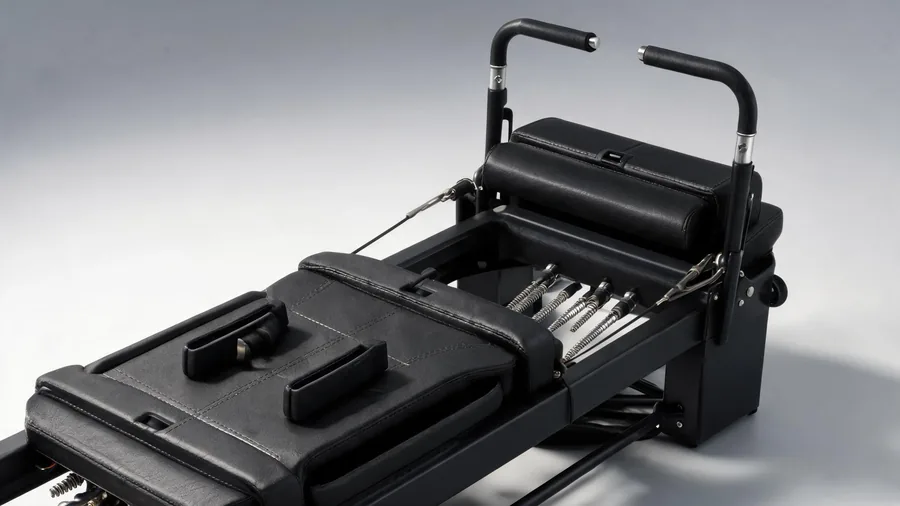
If you are searching for reformer pilates for beginners, the honest answer is that the first class is less intimidating than the machine makes it look. A reformer is a sliding carriage on rails, held back by springs, with a footbar at one end and straps at the other. You lie down, you push, you control the way back. That is most of it.
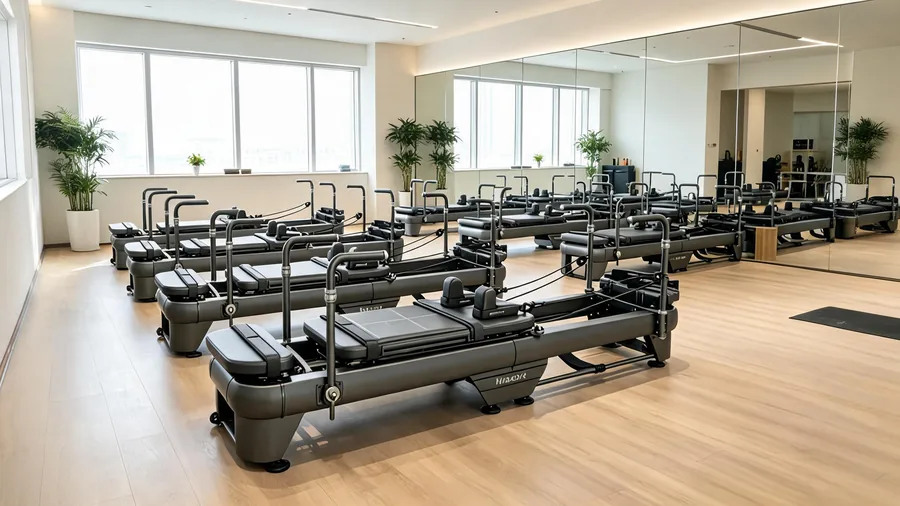
The nerves are normal. The machine looks like a piece of gym equipment that could bite, and the class photos all feature people folded into shapes that seem impossible. What those photos leave out is that beginners spend the first sessions on the same handful of moves as everyone else, and the instructor adjusts the springs down until the work is hard in the right way rather than the wrong one.
Here is what actually happens, in order, plus what to wear, what you will not be able to do yet, and how to tell a good studio from a queue.
1. What Reformer Pilates Actually Is
Pilates is a method of controlled movement, built around a stable trunk and a moving body. The reformer adds springs and a sliding carriage, which changes two things compared with mat work. The resistance goes up and down as the springs stretch, and the carriage moves under you, so your body has to control a surface that will not hold still.
That second part is why reformer sessions feel harder than they look. On a mat you can cheat a movement with momentum and nobody notices. On a reformer the carriage gives the cheat away, and the instructor sees it from across the room. It is also why the reformer is gentler on the joints than it appears. Springs support you, the lying-down positions take load off your spine, and you can start with very light resistance and add from there.
For the deeper comparison, our reformer vs mat pilates guide covers where each one wins. If you have tried mat Pilates and found it either too easy or too hard on your back, the reformer is often the version that clicks.
2. Your First Class, Minute by Minute
Classes run differently from studio to studio, but the shape of a first session is fairly predictable.
| Stage | What happens | How long |
|---|---|---|
| Intro and setup | Instructor sets your spring tension and footbar height, checks your carriage position | 5 minutes |
| Warm-up | Footwork and simple leg presses to wake up the legs and hips | 8–10 minutes |
| Main block | Core, glutes, arms and back work, usually in short sets of 8–12 reps | 25–30 minutes |
| Stretch and finish | Slow lengthening work and a wind-down | 5–8 minutes |
You will not be expected to know the names of anything. A good instructor cues each movement, sets your springs, and watches your carriage. If you are in a small group, expect hands-on adjustments to your ribs, hips and shoulders. If you are in a larger class, watch the person beside you, ask questions between sets, and do not worry about keeping pace.
3. What to Wear and Bring
Keep it simple. Fitted leggings or shorts and a close-fitting top work best, because loose clothing can catch on the moving carriage and makes it harder for the instructor to see whether your hips are level. Skip zips, belts and anything dangling. Grip socks are required at most studios, so bring a pair or buy them at reception.
Bring water. Leave jewellery at home. Do not eat a full meal in the hour before class. If you have an injury, an operation in the last few months, or you are pregnant, tell the instructor before you start rather than halfway through.
4. The Moves You Will Meet First
Every studio has its own order, but beginners meet the same short list in the first few weeks.
| Move | What it trains | Beginner note |
|---|---|---|
| Footwork | Legs, hips, stability | Always early. Spring load is light. |
| The Hundred | Deep core, breathing | Pump the arms, keep the ribs down. |
| Leg circles | Hips, core control | Small circles first. Bigger is not better. |
| Bridging | Glutes, spine mobility | Roll up one bone at a time. |
| Long stretch | Full body, plank pattern | Often feels brutal at first. It gets easier. |
| Short box | Abs, posture | Seated work with a box. Expect wobble. |
Nobody nails these on day one, and that is fine. The Hundred in your first class is a completely different exercise from the Hundred in your fiftieth, even though it looks identical from the outside.
5. How Hard Is It, Really?
Harder than it looks, and less hard than the internet suggests. The difficulty is adjustable in a way most forms of exercise are not, because spring resistance is a dial the instructor can turn for each person in the room. The table below shows the usual starting point.
| Exercise | Typical beginner springs | Feels like |
|---|---|---|
| Footwork | Medium to heavy (all four springs) | Firm but manageable leg press |
| The Hundred | Light to medium | Deep core burn, hard to hold ribs down |
| Leg circles | Light | Cramp risk in the hip flexors at first |
| Bridging | Medium | Glutes working, hamstrings may cramp |
| Long stretch | Light to medium | Shoulders and core under real load |
Spring settings are not universal. They depend on the reformer, the springs it uses and your body. If you want to understand the logic, our spring tension guide explains how resistance changes across an exercise. The short version: heavier is not better. The right spring lets you control the carriage through the whole movement without collapsing at the end.
6. Beginner Mistakes Worth Avoiding
- Chasing the advanced version. A clean footwork set beats a sloppy long stretch every time.
- Holding your breath. If you cannot talk, the springs are too heavy or your ribs have lost position.
- Letting the carriage bang back. The way you return the carriage is the exercise. Slow it down.
- Gripping with your neck and shoulders. If your neck aches after class, tell the instructor next time.
- Doing too much too soon. One good session a week beats three exhausting ones you abandon.
Most beginner aches are the ordinary kind, from muscles you have not used in these positions. If something feels sharp rather than sore, stop and say so. That is what the instructor is there for.
7. How Often Should You Go?
Two sessions a week is the sweet spot for beginners. It is enough to build the coordination and let muscles recover, without the soreness that turns a new habit into a chore. Once the movement patterns feel familiar, three a week is fine for most people.
The first two weeks usually bring the clearest changes, not in strength but in body awareness. You start to feel where your ribs drop, where your hips tilt and which side does more work. Strength follows over a couple of months. If you are comparing the reformer with other options, our guide to how often to do reformer pilates covers frequency in more detail, and the weight-loss guide is honest about what reformer work does and does not do for the scale.
8. Reformer or Mat: Where Should a Beginner Start?
Start on the reformer if you can afford it and you have a studio nearby. The springs support you, an instructor watches your alignment, and the carriage makes cheating obvious. Start on the mat if you want to learn the method cheaply at home, or if you have solid body awareness already.
Many people do both. Mat work is a test of whether your strength survives without the springs helping, which is why it feels harder once you are stronger. For a beginner who has never done either, the reformer is usually the more forgiving entry point.
9. Choosing a Studio as a Beginner
Look for small beginner classes or an intro session, instructors who cue rather than shout, and a studio that asks about your injury history before your first class. Ask what equipment they use and how old it is. A well-maintained reformer glides quietly and the springs return smoothly. A tired one rattles and the carriage drags.
If you are an instructor or studio owner reading this to understand what your beginners are walking into, our group reformer classes guide covers class sizing and equipment choices, and the reformer sizing guide explains how frame dimensions suit different bodies.
One last thing before your first class: you do not need to be flexible, strong or slim to start. None of that is a prerequisite, and the people who get the most from reformer work are usually the ones who arrived with the least confidence and kept showing up.
Često postavljana pitanja
Is reformer pilates suitable for complete beginners?
Yes. Reformer classes are built to be adjusted for each person, and spring resistance can be set very light. Beginners are usually shown the same foundational moves as everyone else, with more guidance and lighter springs.
What should I wear to my first reformer pilates class?
Fitted leggings or shorts and a close-fitting top, with grip socks if the studio requires them. Avoid loose clothing, zips and dangling jewellery, which can catch on the moving carriage. Bring water and leave a gap after meals.
How hard is reformer pilates for a beginner?
Harder than it looks, but adjustable. Spring resistance is a dial the instructor controls, so a beginner can start with light load until coordination improves. Most people feel the work in their core, glutes and legs, and the difficulty settles within a few sessions.
How often should a beginner do reformer pilates?
Two sessions a week is a good starting point, leaving time for recovery. Once the movements feel familiar, three a week suits many people. Consistency matters far more than intensity at the beginning.
Is reformer pilates good for weight loss?
Reformer work builds strength and can support weight loss as part of an overall plan, but it is not primarily a calorie-burning exercise in the way running or cycling is. Pair it with nutrition and cardiovascular activity for meaningful change.
Do I need to be flexible to start reformer pilates?
No. Flexibility is an outcome of regular practice, not a requirement. The reformer is often recommended precisely because it lets beginners work within a comfortable range while gradually building mobility.
Will I be sore after my first reformer pilates class?
Mild soreness for a day or two is normal, especially in the core, glutes and inner thighs, because the positions are new. Sharp or lasting pain is not normal, so mention it to your instructor.
Can you do reformer pilates at home as a beginner?
It is possible with a home reformer and online classes, but beginners learn faster with in-person guidance, because an instructor corrects alignment you cannot see yourself. A few months of studio classes make home practice far more productive.