

Sve više ljudi postavlja reformere u dnevne sobe, spavaonice i garaže. Preskočite članstvo u studiju — 2.000–4.000 USD godišnje, ovisno o tome gdje živite — i vježbajte prema svom rasporedu. Odabir najbolje Pilates sprave za kućnu upotrebu svodi se na nekoliko ključnih odluka: sklopiva ili fiksna, opruge ili bungee, čelik ili aluminij, 400 ili 3.000 USD. Pravilan izbor ovisi o vašem prostoru, tome koliko često vježbate i što zapravo želite postići.
Ovaj vodič uspoređuje opcije kako biste sa sigurnošću odabrali najbolju Pilates spravu za kućnu upotrebu.
Vidio sam kupce kako čine baš svaku moguću pogrešku — kupuju samo prema cijeni, zanemaruju prostor, uzimaju spravu koja ne odgovara njihovom tipu tijela. Evo što sam naučio pomažući kućnim kupcima pri odabiru najbolje Pilates sprave za kućnu upotrebu.
1. Kućni i studijski reformeri: kako odabrati najbolju Pilates spravu za kućnu upotrebu
Before shopping, understand that “home” and “studio” reformers serve different purposes. Buy a studio-grade machine for your home and you’re paying for durability you don’t need. Buy a flimsy home model and you’ll be frustrated within months.
Pojam „kućni reformer” pokriva sve od sklopivih sprava za 400 USD do polukomercijalnih jedinica za 3.000 USD. Razlika među njima je stvarna: stabilnost okvira, kvaliteta opruga, glatkoća kolijevke i trajnost. Kada ljudi pitaju koja je najbolja Pilates sprava za kućnu upotrebu, odgovor je obično polukomercijalna klasa — radi kao studijska sprava, ali bez studijske cijene.
For most home users, light-commercial is the sweet spot. It costs more upfront than a basic home model but lasts twice as long and feels significantly better to use. The only reason to go full commercial is if you’re planning to teach classes at home or just want the best and have the means.
2. Sklopivo ili fiksno — pitanje prostora
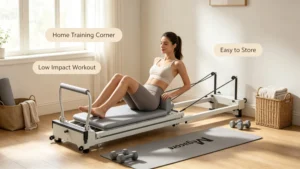
Odluka između sklopivog i fiksnog reformera zapravo je pitanje rasporeda vašeg doma. Sklopivi reformer najbolje funkcionira u stanovima, dijeljenim sobama ili bilo kojem prostoru koji služi dvjema namjenama. Sprema se uspravno uz zid ili pod krevet, što ga čini najboljom Pilates spravom za kućnu upotrebu u skučenim prostorima. Kompromis je obično nešto lakši okvir i kraća kolijevka nego kod fiksnih modela.
This is usually the first decision people make, and it’s often the wrong one to lead with. Figure out your space first, then decide on the form factor.
Good for apartments, shared rooms, or anyone who can’t dedicate 8×6 feet to a piece of equipment.
Što dobivate:
Čega se odričete:
Who it’s for: Povremeno vježbanje (2–3 puta tjedno), ograničen prostor, kupci osjetljivi na cijenu.
To je ono što studiji koriste i to s dobrim razlogom.
Što dobivate:
Čega se odričete:
Who it’s for: Redovito vježbanje (4+ puta tjedno), namjenski prostor za kućnu teretanu, svatko tko Pilates shvaća ozbiljno i dugoročno.
If you have the space, get a fixed frame. For many buyers this alone settles the question of the best pilates machine for home use, because the difference in feel is noticeable from the first session. If you don’t, a quality foldable model is still a good option — just don’t expect it to feel exactly like a studio machine.
3. Opruge ili bungee — tu ne popuštajte
Ovdje ljudi čine najveću pogrešku.
Čelične opruge: Autentična krivulja otpora, ujednačena napetost, traju 3–5 godina uz redovitu uporabu. To koristi svaki profesionalni studio.
Bungee užad: Lighter in weight, but the tension degrades noticeably within 6–12 months. The resistance curve isn’t the same as springs — the initial pull is easier, then it gets harder, which makes some exercises feel off.
Preporuka: Get steel springs. If a machine uses bungee cords, the manufacturer prioritized cost over experience. The only exception is a sub-$500 machine where you’re accepting it as a temporary solution.
4. Planiranje prostora u stvarnom životu
Mjerite prije kupnje, a ne poslije. Reformer tijekom vježbanja treba oko 8×6 stopa slobodnog poda te još nekoliko stopa prostora iza kolijevke za vježbe punog opsega. Visina stropa manje je važna nego što se očekuje, ali niski stropovi mogu ograničiti rad rukama iznad glave s dugim užadima. Razmislite gdje će sprava stajati između treninga — ako ostaje stalno postavljena, pazite da ne blokira vrata ili prozor.
More than a few people have bought a reformer only to realize it doesn’t fit their room. I’ve seen it happen with studio owners and home buyers alike.
Mjere:
Provjerite u praksi: Tape out the dimensions on your floor before buying. It sounds silly. It saves returns. I’ve heard from at least a dozen people who wish they’d done this instead of returning a 70 lb box.
5. Tip tijela
Visina i nosivost dvije su brojke koje prvo treba provjeriti. Korisniku od 6'2" treba reformer s dovoljno dugom kolijevkom i produženim užadima, dok korisniku od 5'2" standardne duljine mogu biti udobnije. Nosivost treba biti ugodno veća od najtežeg korisnika — čelični okviri od 250 kg+ daju najviše prostora. Širina ramena također je važna za razmak remena pri radu rukama.
Reformers aren’t one-size-fits-all. If you’re very tall (over 6 ft / 183 cm) or very short (under 5 ft 2 in / 157 cm), pay attention to:
Napomena za kupce ženskog spola: Many reformers are designed with average male height in mind. If you’re under 5’4″, look for adjustable shoulder rests and a footbar that has multiple height settings.
6. Razine otpora i napredovanje
Otpor je ono zbog čega reformer djeluje kao pravi trening, a ne kao pomagalo za istezanje. Čelične opruge pružaju ujednačen, progresivan otpor koji prati razvoj vaše snage. Početne sprave s dvije opcije opruga ograničavaju napredak — ili vam je prelako ili preteško. Sprava s 4–6 opruga omogućuje povećanje otpora u malim koracima kako napredujete.
A common complaint from home users is outgrowing their machine’s resistance range. If you’re serious about progressing in Pilates, check:
If you’re buying for a teenager or advanced practitioner, don’t buy a machine with only 2 spring options. They’ll outgrow it within months.
U tome se najbolja Pilates sprava za kućnu upotrebu razlikuje od početnog modela: treba vam ostaviti prostora za napredak. Sprava s 4–5 čeličnih opruga pokriva većinu kućnih treninga, dok 6–8 opruga podržava napredni rad i teže korisnike. Provjerite i nosivost — čelični okvir od 250 kg+ ostavlja prostora za sve tipove tijela.
7. Vodič kroz cijene: što stvarno dobivate na svakoj razini
| Značajka | Kućna klasa | Polukomercijalna | Puna komercijalna |
|---|---|---|---|
| Dnevni kapacitet | 1–2 sata | 3–5 sati | 8–10 sati |
| Okvir | Aluminij/laki čelik | Čelik | Teški čelik |
| Nosivost | 120–180 kg | 200–250 kg | 250–350 kg |
| Cijena | $500–1,200 | $1,200–2,000 | $2,000–4,000 |
| Vijek trajanja | 3–5 godina | 6–10 godina | 10–15 godina |
The $800–$1,500 range is where most people should land when choosing the best pilates machine for home use. Below that, you’re making compromises on feel and durability. Above that, you’re paying for brand markup more than functional improvement.
Stvarni primjer: A buyer in Chicago went with a $600 foldable model. Within 8 months, the carriage developed play, one spring lost tension, and the frame started creaking. She replaced it with a $1,400 light-commercial model and hasn’t had a single issue in two years. The first machine ended up costing her $75/month of use. The second is running at $58/month and will drop to $23/month if it lasts the full 5 years.
8. Montaža, dostava i postavljanje
Iskustvo dostave jako se razlikuje među brendovima. Neki šalju potpuno sastavljeno u gajbi; drugi dolaze kao set za koji treba sat vremena montaže. Prije narudžbe pitajte za način dostave, pakiranje i nudi li proizvođač video upute. Za međunarodne kupce potvrdite rok dostave i uključuje li cijena dostavu do vrata ili samo prijevoz od luke do luke.
Ono o čemu nitko ne govori u recenzijama: kako tu stvar unijeti u kuću?
Za sklopive modele: Practice setting it up and taking it down three times on day one. If it’s a hassle, you’ll use it less.
9. Zašto je Megacore snažan izbor za kućnu upotrebu
Prvenstveno proizvodimo za studije, što znači da naši modeli za kućnu upotrebu nose isti inženjerski DNK. Naša polukomercijalna linija popularna je kod kućnih korisnika koji žele studijsku kvalitetu bez plaćanja brenda.
Što to znači u praksi:
If you’re comparing Megacore to brands at the same price point, compare the frame thickness and spring quality. We don’t spend on marketing or retail distribution, so more of your money goes into the hardware.
Svaka Megacore sprava za kućnu upotrebu isporučuje se s certifikatom o kontroli kvalitete GZHL2601000020601SP i 3-godišnjim jamstvom koje pokriva okvir i spravu. Ta dokumentacija dio je razloga zašto je Megacore reformer snažan odgovor kada usporedite opcije najbolje Pilates sprave za kućnu upotrebu jednu uz drugu.
Često postavljana pitanja
Pitanja koja kućni kupci najčešće postavljaju pri odabiru najbolje Pilates sprave za kućnu upotrebu.
P: Mogu li dobiti trening studijske kvalitete na kućnom reformeru?
O: Da, ako reformer ima čelične opruge, stabilan okvir i odgovarajući raspon otpora. Oprema je alat — dosljednost donosi rezultate, a ne cijena.
P: Sklopivi ili fiksni za dom?
A: Fixed if you have dedicated space. Foldable if you don’t. Both deliver good workouts; the fixed frame will feel better and last longer.
P: Koliko bih trebao potrošiti na kućni reformer?
O: 800–1.500 USD za nešto što će stvarno trajati i dobro se osjećati. Ispod 500 USD je kockanje s kvalitetom. Iznad 2.500 USD za isključivo kućnu upotrebu obično je pretjerano, osim ako planirate držati satove.
P: Koliko traje kućni reformer?
O: Kvalitetan kućni reformer trebao bi trajati 5–10 godina uz osnovno održavanje. Opruge treba mijenjati svakih 3–5 godina, ovisno o učestalosti korištenja.
P: Mogu li kod kuće koristiti komercijalni reformer?
A: You can, but you probably don’t need to. Commercial reformers are built for 8–10 hours of daily use. For home use (1–2 hours daily), a light-commercial model delivers the same experience at lower cost.
P: A rabljeni reformeri?
O: Rabljeno može biti dobra kupnja, ali pažljivo pregledajte. Provjerite cjelovitost okvira, napetost opruga, glatkoću kolijevke i stanje remena. Računajte na to da ćete odmah zamijeniti opruge i remenje — planirajte 100–200 USD za to.
P: Trebam li poseban pod?
O: Idealan je tvrd, ravan pod. Tepih može funkcionirati uz podlogu od šperploče ili gumene prostirke. Izbjegavajte postavljanje samo na tepih — neravnomjerno upija udarce i utječe na stabilnost.
Postavljanje kućne Pilates prakse s pravom opremom mijenja vašu fitness rutinu. Kvalitetan reformer koji odgovara vašem prostoru i učestalosti vježbanja investicija je u vaše dugoročno zdravlje i dobrobit. Odaberite mudro prema prostoru, budžetu i ciljevima vježbanja.
Još jedan savjet: pročitajte jamstvo prije kupnje. 3-godišnje jamstvo na okvir i spravu, uz proizvođača koji drži rezervne dijelove, štiti vašu investiciju mnogo bolje od duljeg jamstva brenda bez opskrbe dijelovima. Ta sigurnost dio je razloga zašto se sprave izravno iz tvornice stalno pojavljuju u usporedbama „najbolja Pilates sprava za kućnu upotrebu”.
Zaključak
Uskladite reformer sa svojim prostorom i učestalošću vježbanja. Dobre opruge i čvrst okvir važniji su od brendova. Reformer za 1.200 USD koji redovito koristite vrijedi više od onog za 3.000 USD koji stoji u kutu.
Krenite od prostora, zatim od budžeta, pa od sprave. Ako niste sigurni odakle početi, kontaktirajte Megacore i uskladit ćemo vas s pravim reformerom za vašu kućnu praksu.
Povezani vodiči
- Vodič za kupnju Pilates reformera 2026: kompletna kontrolna lista
- Priprema prostora za Pilates reformer
- Vodič kroz napetost opruga Pilates reformera
- Razina buke Pilates reformera: što je normalno
- Pilates Reformer Dimensions & Space Requirements
Industrijski standardi za kvalitetu opreme dostupni su na Pilates Method Alliance. Za smjernice za kućne fitness objekte pogledajte CDC smjernice za kontrolu okolišnih infekcija.
If you have settled on a home machine, the home reformer range is the shorter list to choose from.