
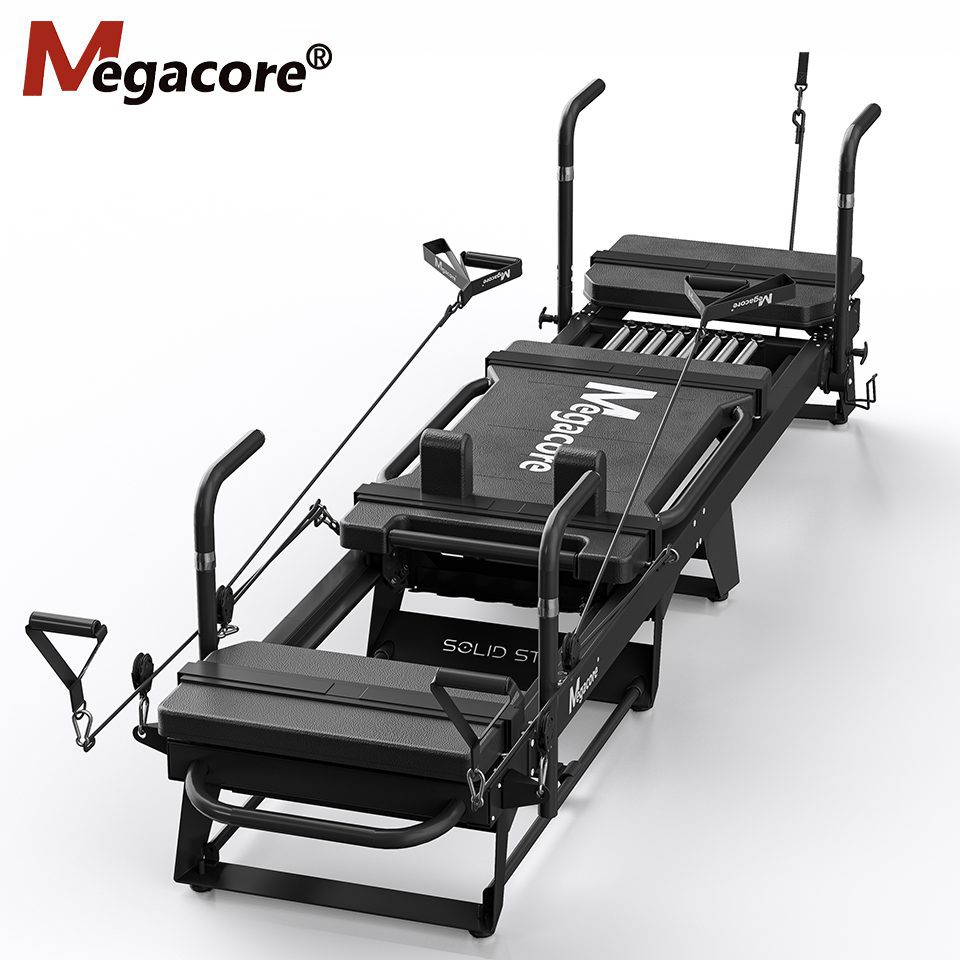
Before comparing C26 and K20, it’s important to define what qualifies as the best Pilates reformer for studio use.
A true commercial reformer should offer:
- Heavy-duty frame construction
- High weight capacity
- Smooth and silent carriage system
- Durable spring resistance
- Anti-slip footbar system
- Long-term structural stability
- Low maintenance cost
- Professional studio aesthetics
Unlike home-use machines, studio reformers must operate up to 8–12 classes per day. This requires industrial-grade engineering.
Megacore C26: Premium Commercial Performance
The Megacore C26 is widely considered a top candidate for the best Pilates reformer for studio use in high-end boutique studios.
Key Features of C26
- Aircraft-grade aluminum frame
- Reinforced carriage rail system
- High weight capacity (suitable for diverse clients)
- Ultra-smooth wheel mechanism
- Professional spring configuration
- Modern premium design
A C26 is engineered for durability and heavy usage environments. Its aluminum frame reduces long-term structural fatigue while maintaining rigidity.
For studios focusing on premium positioning, the C26 provides:
- Elevated visual aesthetics
- Long lifespan under frequent classes
- Reduced noise during group sessions
If your studio runs 6–10 reformers per class and operates daily, the C26 is often regarded as the best Pilates reformer for studio use in terms of performance-to-longevity ratio.
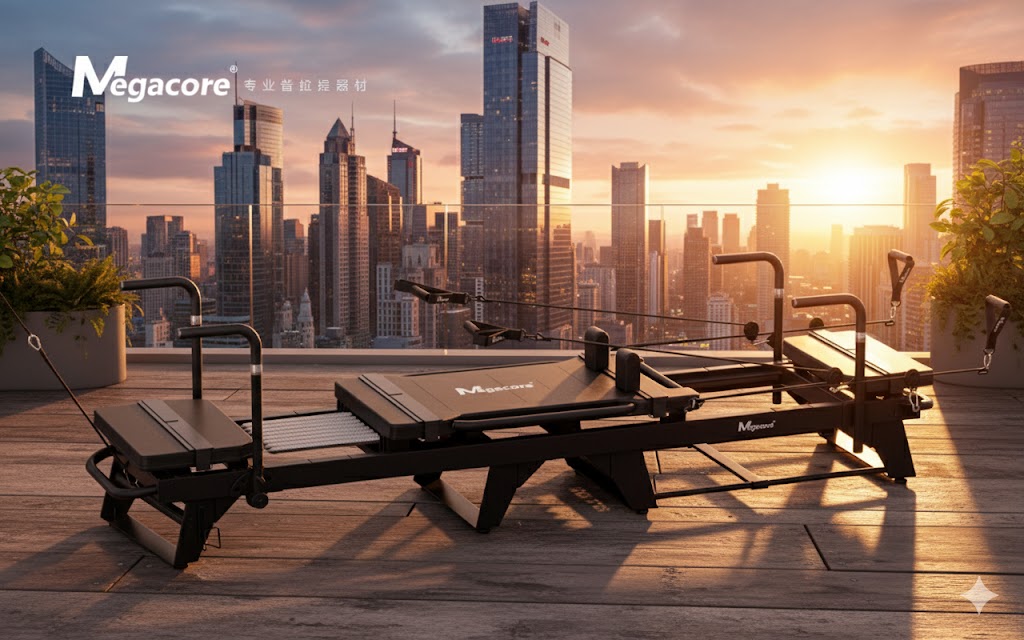
Megacore K20: Commercial Stability with Cost Efficiency
The K20 is another strong option when evaluating the best Pilates reformer for studio use, especially for startup studios or expansion projects.
Key Features of K20
- Heavy-duty commercial-grade frame
- Smooth rail system
- Stable carriage alignment
- Professional spring resistance system
- Designed for high-frequency studio classes
The K20 is optimized for:
- Cost-effective studio setups
- Medium to large group class operations
- Strong ROI for new studio investors
While maintaining professional performance standards, the K20 allows studio owners to optimize capital investment when purchasing multiple units.
For example, when equipping a 6-bed or 8-bed studio, choosing K20 may reduce total startup investment while still delivering commercial durability.
For many entrepreneurs, this makes the K20 a practical choice for the best Pilates reformer for studio use when balancing quality and budget.
C26 vs K20: Which Is the Best Pilates Reformer for Studio Use?
Here is a simplified comparison:
| Feature | C26 | K20 |
|---|---|---|
| Positioning | Premium Boutique | Commercial Value |
| Frame | Aircraft Aluminum | Reinforced Commercial Frame |
| Visual Appeal | High-end Design | Professional Minimal |
| Best For | Luxury Studios | Startup & Expansion |
| ROI Strategy | Long-Term Premium | Cost-Efficient Scaling |
So which is truly the best Pilates reformer for studio use?
It depends on your business model:
- If you are building a luxury Pilates brand → C26 is ideal.
- If you are scaling multiple locations or managing investment budget → K20 is highly strategic.
Both models are engineered specifically for commercial studio environments — not home fitness.
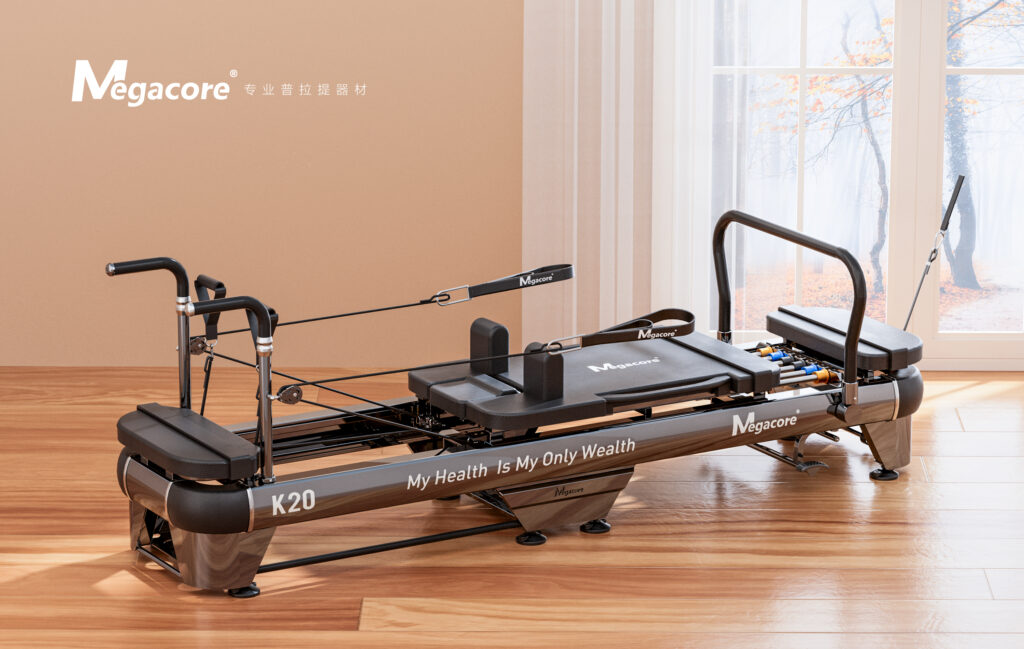
Why Commercial Studios Should Avoid Home Models
Many new studio owners mistakenly consider residential reformers to reduce cost. However, home-use machines:
- Are not designed for high-frequency sessions
- Have lower weight capacity
- Use lighter frame structures
- Wear out faster under group usage
Choosing a true commercial model like C26 or K20 ensures your studio maintains performance standards and avoids early replacement costs.
When evaluating the best Pilates reformer for studio use, durability should always outweigh short-term price savings.
Final Recommendation
If you are opening a new studio, expanding to multiple locations, or upgrading equipment, both Megacore C26 and K20 represent strong candidates for the best Pilates reformer for studio use.
- Choose C26 for premium positioning and long-term luxury branding.
- Choose K20 for scalable growth and optimized investment return.
Ultimately, the best Pilates reformer for studio use is the one aligned with your studio’s positioning, client base, and financial strategy.
Invest in equipment that supports your brand for years — not just months.