
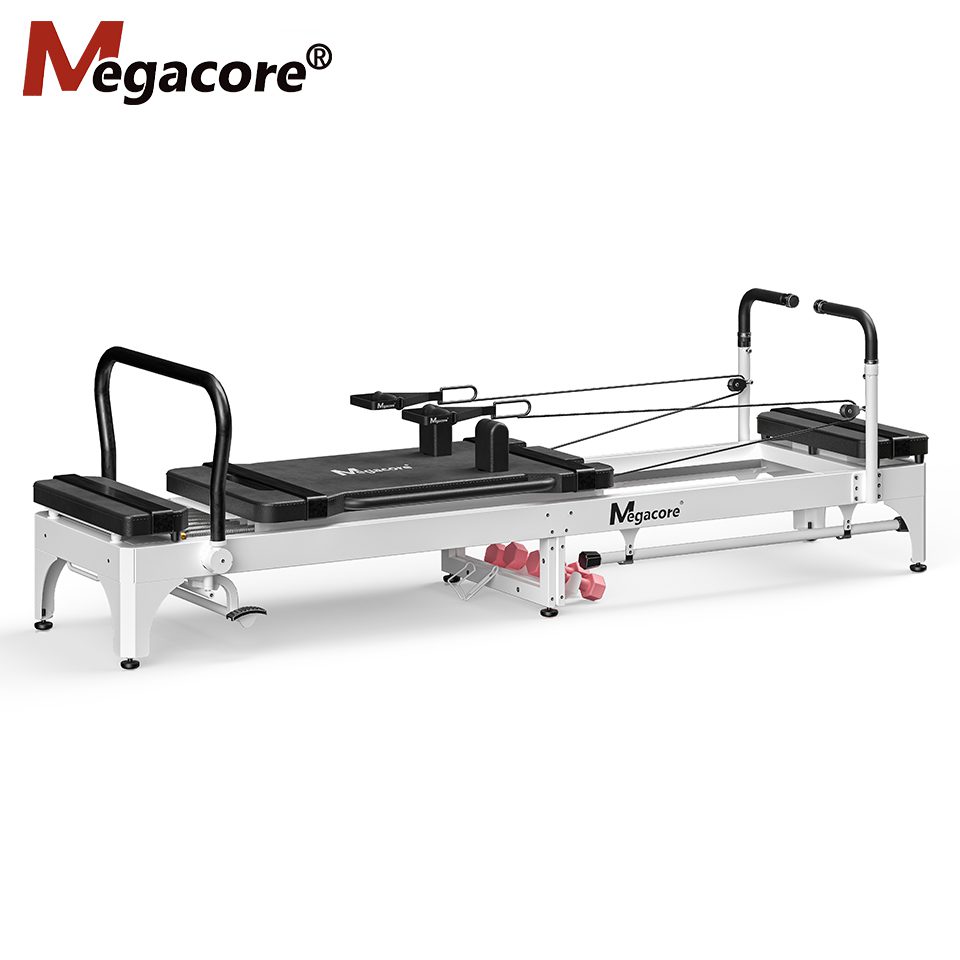
Physical therapy clinics are increasingly integrating Pilates reformers into their treatment protocols. Unlike fitness studios, clinics require equipment that supports one-on-one therapist-patient sessions, accommodates patients with limited mobility, and meets medical facility safety and hygiene standards.
This guide outlines the key features that make a reformer suitable for clinical use, including adjustability, safety mechanisms, and documentation requirements.
Why Reformers Work in Clinical Settings
The Pilates reformer offers features that align closely with physical therapy goals: adjustable resistance through springs allows graded exposure to load — starting at minimal resistance and progressing as the patient gains strength and confidence. The controlled, guided movement pattern reduces compensatory movements — the carriage track keeps the movement path consistent, preventing the patient from recruiting incorrect muscle groups.
Low-impact loading protects healing tissues while allowing early mobilisation. The supine, prone, seated, and standing positions available on the reformer allow the therapist to target specific joints and muscle groups without loading adjacent structures. These characteristics make the reformer useful across a wide range of diagnoses, from post-surgical rehabilitation to chronic pain management.
Key Features for Clinical Reformers
Precise Spring Resistance Calibration:
Clinical protocols require exact, repeatable spring configurations. Springs should be individually calibrated with resistance values printed on the colour-coded tag. Tolerance should not exceed ±3% of rated resistance.
Range-of-Motion Limiters:
The carriage should have mechanical stops that allow the therapist to set a maximum travel distance. This prevents the patient from moving beyond a safe range during early rehabilitation. Adjustable stops that lock in place with a pin or screw mechanism are preferred.
Multiple Footbar Positions:
Minimum 4 height positions and 2 angle positions. Patients with limited hip or knee flexion need the footbar at a higher position. A footbar that adjusts in small increments (2–3 cm) provides finer control than one with large jumps.
Low Profile Frame:
Carriage height under 40 cm from the floor allows patients with walkers, canes, or wheelchairs to mount and dismount safely. Some clinical reformers offer a front-opening frame that eliminates the step-over bar entirely.
Quick-Release Straps:
Straps with magnetic or clip-release connectors allow the therapist to disengage a patient quickly if they experience pain or loss of control. Standard loop-and-hook straps take several seconds to release — too slow in an emergency.
Easy-Clean Upholstery:
Vinyl covers with antimicrobial treatment that withstand daily disinfection with clinic-grade cleaning solutions. Covers should be removable for deep cleaning or replacement.
Documented Load Testing:
Clinics require proof that equipment meets safety standards. Quality inspection certificate GZHL2601000020601SP provides verified documentation of frame load testing, spring fatigue cycles, and upholstery fire retardancy.Clinical Workflow Integration
In a physical therapy setting, each patient typically uses the reformer for 15–30 minutes under direct therapist supervision. The therapist adjusts spring configuration, footbar position, and range limiters between exercises. A single reformer can serve 8–16 patients per day with proper scheduling.
Charting and documentation are essential. The therapist records the spring configuration, carriage travel distance, number of repetitions, and the patient’s pain response (typically on a 0–10 numeric pain rating scale). This data tracks progress over subsequent sessions and supports insurance reimbursement documentation.
Space and Layout for Clinical Settings
A clinical Pilates station requires more space than a fitness station — minimum 10 m² — to accommodate the therapist, patient, and any assistive devices. The reformer should be positioned with access from both sides and the footbar end. Clear floor space of 1 m on each side allows the therapist to spot the patient from any angle.
Storage should include: additional spring sets (calibrated and labelled), strap and handle variations (ankle cuffs, hand straps, shoulder harness), small therapy tools (therabands, foam rollers, balance pads), and a sink or hand-sanitiser station for hygiene.
Purchasing Considerations for Clinics
Clinical reformers are typically ordered through medical equipment suppliers or directly from manufacturers with medical-grade documentation. Request the following before purchasing: static and dynamic load test reports for the frame assembly, spring calibration certificates for each spring in the set, material safety data sheets for upholstery and foam components, and warranty terms stating coverage period for clinical (i.e., continuous daily) use.
Bulk purchase discounts for 4+ reformers are standard from Guangzhou manufacturers. Payment terms for first-time clinical buyers typically require 50% deposit with 50% on delivery.
Summary
Physical therapy clinics require reformers with features beyond those needed in fitness studios: precise spring calibration, range-of-motion limiters, low-profile frames, quick-release straps, and documented safety testing. A well-equipped clinical reformer supports a wide range of rehabilitation protocols and serves 8–16 patients per day in a one-on-one therapy setting. Pilates Reformer for Physical Therapy: W The Best Heavy Duty Pilates Reformers fo