
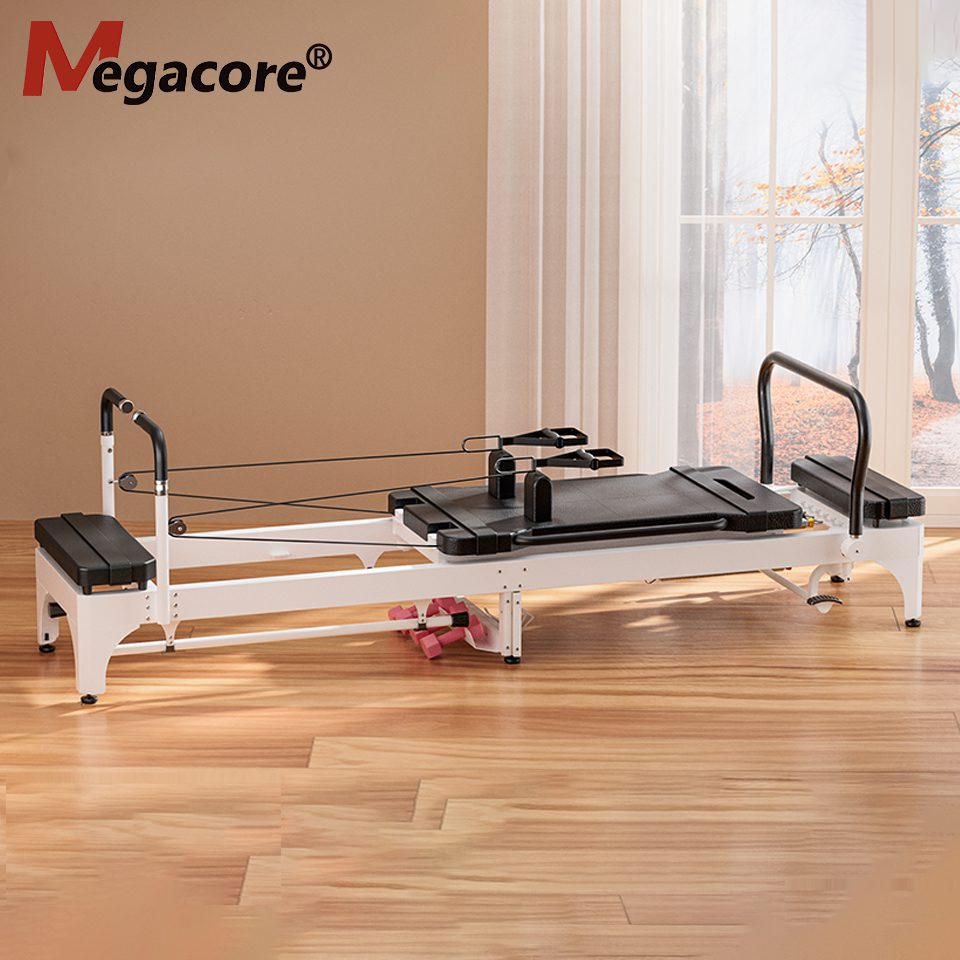
The carriage system is the heart of any Pilates reformer. It is the platform on which every exercise is performed, and its design determines the quality of the glide, the smoothness of resistance transitions, and the long-term reliability of the machine. Two carriage technologies dominate the market: roller bearing systems and friction-free (polymer slide) systems.
This comparison examines how each system works, their respective advantages and limitations, and which type is best suited for different studio environments and usage patterns.
How Roller Bearing Carriages Work
Roller bearing carriages use precision-ground steel bearings that rotate within sealed races as the carriage moves along the rails. Each bearing distributes the load across its circumference, creating rolling friction — significantly lower than sliding friction. Commercial-grade reformers typically use 4–8 sealed roller bearings per carriage, with bearing diameters of 16–25 mm.
The sealed housing protects the bearings from dust, sweat, and debris — common contaminants in a studio environment. Sealed bearings do not require lubrication, which eliminates the risk of grease transferring to the upholstery or clients’ clothing. Bearing life in a commercial setting is typically 3–5 years before replacement.
How Friction-Free (Polymer Slide) Carriages Work
Friction-free carriage systems use low-friction polymer pads — typically made from ultra-high-molecular-weight polyethylene (UHMW-PE), PTFE (Teflon), or nylon-based composites — that slide directly along the carriage rails. These materials have a naturally low coefficient of friction (0.08–0.15), allowing smooth glide without bearings.
Polymer slide systems are quieter than roller bearings — the sliding motion produces minimal sound. They also offer a different feel: the resistance is consistent throughout the entire range of motion, whereas roller bearings can have micro-vibrations that some users perceive as feedback. Polymer systems are less expensive to manufacture and replace.
Comparison: Roller Bearings vs. Friction-Free Slides
Durability:
Roller bearings last 3–5 years in commercial use before requiring replacement. Polymer slides typically last 2–3 years under daily studio conditions, as the pad material gradually wears down. Bearing carriages win on longevity.
Glide Feel:
Roller bearings provide a slightly textured glide with minimal rolling resistance. Some users describe it as ‘precise’ or ‘mechanical.’ Polymer slides provide a completely silent, silky-smooth glide. Preference is subjective; experienced instructors often have strong opinions.
Maintenance:
Sealed roller bearings are maintenance-free for their service life. Polymer slides require periodic inspection for wear and replacement when the pad thickness decreases by 30%. Polymer systems are easier for studio staff to replace without tools.
Load Capacity:
Roller bearings handle higher dynamic loads — 300 kg+ without performance degradation. Polymer slides can manage 250 kg but may show accelerated wear under consistent heavy loads or explosive movements like jump board exercises.
Cost:
Roller bearing carriages add ¥800–1,500 to the reformer cost compared to polymer slide systems. Replacement bearing sets are ¥300–600; replacement polymer slide kits are ¥150–300.
Noise:
Polymer slides are quieter. In a group class setting with 10+ reformers, the cumulative noise difference is noticeable. Studios prioritising sound control often choose polymer systems.Which System Is Right for Your Studio?
For high-volume commercial studios (25+ classes per week, 15–30 client sessions per reformer per day), roller bearing carriages are the recommended choice. The extended service life and higher load capacity offset the initial cost premium. Reformers with roller bearing systems maintain consistent glide quality over years of daily use.
For boutique studios with lower class volumes (8–15 classes per week) and a premium on quiet operation, polymer slide systems can provide an excellent experience. The lower replacement cost and easier maintenance make them practical for smaller operations.
For hybrid studios that offer both high-volume group classes and private sessions, consider a mixed fleet: roller bearing reformers for the group class area and polymer slide reformers for private rooms where silence is valued.
Factory Selection Guide
When ordering from a Guangzhou manufacturer, specify the carriage type explicitly. Some factories offer both options on the same frame platform. Request documentation: bearing specification sheets with load ratings and IP sealing class, and polymer material data sheets with coefficient of friction, wear rate (ASTM G99), and operating temperature range.
Quality inspection certificate GZHL2601000020601SP includes carriage glide force testing — measuring the force required to move the carriage at a constant speed. This test identifies inconsistencies in bearing alignment or polymer pad installation before the reformer leaves the factory.
Summary
Both roller bearing and friction-free carriage systems have their place in the Pilates market. Roller bearings offer superior durability and load capacity for high-volume commercial use. Polymer slides provide silent, smooth operation at a lower cost for boutique and low-volume settings. Evaluate your studio’s class volume, client profile, and noise sensitivity before choosing. The Best Pilates Reformers for Commercia