
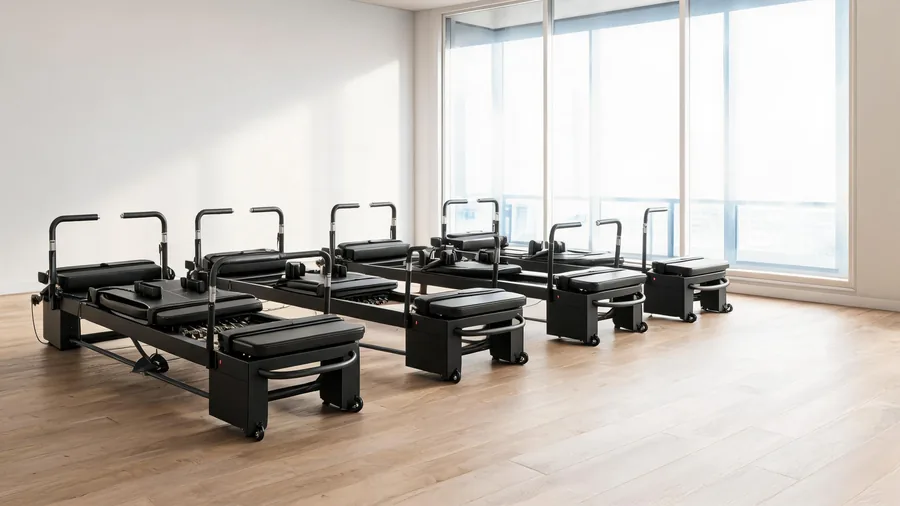
Curățarea eficientă a reformerului stă la baza unui studio de succes. Fiecare proprietar de studio Pilates cunoaște scenariul: un client nou intră, aruncă o privire la echipamente și decide în câteva secunde dacă are încredere în acest spațiu pentru propriul corp.

Un reformer curat nu înseamnă doar igienă — înseamnă încredere. Iar într-un studio aglomerat, unde fiecare aparat este folosit de peste 15 clienți pe zi, păstrarea acestei încrederi cere mai mult decât un spray rapid între cursuri.
Acest ghid prezintă protocoalele de curățare care mențin reformerele comerciale în formă optimă: ce se curăță și când, ce produse funcționează cu adevărat și cum să construiți un sistem pe care echipa dumneavoastră îl poate respecta.
1. Curățarea reformerului Pilates: protocol de sanitarizare între ședințe
Pauza de 10 minute între cursuri este scurtă. Iată un flux de lucru de 90 de secunde care acoperă fiecare punct de contact.
Curățarea corectă a reformerului începe cu consecvență. Când fiecare membru al echipei urmează aceeași succesiune de pași, nimic nu este omis. Iată protocolul standard pe care îl recomandăm pentru studiouri de orice dimensiune.
De ce contează atât de mult curățarea reformerului? Conform studiilor din industrie, curățenia echipamentelor este principalul factor de retenție a clienților — înaintea prețului, a locației și chiar a competenței instructorilor. Un studio care investește în protocoale corecte de curățare a reformerelor are mai multe rezervări repetate și recenzii online mai bune.
Dincolo de percepția clienților, curățarea regulată prelungește direct durata de viață a echipamentelor. Reformerele comerciale reprezintă o investiție importantă — de obicei $2,000-$5,000 per aparat. Fără o curățare adecvată, tapițeria se degradează mai repede, arcurile corodează, iar șina căruciorului acumulează reziduuri care afectează performanța. O rutină corectă de curățare poate adăuga 2-3 ani la durata de utilizare a fiecărui aparat.
Acest ghid acoperă tot ce aveți nevoie pentru a construi un protocol de curățare a reformerelor potrivit studioului dumneavoastră: fluxuri zilnice, curățare profundă săptămânală, alegerea produselor și instruirea personalului. Fie că deschideți un studio nou sau standardizați procedurile într-unul existent, aceste bune practici vă mențin echipamentele în stare optimă.
Ce se șterge de fiecare dată:
- Perna căruciorului — toată suprafața, din față spre spate
- Suporturile pentru umeri — ambele părți, inclusiv marginea interioară
- Bara pentru picioare — partea superioară și dedesubtul, acolo unde se prinde cu mâinile
- Suportul pentru cap — perna și maneta de reglare
- Curelele și mânerele — ștergere cu lavetă umedă, fără înmuiere
Instruirea personalului pentru curățarea între ședințe
Chiar și cel mai bun protocol de curățare a reformerelor eșuează dacă echipa nu îl respectă. Rezervați 30 de minute la integrare pentru a parcurge cu fiecare instructor fluxul de curățare între ședințe. Arătați-le exact cât spray să folosească, ce lavete să utilizeze pentru fiecare suprafață și cum să verifice eventualele deteriorări în timpul curățării. Un scurt videoclip demonstrativ la care personalul poate reveni ulterior ajută la menținerea consecvenței pe măsură ce se alătură colegi noi.
Referință rapidă pentru produse
2. Curățarea zilnică a reformerului Pilates: curățarea profundă de la finalul zilei
Curățarea de la finalul zilei este momentul în care prindeți ce a scăpat ștergerii dintre ședințe. O rutină corectă alocă 5-7 minute per reformer pentru o sanitarizare completă.
Pas cu pas:
- Pulverizați dezinfectant pe o lavetă curată din microfibre (niciodată direct pe aparat)
- Ștergeți fiecare suprafață: perna căruciorului, suporturile pentru umeri, bara pentru picioare, suportul pentru cap, cadrul
- Ștergeți frânghiile și curelele cu săpun delicat și apă
- Verificați sub cărucior dacă există praf sau reziduuri — aspirați dacă este nevoie
- Uscați toate suprafețele cu o lavetă curată
Greșeala frecventă de evitat
Pulverizarea soluției de curățare direct pe reformer. Lichidul pătrunde în rulmenți, în punctele de prindere ale arcurilor și în cusăturile tapițeriei. Pulverizați întotdeauna mai întâi pe lavetă.
3. Sarcini săptămânale de curățare și întreținere a reformerului Pilates
Sarcinile săptămânale de curățare durează aproximativ 30 de minute per reformer. Curățarea profundă regulată previne acumulările pe care sanitarizarea zilnică nu le rezolvă.
- Curele și frânghii: Demontați, spălați cu săpun delicat, uscați complet la aer înainte de remontare
- Cârligele arcurilor: Ștergeți punctele de prindere și verificați dacă prezintă uzură
- Șina căruciorului: Aspirați praful și reziduurile din zona șinei
- Tapițerie: Aplicați balsam pentru vinil pentru a preveni crăparea
- Elemente metalice: Verificați toate șuruburile și strângeți-le dacă sunt slăbite
4. Cele mai bune produse pentru curățarea reformerului Pilates: ce funcționează și ce nu
Nu toate soluțiile de curățare sunt sigure pentru reformerele comerciale. Iată o defalcare pe materiale:
5. Amenajarea stației de curățare pentru reformerele Pilates
O stație de curățare bine organizată face diferența între un protocol respectat și unul ignorat. Cel mai bun sistem de curățare este cel pe care echipa îl va folosi efectiv — deci trebuie să fie rapid, simplu și bine aprovizionat.
Când amenajați stația, gândiți-vă la fluxul de lucru. Dacă un instructor trebuie să traverseze studioul ca să ia o lavetă, va sări peste ștergere. Dacă sticla de spray nu este etichetată, cineva va folosi produsul greșit. Fiecare obstacol din procesul de curățare reduce conformarea.
Consumabile de bază (pentru 10 reformere)
- 40 de lavete din microfibre — codificate prin culori (albastru pentru dezinfectant, verde pentru uscare)
- 4 sticle de spray — etichetate clar
- 1 flacon de balsam pentru vinil
- 2 cutii de mănuși din cauciuc
- 1 cărucior cu două niveluri
Amplasarea stației
Amplasați o stație de curățare la ambele capete ale șirului de reformere. Dacă instructorii trebuie să facă mai mult de 10 pași pentru a lua consumabilele, vor sări peste etape. Un cărucior mobil este soluția optimă pentru studiourile cu peste 15 reformere — câte un cărucior pe fiecare rând, realimentat zilnic.
6. Când se înlocuiesc componentele în timpul curățării reformerului Pilates
Chiar și cea mai bună rutină de curățare nu poate repara materialele uzate. Iată când trebuie înlocuite:

- Tapițerie din vinil: 3-5 ani de utilizare comercială — înlocuiți imediat dacă este crăpată sau se desprinde
- Tapițerie din piele: 2-3 ani de utilizare comercială
- Arcuri: La fiecare 12-18 luni într-un studio aglomerat — verificați lunar prezența ruginii sau a deformărilor
- Curele: Înlocuiți când apar destrămări — de obicei după 6-12 luni
Reformerele comerciale Megacore folosesc vinil de calitate marină, care rezistă cu 40% mai mult decât tapițeria standard. Împreună cu cadrele vopsite în pulbere, care rezistă la coroziune, o curățare corectă menține aceste aparate ca noi ani de zile.
La Megacore, am proiectat reformerele comerciale având în vedere curățarea lor. Șinele cu rulmenți etanși elimină nevoia de lubrifiere a șinei. Tapițeria din vinil de calitate marină rezistă la ștergerea zilnică cu dezinfectant fără să crape. Cadrele din oțel vopsit în pulbere rezistă la coroziunea provocată de produsele de curățare.
Astfel, echipa dumneavoastră petrece mai puțin timp frecând și mai mult timp predând — iar echipamentele arată ca noi ani de zile. Aceasta este diferența între curățarea reformerelor ca sarcină trudnică și curățarea ca avantaj competitiv.
7. Curățarea reformerelor Pilates în studiouri de diferite dimensiuni
Abordarea corectă depinde de dimensiunea studioului și de volumul de cursuri. Un studio boutique cu 5 reformere și 6 cursuri pe zi are nevoie de un sistem diferit față de o franciză cu 30 de reformere care rulează ședințe una după alta de la 6 dimineața până la 8 seara.
În studiourile mici (sub 10 reformere), proprietarul sau instructorul principal se ocupă de obicei personal de curățare. În acest caz, o listă de verificare simplă și o rutină de 15 minute la finalul zilei sunt de obicei suficiente. Avantajul: controlați direct calitatea curățării și observați imediat problemele echipamentelor, pentru că dumneavoastră curățați zilnic.
Studiourile medii (10-20 de reformere) beneficiază de un angajat desemnat pentru curățare sau de un program rotativ. Repartizați câte o persoană pe tură care să răspundă de curățare. Astfel se evită problema „treaba tuturor este treaba nimănui”, care afectează multe studiouri. Persoana desemnată urmează același protocol în fiecare zi, consolidând rutina și consecvența.
Studiourile mari (peste 20 de reformere) au nevoie de o abordare sistemică. Listele de verificare digitale, rotația programată a curățărilor profunde și auditurile regulate ale consumabilelor devin esențiale. Multe studiouri mari de succes repartizează câte un angajat la 10 reformere, creând zone de curățare, astfel încât fiecare aparat să primească aceeași atenție. Auditurile săptămânale efectuate de management asigură menținerea standardelor în toate zonele.
8. Costul curățării reformerelor Pilates: bugetarea consumabilelor
Construirea unui sistem corect de curățare presupune un buget pentru consumabile. Iată o estimare lunară realistă pentru un studio cu 10 reformere:
Costul total lunar al consumabilelor de curățare: aproximativ $105-175 pentru un studio cu 10 reformere. Aceasta înseamnă circa $10-18 pe reformer pe lună — o investiție mică în comparație cu costul de înlocuire de $2,000-5,000 al unui reformer care se degradează prematur din cauza curățării necorespunzătoare.
Multe studiouri constată că externalizarea spălării lavetelor din microfibre și achiziționarea șervețelelor dezinfectante en-gros de la distribuitori de materiale medicale reduc costurile cu consumabilele cu 15-20% față de achizițiile din retail. Aderarea la o cooperativă de achiziții împreună cu alte studiouri locale poate reduce și mai mult costurile.
Curățarea reformerului Pilates: cercetări științifice privind igiena echipamentelor Pilates
Studiile privind igiena echipamentelor de sală publicate în Journal of Environmental and Public Health au arătat că echipamentele de exerciții folosite în comun pot adăposti bacterii până la 72 de ore fără o curățare corectă între utilizări. Ghidul CDC pentru igienizarea centrelor de fitness recomandă utilizarea dezinfectanților omologați EPA, cu un timp de contact de cel puțin 1 minut pe toate suprafețele frecvent atinse.
În cazul Pilates în special, Pilates Method Alliance oferă ghiduri de curățare specifice domeniului, care depășesc recomandările generale pentru echipamentele de fitness. Standardele lor acoperă materialele și metodele de construcție specifice reformerelor Pilates, inclusiv îngrijirea tapițeriei din vinil și întreținerea arcurilor.
Un studiu din 2023 privind protocoalele OMS de curățare a suprafețelor din mediul ambiant a confirmat că compușii de amoniu cuaternar, la concentrația corectă, elimină 99,9% din bacteriile obișnuite de pe suprafețele din sală. Sunt aceiași compuși prezenți în majoritatea produselor comerciale de curățare recomandate pentru vinil și suprafețe vopsite în pulbere.
Curățarea reformerului Pilates: întrebări frecvente
Întrebarea 1: Pot folosi șervețele Clorox pentru curățarea reformerului Pilates?
Da, dar evitați variantele cu înălbitor. Pentru curățarea zilnică, folosiți Clorox Healthcare sau șervețele similare cu amoniu cuaternar, destinate mediului medical. Nu folosiți niciodată șervețele Clorox pe tapițeria din piele — conținutul de alcool o usucă și o crapă în timp. Dacă nu sunteți sigur că un produs este potrivit pentru reformerul dumneavoastră, testați-l mai întâi pe o zonă mică, ascunsă.
Întrebarea 2: Cât de des trebuie să înlocuiesc lavetele din microfibre folosite la curățare?
Înlocuiți-le după 50-80 de spălări sau imediat dacă încep să lase scame pe perna căruciorului. O regulă simplă: dacă laveta nu mai este pufoasă sau dacă apa se adună la suprafață în loc să fie absorbită, este timpul să o înlocuiți. Folosiți o lavetă curată la fiecare 3-4 reformere pentru a evita contaminarea încrucișată între aparate.
Întrebarea 3: Cum curăț spațiul dintre cărucior și șine în timpul curățării?
Folosiți aer comprimat sau un accesoriu îngust de aspirare pentru a elimina praful și reziduurile din zona șinei. Nu introduceți niciodată o lavetă sau alt material între cărucior și șine — reziduurile prinse vor zgâria suprafața șinei în timp. La reformerele Megacore cu șine cu rulmenți etanși, această zonă necesită întreținere minimă, pentru că sistemul de rulmenți împiedică acumularea reziduurilor.
Întrebarea 4: Care este cea mai bună metodă de a îndepărta petele de transpirație?
O parte oțet alb la trei părți apă caldă. Aplicați pe o lavetă, tamponați pata, apoi ștergeți. Pasta de bicarbonat de sodiu funcționează pentru urmele persistente pe vinil.
Întrebarea 5: Cum împiedic rugina arcurilor în timpul curățării?
Mențineți arcurile uscate tot timpul. Ștergeți-le săptămânal în cadrul rutinei de curățare și aplicați lunar un spray siliconic ușor pentru a preveni coroziunea. Dacă observați rugină pe un arc, înlocuiți-l imediat — rugina slăbește metalul și creează un risc de siguranță. În climatele umede, luați în calcul un dezumidificator în studio pentru a încetini oxidarea tuturor componentelor metalice.
Curățarea reformerului Pilates: concluzie
Un reformer curat nu este un lux — este standardul minim. Clienții observă, echipamentele rezistă mai mult, iar echipa lucrează mai eficient atunci când sistemul de curățare este simplu și consecvent.
Dacă deschideți un studio nou sau vă modernizați echipamentele, reformerele comerciale Megacore sunt proiectate pentru întreținere ușoară: vinil de calitate marină, șine cu rulmenți etanși și cadre vopsite în pulbere, rezistente la coroziune.
Resurse conexe despre curățarea reformerelor Pilates
- Ghid pentru tapițeria reformerului Pilates
- Ghid de înlocuire a arcurilor reformerului Pilates
- Listă de verificare pentru întreținerea reformerului Pilates
- Soluții de depozitare pentru reformerul Pilates
Upholstery and frame finish decide how a machine cleans up; the reformer model pages list both per model.