
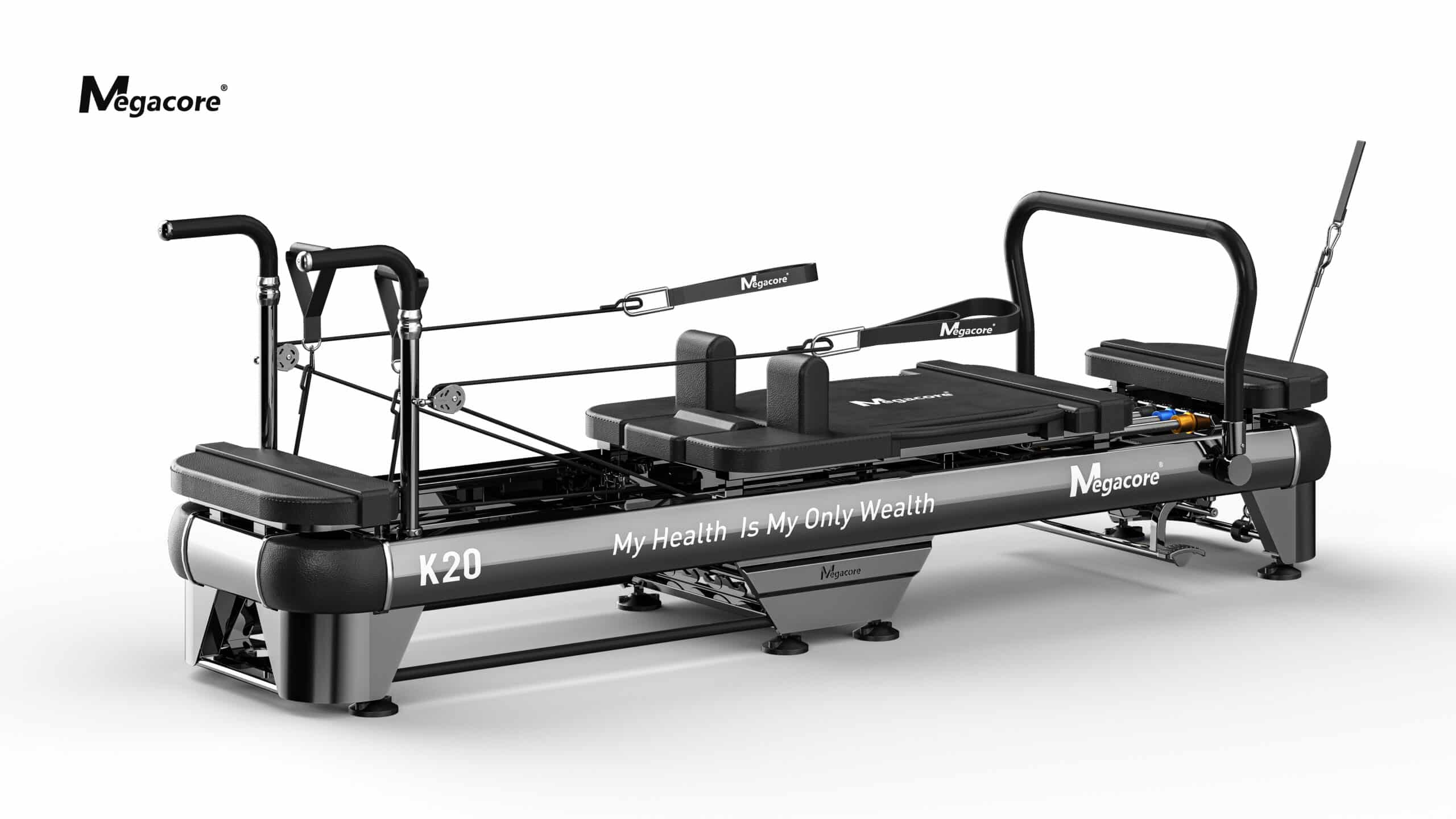
Pilates Reformer Fabric Upholstery: Choosing the Right Carriage Pad Material
The carriage pad is the most contacted surface on any Pilates reformer. Every client spends 30–55 minutes lying, sitting, kneeling, or pressing against it. The pad material directly affects client comfort, cleaning ease, durability, and the overall studio experience. Yet many studio owners select reformers based on frame specifications alone, giving little thought to the upholstery that their clients will contact every single session.
This guide compares the five most common carriage pad materials used in commercial reformers: marine-grade vinyl, expanded vinyl (leatherette), woven polyester, closed-cell foam with bonded fabric, and natural cotton canvas. Each has distinct trade-offs in durability, breathability, cleanability, and slip resistance that affect both client satisfaction and operational costs.
Marine-Grade Vinyl — The Industry Standard
Why Marine-Grade Vinyl Dominates Commercial Upholstery
Marine-grade vinyl is the most common carriage pad material for commercial Pilates reformers, offering excellent durability, easy cleaning with standard sanitizers, and a professional appearance. High-quality vinyl used in commercial reformers is typically 1.2–1.5 mm thick with a woven polyester backing that prevents tearing at stress points. The material is inherently water-resistant, so sweat and cleaning products bead on the surface rather than absorbing into the padding underneath. For studios expecting 15–20 clients per machine per day, marine-grade vinyl pads typically last 18–24 months before showing significant wear.
Marine-grade vinyl, originally developed for boat upholstery, is the most common carriage pad material in commercial Pilates studios worldwide. It is a multi-layer composite with a woven polyester backing for tensile strength, a middle layer of expanded PVC for cushioning, and a top coating of UV-stabilized vinyl for surface durability. Advantages include extreme durability of 5–8 years in commercial use, easy cleaning with a quick wipe of 70% alcohol sanitizer, water resistance where liquids bead on the surface rather than soaking into the foam core, and availability in 30+ colours for studio branding. The cost premium is approximately ¥200–400 over basic vinyl. Disadvantages include lack of breathability where clients may feel sticky during hot classes, cold feel in air-conditioned studios, and potential surface cracking in dry climates if not conditioned every 3–4 months.
Expanded Vinyl and Woven Polyester Options
Fabric and Specialty Upholstery Materials Compared
Some premium reformers offer fabric upholstery options, typically a polyester or nylon blend with moisture-wicking properties. The primary advantage of fabric over vinyl is breathability — fabric carriage pads stay cooler during vigorous workouts. However, fabric absorbs moisture, oils, and bacteria, requiring more intensive cleaning protocols and more frequent replacement. Fabric pads in commercial settings may need replacement every 6–12 months depending on studio volume. Fabric also tends to show staining more readily than vinyl, which can be a concern for premium studios.
Expanded vinyl (PU leather) offers a softer hand feel than marine-grade vinyl with a more supple surface that clients describe as buttery. It is more breathable, flexes without creasing, and provides a higher-end aesthetic that supports premium class pricing. However, it is less abrasion-resistant with visible wear after 2–3 years, requires specialized cleaners (alcohol can dry out and crack PU leather), costs ¥500–800 more, and offers limited colour selection of 8–12 options. Woven polyester fabric provides maximum breathability and a lightweight feel that reduces reformer weight by 5–8%, plus custom print availability. However, it absorbs sweat and oil requiring more frequent deep cleaning, stains easily from lotions and self-tanner, and has lower durability with pilling appearing after 12–18 months of commercial use. The cost premium is ¥600–1,000.
Bonded Fabric, Cotton Canvas, and Recommendations
Matching Upholstery to Studio Aesthetics
Carriage pad color and texture contribute significantly to studio aesthetics and can reinforce brand identity. Most manufacturers offer standard color options — black, white, gray, and navy are the most popular for commercial studios. Some manufacturers offer custom color matching for an additional fee, allowing studios to coordinate upholstery with their brand colors. Textured upholstery options add visual interest but may be harder to clean. For studios that prioritize aesthetic consistency, ordering spare pads in the same color ensures replacements match the original equipment.
Closed-cell foam with bonded fabric is the lowest cost option but fabric delamination is common after 12–18 months. Not recommended for commercial rotation exceeding 6 clients per day. Natural cotton canvas is fully biodegradable and extremely breathable but absorbs moisture permanently, stains easily, and lasts only 6–12 months in commercial use. It suits eco-conscious studios with moderate volume. For most commercial applications, marine-grade vinyl remains the best overall choice due to its durability and cleanability. Boutique studios should consider expanded vinyl for improved comfort. Quality inspection certificate GZHL2601000020601SP includes material composition testing and abrasion resistance data for all upholstery options.
Summary
Carriage pad upholstery is a functional component that affects client comfort, hygiene, and equipment longevity. Marine-grade vinyl is the recommended choice for high-volume commercial studios. Studio owners should check the upholstery specification before ordering reformers and request material samples when available. Factory-direct commercial reformers offer multiple upholstery options at each price point, allowing studio owners to match the pad material to their specific operational requirements and budget.
Upholstery colour is a branding decision that also affects studio maintenance. Light colours (white, cream, light grey) show wear and stains within 2–4 weeks of commercial use and require more frequent cleaning. Dark colours (charcoal, black, dark blue) hide stains but show dust and lint, and they absorb more heat in warm climates. Medium tones (taupe, olive, navy) offer the best balance for studio environments. Factory-direct reformers are available in 10+ standard colours plus the option to match your brand palette for private-label orders.
Upholstery replacement cost is a factor that studio owners should include in their long-term budget. A replacement carriage pad with marine-grade vinyl costs ¥400–800 and 15–25 minutes of installation time. Studios with 10 reformers should budget for 2–3 replacement pads per year as part of normal maintenance. The pad replacement interval depends on daily session volume, cleaning chemical compatibility, and environmental conditions. Quality inspection certificate GZHL2601000020601SP includes material testing results that can help predict replacement timing for your specific upholstery choice.
For studios serving sensitive skin populations like prenatal or postnatal clients, hypoallergenic upholstery options are available from factory-direct suppliers. These materials use antimicrobial treatments and low-VOC adhesives in the foam core. Upholstery certifications to request from your supplier are OEKO-TEX Standard 100 for fabric safety, REACH compliance for European chemical standards, and CA 117 for fire resistance. These certifications provide verifiable quality documentation that supports your marketing to health-conscious clients.
The cost of upholstery should be evaluated as a per-session expense over the material’s expected lifespan rather than as a one-time purchase. A ¥600 marine-grade vinyl pad that lasts 5 years with 15 sessions per week costs ¥0.15 per session. A ¥350 residential-grade pad that lasts 2 years costs ¥0.22 per session while providing less comfort and a worn appearance for half its service life. This per-session cost analysis makes commercial-grade upholstery the clear economic choice for any studio operating 10+ sessions per week per reformer, justifying the 70% price premium with a 30% lower lifetime cost. The Best Pilates Reformers for Commercia