
Yoga Studios and the Equipment-Based Opportunity
Yoga studios represent one of the largest addressable markets for Pilates reformers in the fitness industry. With hundreds of thousands of yoga studios worldwide and a client base already oriented toward mind-body exercise, the crossover potential between yoga and reformer Pilates is substantial. For yoga studio owners seeking to diversify their revenue streams and attract new clients, adding reformers to their equipment offerings creates opportunities for expanded programming, increased membership, and competitive differentiation in crowded markets.
The compatibility between yoga and Pilates is rooted in their shared philosophical foundations. Both modalities emphasize breath control, body awareness, and the integration of movement with mindfulness. Yoga practitioners transitioning to reformer Pilates find the focus on alignment and controlled movement familiar, while the resistance-based nature of the reformer adds a strength-development dimension that yoga alone does not provide. This complementarity makes reformers a natural addition to yoga studio programming.
Space Integration: Reformers in Yoga Studios
Yoga studios face unique space challenges when incorporating reformers. Unlike dedicated Pilates studios where reformers are the primary equipment, yoga studios must accommodate both mat-based and equipment-based classes within the same physical space. Space-efficient solutions are essential for studios where the same room serves multiple class formats throughout the day.
Wall-mounted reformers are the most practical solution for yoga studios. These units mount directly to reinforced wall framing and occupy minimal floor space when not in use. The carriage and footbar can be secured in a stored position, leaving the floor clear for yoga mat placement. A studio with 12 feet of wall space can install 3-4 wall-mounted reformers that deploy for reformer classes and store flush against the wall for yoga classes.
Stand-mounted reformers on locking casters offer an alternative approach. These units can be moved into position for reformer classes and rolled to storage when the space is needed for yoga. A dedicated storage closet or alcove adjacent to the practice room provides convenient access while keeping the reformers out of sight during yoga sessions. Studios with multiple practice rooms can dedicate one room to reformer classes and use the remaining rooms for mat-based yoga.
Floor-standing reformers require the most space but offer the best stability and exercise variety. Studios with sufficient square footage can designate a portion of their main practice room as a permanent reformer zone, with reformers arranged at the perimeter and mat space in the center. This hybrid layout allows simultaneous yoga and reformer use in different zones of the same room, maximizing space utilization during peak hours.
Programming Strategies for Yoga Studios
Yoga studios introducing reformers should develop programming that bridges the two modalities rather than treating reformers as a completely separate offering. Yoga-informed reformer classes that incorporate yogic breathing principles, meditation elements, and familiar movement patterns into reformer exercises attract existing yoga clients who might be hesitant to try Pilates. These hybrid classes lower the barrier to entry for the yoga client base.
Workshop-based introductions are effective for launching reformer programming. A series of introductory reformer workshops — “Reformer Foundations for Yogis” or “Core Strength for Inversions” — provides existing clients with a structured introduction to the equipment. After completing a workshop series, clients are more likely to enroll in ongoing reformer classes or private sessions.
Private and small-group sessions offer the highest per-square-foot revenue for yoga studios starting reformer programming. A single reformer used for 10 private sessions per week at $75-$100 per session generates $3,000-$4,000 monthly revenue from 30-40 square feet of floor space. This revenue density exceeds that of mat-based classes for studios with limited space and enables the equipment investment to be recovered quickly.
Client Acquisition and Retention
Adding reformers expands a yoga studio’s addressable market beyond its existing client base. Pilates-focused clients who might not be attracted to a yoga-only studio become potential members when reformers are available. These new clients may then explore the studio’s yoga offerings, creating cross-sell opportunities that drive overall membership growth.
Member retention improves when studios offer diverse programming options. A member who might consider leaving due to boredom with mat-based classes can find renewed engagement through reformer training. The progressive nature of reformer work — where clients can continuously increase spring tensions and exercise complexity — provides the long-term progression path that supports sustained membership.
Corporate wellness partnerships represent another growth opportunity for yoga studios with reformers. Companies seeking onsite or subsidized wellness programming increasingly include Pilates in their offerings. Studios with reformers can partner with local businesses for corporate Pilates programs, generating additional revenue and introducing new clients to the studio.
Equipment Investment and ROI
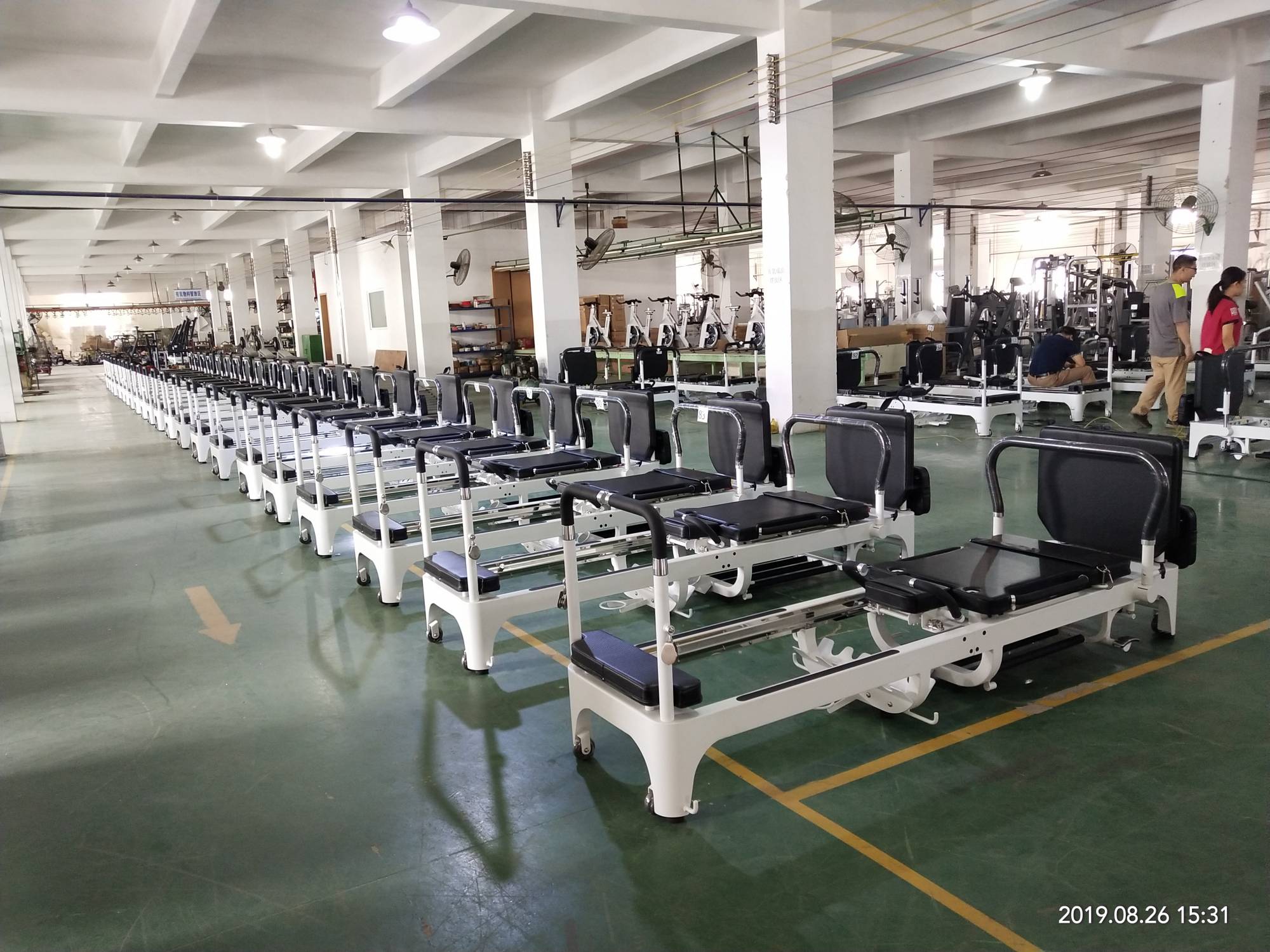
Factory-direct commercial reformers offer yoga studios a cost-effective entry into equipment-based Pilates. At $2,000-$4,000 per unit, a studio can start with 2-3 reformers for a total investment of $4,000-$12,000. The 3-year warranty protects this investment, and the documented quality testing through GZHL2601000020601SP provides assurance of commercial-grade durability.
The return on investment for reformers in yoga studios is typically achieved within 3-6 months of introducing programming. A studio generating $3,000 monthly from reformer classes and private sessions recovers a $12,000 equipment investment in four months. Ongoing monthly revenue from reformer programming contributes directly to studio profitability, with equipment maintenance costs (spring replacement, rope replacement) representing the primary ongoing expense.
Multi-studio yoga brands can achieve economies of scale through fleet purchasing. Factory-direct pricing improves with volume, and standardized equipment across locations simplifies maintenance and instructor training. Brands operating 5+ locations can negotiate volume discounts that reduce per-unit costs by 15-25% compared to single-studio pricing.
Conclusion: A Natural Expansion for Yoga Studios
Pilates reformers represent a natural and profitable expansion for yoga studios seeking to diversify their programming, attract new clients, and increase revenue per square foot. By selecting factory-direct commercial reformers with quality testing certification GZHL2601000020601SP and comprehensive warranty coverage, yoga studio owners can add equipment-based Pilates with confidence in their investment. The compatibility between yoga and Pilates creates a synergistic programming mix that serves the holistic wellness needs of today’s fitness consumers. How Many Reformers Do You Need to Open a How Many Reformers Do You Need to Open a