
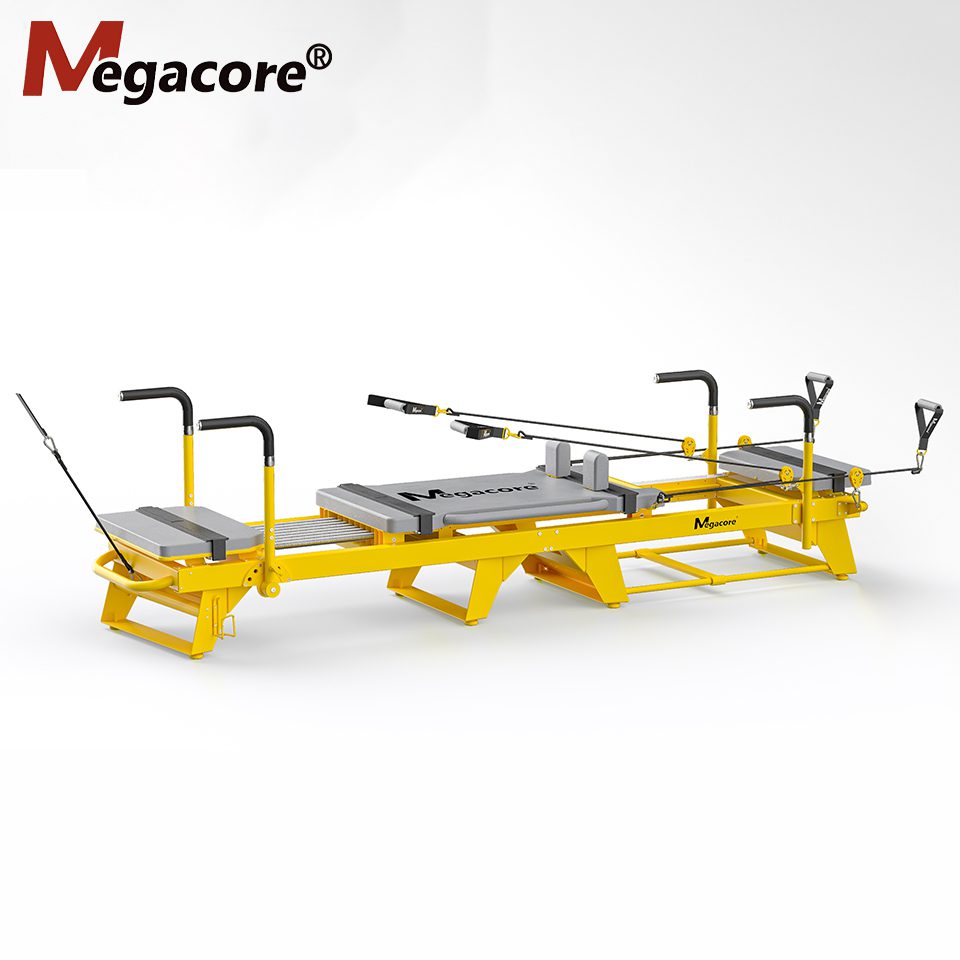
Expanding Beyond Pilates: Reformers for Athletic Cross-Training
The Pilates reformer is no longer confined to dedicated Pilates studios. Professional sports teams, university athletic departments, and commercial gyms are increasingly integrating reformers into cross-training programs. The unique resistance profile — accommodating variable spring tension through full range of motion — makes reformers valuable for strength development, injury prevention, and movement quality improvement across athletic populations. This article explores how reformers are being deployed in athletic settings and what equipment specifications matter for high-performance environments.
Why Athletic Trainers Choose Reformers
Sports performance coaches value the reformer for three distinct capabilities: variable resistance that accommodates each athlete’s strength curve, unilateral loading that exposes strength asymmetries, and the ability to train movement patterns — rather than isolated muscles — under load. A basketball player performing single-leg footwork on the reformer is not just strengthening the quadriceps and glutes; they are training hip stability, ankle control, and core engagement in a coordinated pattern that transfers directly to court movements.
The spring-loaded resistance is particularly useful for eccentric strengthening. In traditional gym equipment, eccentric load is limited by the weight stack’s maximum resistance, which may exceed an athlete’s concentric capacity. Reformer springs provide smooth eccentric resistance through the entire return phase, allowing athletes to overload the eccentric component of movements safely. This is valuable for sports requiring rapid deceleration — soccer, basketball, tennis, and skiing — where eccentric hamstring and quadriceps control is a primary injury prevention goal.
Equipment Specifications for Athletic Contexts
Reformers used in athletic training environments need specific features that differ from typical studio equipment. The spring set should include higher-resistance options — at least two springs rated at 2.0–2.5 kg and one at 3.0 kg — to accommodate the higher strength levels of trained athletes. Standard studio reformers with only light-to-medium springs may max out for collegiate or professional athletes, preventing them from achieving sufficient loading for strength adaptation.
Frame durability is even more critical in athletic settings because the equipment will experience heavier average loads and more aggressive movement patterns. Welded steel frames with a minimum tube gauge of 14-gauge (2.0 mm wall thickness) and a user weight rating of at least 180 kg are recommended. The carriage bearing system should be sealed cartridge type rated for repeated high-load cycling — open roller bearings will develop play within 6 months under athletic program use volumes.
Footbar design matters for athletic training. A wider footbar (minimum 45 cm across) accommodates athletes with larger feet and allows for comfortable two-foot placement during jump training and plyometric-style footwork. Non-slip footbar surface texture is essential — athletes in bare feet or minimalist footwear need secure traction during high-speed movements that may involve brief loss of contact with the footbar.
Programming Reformers for Athletic Populations
Cross-training reformer programs for athletes follow different programming principles than traditional Pilates classes. The focus shifts from flow and breath-to-movement coordination to strength development, power production, and movement screening. A typical athletic reformer session might include: 10 minutes of unilateral leg work for asymmetry exposure and hip stability, 10 minutes of upper body pulling and pressing movements with controlled tempo, 10 minutes of rotational core work using the reformer’s spring resistance for anti-rotation training, and 10 minutes of integrated movement combining upper and lower body patterns.
Load progression follows the principle of progressive overload just like weight training. Athletes start with 3 sets of 8–10 repetitions at moderate spring tension and progress to 4–5 sets of 6–8 repetitions at higher tension as they adapt. Tempo variations — slow eccentric (4 seconds), pause (2 seconds), explosive concentric — add another dimension of training stimulus. The reformer’s accommodating resistance is particularly valuable for explosive concentric work because the spring force is highest at the end range where the athlete can produce the most force.
Injury Prevention and Rehab Applications
Sports medicine professionals use reformers for both prehabilitation and return-to-play progression. The ability to precisely control resistance through spring selection makes the reformer ideal for graded exposure to loading after injury. A soccer player recovering from a hamstring strain can begin with minimal spring resistance for hamstring curls and progress to eccentric loading at higher tensions as healing permits, all within the same movement pattern and under the same piece of equipment.
The reformer is also effective for shoulder and hip rehabilitation. The footbar and spring system allow for controlled, low-load shoulder flexion and extension in the supine position, progressing to standing push and pull patterns. For hip rehabilitation, the reformer’s ability to provide resistance through the full hip range — from extension through flexion and abduction — makes it more versatile than cable machines for early-stage rehab protocols.
Case Study: University Athletic Program Implementation
A Division I university athletic department recently integrated 12 reformers into its strength and conditioning facility, serving 300 athletes across eight sports teams. The equipment was specified with heavy spring sets, reinforced frames, and commercial-grade bearing systems. After 6 months of use, the strength staff reported: 30 percent reduction in non-contact hamstring injuries compared to the previous season, improved single-leg stability scores on pre-season movement screening tests, and high athlete compliance with the reformer training sessions — athletes rated reformer work as more engaging than traditional resistance training for accessory work.
The university’s head strength coach noted that the reformer’s ability to expose strength asymmetries — particularly in hip extension and lateral stabilization — allowed the staff to identify and address imbalances that would not have been apparent in bilateral barbell exercises. This information was used to modify individual athletes’ supplemental training programs, addressing specific weaknesses before they contributed to injury.
Selecting the Right Reformer for Athletic Programs
When evaluating reformers for a gym, sports team, or athletic facility, prioritize commercial-grade construction, heavy spring options, and reinforced footbar design. The machine should be able to withstand 6–8 hours of daily use with athletes in the 80–120 kg range performing explosive movements. Request a load-test certificate from the manufacturer specifying the maximum dynamic load rating. Our inspection report (GZHL2601000020601SP) documents the load testing and material specifications that indicate suitability for athletic training environments.
Megacore Pilates manufactures reformers with heavy-duty spring kits (up to 3.0 kg per spring), reinforced welded steel frames rated to 200 kg dynamic load, and sealed cartridge bearings rated for 500,000 cycles. We supply several collegiate athletic programs and can provide references from strength and conditioning professionals who use our equipment in sports performance settings. The Best Pilates Reformers for Commercia