
Every studio owner reaches a point where the equipment they started with no longer meets the demands of their schedule. Consumer-grade reformers that seemed adequate for a 3-class-per-day schedule begin showing wear when classes double or triple. Springs lose tension, carriages develop noise, and repairs become frequent enough to affect scheduling. The decision to upgrade to commercial-grade Pilates reformers is a significant investment — but the numbers often show it is the most cost-effective move a growing studio can make.
Bu kılavuzda şunlar karşılaştırılmaktadır: commercial-grade Pilates reformers vs consumer models across cost, lifespan, maintenance, client experience, and return on investment, so you can make an informed upgrade decision.

1. Commercial-Grade Pilates Reformers: Upfront Cost Comparison
The most obvious difference between consumer and commercial-grade Pilates reformers is the purchase price. Consumer-grade reformers typically range from $800 to $1,500 per unit. Commercial-grade reformers from a factory-direct manufacturer like Megacore range from $2,500 to $4,500 depending on specifications and customization. The gap is significant — roughly 2–3 times the upfront investment.
However, purchase price is only the beginning. A consumer reformer in a commercial setting lasts 1–3 years before requiring major repairs or replacement. A commercial-grade reformer lasts 5–10 years with routine maintenance. When you divide the cost by years of service, the annual cost of a commercial reformer is often lower than replacing consumer units every few years. A $3,000 commercial reformer over 8 years costs $375 per year. A $1,200 consumer reformer replaced every 2.5 years costs $480 per year — and that does not include the downtime and client dissatisfaction from equipment failures.
2. Commercial-Grade Pilates Reformers: Lifespan and Durability
Lifespan is where commercial-grade Pilates reformers separate themselves from consumer equipment. The key differences are in construction: commercial reformers use welded steel frames with 14-gauge (2.0 mm) or thicker tubing, while consumer models often use thinner steel or aluminum that flexes under load. Commercial reformers use sealed cartridge bearings rated for 500,000+ meters of use, while consumer models use open roller bearings or friction-based systems that wear faster.
Spring quality is another differentiator. Commercial-grade reformers use calibrated stainless steel springs with consistent resistance across production batches. Consumer models may use lower-grade steel springs that lose tension within months. Upholstery on commercial reformers uses marine-grade vinyl and high-density foam (35 kg/m³ or higher), while consumer models use thinner vinyl and lower-density foam that compresses permanently.
3. Commercial-Grade Pilates Reformers: Maintenance Costs
Maintenance is an ongoing cost that many studio owners underestimate when buying consumer equipment. Consumer reformers in commercial use often need spring replacements every 6–12 months, bearing servicing every 12–18 months, and frame repairs within 2–3 years. These costs add up to $200–400 per year per machine in parts and labor, plus the cost of taking the machine out of service during repairs.
Commercial-grade Pilates reformers require significantly less maintenance. Sealed cartridge bearings need no lubrication and last years before replacement. Commercial-grade springs maintain tension for 2–3 years of daily use. Upholstery holds its shape and appearance for 3–5 years. Annual maintenance costs for a commercial reformer typically run $50–100 per machine — primarily for spring replacement and visual inspections. The quality inspection certification GZHL2601000020601SP documents the material and construction standards that make this longevity possible.
4. Commercial-Grade Pilates Reformers: Client Experience Impact
The quality of your equipment directly affects how clients perceive your studio. A reformer with a noisy carriage, loose springs, or worn upholstery signals neglect — even if the studio is otherwise well-maintained. Clients may not know exactly what is wrong, but they feel the difference in movement quality. They may attribute a bumpy ride or inconsistent resistance to their own technique rather than the equipment, which undermines their confidence and progress.
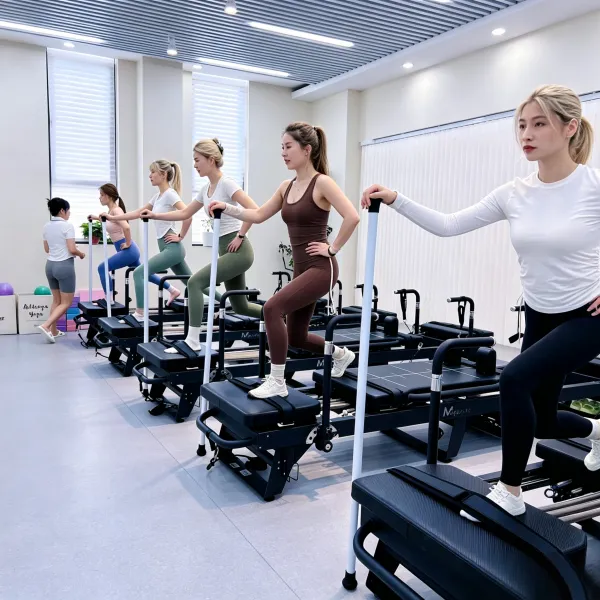
Commercial-grade Pilates reformers deliver consistent performance every class. The carriage glides smoothly and silently. Springs provide predictable resistance. Upholstery is comfortable and supportive. Instructors can focus on teaching rather than apologizing for equipment quirks. Studios that upgrade to commercial equipment often report higher client retention, more referrals, and the ability to charge premium rates for a premium experience. For more on noise level considerations, the guide on commercial reformer noise levels explains why quiet operation matters for client satisfaction.
5. Commercial-Grade Pilates Reformers: ROI Calculation
When calculating the return on investment for upgrading to commercial-grade Pilates reformers, consider both direct and indirect factors. Direct costs include the equipment purchase, installation, and ongoing maintenance. Indirect costs include downtime from repairs, lost class revenue when machines are out of service, and the impact of equipment quality on client retention and referral rates.
A typical 8-reformer studio upgrading from consumer to commercial equipment spends $15,000–25,000 on the upgrade. With conservative estimates — 5% improvement in retention, 10 additional classes per month from reduced downtime, and the ability to raise prices by $2–3 per class — many studios recover the investment within 18–24 months. The Pilates reformer ROI calculator can help you model your specific numbers.
6. Commercial-Grade Pilates Reformers: Warranty and Support
Warranty coverage is another area where commercial-grade Pilates reformers differ from consumer equipment. Consumer reformers typically carry 1-year warranties that exclude commercial use. If you use a home-grade reformer in a studio setting, the warranty is often void from day one. Commercial-grade reformers are designed and warranted for daily professional use.
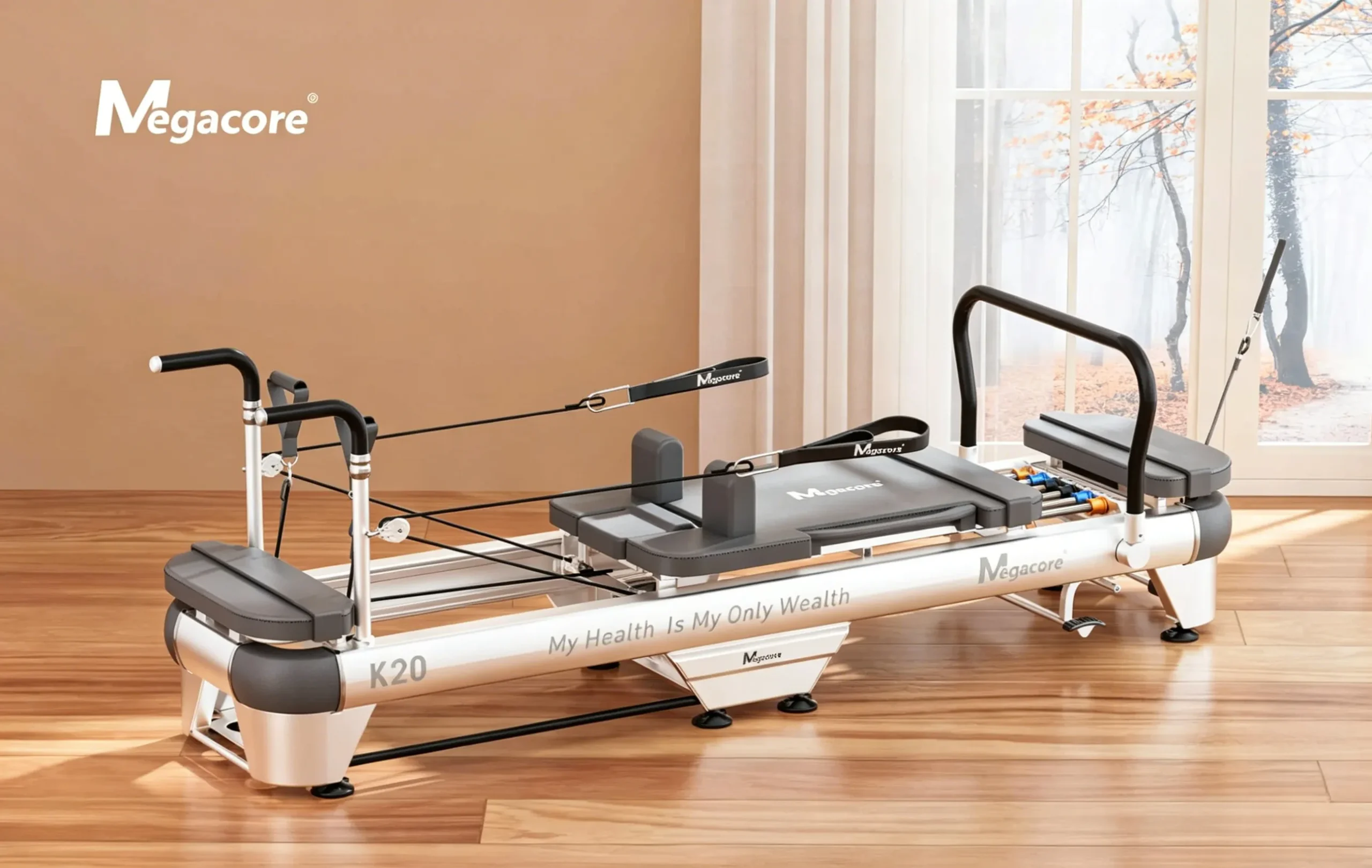
Megacore offers a 3-year warranty covering both frame and entire machine for commercial use. This warranty is backed by the documented quality control processes in certification GZHL2601000020601SP. Factory-direct support means replacement parts ship directly from the factory, and the manufacturer handles claims without a dealer intermediary. The Pilates Yöntemi Birliği provides industry standards for commercial equipment quality that support warranty evaluation.
7. Commercial-Grade Pilates Reformers: When to Upgrade
How do you know when it is time to upgrade to commercial-grade Pilates reformers? Look for these signs:
- You are repairing the same machines multiple times per year
- Clients comment on equipment noise or inconsistent feel
- Your class schedule has grown to 6+ classes per day
- Consumer-grade springs need replacement every 6 months
- Equipment downtime is causing scheduling conflicts
- You are turning away clients because you have reached capacity
- Your current equipment is more than 3 years old and showing wear
If three or more of these apply to your studio, the financial analysis likely favors upgrading now rather than continuing to maintain aging equipment.
8. Commercial-Grade Pilates Reformers: Frequently Asked Questions
How much more do commercial-grade reformers cost than consumer models?
Commercial-grade reformers typically cost 2–3 times more upfront — $2,500 to $4,500 compared to $800 to $1,500 for consumer models. However, commercial reformers last 3–5 times longer, making the annual cost comparable or lower.
Can I use consumer reformers in my studio?
You can, but consumer reformers are not designed for daily commercial use. They will wear faster, require more maintenance, and may fail within 1–3 years. Most consumer warranties exclude commercial use.
How long do commercial-grade reformers last?
With proper maintenance, 5–10 years of daily commercial use. Megacore reformers are built with welded steel frames, sealed cartridge bearings, and commercial-grade springs designed for this lifespan.
What is the best way to finance a studio equipment upgrade?
Factory-direct pricing from manufacturers like Megacore offers the best value. Many studio owners also use equipment financing or phase the upgrade over 6–12 months by replacing a few reformers at a time.
Do commercial-grade reformers increase class prices?
Many studios find they can increase class prices by $2–5 after upgrading, reflecting the improved client experience. The equipment upgrade itself also attracts new clients who value professional-grade facilities.
9. Commercial-Grade Pilates Reformers: Make the Upgrade That Pays for Itself
Upgrading to commercial-grade Pilates reformers is not just about buying better equipment — it is an investment in your studio’s growth. Lower maintenance costs, higher client retention, fewer scheduling disruptions, and the ability to charge premium rates all contribute to a strong return on investment. When the annual cost of commercial equipment is comparable to or lower than consumer replacements, the choice becomes clear.
Megacore Pilates manufactures commercial-grade reformers at factory-direct prices with none of the distributor markups that inflate dealer-sold brands. Every reformer is built in our Guangzhou facility under quality control processes documented in certification GZHL2601000020601SP, and backed by a 3-year warranty covering both frame and entire machine. Whether you are upgrading your first studio or outfitting your third location, Megacore provides the equipment quality and pricing that makes upgrading financially sound.
Diğer kaynaklar: Yatırım Getirisi Hesaplayıcı | 2026 Satın Alma Rehberi | Weight Capacity Guide | Warranty Guide