
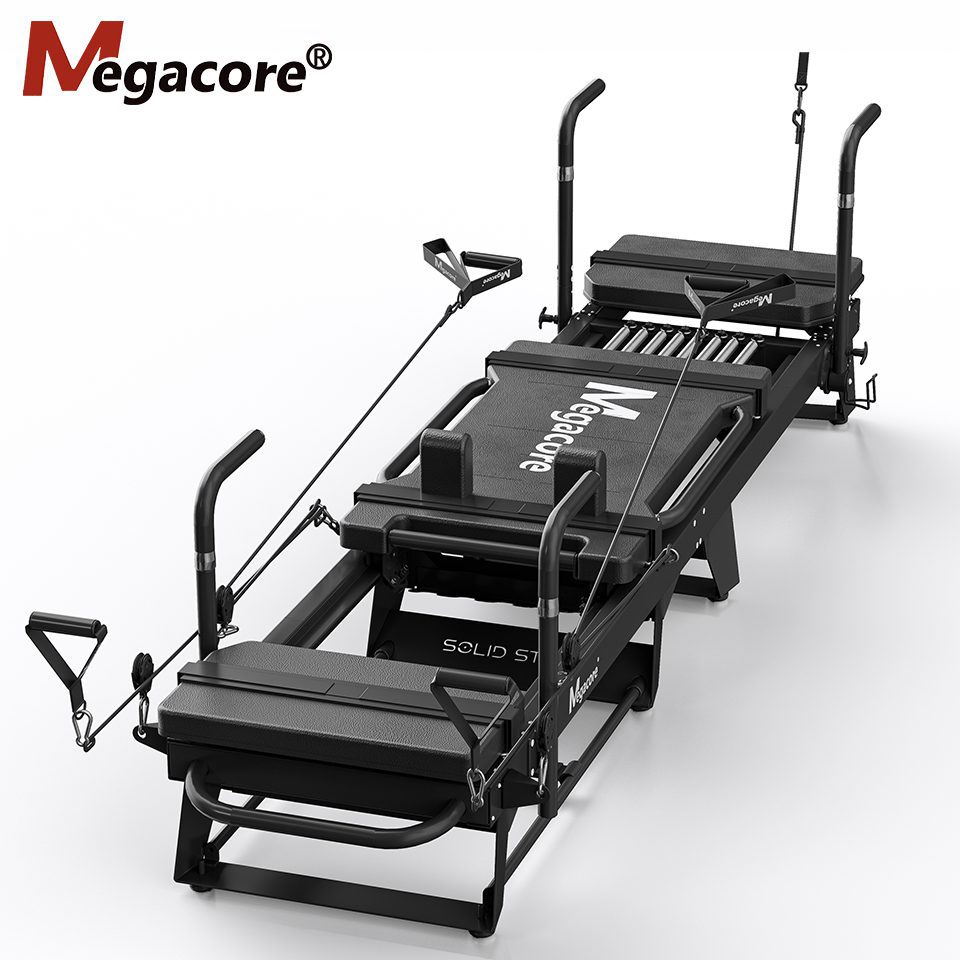
Pilates Reformer Headrest and Shoulder Rest Adjustments for Different Body Types
Proper positioning on the Pilates reformer starts with two often-overlooked components: the headrest and the shoulder rests. Incorrect adjustment of either leads to compromised spinal alignment, reduced exercise effectiveness, and client discomfort that can drive members away. Yet many instructors and studio owners treat these components as fixed elements that clients simply adapt to, missing an opportunity to improve the experience for every body type.
This guide explains how headrest height and shoulder rest width affect exercise biomechanics, provides adjustment protocols for different body types, and outlines what to look for when specifying reformers for a diverse client base that includes both petite and tall individuals.
The Headrest: More Than a Pillow
Understanding Headrest Positions and Functions
The headrest on a Pilates reformer serves a critical ergonomic function — it supports the cervical spine during supine exercises and prevents neck strain. Most commercial reformers offer two to three headrest positions: flat (fully lowered), intermediate (slightly inclined), and raised (fully upright). The flat position is appropriate for tall clients and exercises where the head remains neutral. The intermediate position provides gentle support for clients with shorter torsos. The raised position is used for exercises like the short box series where the client sits upright. Understanding these positions allows instructors to customize each client’s setup.
Adjusting Headrest for Different Neck Lengths
Clients with shorter necks or forward head posture may find even the flat headrest position causes discomfort. For these clients, using a small rolled towel or cervical support cushion behind the neck can bridge the gap between the headrest and the natural cervical curve. Clients with chronic neck pain or cervical spine conditions should start with the headrest in the most supportive position and progress to flatter positions as neck strength improves. The goal is to maintain the natural curve of the cervical spine throughout all supine exercises.
The headrest supports the cervical spine when the client is supine on the carriage. Its position determines the angle of the head relative to the torso. A headrest that is too high forces the chin toward the chest, compressing the cervical vertebrae and creating neck strain. A headrest that is too low allows the head to drop into extension, straining the neck flexors and making it difficult for the client to maintain proper engagement during exercises.
Commercial reformers typically offer 2–3 headrest positions: flat for neutral cervical spine, inclined 15 degrees for reduced neck extension in beginners or clients with tight upper trapezius, and inclined 30 degrees for exercises requiring cervical flexion engagement like the hundred with supported head. The ideal headrest position aligns the ear with the shoulder joint when the client is supine. For petite frames under 160 cm, use the lowest headrest position as a standard 30 cm headrest may be too long. For average frames of 160–175 cm, the middle position works well. For taller frames over 175 cm, use the middle or highest position depending on torso length — extended-length headrests of 33 cm accommodate this demographic.
Shoulder Rests: Critical for Comfort and Stability
Shoulder Rest Width and Padding Adjustments
Shoulder rests support the upper body during supine exercises and provide a stable reference point. Standard shoulder rests are spaced approximately 16–18 inches apart on most commercial reformers, but this fixed width does not accommodate all body types equally. Narrow-shouldered clients may find their shoulders do not reach the padding. Broad-shouldered clients may feel compressed. Some commercial reformers offer adjustable shoulder rests that can be moved laterally. Heavier clients generally benefit from firmer padding, while lighter clients may prefer softer padding that distributes pressure more evenly.
Shoulder rests stabilize the client’s upper body during supine exercises by preventing the shoulders from sliding off the carriage. Key variables include width, angle, and padding density. Standard width is 15–16 cm per side (total 30–32 cm outer to outer). For clients with broad shoulders (46 cm+ width), this standard may be too narrow — the scapulae sit outside the padding, causing impingement and discomfort. Reformers with adjustable-width shoulder rests ranging from 14–20 cm per side accommodate both narrow and broad frames without compromise.
Some commercial reformers offer a slight outward flare of 10–15 degrees in the shoulder rest design, following the natural angle of the scapulae and reducing impingement risk during overhead arm movements. Padding density of 35+ kg/m3 is recommended for commercial durability, and closed-cell foam resists sweat absorption better than open-cell alternatives. Studios serving male or athletic clientele should specify reformers with 20 cm shoulder rest adjustments to accommodate broader frames.
Adjustment Protocols and Purchase Considerations
For narrow frames under 38 cm shoulder width: reduce shoulder rests to the narrowest setting (14 cm per side) and use the lowest headrest position. For average frames of 38–46 cm: standard width and middle headrest. For broad frames over 46 cm: widest setting of 18–20 cm per side with middle or highest headrest. Clients with thoracic kyphosis benefit from widened shoulder rests and a small cervical roll. When purchasing, look for headrests with minimum 3 positions, tool-free shoulder rest width adjustment, and padding density of 35+ kg/m3. Quality inspection certificate GZHL2601000020601SP documents foam density and upholstery adhesion testing. Include adjustment training in instructor onboarding with practical partner drills.
Summary
Headrest and shoulder rest adjustments are small design elements with outsized impact on client comfort and exercise effectiveness. Studios serving diverse body types need reformers with adjustable-width shoulder rests and multi-position headrests. Factory-direct commercial reformers with these adjustment features are available at price points that make proper ergonomics accessible to every studio, regardless of budget.Headrest design details vary across manufacturers and directly affect client comfort. The most comfortable headrests use a contoured shape that follows the cervical curve rather than a flat surface. Contoured headrests reduce pressure points at the base of the skull and provide better support for supine exercises. Some commercial reformers offer headrests with removable covers for laundering, which is a significant hygiene advantage in studios where clients use hair products that transfer to the upholstery. The headrest hinge mechanism should operate smoothly with one hand so instructors can adjust it during class without interrupting their flow. Quality inspection certificate GZHL2601000020601SP confirms the foam density and material quality used in commercial-grade headrests.
For studios that serve clients with specific neck conditions such as cervical kyphosis or whiplash history, a headrest with 5+ adjustment positions and memory foam padding provides the most comfortable experience. Some factory-direct suppliers offer upgrade headrest packages with gel-infused memory foam that reduces heat buildup during longer sessions. The investment for an upgraded headrest is ¥300–600 per reformer, and for studios targeting the rehabilitation market, this upgrade directly supports premium pricing of ¥50–100 more per session compared to standard reformer classes.
Training staff to adjust shoulder rests for each client is a skill that improves client comfort and retention. The most common adjustment error is leaving shoulder rests too narrow, which causes the scapulae to sit outside the padding during supine exercises. This leads to shoulder discomfort that clients may not verbally report but will respond to by avoiding certain exercises or switching studios. Include shoulder rest adjustment in every new client intake process and make it a visible part of your onboarding to demonstrate attention to individual client needs. The Best Pilates Reformers for Commercia