
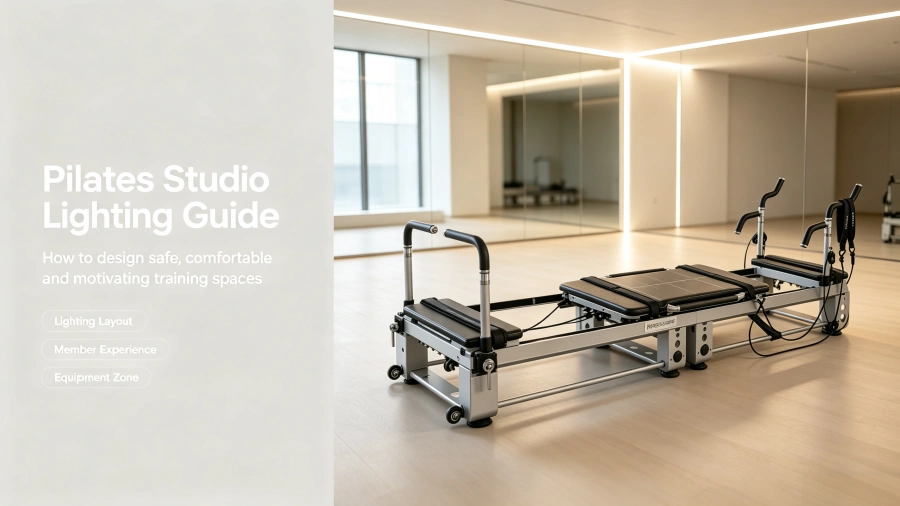
The physical environment of a Pilates studio directly influences client retention, class pricing, and brand perception. Equipment quality and instructor expertise form the foundation, but pilates studio lighting and ambiance create the emotional context in which training happens. This guide walks through lighting zones, color temperature, acoustic treatment, and the practical decisions that turn a functional room into a space clients want to return to.
1. Why Studio Lighting Shapes the Client Experience
Studies in environmental psychology show that pilates studio lighting conditions affect exercise performance, perceived exertion, and post-workout satisfaction. Clients training in well-designed environments with appropriate lighting report 20-30% higher satisfaction scores than those in poorly lit or harshly lit spaces. For Pilates, where the method emphasizes body awareness and mind-body connection, the lighting environment carries even more weight.
Good pilates studio lighting does two jobs at once, and studios that understand both get the biggest return on their fit-out budget. It gives clients and instructors the visual clarity they need for safe, precise movement, and it sets the emotional tone of the session. A dim, warm room signals restoration; a bright, cool room signals focus and energy. The studios that get this right are the ones clients describe as calming, professional, and worth the premium price.
| Class Type | Recommended Color Temperature | Lighting Mood |
|---|---|---|
| Morning reformer flow | 4000K – 4500K | Alert, energizing |
| Midday mixed classes | 3500K – 4000K | Neutral, focused |
| Evening restorative | 2700K – 3000K | Calming, intimate |
| Private sessions | 3000K – 3500K | Warm, personal |
The table above is a starting point, not a rulebook. The right approach for most studios is a tunable system that lets instructors shift color temperature between classes, which we cover in detail below.
2. Lighting Zones for a Reformer Studio
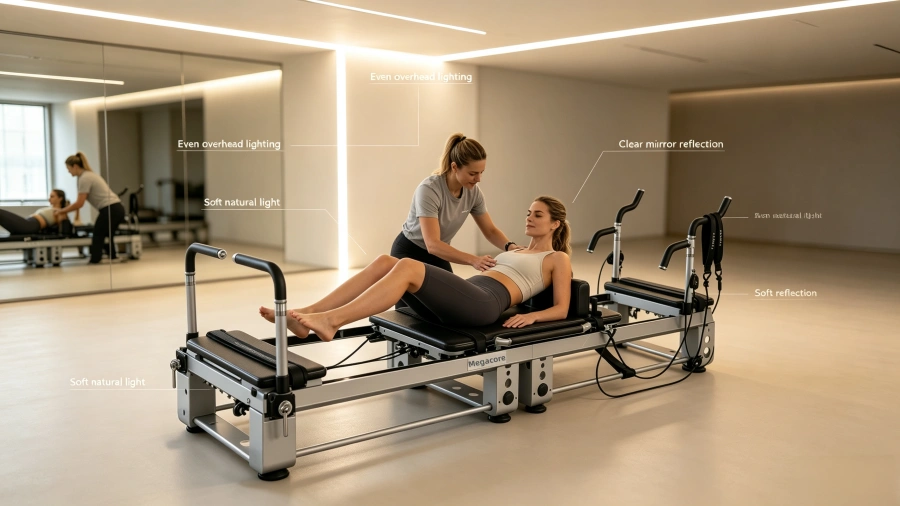
Effective pilates studio lighting divides the space into functional zones, and getting the zones right matters more than the fixtures you choose., each with its own illumination requirement. Trying to light a whole studio with one fixture type produces either dark corners or a flat, hospital-like glare—neither works for Pilates.
- Equipment zone: where reformers sit. Needs 300-500 lux at floor level so clients and instructors can see adjustment mechanisms, rope attachments, and spring settings clearly. Overhead fixtures positioned to minimize shadows on the machines.
- Movement zone: the area around each reformer for standing work and transitions. Requires broader ambient light with fewer shadows; diffuse overhead lighting with a CRI of 90+.
- Perimeter and transition zones: doorways, storage, changing areas. Illuminate at 100-200 lux for safe navigation without competing with the primary zones.
Linear LED fixtures running parallel to the reformer rails provide even illumination, which is why they anchor most pilates studio lighting plans. without creating distracting glare. Dimmer switches or zone-specific controls let instructors rebalance the room between class formats and times of day.
3. Color Temperature and Tunable Lighting
Color temperature, measured in Kelvin, is the single most impactful decision in any pilates studio lighting project. Warm light (2700-3000K) creates a relaxing, intimate atmosphere that supports the calming aspects of the practice. Cool light (4000-5000K) promotes alertness and focus, suiting higher-intensity reformer classes and morning sessions.
A tunable white system allows instructors to adjust color temperature by class type: 4000K for the morning transition into a workout, 2700K for an evening restorative session. Tunable systems typically cost 15-25% more than fixed-temperature fixtures but deliver significantly greater programming flexibility—and they let one room serve both energizing and calming class formats.
Natural light deserves a deliberate place in a pilates studio lighting plan. Adjustable blinds or curtains let instructors control daylight through the day, and north-facing windows provide the most consistent light without the harsh directional quality of east or west exposures. The goal is to use daylight when it helps and block it when it creates glare on the reformer carriage.
4. Acoustic Design: Sound and Silence
Sound management is as important as lighting in creating an effective studio environment, which is why this guide covers both—a room with harsh echo undermines even the best pilates studio lighting. Hard surfaces common in fitness spaces—concrete floors, glass walls, exposed ceilings—create reverberation that makes verbal instruction hard to understand and amplifies equipment noise. See our dedicated noise level guide for the full breakdown of reformer acoustics.
Acoustic treatment should reduce reverberation time to 0.5-0.8 seconds, the optimal range for instructional environments. Achieve this with acoustic ceiling panels, wall-mounted sound-absorbing panels, and carpet or rubber flooring that absorbs impact sound. In studios with multiple reformers running at once, acoustic zoning prevents adjacent classes from interfering with each other.
Music systems should be zoned so different areas can run at different volumes, with speakers at ceiling height for even coverage. Music volume should never exceed the instructor’s speaking voice: clients need to hear both the instructions and the sound of their own movement on the reformer.
5. Equipment Aesthetics and Placement
The reformers themselves are part of the studio environment, and good pilates studio lighting is what presents them at their best. Commercial reformers with clean lines and consistent finishes reinforce the quality message a studio communicates, and pilates studio lighting is what makes those finishes look their best. Factory-direct manufacturers offer finish options that complement the design scheme, so the equipment reads as intentional design rather than utilitarian hardware.
Placement creates visual order. Reformers arranged in parallel rows with consistent spacing produce a sense of professional calm, and carriage positions should be visible from the instructor station so one instructor can monitor the whole room. Accessory storage belongs in the design, not as an afterthought—clutter breaks the ambiance that lighting and acoustics work so hard to build.
Every commercial reformer from Megacore ships with a quality inspection certificate, a detail worth noting when you plan pilates studio lighting around new equipment. and test report—reference report number GZHL2601000020601SP for the commercial range—so the aesthetic quality of the equipment is backed by documented standards, not just appearance.
6. Air Quality and Temperature
Air quality is an overlooked component of studio ambiance that affects the client experience as much as pilates studio lighting itself. Pilates studios need higher ventilation than typical commercial spaces because clients breathe deeply throughout sessions. The recommended rate for fitness spaces is 15-20 cubic feet per minute per person, roughly double a standard office environment.
| Faktor | Recommended Range | Why It Matters |
|---|---|---|
| Ventilation rate | 15-20 CFM per person | Deep breathing needs fresh air exchange |
| Room temperature | 68-72°F | Comfort across class intensities |
| Humidity | 40-60% | Upholstery longevity and comfort |
| Airflow direction | Gentle, non-drafty | Avoid chilling clients mid-session |
Temperature control should account for the range of activity across class types: a slow classical class generates less body heat than a high-intensity reformer flow. Zone controls let different areas of the studio run at different temperatures, and a small HVAC buffer before high-intensity sessions helps clients settle in comfortably.
7. Budgeting the Lighting Investment
Studio owners often ask what pilates studio lighting actually costs, and the answer shapes most renovation budgets. The honest answer: a thoughtful plan costs less than a haphazard one, because redoing fixtures and dimmers after opening is expensive. Budget for the full system—fixtures, controls, dimmers, and professional installation—rather than fixture cost alone.
| System Type | Relative Cost | Am besten geeignet für |
|---|---|---|
| Fixed fixtures + dimmers | Baseline | Single-format studios, tight budgets |
| Zone-controlled LED | +15-25% | Multi-format schedules |
| Full tunable white | +25-40% | Premium studios, restorative + intense mix |
| Tunable + scene presets | Highest | Brand-led studios, spa-like positioning |
Scene presets are the upgrade that pays for itself in pilates studio lighting: one button switches the room from morning flow to evening restorative, which means instructors actually use the system instead of leaving everything at a middle setting. Whatever tier you choose, install dimmers everywhere and keep controls simple enough that every instructor uses them.
8. Launching and Refining Your Studio Environment
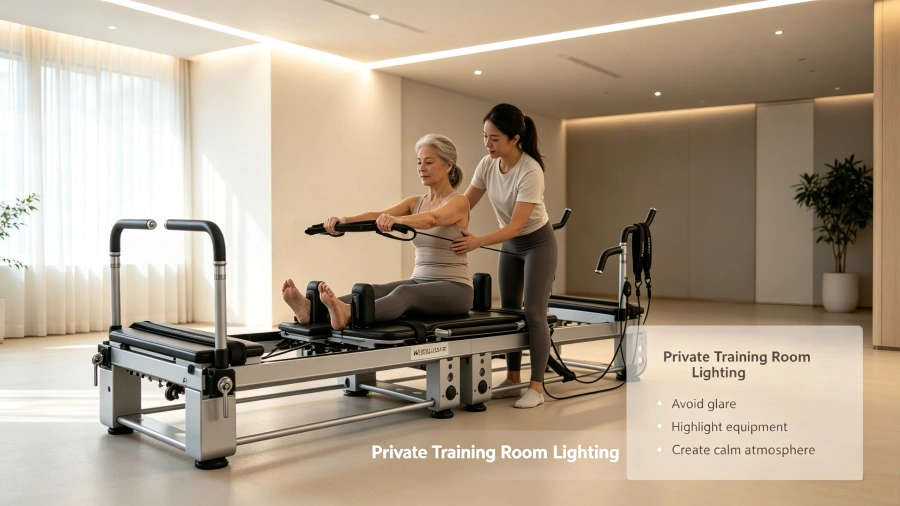
Environment design is not a one-time decision, and pilates studio lighting is the easiest part of it to refine after opening. After opening, collect feedback and observe how each room is used, then refine the lighting scenes and acoustic balance over the first few months. Small adjustments—a warmer evening scene, a slightly brighter movement zone—have outsized effects on how clients describe the studio.
Start with the fundamentals: correct illumination levels in the equipment zone, dimmers everywhere, CRI 90+ fixtures, and acoustic treatment that brings reverberation into the instructional range. From there, layer in tunable color temperature and scene presets as the studio’s schedule and budget allow.
Häufig gestellte Fragen
Q1: What color temperature is best for a Pilates studio?
It depends on the class. 4000-4500K suits morning and higher-intensity sessions; 2700-3000K suits evening and restorative classes, which is why tunable systems dominate pilates studio lighting recommendations. A tunable white system lets one room do both, which is why it is the most common recommendation for pilates studio lighting.
Q2: How many lux does a reformer studio need?
The equipment zone of a well-designed pilates studio lighting layout needs 300-500 lux at floor level for safe setup and clear visibility of springs and ropes. Movement zones can run lower with diffuse light, and perimeter zones need 100-200 lux for safe navigation.
Q3: Do I need dimmers in a Pilates studio?
Yes. Dimmers are the highest-value lighting investment in a studio because they let instructors adapt the room to class type and time of day. Without them, the lighting is fixed at one mood and the ambiance cannot flex.
Q4: How do I reduce echo in my studio?
Target a reverberation time of 0.5-0.8 seconds using acoustic ceiling panels, wall absorbers, and carpet or rubber flooring. This range keeps verbal instruction clear without making the room feel dead.
Q5: Is natural light good for a reformer studio?
Yes, with control. North-facing windows give consistent, glare-free light. East or west exposures need adjustable blinds so instructors can manage glare on the reformer carriage during morning or afternoon sessions.
Q6: What is CRI and why does it matter?
CRI measures how accurately a light renders colors. A CRI of 90+ lets clients see their body position and the equipment clearly, and makes the studio look its best. Lower-CRI fixtures cast a flat, unflattering light that works against the ambiance you are building.
Schlussfolgerung
Pilates studio lighting and ambiance are business tools as much as design choices, and they repay attention quickly. They shape client satisfaction, justify premium pricing, and build the distinctive identity that keeps clients returning. The fundamentals—correct lux levels, dimmers, high-CRI fixtures, acoustic treatment—are affordable and achievable in any space.
Start with the lighting zones and color temperature table in this guide, budget for the full system rather than fixtures alone, and refine the scenes with real feedback after opening. The result is a studio that feels intentional from the moment a client walks in.
Discuss Your Studio Fit-Out With Megacore
Verwandte Anleitungen
- Pilates Reformer Noise Levels Guide
- How to Start a Pilates Studio in 2026
- Pilates Reformer Cleaning Guide
- Leitfaden für Bodenbeläge in Pilates-Studios
Industry references: Pilates Method Alliance industry standards, OSHA sanitation standards, and CDC environmental infection control.