
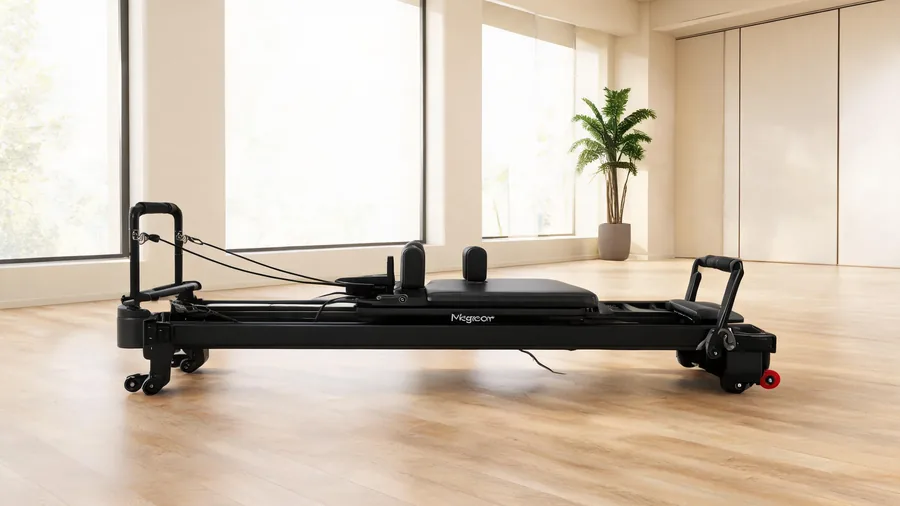
Una guía completa de tallas de reformer de Pilates es esencial para los propietarios de estudios que quieren elegir equipos que encajen en su espacio, atiendan a clientes diversos y maximicen su inversión en equipamiento a largo plazo. Elegir el tamaño equivocado de reformer puede provocar problemas de espacio, experiencias incómodas para los clientes y opciones de ejercicio limitadas. Esta guía abarca las dimensiones estándar del reformer de Pilates, incluidos la longitud del bastidor, el ancho del carro, la altura y la capacidad de peso, para ayudarte a tomar decisiones informadas para tu estudio.
Por qué las tallas importan en los estudios comerciales
A complete Pilates reformer sizing guide starts with understanding why dimensions matter in the first place. In a commercial studio setting, reformers must accommodate clients of varying heights, weights, and physical abilities. An incorrectly sized reformer leads to client discomfort, reduced exercise effectiveness, and potentially lower class retention rates. Studies show that clients who feel physically uncomfortable on equipment are 40% less likely to renew memberships. Investing time in understanding your Pilates reformer sizing guide before purchasing equipment directly impacts your studio’s financial performance and client satisfaction scores.
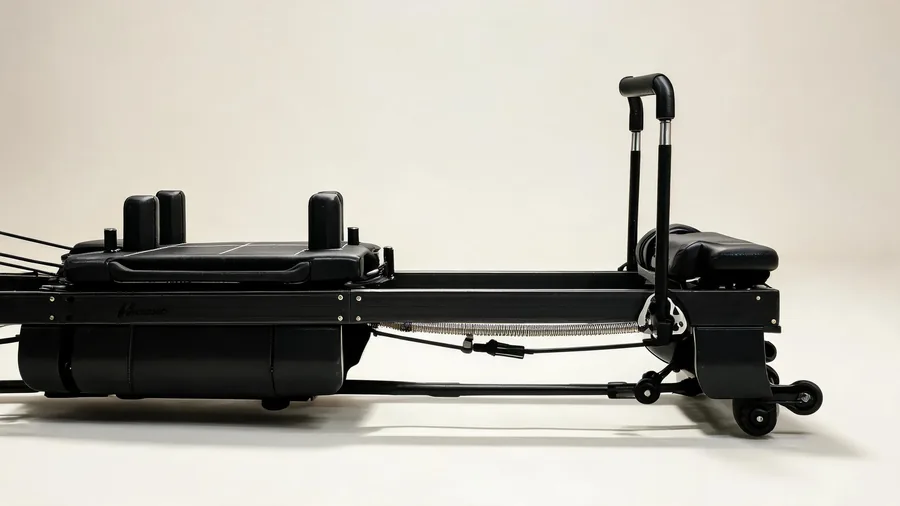
Commercial studios with multiple reformer sizes report higher client satisfaction because they can match equipment to individual needs. For example, a taller client performing leg presses on a reformer that is too short will not achieve full range of motion, reducing the exercise’s effectiveness. A Pilates reformer sizing guide helps studio owners choose the right mix of sizes for their client demographic.
Dimensiones estándar del reformer de Pilates: tu punto de partida en la guía de tallas
Antes de entrar en consideraciones específicas de tallas, conviene entender las medidas estándar de la guía de tallas de reformer de Pilates. Los reformers de grado comercial que se describen en esta guía suelen medir de 90 a 96 pulgadas (228-244 cm) de largo, de 24 a 28 pulgadas (61-71 cm) de ancho y de 12 a 16 pulgadas (30-41 cm) de alto en la plataforma del carro. El peso total de un reformer comercial con bastidor de acero oscila entre 70 y 90 kg, con capacidades de peso de 250 a 350 kg. Los reformers domésticos son por lo general más cortos (80-86 pulgadas), más estrechos (22-24 pulgadas) y tienen menores capacidades de peso (120-200 kg). Estas diferencias influyen directamente en la planificación del espacio del estudio, la idoneidad para los clientes y la longevidad del equipo.
Longitud del bastidor: clave para clientes altos según tu guía de tallas de reformer de Pilates
La longitud del bastidor es la dimensión más importante de cualquier guía de tallas de reformer de Pilates. Un reformer demasiado corto para un cliente limita la extensión completa durante las prensas de piernas, las zancadas y los ejercicios de estiramiento. Según cualquier guía completa de tallas de reformer de Pilates, la longitud del bastidor debería ser la primera dimensión que revises al evaluar equipos para tu estudio. Los reformers comerciales con bastidores de 92-96 pulgadas admiten clientes de hasta 6’6” (198 cm) con el rango completo de movimiento. Los bastidores estándar de 86-90 pulgadas atienden cómodamente a clientes de hasta 6’2” (188 cm). Para los estudios que atienden a poblaciones diversas, invertir en al menos unos cuantos reformers de bastidor largo es esencial para ofrecer un equipamiento inclusivo. Los reformers comerciales de Megacore incorporan bastidores de 92 pulgadas de serie, con opciones ampliadas de 96 pulgadas disponibles para los estudios que atienden con regularidad a clientes altos.
Ancho del carro y capacidad de peso en tu guía de tallas de reformer de Pilates
El ancho del carro es otro factor esencial en cualquier guía de tallas de reformer de Pilates. Afecta al confort del cliente y a la variedad de ejercicios de un modo que repercute directamente en las puntuaciones de satisfacción del estudio. Los carros estándar miden entre 18 y 22 pulgadas de ancho. Los carros más estrechos (18 pulgadas) ofrecen una sensación más compacta, pero pueden resultar incómodos para clientes corpulentos durante los ejercicios en decúbito supino. Los carros más anchos (22 pulgadas) se adaptan cómodamente a todos los tipos de cuerpo, pero requieren mayor ancho de bastidor. La capacidad de peso es igual de importante en tu guía de tallas de reformer de Pilates: los reformers comerciales deberían soportar un mínimo de 250 kg (550 lb) para atender a todos los clientes con seguridad. Los reformers de Megacore utilizan bastidores de acero Q235 probados hasta 350 kg, muy por encima del mínimo comercial.
Portabilidad y almacenamiento en tu guía de tallas de reformer de Pilates
Para los estudios que necesitan reconfigurar el espacio entre distintos tipos de clase, la portabilidad del reformer es una consideración que forma parte de toda guía completa de tallas de reformer de Pilates. Los reformers plegables reducen la huella de almacenamiento entre un 40% y un 60% cuando no se usan, con unas dimensiones plegadas que suelen medir de 36 a 48 pulgadas de alto. Los reformers con ruedas y ruedas bloqueables permiten reubicarlos entre salas con una sola persona. Las estanterías de almacenamiento de pared alojan de 4 a 6 reformers en vertical, ahorrando un valioso espacio en el suelo.
El peso también es un factor en tu guía de tallas de reformer de Pilates: los reformers comerciales de acero pesan entre 70 y 90 kg y requieren dos personas para moverlos. Los reformers de aluminio como el Megacore K20 pesan 55 kg y pueden reubicarse por una sola persona con kits de ruedas. Para los estudios con almacenamiento limitado o espacios polivalentes, estos factores de portabilidad deberían incluirse en la evaluación de tu guía de tallas de reformer de Pilates.
Altura del reformer y accesibilidad
La altura del reformer desde el suelo hasta la plataforma del carro suele oscilar entre 10 y 16 pulgadas. Tu guía de tallas de reformer de Pilates debería tener en cuenta cómo afecta la altura a los distintos perfiles de cliente para un diseño de estudio inclusivo. Las alturas más bajas (10-12 pulgadas) facilitan subir y bajar a los clientes mayores, los pacientes en rehabilitación y las personas de menor estatura. Las plataformas más altas (14-16 pulgadas) ofrecen un mejor punto de apoyo a los instructores que demuestran ejercicios y son las preferidas en entornos de entrenamiento atlético avanzado. Una guía completa de tallas de reformer de Pilates incluye las consideraciones de altura como un factor de accesibilidad para un diseño de estudio inclusivo. Muchos reformers comerciales ofrecen opciones de altura ajustable o bloques elevadores para adaptarse a los distintos perfiles de cliente.
Opciones de tallas de Megacore para cada estudio
Megacore ofrece múltiples configuraciones de tallas para adaptarse a las distintas necesidades de cada estudio. El modelo T59 incorpora un bastidor de 92 pulgadas con un ancho de carro de 22 pulgadas y una altura de plataforma de 14 pulgadas, con una capacidad de peso de 350 kg. El reformer de aluminio K20 ofrece una opción de bastidor más ligera, de 55 kg, con dimensiones de longitud similares, ideal para los estudios que necesitan desplazar el equipo entre salas. El modelo comercial compacto C26 ofrece un bastidor de 88 pulgadas para estudios con planos de planta ajustados. Cada modelo de Megacore incluye especificaciones detalladas de dimensiones que sirven como referencia completa de la guía de tallas de reformer de Pilates para esa unidad concreta. Todos los modelos de Megacore incluyen las especificaciones completas de la guía de tallas de reformer de Pilates en su página de producto, junto con las dimensiones de sala recomendadas para la planificación del espacio del estudio. Megacore también ofrece tablas comparativas de dimensiones que muestran las medidas exactas de todos los modelos en paralelo, lo que facilita comparar opciones antes de tomar una decisión de compra.
Planificación del espacio del estudio: cómo aplicar tu guía de tallas de reformer de Pilates
Además de las dimensiones de cada reformer, tu guía de tallas de reformer de Pilates debería incluir consideraciones sobre la distribución de la sala. Cada puesto de reformer requiere aproximadamente entre 8 y 12 pies de espacio lineal según las directrices estándar de la guía de tallas de reformer de Pilates (longitud del reformer más la zona de acceso del instructor). Una separación lateral de 3-4 pies entre reformers permite el movimiento seguro del cliente y las indicaciones del instructor. La altura del techo debe permitir los ejercicios con salto: se recomienda un mínimo de 8 pies, y de 9 a 10 pies es lo ideal para el trabajo de brazos por encima de la cabeza. Estos requisitos de espacio influyen directamente en cuántos reformers puede alojar tu estudio y deberían tenerse en cuenta en el proceso de decisión de tu guía de tallas de reformer de Pilates.
Cómo medir el espacio de tu estudio usando la guía de tallas de reformer de Pilates
Antes de realizar un pedido de reformers, utiliza tu guía de tallas de reformer de Pilates para medir correctamente el espacio de tu estudio. Empieza midiendo la superficie total del suelo y luego resta el espacio necesario para las zonas de demostración del instructor, las áreas de cambio de los clientes y el almacenamiento del equipo. El espacio útil restante determina cuántos reformers puede alojar tu estudio.
Para una planificación precisa del estudio, crea un plano de planta con las dimensiones exactas del reformer, incluida la extensión de la barra de pies (que añade de 6 a 12 pulgadas a la longitud total durante el uso). Ten en cuenta la distancia de recorrido del carro: el carro se desplaza aproximadamente entre 36 y 48 pulgadas a lo largo de los raíles, por lo que necesita espacio libre en ambos extremos de cada reformer. Considera también las rutas de circulación entre las filas de reformers: un mínimo de 36 pulgadas es lo estándar, y se recomiendan 48 pulgadas para los estudios con mucha afluencia. Una guía de tallas de reformer de Pilates te ayuda a optimizar tu plano de planta para lograr la máxima densidad de equipos manteniendo el confort y la seguridad del cliente.
Comparativa de tallas entre fabricantes de reformers
No todos los fabricantes de reformers utilizan las mismas dimensiones, por lo que una guía estándar de tallas de reformer de Pilates es esencial para comparar opciones. Algunas marcas miden la longitud del bastidor incluyendo la barra de pies, mientras que otras solo miden la longitud del raíl. El ancho del carro puede variar entre 2 y 4 pulgadas según el fabricante, lo que afecta notablemente al confort del cliente. Diferencias de 2-3 pulgadas en la altura de la plataforma pueden marcar la diferencia en la accesibilidad para determinados perfiles de cliente.
Cuando compares fabricantes con tu guía de tallas de reformer de Pilates, solicita siempre las siguientes medidas: longitud total del bastidor (incluida la barra de pies), longitud del raíl (distancia de recorrido del carro), ancho y profundidad del carro, altura de la plataforma desde el suelo, peso total de la máquina y altura de techo recomendada. Megacore proporciona todas estas especificaciones en un formato estandarizado, lo que facilita las comparaciones directas a los propietarios de estudios. Los informes de control de calidad (informe GZHL2601000020601SP) están disponibles para verificar las dimensiones y la calidad de fabricación antes de la compra.
Tallas personalizadas para pedidos OEM y de marca blanca
Para las cadenas de estudios y las marcas de fitness que encargan equipos personalizados, la guía de tallas de reformer de Pilates puede adaptarse a tus requisitos específicos. Megacore ofrece personalización OEM que incluye longitudes de bastidor ampliadas de hasta 98 pulgadas, anchos de carro a medida, alturas de plataforma modificadas y acabados de color con tu marca. Los MOQ de tallas personalizadas suelen partir de 10 unidades para modificaciones del bastidor. Para los estudios más pequeños que solo necesitan de 2 a 4 unidades personalizadas, Megacore ofrece opciones semipersonalizadas con plazos de entrega más cortos. Tu guía de tallas de reformer de Pilates debería incluir tanto las vías de tallas estándar como las personalizadas para darte flexibilidad en la planificación del equipamiento. Los clientes OEM reciben planos técnicos completos y especificaciones de dimensiones de su equipo de marca, lo que garantiza una planificación precisa del estudio en todas las ubicaciones.
Preguntas frecuentes
P: ¿Cuál es la longitud estándar de un reformer de Pilates?
R: Los reformers comerciales estándar miden 90-96 pulgadas (228-244 cm). Los reformers domésticos suelen medir 80-86 pulgadas (203-218 cm). Tu guía de tallas de reformer de Pilates debería especificar la longitud exacta del modelo que estás considerando.
P: ¿Cuánto espacio necesito por cada reformer en mi estudio?
R: Calcula entre 8 y 12 pies de espacio lineal y de 3 a 4 pies de separación lateral por cada puesto de reformer. Esto incluye espacio para el acceso del instructor y el movimiento del cliente.
P: ¿Qué capacidad de peso debería tener un reformer comercial?
R: Un mínimo de 250 kg (550 lb). Los reformers comerciales de Megacore están probados hasta 350 kg, con márgenes de seguridad para todos los tipos de cuerpo de los clientes.

P: ¿Puedo conseguir reformers con dimensiones personalizadas para mi estudio?
R: Sí, Megacore ofrece tallas personalizadas OEM que incluyen bastidores ampliados, carros más anchos y alturas modificadas, con pedidos mínimos de 10 unidades.
P: ¿Afecta la altura del reformer a la experiencia del cliente?
R: Sí. Las plataformas más bajas (10-12 pulgadas) son más accesibles para todos los clientes. Las plataformas más altas (14-16 pulgadas) ofrecen un mejor punto de apoyo al instructor. Elige en función del perfil principal de tus clientes.
P: ¿Cuál es la diferencia entre las dimensiones de los reformers comerciales y los domésticos?
R: Los reformers comerciales son más largos (90-96 pulgadas), más anchos (24-28 pulgadas) y más pesados (70-90 kg) que los modelos domésticos (80-86 pulgadas, 22-24 pulgadas, 25-40 kg). Tu guía de tallas de reformer de Pilates debería especificar las dimensiones comerciales para uso en estudio.
¿Listo para encontrar el tamaño adecuado para tu estudio?
Elegir la guía de tallas de reformer de Pilates adecuada es el primer paso para crear un estudio de éxito. Megacore Pilates ofrece múltiples opciones de tallas con 3 años de garantía, precios directos de fábrica y dimensiones personalizables para pedidos OEM y de marca blanca. Ponte en contacto con nuestro equipo para hablar de los requisitos de espacio específicos de tu estudio y solicitar un presupuesto con las especificaciones dimensionales exactas.
Conclusión
Dominar la guía de tallas de reformer de Pilates es esencial para los propietarios de estudios que planifican espacios nuevos o amplían instalaciones existentes. Desde la longitud del bastidor para clientes altos hasta el ancho del carro para un acceso inclusivo, todas las dimensiones afectan a la experiencia del cliente y a la eficiencia del estudio. Esta guía de tallas de reformer de Pilates ha abarcado las medidas clave que necesitas para tomar decisiones informadas sobre el equipamiento. Los reformers de grado comercial con especificaciones verificadas y opciones de personalización ofrecen la flexibilidad que necesitan los estudios profesionales. Ponte en contacto hoy con Megacore para hablar de tus requisitos de tallas.
Guías relacionadas
Guía de capacidad de peso del reformer de Pilates
Guía de tensión de los muelles del reformer de Pilates
Guía de cuerdas y correas del reformer de Pilates
Guía de compra de reformers de Pilates comerciales