

Hotel fitness centers are no longer an afterthought in the guest experience. Wellness amenities now drive booking decisions, and a pilates reformer for hotel fitness centers is one of the most effective ways to differentiate a property. Reformers deliver visible value: they photograph well, serve both fitness travelers and spa guests, and require less space than an equivalent row of cardio machines. This guide covers the equipment selection process for hospitality buyers—durability, space, aesthetics, guest safety, and the procurement steps that work for hotels and resort groups.
1. Why Hotels Are Adding Reformers
The hospitality industry has shifted from offering a token gym to building genuine wellness programs, and equipment selection for a pilates reformer for hotel fitness centers is a core part of that shift. A pilates reformer for hotel fitness centers fits that strategy better than most equipment purchases because it serves three audiences at once: fitness travelers who train regularly, spa guests looking for low-impact movement, and business travelers who want a short effective session between meetings.
A pilates reformer for hotel fitness centers also earns its footprint. A single reformer occupies roughly the same floor area as two treadmills but delivers a full-body workout that guests perceive as premium. For properties marketing themselves as wellness destinations, a dedicated reformer suite—even a two-machine alcove—becomes a photo-worthy amenity that appears in reviews and social media.
| Guest Type | Usage Pattern | Reformer Value |
|---|---|---|
| Fitness traveler | Daily training, 45-60 min | Full-body strength and mobility |
| Spa guest | 1-2 sessions per stay | Low-impact, recovery-focused work |
| Business traveler | 20-30 min quick sessions | Efficient workout, minimal setup |
| Wellness retreat guest | Instructor-led group sessions | Signature amenity, class revenue |
The table above is the starting point for any hospitality equipment proposal: match the reformer count and configuration to the guest mix, not to a generic gym template. A boutique wellness hotel and a 400-room convention property need different setups, and the selection process should reflect that.
2. Durability Requirements for Hotel Use
Hotel fitness equipment faces a usage pattern unlike any other environment: irregular but intense use by guests of varying skill levels, minimal supervision, and maintenance schedules that depend on housekeeping and facilities staff rather than a dedicated fitness team. A pilates reformer for hotel fitness centers must therefore be commercial-grade by construction, not by label.
When you select a pilates reformer for hotel fitness centers, specify all-steel frames, sealed bearings, and reinforced carriages rated for 8-12 sessions per day. Springs should be enclosed or shielded so guests cannot access tension mechanisms. Upholstery must be commercial-grade vinyl that resists punctures, stains, and the disinfectant chemicals used in hotel cleaning protocols. Replaceable parts—springs, ropes, straps—should use standard sizes that facilities staff can source without specialized knowledge.
Every commercial reformer from Megacore ships with a quality inspection certificate, which is a standard part of any pilates reformer for hotel fitness centers proposal. and test report—reference report number GZHL2601000020601SP for the commercial range—so hotel procurement teams have documented assurance of build quality rather than marketing claims. This documentation also simplifies approvals from corporate purchasing departments.
3. Space Planning and Layout Options
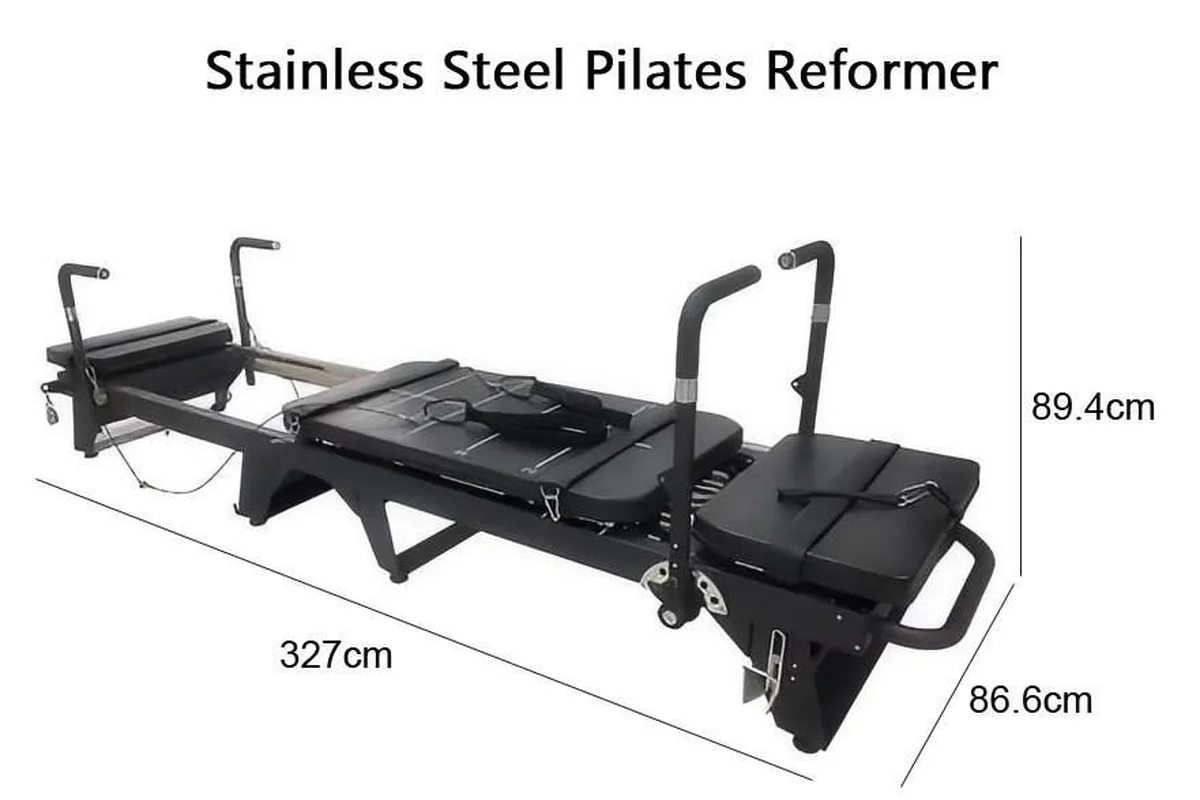
Hotels typically allocate 200-500 square feet to fitness equipment, and reformers compete for that space against cardio machines, free weights, and functional training zones. Space planning for a pilates reformer for hotel fitness centers starts with the working envelope: each reformer needs roughly 6-8 feet of clearance in front for carriage travel, plus a cleaning path around the machine.
| Configuration | Space Needed | Best Fit |
|---|---|---|
| Single reformer alcove | ~60 sq ft | Boutique hotels, limited space |
| Two-reformer corner | ~120 sq ft | Mid-size properties |
| Dedicated reformer suite | 200+ sq ft | Wellness destinations, resorts |
| Foldable model (stored) | Under 24 in depth | Multi-use rooms, flexible layouts |
Foldable reformers are an excellent choice for hotels with multi-purpose fitness rooms, though they change the calculus of a pilates reformer for hotel fitness centers purchase. Units that fold vertically to under 24 inches deep allow the space to host yoga, stretching, or meetings when reformers are not in use, which is a major advantage in multi-function rooms. For properties with a dedicated wellness area, permanent floor-standing commercial reformers offer greater stability and a more substantial guest experience.
4. Aesthetic Integration and Noise Control
Appearance matters more in a hotel than in a dedicated studio. The fitness center is part of the guest’s impression of the property, and equipment that clashes with the design language undermines the premium feel. A pilates reformer for hotel fitness centers should offer finish options that complement the property’s palette—upholstery colors, frame finishes, and branding opportunities that turn equipment into a design element.
Noise control is equally critical when choosing a pilates reformer for hotel fitness centers. Hotel fitness centers are frequently located adjacent to guest rooms or meeting spaces, and a noisy reformer creates complaints that outweigh its wellness value. Specify quiet bearing systems, rubber carriage stops, and damped spring housings. Ask the manufacturer for the decibel profile of the machine under load before committing to a model.
Branded equipment—the hotel logo on the frame, coordinated upholstery—transforms reformers from generic gym hardware into a visible statement of the property’s wellness commitment. Some properties extend this further by placing a reformer in a spa treatment area as a complimentary amenity for spa guests.
5. Guest Safety and Self-Service Use
Most hotel fitness centers operate without dedicated Pilates instructors, so a pilates reformer for hotel fitness centers must be safe for unsupervised guest use by design. for unsupervised guest use. Reformers are inherently lower-risk than free weights because resistance is spring-based with a controlled range of motion, but the equipment and its instructions still need to be designed for self-service.
- Multilingual instructional materials—laminated quick-start guides or QR codes linking to video tutorials.
- Color-coded spring charts showing resistance levels and recommended starting configurations.
- Clear signage on basic posture cues and common mistakes.
- Simple spring-change mechanisms that guests can operate without tools.
- Liability coverage and equipment waivers reviewed by hotel legal counsel.
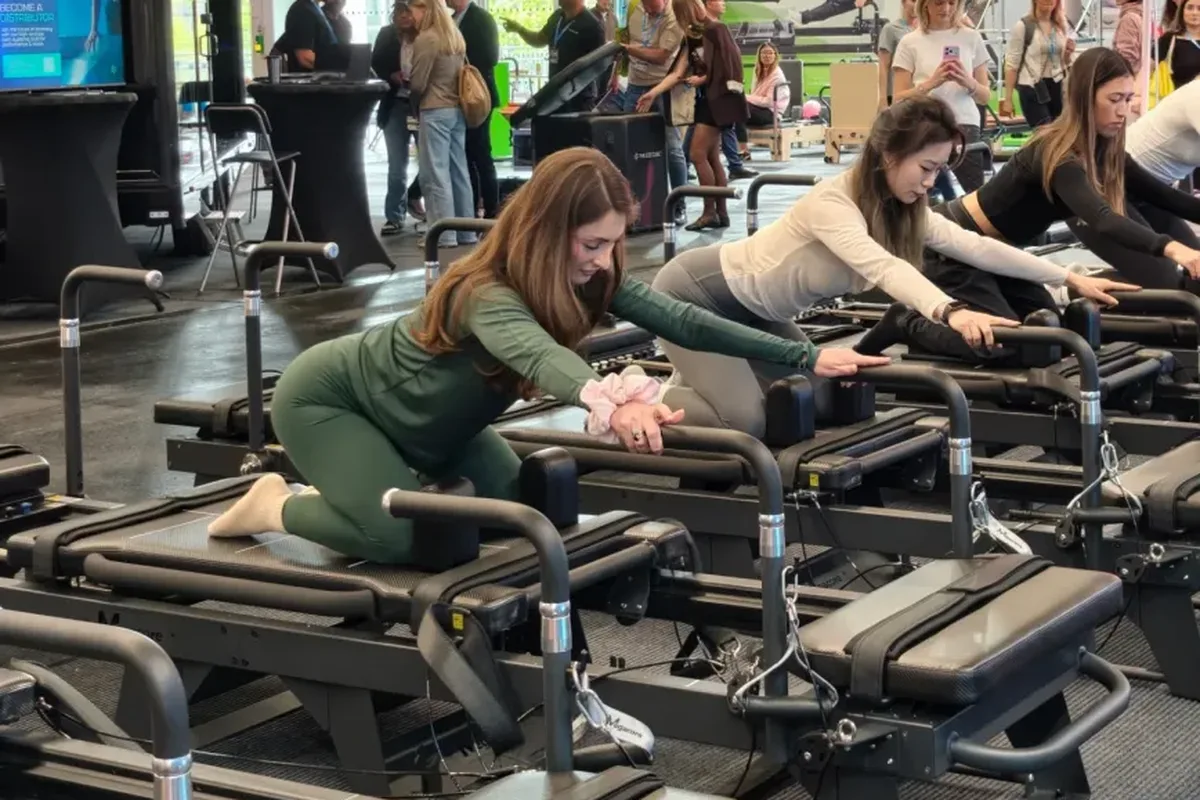
For hotels that do offer instructor-led sessions, standardize spring configurations across the fleet. Unified setups let a single instructor manage multiple guests simultaneously without adjusting each machine differently, and they simplify both training and maintenance.
6. Staffing, Training, and Programming
The level of staff supervision determines how much programming a property can offer around its reformers. Properties with a fitness attendant can offer guided orientation sessions; properties without one rely on self-service content. Either way, the equipment should come with content support: QR-linked video tutorials, printable session cards, and programming ideas for 10-minute, 20-minute, and 30-minute formats.
For resort properties with a spa or wellness director, a pilates reformer for hotel fitness centers unlocks revenue-generating programming: private sessions for guests, small-group classes, and packages bundled with spa treatments. A 30-minute private session at resort rates can generate more revenue per square foot than any other fitness amenity in the building, which is why wellness directors increasingly list reformers in their capital budgets first. A pilates reformer for hotel fitness centers can pay for itself through programming revenue alone, before accounting for its effect on booking decisions and guest satisfaction scores.
7. Procurement for Hotels and Multi-Property Groups
Hotel purchasing decisions involve multiple stakeholders: the general manager, facilities director, spa or fitness manager, and sometimes corporate procurement. A successful equipment proposal addresses each stakeholder’s concern with documented answers.
- Delivery access: standard freight elevators, door widths, and ground-floor access requirements.
- Assembly time: typically 30-45 minutes per reformer for professional installers.
- Electrical requirements: most reformers are fully manual and need no electrical connection.
- Warranty service: 3-year warranty on frame and machine, with clear claims procedures.
- Consistent specifications: identical models across properties for simplified parts and training.
- Consolidated shipping: multi-property orders with coordinated delivery schedules.
Multi-property hotel groups benefit from manufacturer programs that standardize pilates reformer for hotel fitness centers specifications across the portfolio, consolidate shipping across properties, and provide a single point of contact for maintenance coordination. This consistency is what keeps a 10-property portfolio running on one parts list and one training standard.
8. Maintenance and Lifecycle Planning
A pilates reformer for hotel fitness centers is a long-term asset, and its lifecycle cost depends on the maintenance discipline behind it. Hotels should schedule quarterly professional maintenance: bearing lubrication, spring tension checks, rope inspection, and frame integrity assessment. Daily staff checks cover visual inspection of springs, ropes, and upholstery for visible wear, with a logbook tracking usage and service intervals.
Plan the lifecycle from day one: replacement spring sets and rope kits stocked at the property or available on fast reorder, upholstery replacement options at the 3-5 year mark, and a documented service history that protects the warranty. Hotels that treat reformers as capital equipment with a maintenance schedule get 10+ years of reliable service; hotels that ignore maintenance replace machines prematurely.
Gyakran feltett kérdések
Q1: How many reformers should a hotel purchase?
Most properties start with 2-4 reformers depending on size and guest demographics. Hotels with 200+ rooms, a spa, or a wellness positioning should plan for 4-6 units. Boutique hotels focused on wellness travelers often achieve higher utilization with fewer machines.
Q2: Can guests use reformers without supervision?
Yes, with proper instructional materials. A pilates reformer for hotel fitness centers is safer than free weights because resistance is spring-based with controlled range of motion, and guests cannot drop a loaded bar or misjudge a free-weight lift. Provide QR-linked video tutorials, clear signage, and recommended starting spring configurations, and have legal counsel review liability coverage.
Q3: What maintenance do hotel reformers need?
Quarterly professional maintenance—bearing lubrication, spring tension checks, rope inspection, frame assessment—plus daily visual checks by staff. A logbook system tracks usage and keeps the warranty valid.
Q4: Are foldable reformers suitable for hotels?
Yes, especially for multi-use fitness rooms, where a pilates reformer for hotel fitness centers may share space with other activities. Foldable models store upright in under 24 inches of depth, letting the space host other activities. Permanent floor-standing models are better for dedicated wellness areas where stability and guest experience come first.
Q5: Can hotels brand their reformers?
Yes. Manufacturers offer logo application on the frame, coordinated upholstery colors, and branded packaging. Customization services carry quoted setup costs; a branded machine turns equipment into a design element and a marketing asset.
Q6: What warranty comes with hotel-grade reformers?
Commercial reformers from Megacore carry a 3-year warranty on frame and machine, backed by a quality inspection certificate and test report with each unit. Warranty service procedures are documented for hotel facilities teams.
Következtetés
Adding a pilates reformer for hotel fitness centers is a decision that pays off across the guest journey: it differentiates the property, supports wellness programming, and generates content and reviews. The selection process comes down to commercial-grade durability, space-efficient layouts, aesthetic integration, and guest-safe self-service design.
Factory-direct procurement gives hotels consistent specifications across properties, documented quality assurance, and a single point of contact for service. Start with a two-machine alcove and a clear maintenance plan, measure guest usage and feedback, and scale the wellness offering as the property’s reputation grows.
Discuss Your Hotel Wellness Project With Megacore
Kapcsolódó útmutatók
- Pilates Reformer for Corporate Wellness
- Pilates Reformer for CrossFit and Functional Fitness Gyms
- A Pilates Reformer tisztítási útmutatója
- Commercial Pilates Reformers from China
Ipari referenciák: A Pilates Method Alliance iparági szabványai, OSHA sanitation standards, és CDC environmental infection control.