
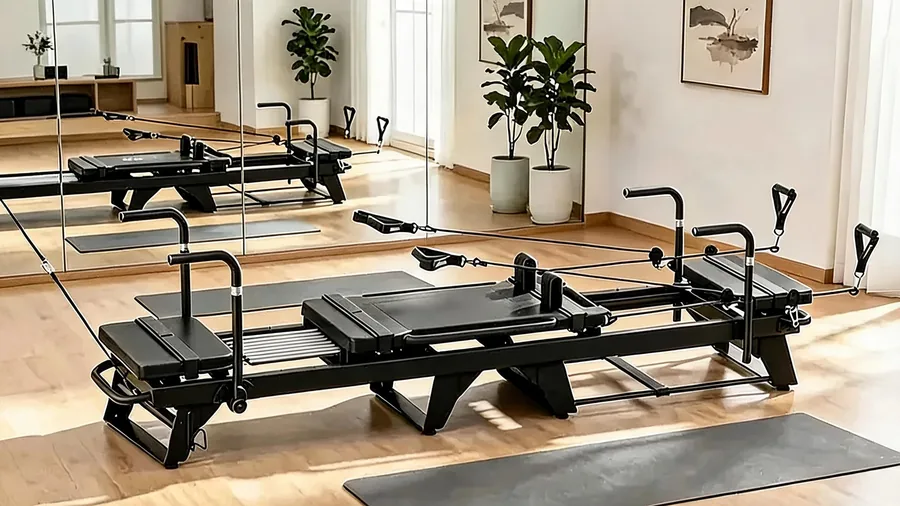
The megacore c26 vs k20 question is the decision many studio owners face when outfitting a commercial Pilates space. Both reformers are professional-grade, and the megacore c26 vs k20 choice comes down to studio priorities: the C26 is built for heavy-duty, high-frequency use, while the K20 favors lighter weight and core-focused training. This guide compares the two models across the factors that actually matter for a studio purchase.
1. Megacore C26 vs K20: Product Overview
C26: The Commercial Workhorse
A Megacore C26 is a stainless steel commercial reformer designed for high-frequency studio use. Its frame is engineered for durability and stability that exceed typical home machines, which is why studios, fitness centers, and rehabilitation facilities choose it for daily rotation use.
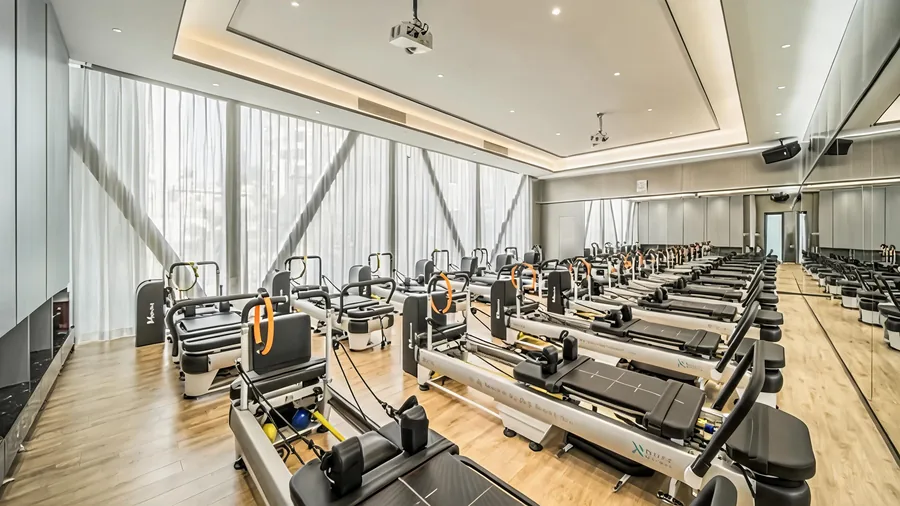
- Stainless steel frame for heavy-duty use
- Adjustable spring resistance for varied exercises
- Smooth carriage with precision roller bearings
- Optional tower and accessory upgrades
- Suitable from basic to advanced movements
K20: The Core-Focused All-Rounder
A Megacore K20 features an aluminum alloy frame that is strong yet lightweight. It focuses on core strengthening, movement control, and full-body coordination, making it a strong fit for group classes and personal training sessions.
- Aluminum alloy frame, strong and lightweight
- Smooth, low-impact movement across exercises
- Adjustable spring resistance for all levels
- Excellent for core work, flexibility, and rehabilitation
- Ideal for studio group classes and one-on-one sessions
2. Key Differences in the Megacore C26 vs K20
The practical difference in the megacore c26 vs k20 comparison comes down to usage intensity. Studios running back-to-back classes with heavy daily rotation get more long-term value from the C26’s stainless steel frame. Studios that prioritize core-focused programming, lighter equipment movement, and mixed-level classes often find the K20 the better match.
3. Stability and Load Capacity
Stability under load is the first thing clients notice on a reformer. The C26’s stainless steel frame and heavier construction absorb high-impact work with minimal vibration, which matters in classes with jumping or fast transitions. The K20’s aluminum alloy frame is stable for standard studio work but is tuned more for smoothness than maximum rigidity.
Both models are built to commercial standards with load-rated frames. The C26 carries the higher rating for heavy-duty scenarios; the K20 is rated for the demands of regular group classes. For a studio that expects very high daily volume, the C26 is the safer long-term choice.
4. Training Range and Purpose
The training focus differs noticeably. The C26 supports the full range of Pilates work, from foundation moves to advanced, high-resistance exercises, including optional tower attachments for standing work. The K20 is optimized for core strengthening, flexibility, and rehabilitation-style programming, with a lighter feel that suits slower, controlled movement.
If your schedule is dominated by classic full-body reformer classes, the megacore c26 vs k20 answer leans toward the C26, the C26’s range and resistance depth serve you better. If your brand is built on core-focused sessions, pre/postnatal work, or rehab-oriented classes, the K20’s character matches that positioning.
5. Space and Studio Layout
Space planning differs between the two. The C26 is a heavier, full-size machine that stays in place once positioned. The K20’s lighter frame makes rearrangement easier, which suits studios that reconfigure rooms for different class formats or share space with other disciplines like barre and yoga.
For a dedicated reformer room, the C26’s permanent placement is an advantage. For a multi-purpose studio that converts space between formats, the K20’s mobility wins.
6. Megacore C26 vs K20: Which One Fits Your Studio?
Use this quick decision guide:
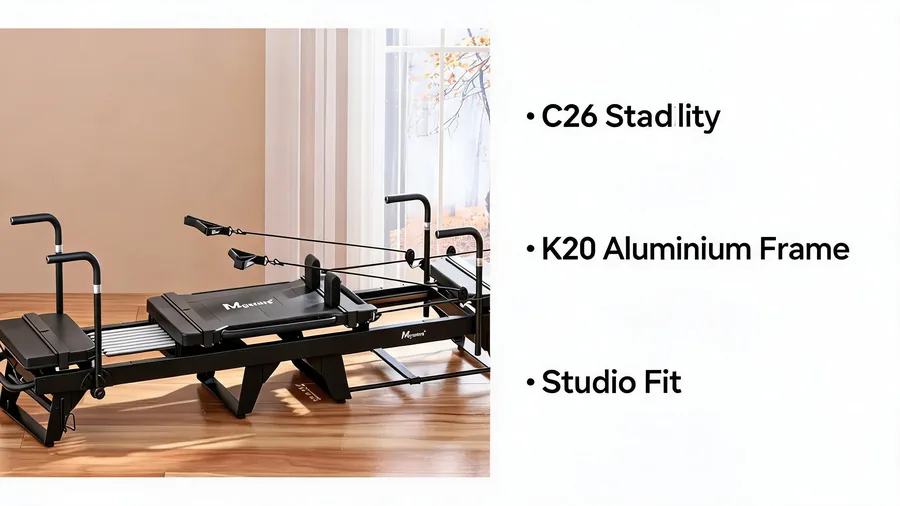
- Choose the C26 if: you run high-volume back-to-back classes, expect years of heavy daily use, or want the maximum stability and load rating.
- Choose the K20 if: your brand centers on core and rehab work, you reconfigure your space often, or you want a lighter machine that still meets commercial standards.
- Mixed fleets: many studios run both, using C26 machines as the core fleet and K20 units for specialty classes.
Whatever you choose, buy from a factory-direct manufacturer that documents quality. Megacore supports every commercial unit with a 3-year warranty on frame and machine, plus a quality inspection certificate and test report (report number GZHL2601000020601SP).
7. Frequently Asked Questions
Q1: What is the main difference between the C26 and K20?
The C26 is a stainless steel heavy-duty reformer for high-frequency commercial use; the K20 is a lighter aluminum alloy reformer focused on core strengthening and rehab-style training.
Q2: Which model is better for a 10-reformer studio?
For a studio running consistent group classes on all machines, the C26 is the stronger choice due to its durability and stability under high daily volume.
Q3: Can I upgrade from K20 to C26 components later?
No. The two models use different frames and component systems, so upgrades are not interchangeable between them. Choose based on your long-term programming needs.
Q4: What warranty comes with each model?
Both carry a 3-year warranty on frame and machine, with a quality inspection certificate and test report (report number GZHL2601000020601SP) per unit.
Q5: Which is better for rehabilitation work?
The K20’s lighter, smoother movement profile suits rehabilitation and core-focused work; the C26 suits general full-body and high-resistance training.
8. Conclusion
The megacore c26 vs k20 decision is not about which is better overall, but which fits your studio’s model. High-volume commercial use points to the C26; core-focused, flexible programming points to the K20. Many studios run both.
Contact Megacore to discuss your class schedule, space, and volume, and we will recommend the fleet configuration that matches your business.
Get C26 and K20 Pricing From Megacore
Kapcsolódó útmutatók
- Heavy Duty Pilates Reformers Guide
- Best Pilates Reformers for Commercial Use
- Pilates Reformer vs Megaformer vs Cadillac
- Pilates Reformer megtérülési kalkulátor
Ipari referenciák: A Pilates Method Alliance iparági szabványai, Az OSHA munkahelyi biztonsági irányelvei, és A CDC környezeti fertőzésmegelőzése.