

Semakin banyak orang menempatkan reformer di ruang tamu, kamar tidur cadangan, dan garasi. Tak perlu bayar keanggotaan studio — $2.000–4.000 per tahun tergantung lokasi Anda — dan Anda bisa berlatih sesuai jadwal sendiri. Memilih mesin Pilates terbaik untuk rumah bermuara pada beberapa keputusan kunci: lipat vs tetap, pegas vs bungee, baja vs aluminium, $400 vs $3.000. Pilihan yang tepat bergantung pada ruang Anda, seberapa sering Anda berlatih, dan apa yang sebenarnya ingin Anda dapatkan.
Panduan ini membandingkan berbagai opsi agar Anda bisa memilih mesin Pilates terbaik untuk rumah dengan percaya diri.
Saya sudah melihat pembeli melakukan hampir semua kesalahan yang ada — membeli hanya berdasarkan harga, mengabaikan kebutuhan ruang, membeli mesin yang tidak cocok dengan tipe tubuhnya. Berikut yang saya pelajari dari membantu pembeli rumah memilih mesin Pilates terbaik untuk rumah.
1. Reformer Rumah vs Studio: Memilih Mesin Pilates Terbaik untuk Rumah
Before shopping, understand that “home” and “studio” reformers serve different purposes. Buy a studio-grade machine for your home and you’re paying for durability you don’t need. Buy a flimsy home model and you’ll be frustrated within months.
Istilah "home reformer" mencakup semuanya, dari mesin lipat $400 hingga unit semi-komersial $3.000. Selisih di antaranya nyata: stabilitas rangka, kualitas pegas, kehalusan carriage, dan umur pakai. Saat orang bertanya mana mesin Pilates terbaik untuk rumah, jawabannya biasanya kelas semi-komersial — performanya seperti mesin studio tanpa harga studio.
For most home users, light-commercial is the sweet spot. It costs more upfront than a basic home model but lasts twice as long and feels significantly better to use. The only reason to go full commercial is if you’re planning to teach classes at home or just want the best and have the means.
2. Lipat vs Tetap — Pertanyaan Ruang
Keputusan lipat vs tetap sebenarnya adalah pertanyaan tentang tata letak rumah Anda. Reformer lipat paling cocok untuk apartemen, kamar bersama, atau ruang apa pun yang juga dipakai sebagai area hunian. Ia bisa disimpan tegak menempel dinding atau di bawah tempat tidur, sehingga menjadi mesin Pilates terbaik untuk rumah di ruang sempit. Konsekuensinya biasanya rangka sedikit lebih ringan dan carriage lebih pendek dibanding model tetap.
This is usually the first decision people make, and it’s often the wrong one to lead with. Figure out your space first, then decide on the form factor.
Good for apartments, shared rooms, or anyone who can’t dedicate 8×6 feet to a piece of equipment.
Yang Anda dapatkan:
Yang Anda korbankan:
Who it’s for: Latihan sesekali (2–3 kali seminggu), ruang terbatas, pembeli yang peka harga.
Inilah yang dipakai studio, dan alasannya masuk akal.
Yang Anda dapatkan:
Yang Anda korbankan:
Who it’s for: Latihan teratur (4+ kali seminggu), ruang gym khusus di rumah, siapa pun yang serius menjadikan Pilates kebiasaan jangka panjang.
If you have the space, get a fixed frame. For many buyers this alone settles the question of the best pilates machine for home use, because the difference in feel is noticeable from the first session. If you don’t, a quality foldable model is still a good option — just don’t expect it to feel exactly like a studio machine.
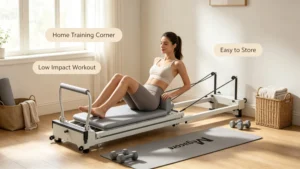
3. Pegas vs Bungee — Jangan Berkompromi di Sini
Di sinilah orang membuat kesalahan terbesar.
Pegas baja: Kurva resistensi yang autentik, tegangan konsisten, bertahan 3–5 tahun dengan pemakaian rutin. Inilah yang dipakai setiap studio profesional.
Tali bungee: Lighter in weight, but the tension degrades noticeably within 6–12 months. The resistance curve isn’t the same as springs — the initial pull is easier, then it gets harder, which makes some exercises feel off.
Rekomendasinya: Get steel springs. If a machine uses bungee cords, the manufacturer prioritized cost over experience. The only exception is a sub-$500 machine where you’re accepting it as a temporary solution.
4. Perencanaan Ruang di Dunia Nyata
Ukur sebelum membeli, bukan sesudahnya. Reformer memerlukan sekitar 8×6 kaki ruang lantai kosong saat dipakai, ditambah beberapa kaki jarak di belakang carriage untuk gerakan jangkauan penuh. Tinggi plafon tidak sepenting yang orang kira, tetapi plafon rendah bisa membatasi gerakan lengan ke atas dengan tali panjang. Pikirkan di mana mesin akan berada di antara sesi — jika menetap permanen, pastikan tidak menghalangi pintu atau jendela.
More than a few people have bought a reformer only to realize it doesn’t fit their room. I’ve seen it happen with studio owners and home buyers alike.
Ukurannya:
Wujudkan: Tape out the dimensions on your floor before buying. It sounds silly. It saves returns. I’ve heard from at least a dozen people who wish they’d done this instead of returning a 70 lb box.
5. Pertimbangan Tipe Tubuh
Tinggi badan dan kapasitas beban adalah dua angka yang perlu dicek lebih dulu. Pengguna setinggi 188 cm butuh reformer dengan carriage yang cukup panjang dan opsi tali yang diperpanjang, sementara pengguna 157 cm mungkin merasa panjang standar lebih nyaman. Kapasitas beban sebaiknya melebihi pengguna terberat dengan margin yang nyaman — rangka baja 250 kg+ memberi ruang paling lega. Lebar bahu juga berpengaruh pada jarak strap saat latihan lengan.
Reformers aren’t one-size-fits-all. If you’re very tall (over 6 ft / 183 cm) or very short (under 5 ft 2 in / 157 cm), pay attention to:
Catatan untuk pembeli perempuan: Many reformers are designed with average male height in mind. If you’re under 5’4″, look for adjustable shoulder rests and a footbar that has multiple height settings.
6. Tingkat Resistensi dan Progresi
Resistensi adalah yang membuat reformer terasa seperti latihan sungguhan, bukan sekadar alat peregangan. Pegas baja memberi resistensi konsisten dan progresif yang sesuai dengan perkembangan kekuatan Anda. Mesin pemula dengan hanya dua pilihan pegas membatasi progresi — Anda akan merasa terlalu ringan atau terlalu berat. Mesin dengan 4–6 pegas memungkinkan Anda menaikkan resistensi bertahap seiring peningkatan kemampuan.
A common complaint from home users is outgrowing their machine’s resistance range. If you’re serious about progressing in Pilates, check:
If you’re buying for a teenager or advanced practitioner, don’t buy a machine with only 2 spring options. They’ll outgrow it within months.
Di sinilah mesin Pilates terbaik untuk rumah berbeda dari model pemula: ia harus memberi ruang untuk berkembang. Mesin dengan 4–5 pegas baja cukup untuk sebagian besar latihan rumah, sementara 6–8 pegas mendukung latihan lanjutan dan pengguna yang lebih berat. Cek juga kapasitas bebannya — rangka baja 250 kg+ menyisakan margin untuk semua tipe tubuh.
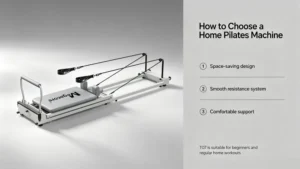
7. Panduan Harga: Apa yang Sebenarnya Anda Dapat di Tiap Kelas
| Fitur | Kelas Rumah | Semi-Komersial | Komersial Penuh |
|---|---|---|---|
| Kapasitas harian | 1–2 jam | 3–5 jam | 8–10 jam |
| Rangka | Aluminium/baja ringan | Baja | Baja heavy-duty |
| Kapasitas beban | 120–180 kg | 200–250 kg | 250–350 kg |
| Harga | $500–1,200 | $1,200–2,000 | $2,000–4,000 |
| Masa Pakai | 3–5 tahun | 6–10 tahun | 10–15 tahun |
The $800–$1,500 range is where most people should land when choosing the best pilates machine for home use. Below that, you’re making compromises on feel and durability. Above that, you’re paying for brand markup more than functional improvement.
Contoh nyata: A buyer in Chicago went with a $600 foldable model. Within 8 months, the carriage developed play, one spring lost tension, and the frame started creaking. She replaced it with a $1,400 light-commercial model and hasn’t had a single issue in two years. The first machine ended up costing her $75/month of use. The second is running at $58/month and will drop to $23/month if it lasts the full 5 years.
8. Perakitan, Pengiriman, dan Pemasangan
Pengalaman pengiriman sangat bervariasi antar merek. Sebagian dikirim sudah terakit dalam peti; sebagian lain tiba sebagai kit yang butuh satu jam pemasangan. Tanyakan metode pengiriman, kemasan, dan apakah produsen menyediakan panduan video sebelum Anda memesan. Untuk pembeli internasional, pastikan estimasi waktu pengiriman dan apakah harga sudah mencakup pengiriman sampai pintu atau hanya port-to-port.
Sesuatu yang tidak pernah dibahas di ulasan: bagaimana cara memasukkan alat ini ke dalam rumah Anda?
Untuk model lipat: Practice setting it up and taking it down three times on day one. If it’s a hassle, you’ll use it less.
9. Mengapa Megacore Pilihan Kuat untuk Pemakaian Rumah
Kami memproduksi terutama untuk studio, artinya model rumahan kami membawa DNA rekayasa yang sama. Lini semi-komersial kami populer di kalangan pengguna rumahan yang ingin kualitas studio tanpa membayar nama merek.
Artinya dalam praktik:
If you’re comparing Megacore to brands at the same price point, compare the frame thickness and spring quality. We don’t spend on marketing or retail distribution, so more of your money goes into the hardware.
Setiap mesin Megacore untuk pemakaian rumah dikirim dengan sertifikat inspeksi kualitas GZHL2601000020601SP dan garansi 3 tahun untuk rangka dan mesin. Dokumentasi itu menjadi salah satu alasan reformer Megacore jadi jawaban kuat saat Anda membandingkan opsi mesin Pilates terbaik untuk rumah secara berdampingan.
Pertanyaan yang Sering Diajukan
Pertanyaan yang paling sering diajukan pembeli rumah saat memilih mesin Pilates terbaik untuk rumah.
T: Bisakah saya mendapat latihan kualitas studio di reformer rumah?
J: Bisa, asalkan reformer punya pegas baja, rangka stabil, dan rentang resistensi yang memadai. Peralatan hanyalah alat — konsistensi yang menentukan hasil, bukan harga.
T: Lipat atau tetap untuk rumah?
A: Fixed if you have dedicated space. Foldable if you don’t. Both deliver good workouts; the fixed frame will feel better and last longer.
T: Berapa anggaran untuk reformer rumah?
J: $800–$1.500 untuk alat yang benar-benar tahan lama dan nyaman. Di bawah $500 adalah pertaruhan kualitas. Di atas $2.500 untuk pemakaian rumah saja biasanya berlebihan, kecuali Anda berencana mengajar.
T: Berapa lama reformer rumah bertahan?
J: Reformer rumah berkualitas seharusnya bertahan 5–10 tahun dengan perawatan dasar. Pegas perlu diganti setiap 3–5 tahun tergantung frekuensi pemakaian.
T: Bolehkah memakai reformer komersial di rumah?
A: You can, but you probably don’t need to. Commercial reformers are built for 8–10 hours of daily use. For home use (1–2 hours daily), a light-commercial model delivers the same experience at lower cost.
T: Bagaimana dengan reformer bekas?
J: Bekas bisa jadi penawaran bagus, tetapi periksa dengan teliti. Cek integritas rangka, tegangan pegas, kehalusan carriage, dan kondisi strap. Perkirakan harus segera mengganti pegas dan strap — siapkan $100–200 untuk ini.
T: Apakah perlu lantai khusus?
J: Lantai keras dan rata adalah yang ideal. Karpet bisa dipakai dengan alas plywood atau mat karet. Hindari meletakkannya langsung di atas karpet — karpet menyerap benturan secara tidak merata dan memengaruhi stabilitas.
Menyiapkan latihan Pilates di rumah dengan peralatan yang tepat akan mengubah rutinitas kebugaran Anda. Reformer berkualitas yang sesuai ruang dan frekuensi latihan Anda adalah investasi untuk kesehatan dan kesejahteraan jangka panjang. Pilih dengan bijak berdasarkan ruang, rencana anggaran, dan tujuan latihan Anda.
Satu tips terakhir: baca garansinya sebelum membeli. Garansi 3 tahun untuk rangka dan mesin, didukung produsen yang menyimpan suku cadang, melindungi investasi Anda jauh lebih baik daripada garansi lebih panjang dari merek tanpa pasokan suku cadang. Kepastian itu menjadi salah satu alasan mesin langsung dari pabrik terus muncul dalam perbandingan "mesin Pilates terbaik untuk rumah".
Kesimpulan
Sesuaikan reformer dengan ruang dan frekuensi latihan Anda. Pegas bagus dan rangka kokoh lebih penting daripada nama merek. Reformer $1.200 yang Anda pakai konsisten lebih bernilai daripada reformer $3.000 yang menganggur di sudut ruangan.
Mulai dari ruang Anda, lalu rencana anggaran, baru mesinnya. Jika belum yakin harus mulai dari mana, hubungi Megacore dan kami akan mencocokkan Anda dengan reformer yang tepat untuk latihan di rumah.
Panduan Terkait
- Panduan Membeli Reformer Pilates 2026: Checklist Lengkap
- Mempersiapkan Ruang Anda untuk Reformer Pilates
- Panduan Tegangan Pegas Reformer Pilates
- Tingkat Kebisingan Reformer Pilates: Apa yang Normal
- Pilates Reformer Dimensions & Space Requirements
Standar industri untuk kualitas peralatan tersedia dari Pilates Method Alliance. Untuk panduan fasilitas kebugaran rumah, lihat Pengendalian Infeksi Lingkungan CDC.
If you have settled on a home machine, the home reformer range is the shorter list to choose from.