

Menetapkan harga keanggotaan yang tepat untuk studio reformer Pilates Anda adalah salah satu keputusan bisnis paling berdampak yang akan Anda ambil. Jika tarif terlalu tinggi, studio akan sulit memenuhi kelas; jika terlalu rendah, bisnis tidak pernah mencapai profitabilitas yang berkelanjutan. Panduan ini membahas faktor-faktor yang menentukan harga keanggotaan reformer Pilates yang optimal — termasuk analisis pasar, pemodelan berbasis biaya, perancangan struktur tier, dan strategi retensi yang memastikan anggota merasakan nilai berkelanjutan.
1. Harga Keanggotaan Reformer Pilates: Memahami Pasar Lokal Anda
Langkah pertama dalam menetapkan harga keanggotaan reformer Pilates adalah memahami tarif studio sejenis di pasar Anda. Teliti setidaknya lima studio dalam radius 15 menit berkendara yang menawarkan kelas reformer Pilates. Catat harga keanggotaan unlimited bulanan, tarif drop-in per kelas, dan paket bertingkat yang mereka tawarkan. Perhatikan jumlah reformer di setiap studio — ini memengaruhi proposisi nilai karena studio dengan 15 reformer dapat menampung lebih banyak jadwal kelas dibanding studio dengan 8 reformer.
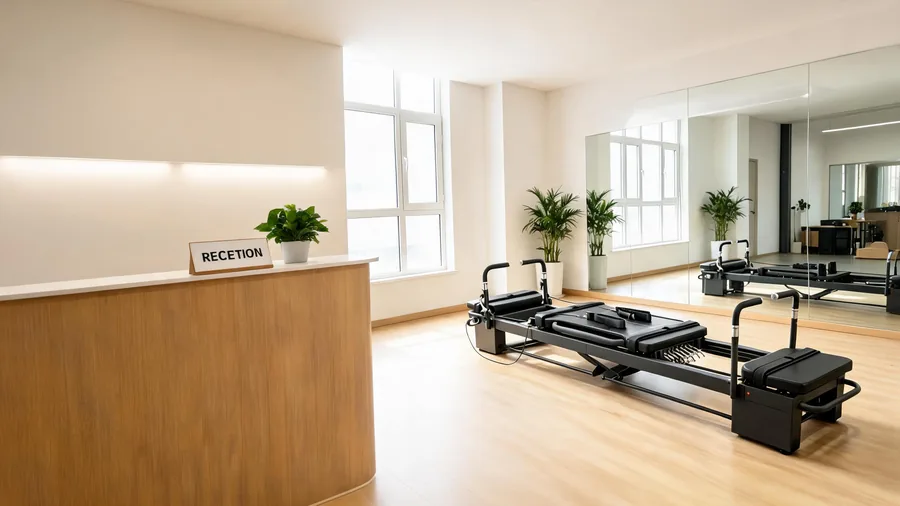
Psikologi harga berperan penting. Di sebagian besar pasar perkotaan, segmen premium untuk harga keanggotaan reformer Pilates berkisar $180–$300 per bulan, sedangkan studio kelas menengah menetapkan $120–$179. Studio yang menetapkan di bawah $120 per bulan untuk kelas unlimited umumnya berada di pasar dengan biaya operasional lebih rendah atau menggunakan keanggotaan sebagai loss leader untuk menjual sesi privat dan produk ritel. Riset secara konsisten menunjukkan bahwa penetapan harga di kisaran menengah ke atas menandakan kualitas lebih tinggi — klien sering mengasosiasikan harga lebih tinggi dengan peralatan lebih baik, instruktur lebih berpengalaman, dan lingkungan studio yang superior.
2. Harga Keanggotaan Reformer Pilates: Menutup Biaya Anda Terlebih Dahulu
Before setting any price, calculate your studio’s break-even membership count. Sum your monthly fixed costs: rent or mortgage ($4,000–$12,000 depending on market), utilities ($500–$1,200), insurance ($300–$800), equipment financing or depreciation ($2,000–$5,000 for a 10-reformer studio), software subscriptions ($200–$500), marketing ($1,000–$3,000), and administrative staff ($2,000–$5,000). A typical 10-reformer studio has fixed monthly costs of $10,000–$28,000.
Biaya variabel per anggota mencakup tingkat konsumsi kelas, upah instruktur per kelas, dan perlengkapan. Jika rata-rata anggota mengikuti 8 kelas per bulan dan biaya instruktur $25 per kelas, biaya instruktur per anggota sekitar $3.13 per kelas, atau $25 per bulan. Dengan model ini, studio dengan biaya tetap $15,000 dan biaya variabel $25 per anggota membutuhkan sekitar 86 anggota pada harga unlimited $200 per bulan untuk mencapai titik impas. Anggota di atas 86 langsung berkontribusi pada laba.
3. Harga Keanggotaan Reformer Pilates: Merancang Struktur Tier Anda
Model harga keanggotaan reformer Pilates paling sukses menawarkan tiga tier. Tier pemula (4–6 kelas per bulan seharga $99–$149) menarik klien yang menginginkan sesi mingguan tanpa komitmen penuh. Tier menengah (8–12 kelas per bulan seharga $159–$229) melayani mayoritas klien reguler. Tier premium unlimited (kelas tanpa batas seharga $199–$299) menyasar penggemar Pilates yang mengikuti 12+ kelas per bulan.
Struktur tier harus mendorong perpindahan ke atas. Biaya per kelas pada tier pemula sebaiknya $22–$28, turun menjadi $16–$20 di tier menengah, dan $12–$16 untuk unlimited. Ini menciptakan progresi nilai yang jelas. Pada saat yang sama, selisih antara tier menengah dan unlimited harus cukup besar ($30–$60 per bulan) agar anggota memilih berdasarkan penggunaan nyata, bukan otomatis mengambil unlimited.
4. Harga Keanggotaan Reformer Pilates: Opsi Drop-In dan Paket
Tidak semua klien menginginkan keanggotaan bulanan. Tarif drop-in tunggal $30–$45 per kelas dan paket 5 kelas seharga $25–$35 per kelas dengan masa berlaku 3–6 bulan memberikan fleksibilitas bagi klien kasual. Paket 10 kelas seharga $22–$28 per kelas dengan masa berlaku 8 bulan menjembatani paket dan keanggotaan.
Jangan pernah menetapkan harga drop-in atau paket di bawah biaya per kelas keanggotaan tier pemula Anda. Jika keanggotaan 4 kelas berharga $120 ($30 per kelas), menetapkan $25 untuk drop-in tunggal akan melemahkan nilai keanggotaan. Biaya per kelas harus paling tinggi untuk drop-in tunggal dan paling rendah untuk keanggotaan unlimited — struktur ini memberi penghargaan pada komitmen sekaligus menjaga margin pada kunjungan kasual.
5. Harga Keanggotaan Reformer Pilates: Penawaran Perkenalan dan Retensi
Akuisisi klien baru biasanya melibatkan penawaran perkenalan yang mengurangi komitmen finansial awal. Model umum: bulan pertama keanggotaan unlimited seharga 40–50 persen dari harga reguler, dengan komitmen minimum 3 bulan yang beralih ke harga penuh setelah bulan pertama. Data retensi menunjukkan klien yang menyelesaikan periode perkenalan 3 bulan memperpanjang pada tingkat sekitar 65 persen, dibandingkan 35 persen untuk keanggotaan bulanan sejak awal.
Strategi efektif lainnya adalah paket pemula studio: 3 sesi privat untuk membangun teknik yang benar ditambah 1 bulan kelas grup unlimited dengan harga terpadu. Ini memastikan anggota baru mendapat orientasi peralatan yang tepat sebelum masuk kelas grup, meningkatkan pengalaman mereka dan mengurangi risiko cedera. Studio yang menggunakan model ini melaporkan retensi 6 bulan 20–30 persen lebih tinggi.
6. Harga Keanggotaan Reformer Pilates: Meningkatkan Pendapatan per Anggota
Selain biaya keanggotaan, studio dapat meningkatkan pendapatan per anggota melalui sesi privat, penjualan ritel, dan workshop. Sesi privat $60–$120 per jam merupakan pendapatan bermargin tinggi dengan peralatan yang sama. Item ritel — aksesori reformer, grip socks, dan pakaian berlabel — menghasilkan $10–$30 per bulan per anggota. Workshop $30–$60 per orang menambah pendapatan sekaligus memperkuat keterlibatan komunitas.

Pendapatan peralatan adalah peluang unik. Sebagian pemilik studio menawarkan opsi kepada anggota untuk membeli reformer untuk penggunaan rumah melalui studio, dengan produsen mengirim langsung. Ini memberikan pendapatan tambahan tanpa risiko inventaris dan memposisikan studio sebagai sumber daya Pilates serba lengkap.
7. Harga Keanggotaan Reformer Pilates: Penyesuaian Tahunan
Harga keanggotaan reformer Pilates harus ditinjau setiap tahun dan disesuaikan dengan inflasi, kenaikan sewa, dan perkembangan pasar. Kenaikan tahunan 5–8 persen adalah standar di industri kebugaran. Sampaikan perubahan harga 30–45 hari sebelumnya dan tawarkan jendela 30 hari bagi anggota lama untuk mengunci tarif saat ini selama 12 bulan tambahan.
The studio’s equipment investment is a legitimate factor in pricing justification. Premium reformers with commercial-grade construction, quiet operation, and comprehensive warranties support a higher price point. When members see well-maintained quality equipment, the monthly fee appears as an investment in a premium experience. Megacore Pilates reformers are backed by a 3-year warranty and quality inspection certification GZHL2601000020601SP, demonstrating the manufacturing standards that support your studio’s premium positioning.
8. Harga Keanggotaan Reformer Pilates: Pertanyaan yang Sering Diajukan
Berapa rata-rata harga keanggotaan reformer Pilates di AS?
Keanggotaan unlimited bulanan umumnya berkisar $120–$300, dengan rata-rata lintas pasar sekitar $180. Studio perkotaan dan yang memiliki peralatan premium menetapkan tarif lebih tinggi.
Berapa banyak anggota yang saya butuhkan untuk mencapai titik impas?
Untuk studio 10 reformer dengan biaya tetap bulanan $15,000, sekitar 80–90 anggota pada harga unlimited $200/bulan. Gunakan kalkulator ROI untuk angka spesifik Anda.
Apakah sebaiknya saya menawarkan keanggotaan tahunan dengan diskon?
Ya. Keanggotaan tahunan dengan diskon 10–15 persen dari ekuivalen bulanan meningkatkan arus kas dan retensi. Banyak studio melaporkan tingkat perpanjangan tahunan 80+ persen.
Berapa tarif yang tepat untuk sesi privat?
$60–$120 per jam tergantung pasar Anda. Sesi privat menghasilkan pendapatan per jam 3–5 kali lipat kelas grup dan harus diberi harga untuk mencerminkan premi tersebut.
Apakah kualitas peralatan memengaruhi tarif yang bisa saya tetapkan?
Tentu saja. Studio dengan reformer kelas komersial yang memiliki sistem carriage halus, operasi senyap, dan garansi menyeluruh dapat membenarkan tarif di kisaran atas pasar lokal. Pilates Method Alliance menyediakan standar industri yang mendukung justifikasi harga berbasis peralatan.
9. Harga Keanggotaan Reformer Pilates: Tetapkan Tarif yang Tepat untuk Studio Anda
Harga keanggotaan reformer Pilates yang optimal menyeimbangkan apa yang didukung pasar dengan apa yang dibutuhkan biaya Anda. Teliti pesaing, modelkan angka titik impas Anda, rancang tier yang melayani segmen klien berbeda, dan tinjau harga setiap tahun. Peralatan yang Anda pilih untuk diinvestasikan — reformer kelas komersial yang bertahan bertahun-tahun dengan perawatan minimal — mendukung harga premium yang membuat studio Anda menguntungkan.
Megacore Pilates manufactures commercial-grade reformers at factory-direct pricing, helping studio owners achieve profitability faster through lower equipment costs and higher machine reliability. Every reformer is backed by a 3-year warranty and quality documented in inspection certification GZHL2601000020601SP. Contact Megacore for equipment pricing that supports your studio’s membership model.
Sumber daya lainnya: Kalkulator ROI | Panduan Membeli 2026 | Panduan Mendirikan Studio
Pricing per class depends on what the equipment cost; the studio equipment range covers the machine side.