
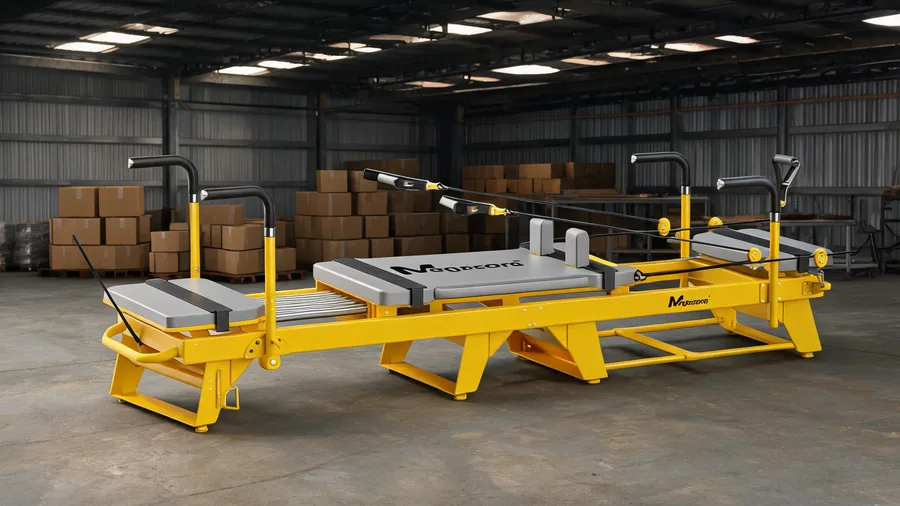
Sourcing Pilates reformers from China offers clear advantages — factory-direct pricing, custom manufacturing, and access to experienced production teams. But not every supplier delivers what they promise. The difference between a reliable manufacturing partner and a problematic vendor often comes down to warning signs that are visible before you place your first order — if you know what to look for.
This guide covers the most common Pilates reformer supplier red flags to watch for when sourcing equipment from China. Recognizing these signals early helps you avoid costly mistakes, production delays, and equipment that fails to meet your studio’s quality standards.
1. Pilates Reformer Supplier Red Flags: Pricing That Seems Too Good to Be True
The most common Pilates reformer supplier red flags include pricing that falls significantly below market average. When a quote is 30–50% lower than other suppliers for apparently equivalent specifications, something is being compromised. Quality materials cost money — Q235 steel frames, sealed cartridge bearings, marine-grade vinyl upholstery, and calibrated stainless steel springs all have established market prices. A supplier offering prices far below these benchmarks is cutting corners somewhere.
Common cost-cutting tactics include using thinner-gauge steel (1.2 mm instead of 2.0 mm), substituting open roller bearings for sealed cartridge bearings, using lower-density foam that compresses permanently within months, and skipping quality control checks entirely. These savings look good on an invoice but create real costs for your business through equipment failures, client complaints, and replacement expenses. Factory-direct pricing from a quality manufacturer is cost-effective, but pricing that seems too good to be true always is.
2. Pilates Reformer Supplier Red Flags: Missing Quality Certifications
A reliable Pilates reformer manufacturer should be able to provide documented quality inspection reports. When a supplier cannot or will not share testing documentation, consider it a significant Pilates reformer supplier red flag. Legitimate manufacturers maintain records of raw material inspections, weld quality checks, powder coating adhesion tests, spring load verification, and final assembly testing.
Ask for specific documentation. Megacore’s quality inspection certification GZHL2601000020601SP covers frame load testing, material composition verification, coating thickness measurements, spring load consistency, and bearing durability testing. A supplier that hesitates to share equivalent documentation likely does not have the quality control systems in place to produce consistent, durable equipment.
Note that some suppliers may claim certifications they do not hold, so verifying documentation with the issuing body is worthwhile for large orders. A factory tour or video call showing the quality control checkpoints is the best way to confirm that documented processes are actually followed.
3. Pilates Reformer Supplier Red Flags: Slow Communication and No Factory Access
Communication quality during the sales process often predicts how a supplier will handle issues after you place an order. Slow, evasive, or inconsistent responses are major Pilates reformer supplier red flags. Recognizing these Pilates reformer supplier red flags early can save months of frustration, overcapacity, or a lack of commitment to customer relationships. A reliable supplier responds to inquiries within 24 business hours, provides clear answers to technical questions, and offers video or in-person factory tours.
If a supplier refuses to show their factory on a video call, cannot introduce you to specific team members (sales, QC, production), or gives vague answers about production timelines and quality processes, proceed with caution. Reputable manufacturers — including Megacore — welcome potential buyers to tour their facilities either in person or via live video. Transparency about production capabilities is a sign of confidence, not a weakness.
4. Pilates Reformer Supplier Red Flags: Minimal Warranty and No After-Sales Support
The warranty a supplier offers reveals their confidence in their product. A manufacturer that stands behind their equipment provides at least a 3-year warranty covering both frame and components. Suppliers offering only 6–12 month warranties or who are vague about what the warranty covers are signaling that they expect their equipment to fail within that timeframe.
Pilates reformer supplier red flags in warranty and support include: no written warranty document, conditions that exclude most common failure modes, no local or regional support contact, and a history of not honoring warranty claims. Before committing to a supplier, ask for the warranty policy in writing, contact references from previous buyers, and confirm that the supplier stocks replacement parts. Megacore’s 3-year warranty on both frame and entire machine is backed by documented quality control processes and a commitment to after-sales support for every customer.
5. Pilates Reformer Supplier Red Flags: Stock Photos and Inconsistent Listings
One of the most visible Pilates reformer supplier red flags is inconsistent product presentation. Professional Pilates equipment manufacturers maintain consistent product photography and detailed specifications for their models. When a supplier uses stock images, watermarked photos, or inconsistent product listings across different platforms, treat it as a Pilates reformer supplier red flag. Along with other Pilates reformer supplier red flags, these signs suggest the supplier may not actually manufacture the equipment they are selling — they could be a trading company reselling products from multiple factories with varying quality.
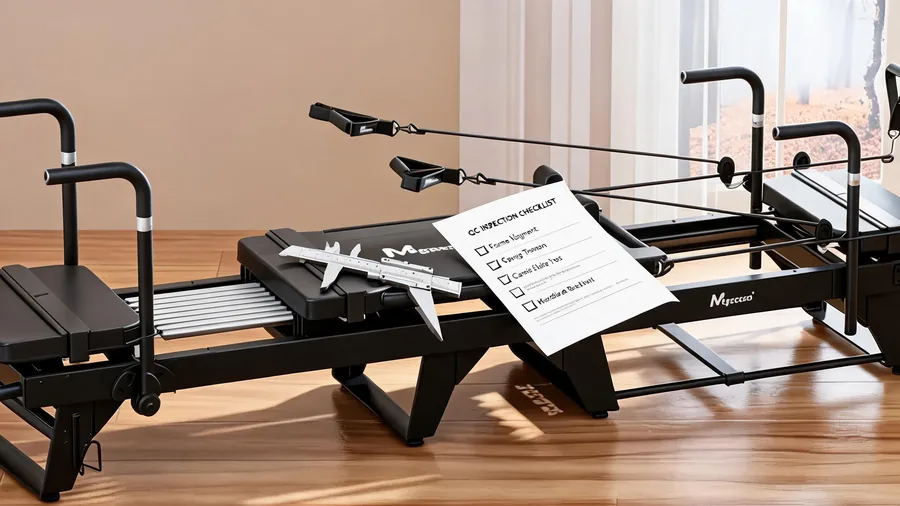
Request specific photos of the actual models you are considering — including close-ups of welds, spring attachments, bearing housings, and upholstery seams. Ask for a video demonstration of the reformer in operation, showing carriage glide smoothness and spring engagement. A genuine manufacturer can provide these without hesitation. The Pilates Method Alliance provides equipment guidelines that professional suppliers should be able to reference when discussing their product specifications.
6. How to Vet a Pilates Reformer Supplier Before Ordering
Now that you know the key Pilates reformer supplier red flags, here is a practical vetting process to follow. Being aware of Pilates reformer supplier red flags before you order protects your investment. to follow before placing an order:
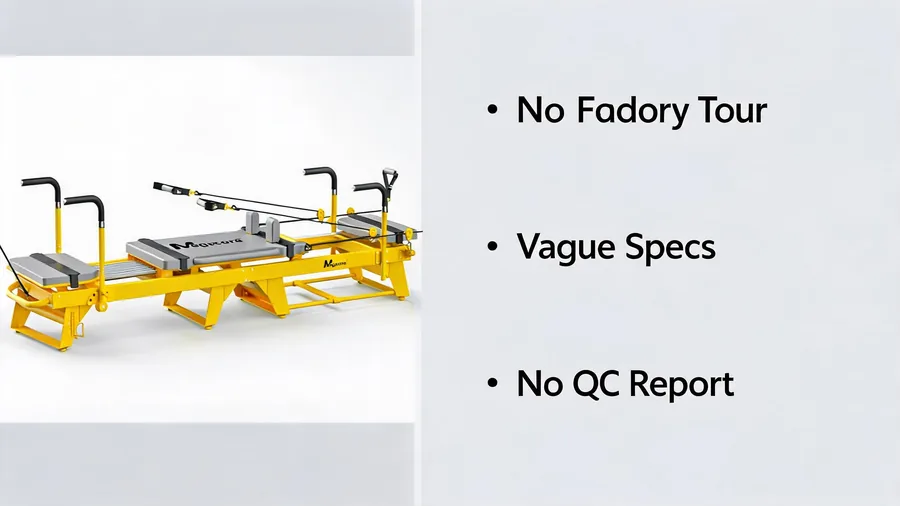
- Request product specifications in writing — steel grade, tube thickness, bearing type, spring resistance values, upholstery material
- Ask for quality inspection documentation covering raw materials through final assembly
- Schedule a video factory tour showing production lines and QC checkpoints
- Request samples or visit the factory in person for large orders
- Contact references — previous buyers who have ordered similar equipment
- Confirm warranty terms in writing with clear coverage and claim process
- Compare pricing across multiple suppliers to understand market range
- Verify the supplier’s export experience and shipping logistics
A manufacturer that passes all these checks is likely a reliable partner. Megacore meets every point on this checklist and welcomes potential buyers to verify each one.
7. Factory-Direct vs. Middlemen: Understanding the Supply Chain
Another important set of Pilates reformer supplier red flags involves supply chain transparency. A supplier that cannot clearly describe their role in the manufacturing process is showing one of the classic Pilates reformer supplier red flags their role in the supply chain. Some companies present themselves as manufacturers but are actually trading companies or middlemen who add a markup without adding value. These suppliers often cannot answer detailed technical questions about production processes because they do not operate the factory.
Working factory-direct with a manufacturer like Megacore provides several advantages: lower pricing without intermediary markups, direct communication with the production team, faster issue resolution, and the ability to customize equipment to your specifications. When a supplier cannot confirm they own or operate the factory producing your equipment, you are taking on additional risk. For more on this topic, the guide on China factory vs local supplier provides a detailed comparison.
8. Pilates Reformer Supplier Red Flags: Frequently Asked Questions
Q: How can I tell if a supplier is actually a manufacturer?
A: Ask for a live video factory tour. A genuine manufacturer can show you their production line, QC stations, and inventory. Request specific photos with today’s newspaper or a dated sign to confirm the supplier has current stock.
Q: What documentation should a Pilates reformer supplier provide?
A: Look for raw material certificates, weld inspection records, coating thickness reports, spring load test results, and final assembly quality inspection reports. Megacore’s certification GZHL2601000020601SP documents these checks.
Q: Is pricing the most important factor when choosing a supplier?
A: No. The lowest-priced supplier often costs the most over time through equipment failures, replacement expenses, and lost business from poor client experiences. Focus on value — quality equipment at a fair factory-direct price with a strong warranty.
Q: What warranty should a quality manufacturer offer?
A: At least 2–3 years covering both frame and components. Megacore offers a 3-year warranty on both frame and entire machine, backed by documented quality control processes.
Q: How do I verify a supplier’s quality claims?
A: Request sample units, contact existing customers for references, and consider a third-party inspection service for large orders. A manufacturer confident in their quality will support all three verification methods.
9. Source Smart — Choose a Pilates Reformer Supplier You Can Trust
Knowing the Pilates reformer supplier red flags is only half the battle. Understanding Pilates reformer supplier red flags protects your studio investment. The other half is finding a manufacturer that consistently demonstrates the opposite the battle. The other half is finding a manufacturer that consistently demonstrates the opposite — clear communication, transparent processes, documented quality control, and a warranty that backs their work. When you find a supplier that checks these boxes, you have found a partner for the long term.
Megacore Pilates has been manufacturing commercial-grade reformers for studios worldwide, operating factory-direct with no middlemen. Every reformer is produced in our Guangzhou facility under documented quality control processes verified by certification GZHL2601000020601SP. We welcome potential buyers to tour our factory, inspect our quality control stations, and speak directly with our production team before placing an order. That transparency is the foundation of a trusted supplier relationship.
Altre risorse: China Factory vs Local Supplier | Guida all'acquisto 2026 | Frame Materials Guide | Warranty Guide | Price vs Quality