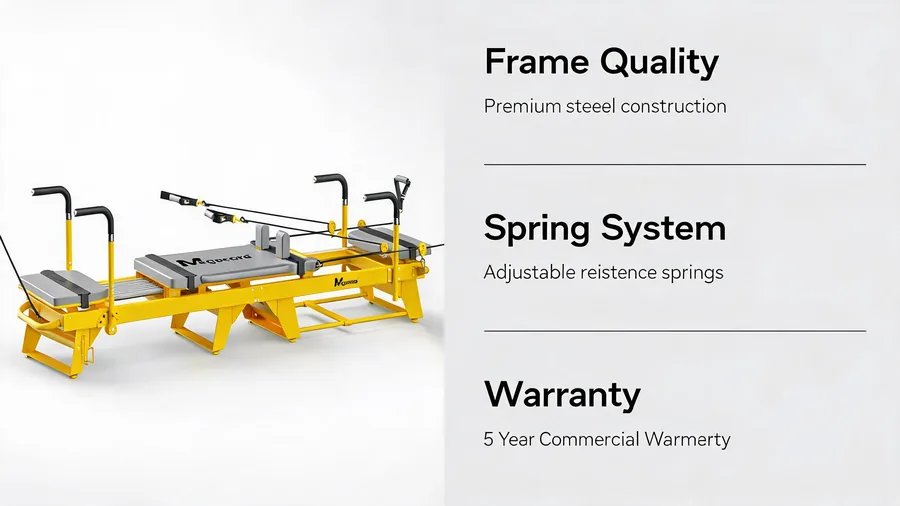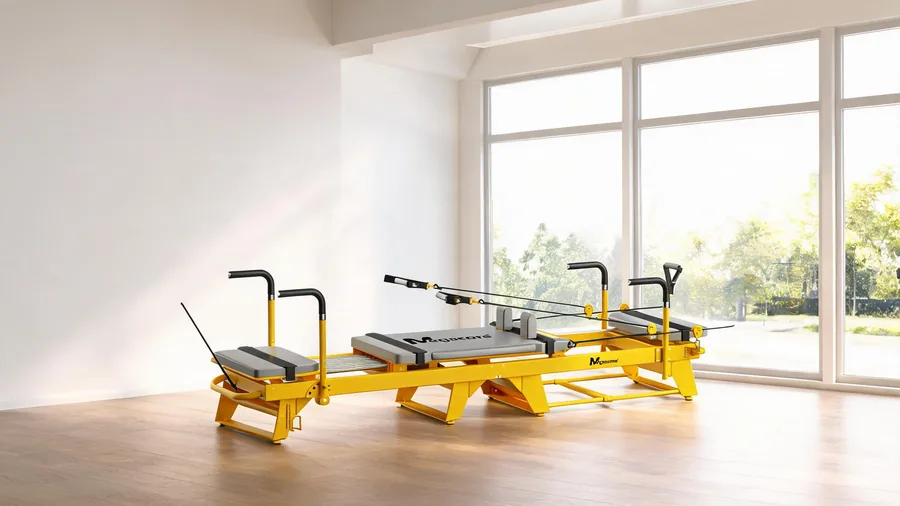
This Pilates reformer buying guide 2026 covers everything studio owners need. Buying Pilates reformers for a commercial studio is one of the biggest investments you will make as a studio owner. With prices ranging from $800 to $4,000 per unit and orders often involving 6-20 machines, the wrong decision costs thousands. This 2026 buying guide breaks down every factor you need to consider from frame construction to spring systems, carriage mechanisms to warranty coverage, so you can make an informed purchase that serves your studio for the next decade.
1. Pilates Reformer Buying Guide 2026: Studio Profile
Before comparing specifications, you need to understand your studio unique requirements. A riformatore that works perfectly for a clinical rehab studio would be wrong for a high-intensity group fitness studio.
Class Types and Intensity
Consider what classes you will teach: classical Pilates, contemporary group reformer, rehabilitative sessions, or a mix. Each places different demands on the equipment.
- Classical/clinical: Standard commercial frame with smooth carriage
- Group reformer: Steel frame with dual-rail bearings
- High-intensity/cardio: Heavy-duty steel frame with reinforced springs
- Mixed-use: Versatile model with adjustable carriage friction
Client Demographics
Your client base determines sizing, weight capacity, and adjustability needs. A studio serving mainly athletes needs different specifications than one focused on seniors.
Space and Layout
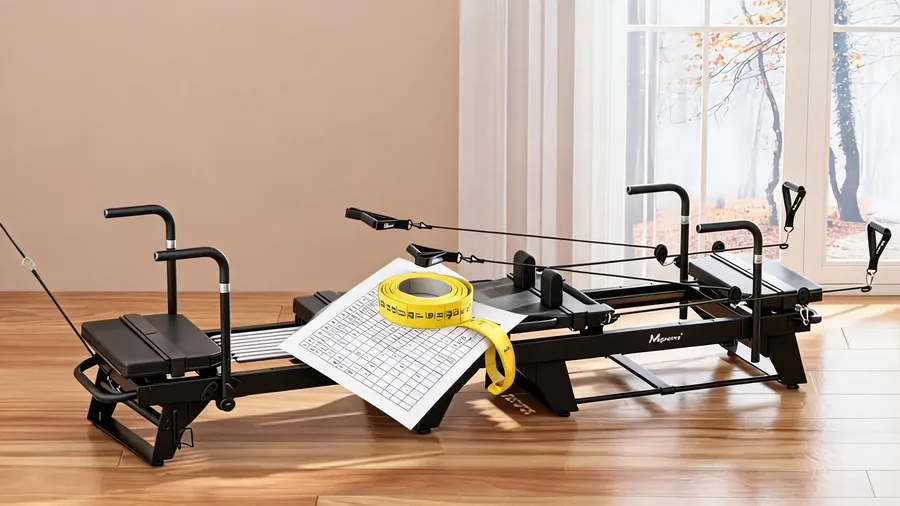
Measure your studio space carefully. Standard reformers need about 8 ft x 3 ft plus 3 ft clearance at each end.
2. Pilates Reformer Buying Guide 2026: Frame Material
Three main materials are used, each with distinct trade-offs:
3. Pilates Reformer Buying Guide 2026: Spring Systems
Springs are the most maintenance-intensive component. Quality steel springs maintain tension for 50,000+ cycles while entry-level springs lose tension after 10,000 cycles.
- High-carbon spring steel: standard for commercial use
- Tension consistency: +/-3% tolerance across all units
- Standard color coding: yellow/red/blue/green
- 4-5 springs per reformer for full programming flexibility
4. Pilates Reformer Buying Guide 2026: Carriage Quality
The carriage is where clients feel quality every session.
- Roller bearings: Smooth, 5-8 year lifespan
- Friction-free track: Ultra-smooth, 10+ year lifespan
- Dual-rail systems: Best balance of smoothness and durability
- Adjustable friction: Allows tuning the carriage feel
5. Pilates Reformer Buying Guide 2026: Warranty and Support
Warranty terms reveal manufacturer confidence:
6. Pilates Reformer Buying Guide 2026: Plan for All Costs
Factor in shipping ($100-300/unit), import duties (5-15%), installation, spare parts, and maintenance supplies.
7. Pilates Reformer Buying Guide 2026: Why Factory-Direct
Factory-direct purchasing eliminates middlemen and reduces costs by 30-50% compared to branded alternatives, all while maintaining commercial-grade specifications. This Pilates reformer buying guide 2026 recommends factory-direct sourcing for studios seeking maximum value.
Megacore commercial reformers check every box: Q235 steel frames with 350 kg capacity, 50,000-cycle tested springs, dual-rail bearing carriages, and 3-year frame warranty at factory-direct prices.
Pilates reformer buying guide 2026: Frequently Asked Questions
Cosa distingue questa attrezzatura per il Pilates dalle alternative di fascia base?
The difference comes down to materials and construction. Commercial-grade equipment uses all-metal frames, sealed bearings, and calibrated springs. Entry-level models use lighter materials that degrade faster. A quality reformer lasts 5-10+ years — an entry-level reformer often needs replacement in 1-2 years.
Come faccio a sapere se questa attrezzatura è adatta alle mie esigenze specifiche?
Consider your primary use case: studio vs home, client demographics, class volume, and budget. Studio owners should prioritize durability and maintenance access. Home users should prioritize space efficiency and ease of use. Match the equipment specifications to your specific requirements rather than buying general-purpose.
Quali garanzie e quale assistenza posso aspettarmi da un produttore affidabile?
Le attrezzature commerciali dovrebbero essere coperte da una garanzia strutturale di almeno 2 anni e da una garanzia di 1 anno sui componenti. I produttori che vendono direttamente, come Megacore, offrono spesso una copertura estesa e assistenza tecnica diretta. Richiedete sempre la documentazione relativa alla garanzia per iscritto prima dell’acquisto.
Pilates reformer buying guide 2026: Conclusion
La scelta dell'attrezzatura giusta fa davvero la differenza nella pratica o nell'attività di Pilates. Che si tratti di allestire uno studio, rinnovare le attrezzature esistenti o attrezzare uno spazio per la pratica a casa, investire in attrezzature di qualità che rispondano alle tue esigenze specifiche è fondamentale per garantire soddisfazione e prestazioni a lungo termine.
Scopri i nostri reformer commerciali →
Start Your Pilates Reformer Buying Guide 2026 Journey
Contact us with your Pilates reformer buying guide 2026 questions. Our Pilates reformer buying guide 2026 covers everything you need.. Our team can help you select the right equipment for your commercial studio.
Guide correlate
- Lista di controllo delle attrezzature per uno studio di Pilates
- Commercial Pilates Reformer Cost Guide
Industry reference · Industry reference ·