
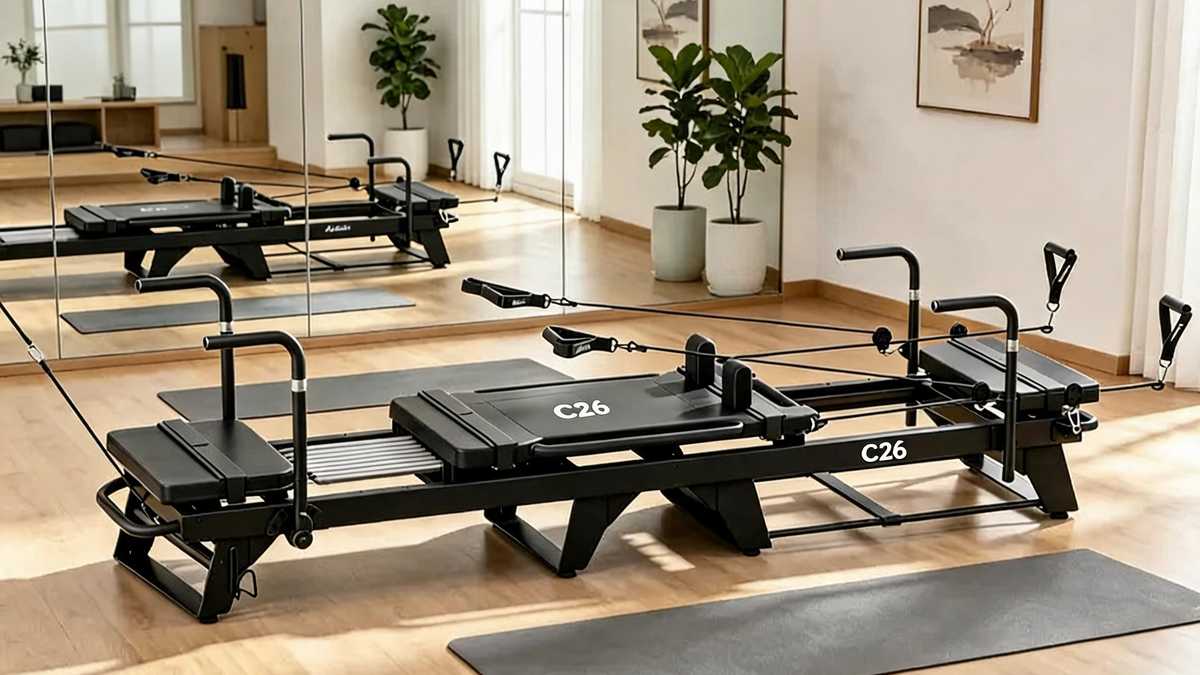
Pilates Reformer Cleaning and Sanitization: Best Practices for Studio Hygiene
Maintaining a clean studio environment is non-negotiable for Pilates business owners. Clients expect every surface they touch — carriage pad, shoulder rests, footbar, straps, ropes — to be sanitized between sessions. A studio with visible wear, lingering odour, or sticky upholstery loses repeat business faster than any pricing issue can compensate. The cleaning protocol directly affects equipment longevity, client health, and the professional reputation of your business.
This guide covers the complete cleaning protocol for commercial Pilates reformers: daily surface sanitization, weekly deep cleaning, monthly maintenance, product selection guidelines, and upholstery care. Implement these procedures to protect your equipment investment and your clients’ health across years of daily operation.
Why Commercial Reformers Require a Different Cleaning Protocol
Home-use reformers see one or two users per day. A commercial reformer in a busy studio can serve 12–18 clients in a single shift. Each client leaves behind skin oils, sweat residue, and lotion transfer. Over a week, the cumulative biological load on the carriage pad, shoulder rests, and footbar becomes significant. Standard household cleaning products often leave a film that attracts more dirt or degrades upholstery materials faster, shortening the lifespan of your equipment.
Commercial studios should implement a three-tier cleaning schedule: between-session wipe-down with a fast-drying sanitizer, end-of-day full-surface cleaning with a pH-neutral cleaner, and a weekly deep-clean rotation that includes rope and strap treatment. This tiered approach ensures that every surface is sanitized between clients while preventing long-term buildup that degrades materials.
Between-Session Sanitization Protocol
Step-by-Step 60-Second Cleaning Pass
Establishing a consistent between-session cleaning routine ensures every client experiences a fresh, sanitized reformer. Start with the carriage pad, using a microfiber cloth dampened with a hospital-grade sanitizer spray. Wipe the entire surface in overlapping passes, paying extra attention to the edges where sweat and oils accumulate during plank and side-lying exercises. Move to the shoulder rests, using separate sections of the cloth for left and right sides to prevent cross-contamination. The footbar requires special attention — clients grip it with hands during footwork and hook heels during stretches, making it one of the highest-contact surfaces on the reformer. Finally, pull each rope through a sanitizing wipe to clean the handles and the rope sections that pass through clients’ hands. This entire process should take no more than 60 seconds per machine once staff are properly trained.
Product Selection for Fast-Drying Sanitizers
Not all sanitizers are safe for reformer upholstery. The ideal between-session product should contain 60–70% isopropyl alcohol for effective disinfection while evaporating quickly enough that the carriage pad is dry before the next client arrives. Avoid products with bleach, hydrogen peroxide, or quaternary ammonium compounds at high concentrations — these can break down the PU leather or vinyl upholstery over months of daily use. Many factory-direct reformer manufacturers recommend specific cleaning product lines that have been tested with their upholstery materials. Using unapproved cleaners can void upholstery coverage, so selecting compatible products is both a hygiene decision and a financial one.
Every hand-off between clients should include a 60-second sanitization pass covering these areas. Carriage pad surface: full top surface including edges where hands grip during plank and stretching exercises. Shoulder rests: top and side surfaces using separate clean zones for left and right rests to avoid cross-contamination. Footbar: entire contact surface including the top edge where clients hook heels during footwork. Straps and handles: wipe down leather or foam handles with a sanitizing cloth; for rope-loop handles, pull the rope through a sanitizing wipe. Headrest cushion: both flat and inclined surfaces. Carriage rails: visual check and wipe with a lightly dampened cloth to remove grit that affects glide quality.
Use a hospital-grade, fast-drying sanitizer with 60–70% isopropyl alcohol or a quaternary ammonium compound. Avoid bleach-based products on any reformer component — bleach degrades vinyl upholstery within months. Spray the sanitizer onto a microfiber cloth, not directly onto the machine, to prevent overspray into the spring mechanism where moisture can cause corrosion.
End-of-Day Cleaning Procedure
At close, each reformer needs a thorough cleaning that takes approximately 5–7 minutes per machine. For a 10-reformer studio, budget one hour for post-shift cleaning by a dedicated staff member. Step one: apply a pH-neutral vinyl cleaner to the entire pad surface. Agitate with a soft-bristle brush to lift embedded oils. Wipe clean with a damp microfiber cloth, then dry with a separate towel. Step two: apply a monthly conditioner to commercial-grade upholstery (marine-grade vinyl or high-density foam) to prevent cracking in dry climates and mildew in humid environments. Step three: wipe exposed spring coils with a dry cloth. Do not oil or lubricate springs — dry operation is correct. If a spring makes noise during cleaning, tag it for replacement. Step four: wipe ropes with a damp cloth and check for fraying near pulley contact points. Replace ropes showing any fibre separation. Step five: clean powder-coated frame surfaces with a damp cloth and dry immediately, paying attention to footbar posts and adjustment tracks where sweat pools.
Product Selection: What to Use and What to Avoid
Choosing the wrong cleaning product can void your warranty and shorten equipment life. Approved products include 70% isopropyl alcohol solution (fast-drying, broad-spectrum antimicrobial), pH-neutral vinyl cleaner (pH 6–8), mild dish soap diluted in water for occasional deep cleaning, microfiber cloths that are lint-free and non-abrasive, and soft-bristle brushes for textured upholstery. Products to avoid include bleach and chlorine-based cleaners that discolour and embrittle upholstery, ammonia-based glass cleaners that damage powder coating, oil-based polishes or silicone sprays that create slippery surfaces on the carriage, abrasive scrub pads that scratch powder coating and upholstery, and steam cleaners directed at upholstery seams where moisture migrates into foam and causes delamination.
Quality inspection certificate GZHL2601000020601SP confirms that reformer upholstery materials used in factory-direct commercial reformers resist common cleaning chemicals without degradation. Request the material safety data sheet from your supplier to confirm cleaner compatibility with your specific upholstery specification.
Weekly Deep-Cleaning Tasks
The Weekly Deep-Clean Checklist
Deep cleaning goes beyond the daily sanitization pass to address areas that accumulate grime over time. Start by removing the carriage pad if your model allows — many commercial reformers have removable pads that can be cleaned separately. Wipe down the carriage frame underneath the pad, where sweat often drips through ventilation holes. Clean the carriage rails thoroughly with a damp cloth, removing any grit or dust that affects glide quality. Apply a silicone-based lubricant to the rails sparingly — too much lubricant attracts more dust. Inspect the spring hooks and attachment points for rust or wear, cleaning them with a dry cloth. Finally, vacuum the reformer frame and any fabric surfaces on the headrest or platform extender to remove dust and hair accumulation.
Rope and Strap Maintenance Protocol
The ropes and straps are the most neglected components in many cleaning routines. Fabric or leather straps absorb sweat and skin oils, becoming breeding grounds for bacteria if not cleaned regularly. For leather straps, use a saddle soap or leather cleaner monthly, followed by a conditioner to prevent cracking. For foam handles, a gentle soap and water solution works, but ensure they dry completely before the next use — trapped moisture degrades foam from the inside out. Rope-loop handles should be removed and washed in a mild detergent solution quarterly, or more frequently in high-turnover studios. Check for fraying during each deep clean; compromised ropes are a safety hazard as well as a hygiene concern.
Beyond the daily routine, schedule these weekly tasks on a rotation so each reformer receives a deep clean every 4–6 weeks. Rope replacement evaluation: examine all rope-and-pulley assemblies; commercial studios should replace ropes every 6–9 months regardless of visible wear because rope failure during a class creates a safety incident. Carriage removal and track cleaning: lift the carriage off the rails following the manufacturer’s instructions; clean the rail surfaces and the bearing contact areas with a dry cloth; remove any accumulated lint or debris that affects glide quality. Spring hook inspection: check the spring attachment hooks on the carriage and the frame; hooks can deform over time, creating a spring-release risk; replace any hook with more than one millimetre of gap deformation. Footbar mechanism lubrication: some reformers have a pivot point requiring dry PTFE lubricant — never use oil-based lubricants. Upholstery seam inspection: check all stitching for loose threads or separation; catching a seam failure early prevents foam from being exposed to sweat and bacteria that cause odour.
Cleaning Station Design
Setting Up an Efficient Cleaning Station
Every reformer in a commercial studio should have a dedicated cleaning station or cart stocked with essential supplies. The cleaning cart should include hospital-grade sanitizer spray, microfiber cloths color-coded for different surfaces, disposable gloves, rope wipes, and a small trash receptacle for used cloths. Position the cart so staff can access it quickly between sessions without disrupting class flow. Many studio owners find that wall-mounted sanitizer dispensers at each reformer reduce cleaning time significantly. For larger studios with 10+ reformers, a mobile cleaning cart with multiple compartments lets staff service several machines efficiently during a single pass through the studio.
Staff Training and Compliance Monitoring
A cleaning protocol is only effective when every staff member follows it consistently. Develop a written cleaning checklist posted in the cleaning station with specific instructions for each surface. Train new staff during orientation and conduct quarterly refresher training. Some studios implement a cleaning log where staff initial each reformer after cleaning, providing accountability. Consider designating a cleaning captain for each shift who inspects reformers before first use, monitors between-session cleaning, and completes the end-of-day deep clean. Regular management inspections ensure standards are maintained even during busy periods.
Efficient cleaning requires a well-organized station. Designate a cleaning cart or cabinet for each shift with spray bottles of 70% isopropyl alcohol solution (labelled and filled fresh daily), a stack of clean microfiber cloths colour-coded for reformers, floors, and restrooms, disposable gloves for staff, a small trash bin for used wipes, spare straps, ropes, and springs for replacements identified during cleaning, and a hand sanitizer station for clients entering the reformer area. A well-designed cleaning station reduces per-reformer cleaning time from 90 seconds to 45 seconds between clients. In a high-volume studio with back-to-back classes, those 45 seconds per machine add up to significant operational efficiency. Factory-direct suppliers offer studio layout consultations that include cleaning station placement recommendations.
Summary
A disciplined cleaning and sanitization protocol extends reformer life, protects client health, and maintains your studio’s professional reputation. Invest in the right cleaning products, train your staff on the three-tier schedule, and inspect equipment regularly. Commercial-grade reformers from factory-direct suppliers are built to withstand rigorous cleaning routines — maintain them properly and they will serve your studio reliably for 15 years or more.