
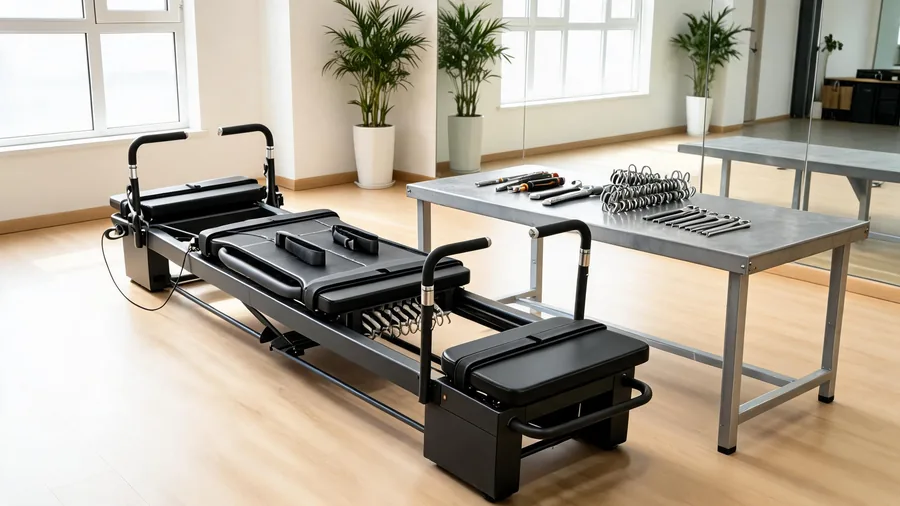
1. スプリング交換の時期
スプリングは、あらゆる ピラティス リフォーマーの心臓部です。リフォーマー特有の運動を可能にする可変抵抗を生み出し、その状態はエクササイズの質、顧客の安全、ワークアウト体験の一貫性に直結します。数十年持つフレームとは異なり、スプリングは寿命の決まった消耗部品です。いつ交換すべきか、そして正しく交換する方法を知ることは、スタジオ経営者にとって欠かせないメンテナンス知識です。
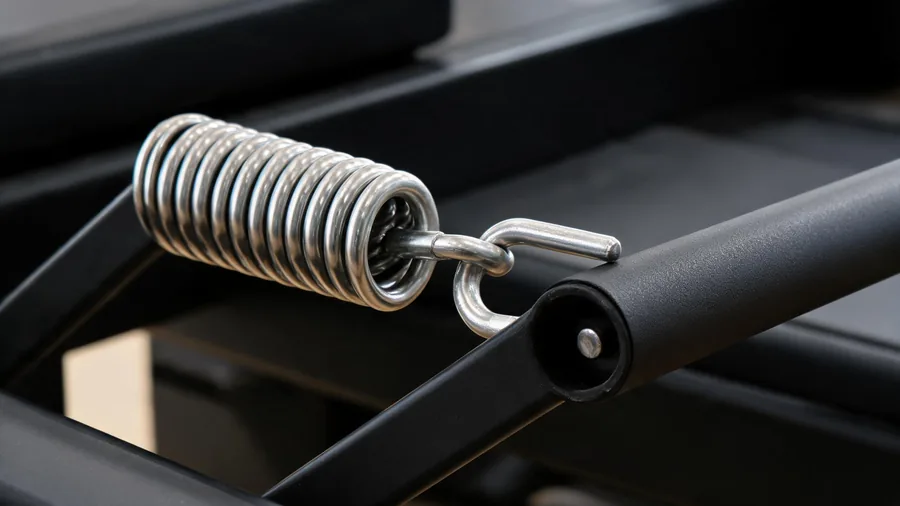
ピラティスリフォーマーのスプリング交換時期は使用状況によって変わります。各リフォーマーで1日10クラスを運営するスタジオなら、6〜8か月ごとに交換してください。週3回トレーニングする家庭ユーザーなら、スプリング寿命は3〜5年が目安です。交換時期の管理は、カレンダーよりサイクル数の記録のほうが正確です。多くのスタジオは、各リフォーマーのフレームに簡単な記録表を貼り、クラス回数を記録しています。
2. スプリング交換:工具と準備
交換を始める前に、以下を用意してください。お使いのリフォーマーモデルに合った交換用スプリング、安全に脱着するためのスプリングフックツール、スプリングの張力から手を守る安全手袋、そして清潔な作業スペースです。キャリッジ全体で張力を一定に保つため、スプリングは必ずセット単位で交換してください。同じ定格張力でも古いものと新しいものを混ぜると抵抗が不均一になり、エクササイズの質に影響します。
ピラティスリフォーマーのスプリングは、特定の力の範囲で作動するように設計された引張スプリングです。一般的な業務用リフォーマーでは、1mm伸びるごとに1.0kg〜2.5kgの抵抗を持つスプリングが使われ、多くは色分けで識別できます。各スプリングは寿命の中で数十万回の荷重サイクルを受けます。伸びと戻りのたびに、スプリング線材、とりわけ引張応力が最も高いコイル内面に微細な疲労が蓄積します。
スプリングの疲労は累積的で、非線形です。寿命の90%までは同じ性能を保ち、その後急速に劣化することがあります。主な兆候は、抵抗感の変化(「柔らかい」「緩い」と感じる)と、コイル形状の目に見える変形です。目で測れる永久伸び(セット)が生じ、元の自由長を超えた時点で抵抗カーブは変わっており、直ちに交換すべきです。
3. スプリング交換の手順
スプリング表面の目立つ錆や腐食は、最も明らかな交換サインです。クロムめっきや亜鉛めっきのスプリングは腐食に強いものの、塩分の多い海沿いのスタジオ環境では無傷とはいきません。触るとざらつく小さな黒い斑点の孔食は、保護皮膜が破れ、線材が劣化している証拠です。
自由長の減少は、最も信頼できる定量的な指標です。無負荷状態の長さを測り、元の仕様と比べてください。自由長が3%以上伸びたスプリングは弾性限界を超えており、安定した抵抗を得られません。仕様が20cmのスプリングなら、無負荷で20.6cm以上になったものは引退させるべきです。
使用中の感触の変化——同じ可動域を動かすのに必要な力が軽くなる、あるいは滑らかで漸進的な抵抗ではなく「跳ねる」感じがする——は、スプリング内部の減衰特性が変わったことを示します。長さの変化が測れる前に、経験のあるインストラクターが気づくことも多いです。
4. 交換後のスプリング検査
交換間隔は使用量によって決まります。1日8〜10クラスで使う高稼働の業務用スタジオなら、6〜8か月ごとに交換します。1日4〜5クラスの中程度の使用なら12〜18か月です。小規模なプライベートスタジオなら2〜3年に1回で足りる場合もあります。最も安全なのは、機械ごとのクラス回数を記録し、実際の使用データに基づいて一定間隔で交換することです。
多くの業務系運営者は、スプリング交換をずらして行います。各リフォーマーの半分をある時期に、残り半分を次の時期に交換する方法です。これにより、1台のすべてのスプリングが同時に寿命を迎えるのを防げます。また、新品と部分的に摩耗したスプリングの比較基準ができるため、交換時期の判断に役立ちます。
スプリング交換のたびに検査結果を記録すると、将来の交換時期を予測できるメンテナンス履歴ができます。スタジオは、保有する各リフォーマーの交換日、スプリング仕様、検査値を記録しておくべきです。
5. 交換用スプリングの仕様
ピラティスリフォーマーのスプリング交換では、正しい仕様を合わせる必要があります。線径(業務用は通常1.8〜2.2mm)、全長(リフォーマーモデルによる)、端部の取付形状(フック、アイレット、スナップ)です。誤った仕様のスプリングは安全性と性能を損ないます。Megacoreのような工場直販メーカーは、自社リフォーマーとの互換性を確保するため、交換用スプリングごとに詳細な仕様を提供しています。
交換用スプリングは元の仕様に正確に合わせる必要があります。重要なのは、線径(リフォーマー用は通常1.8〜2.2mm)、コイル径、自由長、有効巻数、ばね定数(kg/mmまたはlbs/inch)です。線径が同じでもコイル径や有効巻数が違えば、全長が同じでも抵抗カーブは変わります。
端部の形状——フレームとキャリッジに取り付くループやフック——も一致させる必要があります。閉ループ、オープンフック、延長フックは、リフォーマーの取付部を改造しない限り互換性がありません。交換用スプリングを注文する際は、リフォーマーの正確なモデルと製造年を伝え、供給元が端部形状の一致を確認できるようにしてください。
スプリングの材質グレードも重要です。ミュージックワイヤー(ASTM A228)は、 業務用リフォーマースプリングの標準材 で、高い引張強度と耐疲労性を備えています。海沿いや高湿度の環境向けにはステンレススプリングもありますが、価格はミュージックワイヤーの約2倍です。クロムシリコン合金スプリングは一般的な材質の中で最も疲労寿命が長く、目立った永久変形が生じるまで50万回以上のサイクルに耐えます。
6. 交換用スプリングの在庫保管
新しいスプリングの取付けでは、3点に注意します。装着、位置合わせ、張力です。各フックは取付部に完全に収まっている必要があり、半端な装着は荷重でフックが開いて危険です。スプリングは隣のスプリングやフレームに干渉せず、真っ直ぐ垂れるようにします。取付後は、無負荷で自由長に戻ること、キャリッジ移動中にフレーム部品と擦れないことを確認してください。
スプリングは個別ではなく、必ずセットで交換してください。年数の違うものを混ぜると位置によって抵抗が変わり、顧客がどの抵抗で運動しているのか分からなくなります。同じ生産ロットの4〜5本セットなら、すべての位置で同じ抵抗カーブが得られます。
7. スタジオのメンテナンス体制
文書化した交換手順には、月次の全スプリング目視点検(腐食・変形)、四半期ごとのばね秤による張力検査、サイクル数に基づく計画交換を含めます。複数台を保有するスタジオは、機械ごとに管理する一元化されたメンテナンス記録が有効です。同じモデルのリフォーマーは同時に交換し、スタジオ全体でクラス体験を揃えましょう。
フロアにある全モデル分の予備スプリングセットを在庫しましょう。セットはコンパクトで、乾燥環境なら期限なく保管できるため、3か月分を余分に持っていても損はありません。海外発注なら、在庫計画に15〜30日の輸送期間を見込みます。保管中の腐食を防ぐため、シリカゲル乾燥剤とともに密閉ビニール袋で保管してください。
Megacoreは全リフォーマーモデル用のマッチング済みスプリングセットを供給しており、抵抗値別に色分けし、張力検査証明書を添付しています。当社のスプリングはASTM A228のミュージックワイヤー製で、亜鉛ニッケル皮膜により72時間の塩水噴霧耐食性を備えています。これは業界標準の24時間を大きく上回ります。各セットはロット単位でマッチングされ、キット内のすべてのスプリングが±2%の公差で同一の抵抗を示します。
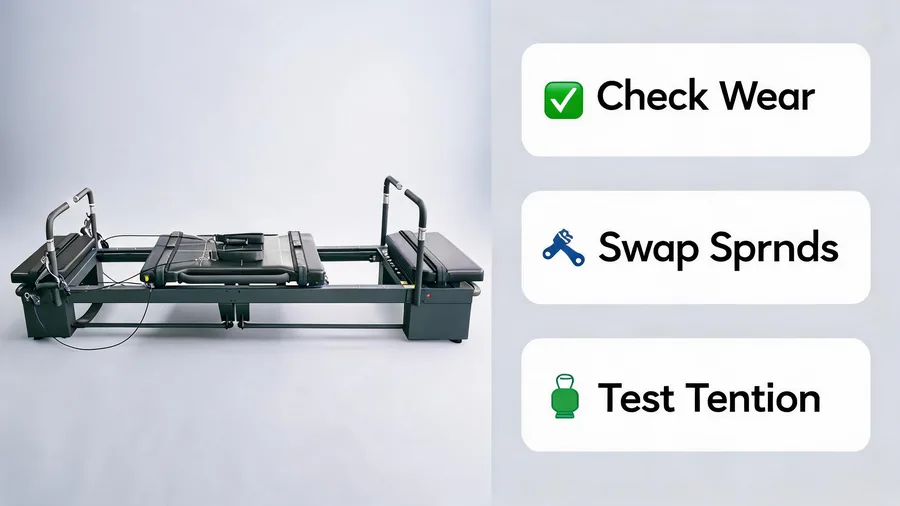
スプリング点検のスケジュールを文書化し、担当スタッフを決めましょう。毎週:全スプリングの錆、変形、損傷の目視点検。毎月:各スプリングの自由長を測定し、メンテナンス記録に記載。四半期ごと:抵抗品質の変化を見分けられるベテランインストラクターによる感触テスト。メンテナンス記録は保証請求の際の有力な資料となり、緊急になる前に交換時期を予測できます。 業務用ピラティスリフォーマーのベスト
スプリング交換に関するよくある質問
このピラティス機器は、エントリーモデルとどこが違うのですか?
ピラティスリフォーマーのスプリング交換は、業務用スタジオ経営者にとって欠かせないメンテナンス作業です。違いは素材と構造にあります。業務用グレードは全金属フレーム、密封ベアリング、校正済みスプリングを使用します。入門向け製品は劣化の早い軽量素材です。高品質なリフォーマーは5〜10年以上持ちますが、入門向けは1〜2年で交換が必要になることが多いです。
自分の用途に合っているかは、どう判断すればよいですか?
主な用途を考えてください。スタジオか家庭か、顧客層、クラス数、価格です。スタジオ経営者は耐久性とメンテナンス性を優先すべきです。家庭ユーザーは省スペース性と使いやすさを優先しましょう。汎用品を買うのではなく、自分の要件に仕様を合わせてください。
信頼できるメーカーには、どのような保証とサポートを求めるべきですか?
業務用機器には少なくとも2年間の構造保証と、部品1年間の保証が必要です。Megacoreのような工場直販メーカーは、多くの場合、延長保証と直接の技術サポートを提供しています。購入前には必ず保証内容を書面で取り寄せましょう。
まとめ
適切な機器を選ぶことは、ピラティスの練習やビジネスに大きな差を生みます。スタジオの開設、既存マシンの更新、自宅練習の環境づくり——いずれの場合も、自分のニーズに合った高品質な機器への投資が、長期的な満足と成果の土台となります。
リフォーマーの交換用スプリングをお探しですか?
業務用スタジオ向けに、純正のピラティスリフォーマー用スプリング交換部品をご用意しています。全張力レベルを在庫し、世界中に発送します。
Spring length and rating are model-specific, and the reformer model pages list both.