
The Role of Studio Environment in Client Experience
The physical environment of a Pilates studio directly influences client retention, class pricing, and brand perception. While equipment quality and instructor expertise are the foundation of a successful studio, the lighting and ambiance create the emotional context in which the training occurs. For studio owners designing a new space or renovating an existing one, understanding the interplay between lighting design and the Pilates experience is essential for creating an environment that supports both client outcomes and business objectives.
Studies in environmental psychology demonstrate that lighting conditions affect exercise performance, perceived exertion, and post-workout satisfaction. Clients exercising in well-designed environments with appropriate lighting report 20-30% higher satisfaction scores than those in poorly lit or harshly lit spaces. For Pilates studios where the training modality emphasizes body awareness and mind-body connection, the lighting environment plays an even more significant role in the overall experience.
Lighting Zones for Reformer Studios
Effective studio lighting design divides the space into functional zones with different lighting requirements. The equipment zone — where reformers are positioned — requires task-level illumination that allows clients and instructors to see adjustment mechanisms, rope attachments, and spring settings clearly. The recommended illumination level for the equipment zone is 300-500 lux at floor level, provided by overhead fixtures positioned to minimize shadows on the machines.
The movement zone — the area around each reformer where clients perform standing exercises and transitions — requires broader ambient lighting with fewer shadows. Diffuse overhead lighting with a color rendering index (CRI) of 90+ ensures that clients can see their body position clearly and instructors can observe movement quality. Linear LED fixtures running parallel to the reformer rails provide even illumination without creating distracting glare.
The perimeter and transition zones — including doorways, storage areas, and changing spaces — should be illuminated at 100-200 lux to provide safe navigation without competing with the primary lighting zones. Dimmer switches or zone-specific controls allow instructors to adjust the lighting balance between zones based on the class type and time of day.
Color Temperature and Its Effects
Color temperature, measured in Kelvin (K), significantly affects how clients perceive the studio environment and respond to the training stimulus. Warm light (2700-3000K) creates a relaxing, intimate atmosphere that supports the calming, meditative aspects of Pilates practice. Cool light (4000-5000K) promotes alertness and focus, making it more suitable for high-intensity reformer classes and morning sessions.
The optimal approach for many studios is a tunable white lighting system that allows instructors to adjust color temperature based on class type. A morning class might use 4000K light to help clients transition into their workout, while an evening restorative class might use 2700K to promote relaxation. Tunable systems cost 15-25% more than fixed-temperature systems but provide significantly greater programming flexibility.
For studios with windows, natural light should be incorporated into the lighting plan but managed to prevent glare on the reformer carriage. Adjustable blinds or curtains allow instructors to control natural light levels throughout the day. North-facing windows provide the most consistent natural light without the harsh directional quality of east or west exposures.
Acoustic Design: Sound and Silence
Sound management is as important as lighting in creating an effective Pilates studio environment. The acoustic profile of the space affects both the instructor’s ability to communicate and the client’s ability to focus on internal cues. Hard surfaces common in fitness spaces — concrete floors, glass walls, and exposed ceilings — create reverberation that makes verbal instruction difficult to understand and amplifies equipment noise.
Acoustic treatment should focus on reducing reverberation time to 0.5-0.8 seconds, which is the optimal range for instructional environments. This can be achieved through acoustic ceiling panels, wall-mounted sound-absorbing panels, and carpet or rubber flooring that absorbs impact sound. For studios with multiple reformers operating simultaneously, acoustic zoning prevents sound from adjacent classes from interfering with the instructional quality.
Music systems should be zoned to allow different areas of the studio to operate at different volume levels. Speakers positioned at ceiling height provide even coverage without creating hot spots or dead zones. The music volume should never exceed the instructor’s speaking volume, as clients need to hear both verbal instructions and the sounds of their own movement on the reformer.
Equipment Aesthetics in the Studio Environment
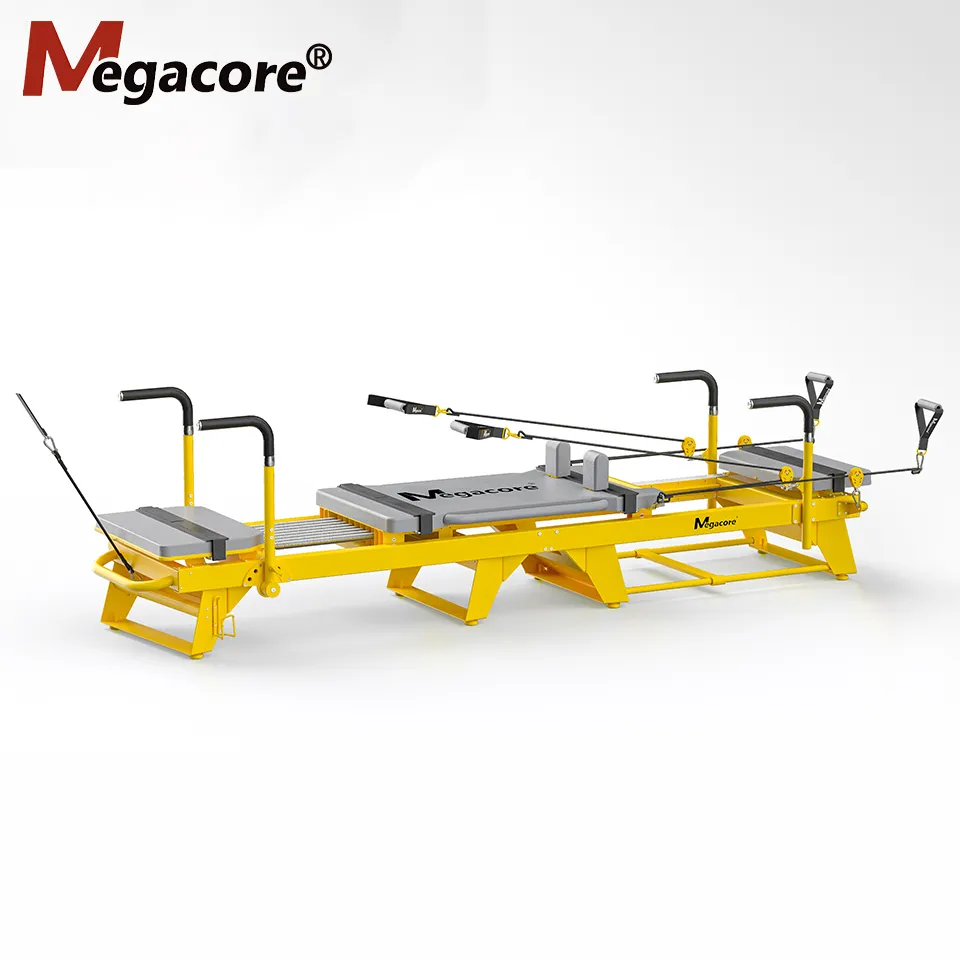
The visual design of the reformers themselves contributes to the overall studio ambiance. Commercial reformers with clean lines, consistent finishes, and professional appearance reinforce the quality message that the studio communicates to clients. Color customization options from factory-direct manufacturers allow studio owners to select reformer finishes that complement the overall design scheme.
Equipment placement should create visual order and flow. Reformers arranged in parallel rows with consistent spacing create a sense of professional calm. The carriage position should be visible from the instructor station, allowing instructors to monitor all clients without moving between machines. Storage for accessories should be integrated into the studio design rather than creating visual clutter.
The quality testing certification GZHL2601000020601SP applies to all reformer finishes and materials, ensuring that the aesthetic appearance of the equipment is backed by verified quality standards. Studio owners can reference this certification when communicating with clients about the quality standards maintained in their facility.
HVAC and Air Quality for Pilates Studios
Air quality is an often-overlooked component of studio ambiance that significantly affects client experience. Pilates studios require higher ventilation rates than typical commercial spaces because clients are breathing deeply and consistently throughout their sessions. The recommended ventilation rate for fitness spaces is 15-20 cubic feet per minute per person, approximately double the rate for standard office environments.
Temperature control should account for the wide variation in activity levels across different class types. A slow classical Pilates class generates less body heat than a high-intensity reformer flow, and the thermostat should be adjustable to accommodate these differences. The optimal temperature range for Pilates studios is 68-72°F, with individual zone controls for different class areas.
Conclusion: Environment as a Business Tool
The investment in studio lighting and ambiance directly impacts the studio’s ability to attract and retain clients, command premium pricing, and build a distinctive brand identity. By applying the principles of lighting design, acoustic treatment, and environmental psychology, studio owners can create spaces that enhance the Pilates experience and support their business goals. Factory-direct reformers with quality-certified construction through GZHL2601000020601SP and customizable aesthetics provide the equipment foundation for a studio environment that impresses clients from their first visit. Preparing Your Space for a Pilates Refor Preparing Your Space for a Pilates Refor