
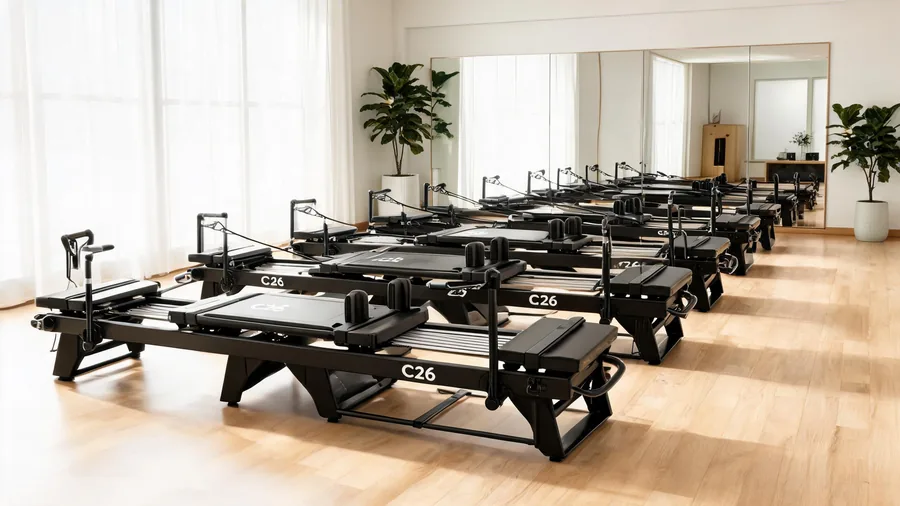
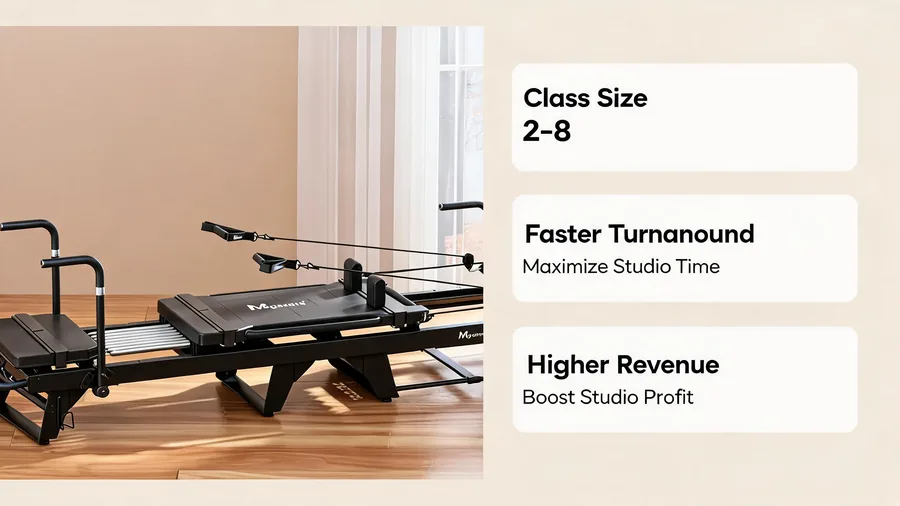
Întreabă majoritatea proprietarilor de studiouri care este cel mai profitabil format de curs al lor, iar răspunsul sincer îi surprinde: nu este ședința privată. Este cursul de reformer în grup mic — 2 până la 8 clienți, un instructor, o sală de reformere. Matematica este simplă și brutală în cel mai bun sens: ședințele private îți plafonează venitul la un client pe oră de instructor, în timp ce cursurile în grup mic îl multiplică de 4 până la 8 ori. În 2026, pe măsură ce frecventarea fitnessului boutique revine la nivelurile de dinainte de pandemie și prețurile cursurilor cresc cu aproximativ 6% de la an la an, studiourile care câștigă sunt cele care tratează capacitatea de grup mic ca model de afaceri central — nu ca un gând ulterior.
But the equipment side is where most studios leave money on the table. A reformer room configured for private sessions performs terribly in group format: too few machines, slow turnaround between classes, stations that can’t adapt to different client levels. This guide walks through the equipment math of small-group Pilates — how many reformers you actually need, how fast your room should turn over, how to configure each station — so you can build a room that prints money per square foot.
1. Matematica veniturilor: de ce grupul mic bate ședințele private
Fă calculul pentru un studio boutique tipic și concluzia este fără echivoc. Ia în considerare o piață americană de nivel mediu, un instructor, o sală:
Three private sessions fill an instructor’s morning at $255. Six small-group classes at 6 clients each generate $1,260 from the same instructor — nearly 5x the revenue from the same labor cost. This is why Pilates now represents over 43% of primary studio class formats in 2026 industry data, and why franchise models like Club Pilates and KX Pilates built their entire economics on group reformer rooms.
Partea delicată: economia de grup funcționează doar dacă echipamentul o susține. Asta înseamnă suficiente reformere, tranziții rapide și posturi care le permit clienților de niveluri diferite să lucreze în siguranță în același curs. Vezi ghidul de prețuri pentru abonamente pentru modul în care studiourile stabilesc profitabil prețurile acestor formate.
2. De câte reformere ai nevoie de fapt
Cea mai frecventă greșeală este să cumperi un reformer pentru fiecare loc din curs — și apoi să vezi aparatele stând nefolosite 70% din zi. Utilizarea reformerelor urmează un tipar clar: ai nevoie de suficiente aparate pentru vârful de solicitare al cursului de grup, nu pentru cursul tău mediu.
Here’s the practical sizing rule used by profitable studios:
- 1–2 aparate: Doar ședințe private și duo. Nu este viabil pentru economia de grup.
- 4–6 aparate: Un curs în grup mic (4–6 locuri). Aceasta este configurația minimă viabilă pentru grup.
- 8–10 aparate: Un curs complet de grup (8 locuri) plus supliment pentru ședințe private. Punctul optim pentru un studio boutique cu o singură sală.
- 12–16 aparate: Două blocuri de cursuri simultane sau un curs mare cu un al doilea instructor. Sala standard de franciză.
Why 8 spots as the sweet spot: below 8, your revenue per instructor-hour doesn’t justify a second room; above 10, individual cueing quality drops and clients notice. The full breakdown of room sizing — including how many reformers per square foot and how to handle waitlists — is in our ghidul despre câte reformere sunt necesare.
3. Timpul de tranziție: scurgerea ascunsă de profit
Here’s a number most studio owners never calculate: rotația sălii. If your group class is scheduled for 60 minutes but clients take 8 minutes to exit, wipe down, and the next group takes 8 minutes to settle in, you’ve lost 16 minutes — meaning your “60-minute” class actually delivers 44 minutes of training and blocks your room for 76 minutes.
That hidden loss directly caps your daily class count. A room that turns over in 10 minutes runs 6 classes in a 6-hour day. A room that takes 20 minutes to turn runs 4. That’s a 33% revenue difference from the same room, same rent, same instructor.
Alegi echipamente care reduc timpul de tranziție:
- Suprafețe ușor de curățat: Tapițeria sigilată și cadrele vopsite prin pulverizare se șterg în câteva secunde. Materialul textil care absoarbe transpirația dublează timpul de curățare.
- Configurații standardizate: Reformerele cu aceleași configurații de arcuri și chingi în toată sala le permit instructorilor să remonteze rapid posturile.
- Spațiu între posturi: Aparatele înghesuite fac ieșirea și reintrarea lente. Spațierea corectă se plătește singură prin rotație.
- Depozitare pentru accesorii: Boxes, jump boards, and props within arm’s reach of each station — not a pile in the corner.
Analiza noastră ghidul de curățare acoperă fluxul de ștergere, iar ghidul despre cerințele de spațiu conține cifrele pentru spațierea posturilor.
4. Configurarea fiecărui post pentru grupuri cu niveluri mixte
Partea cea mai grea a predării la reformer în grup este gestionarea nivelurilor diferite în același curs. Echipamentul poate rezolva cea mai mare parte — dacă îți configurezi posturile deliberat.
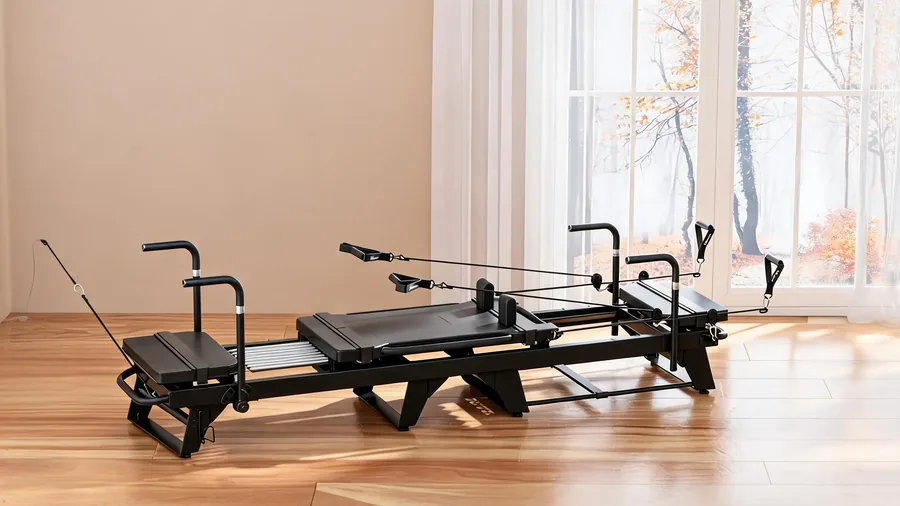
- Varietate de arcuri la fiecare post: Fiecare post are nevoie de întreaga gamă de arcuri (de la ușor la greu). Un începător folosește rezistență mai mică; un client avansat la același post folosește una mai mare. Seturile uniforme de arcuri fac imposibilă diferențierea pe niveluri.
- Bară pentru picioare și suport de cap reglabile: Nenegociabil pentru înălțimi și niveluri diferite. Aparatele cu poziții fixe îi obligă pe toți la aceeași configurație.
- Lăzi la fiecare post: Lada este calul de povară al cursului de grup — adaugă amplitudine verticală și opțiuni de progresie fără echipament suplimentar.
- Disponibilitatea plăcii de săritură: Nu fiecare post trebuie să aibă una montată, dar fiecare post ar trebui să fie compatibil. Schimbarea plăcilor între cursuri costă minute.
- Înălțime constantă a platformei: Dacă aparatele au înălțimi diferite în sală, clienții și instructorii observă, iar corectarea devine mai dificilă.
Pentru lista completă de accesorii și ce adaugă fiecare piesă unui program de grup, vezi ghidul de accesorii pentru reformere.
5. Scenarii de sală: configurații reale care funcționează
Iată trei configurații de sală dovedite, dimensionate pentru matematica veniturilor din secțiunea 1:
Cifrele de venit presupun disciplina de tranziție de 10 minute din secțiunea 3. Fără ea, scade 20–30% din fiecare rând. ROI pentru reformere îți permite să introduci propriile prețuri, numere de cursuri și costuri ale aparatelor pentru a-ți modela scenariul exact.
6. Cumpărarea pentru format de grup: ce să specifici furnizorului
Când cumperi reformere pentru o sală de grup, fiecare aparat trebuie să fie de calitate comercială și identic ca configurație. Cerințele specifice:
- Cadru și arcuri comerciale: Sălile de grup rulează 8–12 cursuri pe zi. Aparatele de calitate rezidențială cedează în mai puțin de doi ani la acest nivel. Ghidul nostru despre echipamentele de calitate comercială enumeră specificațiile care contează.
- Unități identice în toată sala: Brandurile sau configurațiile amestecate fac diferențierea pe niveluri și instruirea mai dificile. Comandă un singur model, o singură specificație, o singură culoare.
- Seturi complete de arcuri incluse: Confirm every machine ships with the complete range, not a “standard” subset you’ll have to upgrade.
- Tapițerie sigilată, care se poate șterge: Fluxul tău de curățare depinde de asta. Cere specificația materialului înainte de a comanda.
- Termen de livrare și control al calității constante: Cu peste 10 aparate comandate, consistența loturilor contează. Întreabă fabrica despre controlul calității la expediere și testarea la sarcină — ghidul nostru despre controlul calității acoperă întrebările pe care trebuie să le pui.
Cumpărarea direct de la un producător precum Megacore (24 de ani de construcție de reformere comerciale) înseamnă că poți comanda 6, 10 sau 16 aparate identice, cu exact seturile de arcuri și tapițeria de care are nevoie programul tău — și că primești datele de control al calității care să le susțină. Vezi comparația noastră cele mai bune reformere pentru studiouri pentru ce să urmărești.
7. Întrebări frecvente
Î: De câte reformere am nevoie ca să încep să ofer cursuri de grup?
R: Patru este minimul pentru un curs viabil în grup mic; 6–8 este punctul optim practic, care justifică costul instructorului și menține calitatea cursului ridicată. Începând cu 4 poți testa cererea înainte de a angaja mai mult capital.
Î: Ar trebui ca fiecare reformer să aibă aceleași arcuri?
R: Da — seturi identice cu gamă completă pe fiecare aparat. Diferențierea pe niveluri în cursurile de grup vine din alegerea unor arcuri diferite pe același aparat, nu din aparate diferite.
Î: Cât spațiu are nevoie o sală de grup cu 8 reformere?
R: În jur de 800 de picioare pătrate pentru 8 aparate, cu spațiere corectă a posturilor și circulație pentru instructor. Înghesuirea sălii economisește chirie, dar te costă în timp de tranziție și în experiența cursului — vezi ghidul de spațiu linkat mai sus pentru dimensiuni exacte.
Î: Pot combina ședințele private și cursurile de grup în aceeași sală?
R: Da, și majoritatea studiourilor o fac — ședințe private în orele cu solicitare redusă, grupuri în orele de vârf. Doar păstrează toate aparatele identice, ca ambele formate să funcționeze pe orice post, și protejează intervalele de grup din vârf de rezervările private.
8. Rezumat: construiește sala, apoi vin veniturile
Cursurile de reformer în grup mic sunt cel mai fiabil motor de profit din fitnessul boutique în acest moment. Studiourile care captează acest profit sunt cele care și-au construit sălile deliberat: suficiente aparate comerciale identice, fluxuri rapide de tranziție și posturi configurate pentru niveluri mixte.
If you’re planning a new room or expanding an existing one, contactează Megacore for a room configuration consultation — we’ll help you spec the right number of machines, spring sets, and accessories for your square footage and your class schedule. You bring the programming; we bring the equipment math.
Ghiduri conexe
- Câte reformere sunt necesare pentru un studio de Pilates
- Calculator ROI pentru reformere Pilates
- Ghidul reformerelor Pilates de calitate comercială
- Dimensiuni și cerințe de spațiu pentru reformer
- Ghid de prețuri pentru abonamentele Reformer Pilates
Per-station cost math starts from the commercial grade range.