
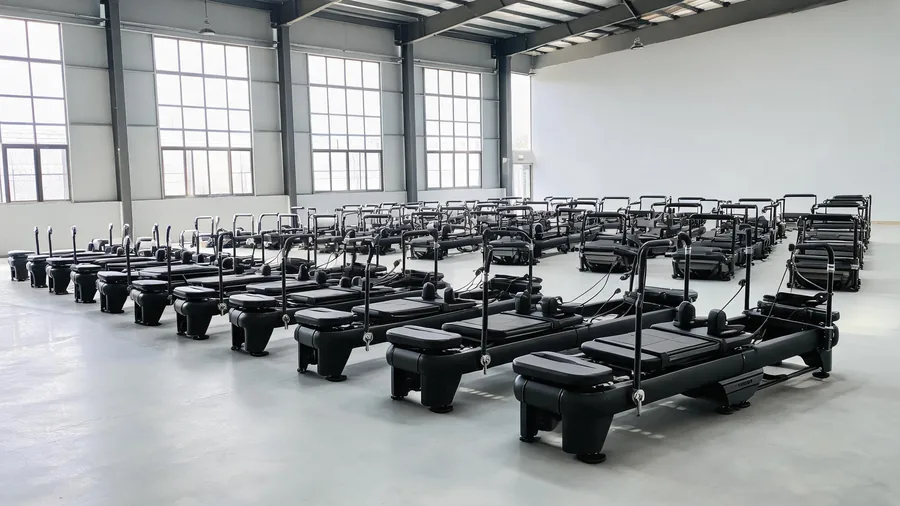
Izbira Kitajski proizvajalec naprav za pilates »Reformer« is one of the most consequential decisions a studio owner or distributor makes. China is the world’s main production hub for fitness equipment, and Pilates is no exception, but the range of quality and credibility between suppliers is enormous. This guide walks through how to identify, vet and work with a China Pilates reformer manufacturer you can rely on.
Vodnik po kitajskih proizvajalcih Pilates reformerjev: kako najti in oceniti tovarne
This section explains why China leads Pilates reformer production worldwide.
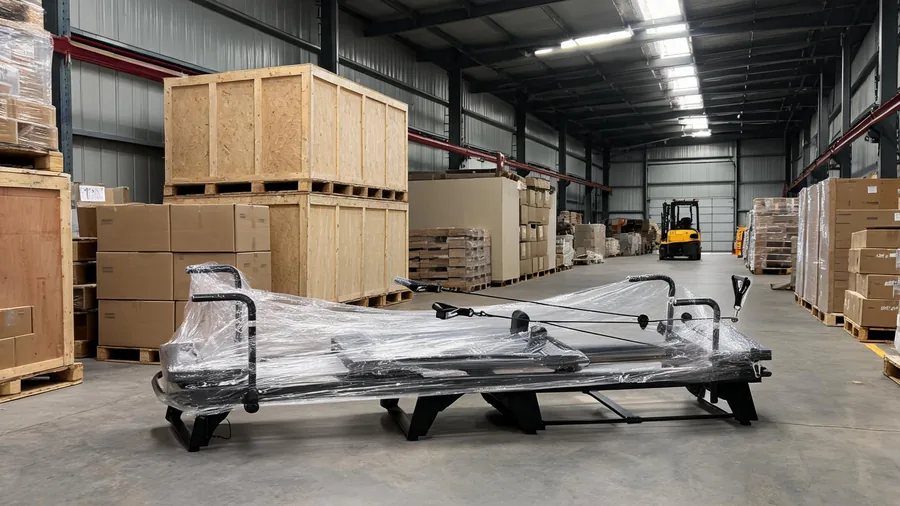
Why China Dominates Pilates Reformer Manufacturing
Over the past decade, China has built a dense ecosystem of metal fabrication, precision machining, and assembly expertise that directly serves the fitness equipment sector. Cities like Huizhou, Dongguan, and Xiamen host hundreds of factories producing everything from spring-loaded reformers to Cadillacs and Wunda chairs. The advantages are clear: mature supply chains for raw materials like stainless steel and aluminum, skilled labor pools, and production costs that undercut Western and European alternatives by 40–60%, according to International Trade Administration manufacturing data. However, cost savings alone are not a sufficient reason to commit. The real value lies in finding a manufacturer that pairs competitive pricing with commercial-grade construction, consistent quality control, and responsive after-sales support.
A studio equipped with well-built reformers retains clients longer, reduces maintenance downtime, and commands higher class fees. That is why the search for a China Pilates reformer manufacturer should begin with quality requirements, not price floors.
Key Criteria for Evaluating a Pilates Reformer Factory
Not all factories that claim to manufacture Pilates reformers produce equipment that is safe, durable, or suitable for commercial use. Here are the essential evaluation criteria.
Frame Construction and Materials
The frame is the backbone of any reformer. Look for factories that use solid steel tubing with a minimum wall thickness of 2.0 mm for commercial models. Welds should be clean, continuous, and reinforced at stress points. Beechwood or Baltic birch platforms indicate higher attention to material quality. Avoid manufacturers that cut corners with thin-gauge metals or particle board components that degrade under daily studio use.
Spring Quality and Tension Consistency
Springs are the heart of the reformer experience. Reputable China Pilates reformer manufacturers use high-tensile spring steel with consistent coil diameter and heat treatment. Each spring should be individually tested for tension accuracy before leaving the factory. Inconsistent springs lead to uneven resistance, client frustration, and increased injury risk. Ask factories for spring cycle test reports — commercial reformers should pass 50,000+ cycles without measurable tension loss.
Quality Control and Inspection Processes
A factory’s commitment to quality is visible in its inspection workflow. Leading manufacturers implement three-stage QC: incoming raw material inspection, in-process checks during assembly, and final pre-shipment testing. Look for recognized quality management certification and ask whether the factory opens and inspects every unit or relies on batch sampling. Factories that work with brands like Megacore subject every reformer to a 27-point inspection before it ships.
MOQ and Customization Flexibility
Minimum order quantities vary widely. Large OEM factories may require 50–100 units per design, while more agile manufacturers accept orders as low as 10–20 units, especially for standard models. If you need custom branding, color matching, or proprietary dimensions, verify the factory’s in-house capabilities. Shops that operate their own powder-coating lines and CNC machining centers can deliver custom work faster and with tighter tolerances.
Factory Tier Comparison: Entry vs. Commercial vs. Premium
Understanding the market segmentation is critical to setting realistic expectations. The table below compares the three main tiers of Pilates reformer factories in China.
If you are opening a commercial studio, the entry-level tier carries hidden costs: frequent spring replacements, frame wobble, and diminished client experience that ultimately hurts retention. The commercial-grade tier, which includes reputable brands like Megacore, delivers the longevity and performance required for 15+ classes per day.
How to Vet a China Pilates Reformer Manufacturer Before Ordering
Due diligence separates a successful partnership from a costly mistake. Follow these steps before placing your first order.
Request Product Specifications and Test Reports
Ask every shortlisted manufacturer for detailed spec sheets: frame dimensions, material grade, spring weight ratings, carriage bearing type, and maximum user weight. Legitimate factories supply these without hesitation. Cross-check their claims by requesting third-party test reports for spring fatigue, frame load capacity, and coating adhesion.
Order Pre-Production Samples
Never commit to a bulk order without evaluating a physical sample. Ship the unit to your location or use a freight forwarder’s inspection warehouse. Check carriage glide smoothness, listen for spring noise during transitions, and test all adjustment mechanisms. If possible, have an experienced instructor use the reformer for a full session to assess ride quality under load.
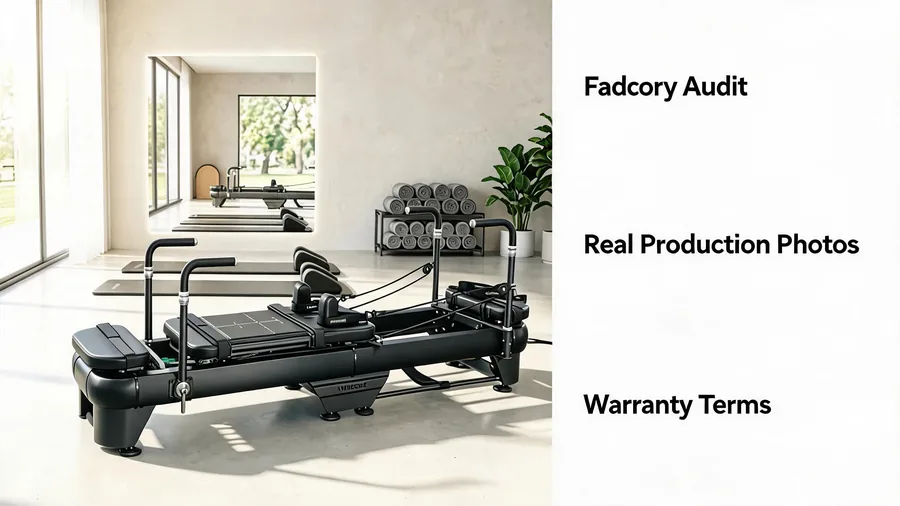
Conduct a Factory Audit or Hire an Inspector
A video call walkthrough is better than nothing, but an in-person or third-party audit is far more revealing. Companies like SGS, Bureau Veritas, or QIMA offer factory inspection services throughout China. They will verify worker safety conditions, machine maintenance logs, raw material inventory, and production capacity. For studio owners who cannot visit China personally, this is the most reliable way to confirm that the manufacturer matches its marketing claims.
For a deeper look at red flags during the supplier search, see our guide on rdeče zastavice pri dobaviteljih Pilates reformerjev.
Shipping, Duties, and Import Logistics
Once you have selected a China Pilates reformer manufacturer, the next hurdle is getting the equipment to your door. Most factories quote FOB (Free on Board) pricing, which covers production and loading at the origin port. You or your freight forwarder then manage ocean freight, import duties, and inland delivery. Plan for an additional 20–35% on top of the FOB price for shipping, customs clearance, and local trucking. Grouping your order into a full container load (FCL) rather than less-than-container (LCL) reduces per-unit shipping costs significantly when ordering 20+ reformers.
Če nabavljate opremo za studio v tujini, vodnik o uvozu opreme reformerjev s Kitajske podrobno obravnava carinsko dokumentacijo, tarifne kode in dobavne roke.
Comparing Factory-Direct Brands vs. Intermediaries
Many studio owners discover they have been buying from intermediaries rather than manufacturers. A trading company may purchase from the same factory pool and mark up 30–50% while offering no additional quality assurance. Working directly with a verified China Pilates reformer manufacturer eliminates this markup and provides direct access to the production line. Megacore deluje po lastnem modelu proizvodnega partnerstva, ki kupcem omogoča cene neposredno iz tovarne, ne da bi pri tem žrtvovali specifikacije komercialne kakovosti, garancijsko kritje ali namensko podporo.
Pogosto zastavljena vprašanja
How do I know if a China Pilates reformer manufacturer is legitimate?
Check the manufacturer’s business license and registration through China’s National Enterprise Credit Information. Platforms like Alibaba offer factory assessment reports and trade assurance for supplier verification. Publicity System. Request references from at least three past clients you can contact directly. A legitimate factory will also provide clear factory photos, production videos, and a physical address that matches its registration. Avoid suppliers that only offer a WeChat or WhatsApp number with no verifiable business entity.
What is the typical lead time for a bulk order of reformers?
For standard commercial reformers produced by an established manufacturer, lead time typically ranges from 30 to 60 days after order confirmation. Custom orders with proprietary paint colors or branding may extend to 60–90 days. Always factor in an additional 25–40 days for ocean freight depending on the destination port.
Can I visit the factory myself as a foreign buyer?
Yes. Most manufacturers in Guangdong, Fujian, and Zhejiang provinces welcome foreign buyers and can arrange airport pickup, factory tours, and even local accommodation. Plan your visit after an initial round of video calls and documentation review so you arrive prepared with a checklist of specific items to inspect.
What warranty should a reputable China Pilates reformer manufacturer provide?
Entry-level factories typically offer 6–12 months. Commercial-grade manufacturers, including those supplying Megacore, provide 3–5 year frame warranties with 1–2 years on springs and upholstery. Premium OEM partners may extend to 10 years on frames. Always get the warranty terms in writing and clarify whether it covers replacement parts, labor, or both.
Is it more cost-effective to buy directly from a Chinese factory than from a local distributor?
Factory-direct pricing is typically 30–50% lower than distributor pricing for comparable equipment. However, the savings come with added responsibility — you manage shipping, customs clearance, and any defect resolution. Brands like Megacore bridge this gap by offering factory-direct pricing while handling logistics and providing localized support, giving you the best of both worlds.
Zaključek
Choosing the right China Pilates reformer manufacturer is a strategic investment that shapes your studio’s equipment quality, operational costs, and client satisfaction for years to come. Focus on factories with proven commercial-grade construction, transparent quality processes, and a willingness to share test reports and client references. The Pilates Method Alliance (PMA) provides guidelines for evaluating commercial Pilates equipment quality. Avoid basing your decision solely on lowest pricing — the hidden costs of poor materials, inconsistent springs, and inadequate warranties far outweigh the initial savings.
Whether you are ordering 10 reformers for a boutique studio or outfitting a multi-location franchise, taking the time to evaluate frame specs, QC procedures, and manufacturer reputation will pay dividends in equipment longevity and member experience. Megacore offers factory-direct Pilates reformers built to commercial standards, with per-unit inspections, competitive pricing, and global shipping support for studio owners who want quality without the complexity of managing an overseas factory relationship alone.
Editor’s note: For additional resources, see our Pilates studio equipment checklist and the comparison of China Pilates equipment factory vs. local supplier.
Sorodni vodniki
- Vodič za nakup Pilates reformerja 2026
- Najboljši Pilates reformer za uporabo v studiu
- Vodič po nosilnosti
- Vodič po garanciji za opremo
Factory capability, certifications and audit records are on the reformer manufacturer page.