
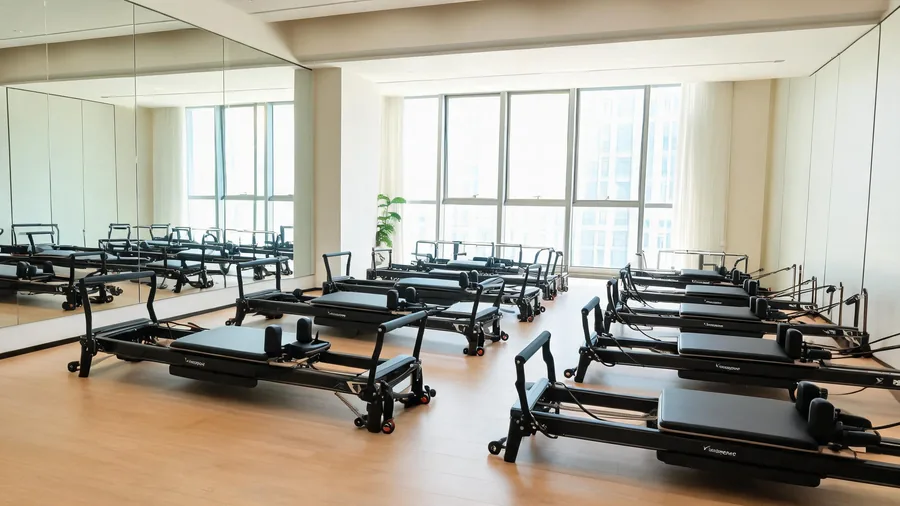
A pilates reformer with tower combines two classic apparatuses into one machine: the sliding carriage of a reformer plus the spring-loaded tower (also called a trapeze table unit) mounted at the head end. The tower adds dozens of exercises that a standard reformer cannot do — arm springs, leg springs, roll-down bar, and push-through bar work. For studio owners, the question is practical: does the extra cost and footprint pay for itself in class programming? This 2026 guide breaks down what a tower actually adds, which exercises justify the upgrade, and how to spec one for a commercial studio.
1. What a Pilates Reformer with Tower Adds to Your Studio
A pilates reformer with tower is two machines in one footprint. The reformer carriage, springs, and footbar remain exactly as on a standard model. The tower frame rises behind the headrest and carries four to five spring stations: two arm springs, one or two leg springs, a roll-down bar, and a push-through bar. That converts roughly 40 percent of the exercise vocabulary of a Cadillac — historically a separate, expensive apparatus — onto the reformer itself.
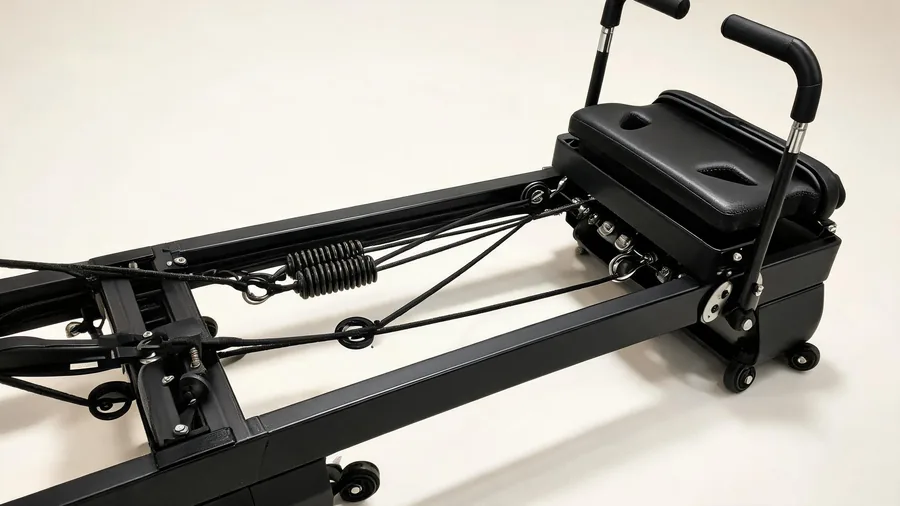
For a boutique studio, the benefit is class programming density. One machine supports reformer sessions, tower sessions, and hybrid formats without dedicating floor space to a full Cadillac. Commercial studios running mixed schedules typically recover the tower’s added cost through additional class types within 12 to 18 months.
2. The 12 Tower Exercises That Matter Most
These twelve movements represent the highest-value tower work for a commercial studio — the exercises clients ask for by name and instructors teach most often. All twelve are possible on a pilates reformer with tower and none are possible on a standard reformer.
3. Tower vs Cadillac: What You Gain and Give Up
The most common question from studio owners is whether a pilates reformer with tower replaces a Cadillac. The honest answer: it covers the most-used 60 to 70 percent of Cadillac work — arm springs, leg springs, roll-down bar, and push-through bar — at roughly one-third of the floor space. What it does not include are the trapeze and mat platform, the full-length springboard, and the wider range of hanging and inversion work that a Cadillac offers.
For most new studios, starting with reformer-tower combos and adding one Cadillac later is the capital-efficient path. For established studios, a tower-equipped reformer lets you add apparatus variety without a second equipment bay.
4. Space, Weight, and Installation Requirements
A pilates reformer with tower needs roughly the same footprint as a standard reformer — about 96 inches long and 30 inches wide — plus 24 inches of clearance above for the tower frame and spring work. Ceiling height of at least 8 feet is recommended for standing roll-down and hanging exercises. The tower frame adds approximately 15 to 20 kg to machine weight, so floor stability matters more than on a standard unit.
Installation is straightforward: the tower bolts to the reformer frame at the head end, and most models ship as a single unit. Wall mounting is not required, although anchoring is recommended in studios with very active spring work.
5. Pilates Reformer with Tower: Spring Sets and Resistance
Tower springs are rated by resistance, typically color-coded from light (0.5 kg) to heavy (2.5 kg). A pilates reformer with tower should include at least two arm springs, one to two leg springs, and the roll-down and push-through bars in the base configuration. Commercial studios should order one spare set per four machines, since tower springs see heavy daily use and wear faster than reformer carriage springs.
6. Choosing a Pilates Reformer with Tower: 2026 Spec Checklist
When evaluating a pilates reformer with tower for commercial use, verify these specifications before ordering:
- Steel frame with 2.0 mm+ wall thickness and a rated weight capacity of at least 250 kg
- Tower attachment bolts to the frame (not the carriage) to avoid stress on moving parts
- Color-coded, replaceable springs with consistent tension across sets
- Roll-down bar with adjustable height and secure locking
- Push-through bar that travels smoothly through the frame
- Three-year warranty covering both frame and tower components
7. Cost of a Pilates Reformer with Tower
Factory-direct pricing for a commercial pilates reformer with tower typically runs 30 to 45 percent higher than the equivalent reformer alone. A standard commercial reformer ranges from $1,200 to $2,800; tower-equipped models from $1,700 to $3,900 depending on frame material, spring count, and upholstery grade. The tower’s value shows up in revenue: studios can price tower classes at a premium because the apparatus is scarcer in most markets.

8. คำถามที่มักถูกถาม
Will a pilates reformer with tower fit my existing studio space?
Yes, if you have space for a standard reformer plus 24 inches of overhead clearance. The footprint is nearly identical to a standard reformer; the tower rises above the head end.
Does the tower replace a full Cadillac?
It covers the most-used 60 to 70 percent of Cadillac exercises — arm and leg springs, roll-down bar, push-through bar. Trapeze, mat platform, and inversion work still require a full Cadillac.
How much more does a tower cost than a standard reformer?
Factory-direct, expect 30 to 45 percent above the reformer-alone price. For a commercial studio, tower classes typically command a premium rate that offsets the difference.
Can I add a tower to my existing reformer later?
Only if the frame is designed for tower attachment. Retrofitting a standard reformer is rarely cost-effective; buying a tower-ready model from the start is the safer path.
What maintenance does the tower need?
Inspect tower springs monthly for stretching or corrosion, check bar locking mechanisms before each class, and wipe down the frame after sessions. Springs should be replaced every 12 to 18 months in busy studios.
Is the tower suitable for home use?
Yes — home users with 8-foot ceilings and a dedicated space benefit most, since tower work adds variety that keeps home practice engaging. Compact tower models are available for smaller rooms.
สรุป
A pilates reformer with tower is the highest-value single upgrade a studio can make in 2026: it adds a second apparatus’s worth of programming to the same footprint, supports premium-priced class formats, and keeps capital costs below a separate Cadillac purchase. Spec the frame for commercial use, verify spring quality and warranty coverage, and the tower will pay for itself through class revenue within its first year and a half.
คู่มือที่เกี่ยวข้อง
- Pilates Reformer Platform Extender Guide
- Reformer vs Megaformer vs Cadillac
- Reformer Dimensions and Space
External Resources
The following industry resources provide authoritative guidance on this topic: