
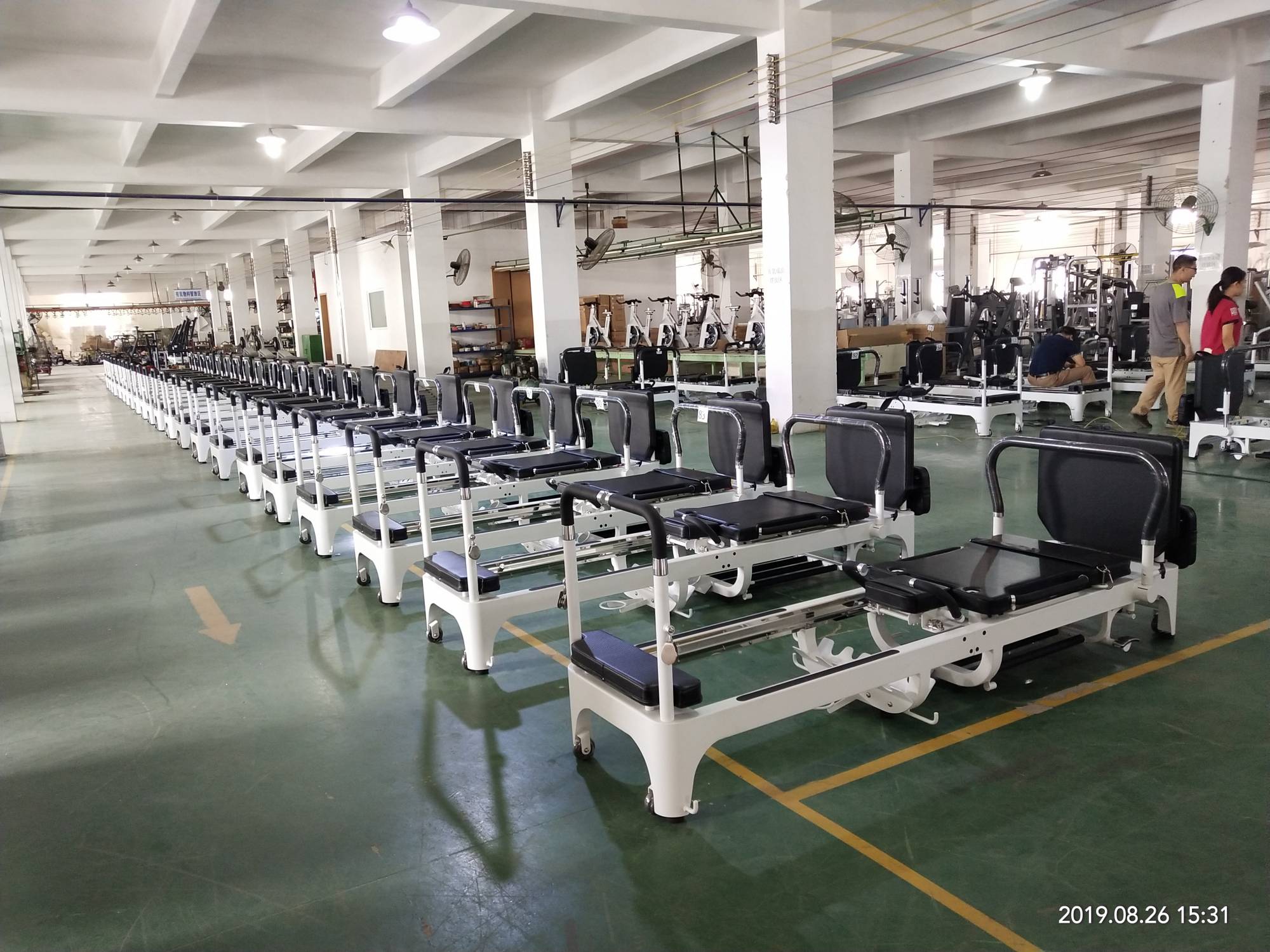
Reformer Pilates has gained significant recognition in clinical and rehabilitation settings. Physical therapists, chiropractors, and sports medicine practitioners increasingly prescribe reformer exercises as part of injury recovery and functional rehabilitation programmes. The controlled resistance, adjustable range of motion, and low-impact nature of the reformer make it uniquely suited for clinical applications where traditional exercise equipment may be too aggressive or insufficiently controlled.
This article examines the clinical evidence supporting reformer Pilates for rehabilitation, the specific equipment features required for therapeutic use, and practical guidelines for integrating reformers into a physical therapy or rehabilitation practice.
Clinical Evidence for Reformer-Based Rehabilitation
A growing body of peer-reviewed research supports the use of reformer Pilates across multiple rehabilitation diagnoses. A 2022 systematic review published in the Journal of Orthopaedic & Sports Physical Therapy analysed 14 randomised controlled trials involving 876 patients with chronic low back pain. The review concluded that reformer-based Pilates was significantly more effective than standard physical therapy for improving functional outcomes, with a mean effect size of 0.72 — classified as a moderate to large treatment effect. Patients receiving reformer-based rehabilitation showed 34% greater improvement in pain scores and 28% greater improvement in functional capacity compared to control groups.
A 2023 study in Clinical Rehabilitation examined reformer training for patients recovering from total knee arthroplasty. The group receiving reformer-based rehabilitation showed 18% greater improvement in knee range of motion and 22% greater improvement in quadriceps strength at 12 weeks post-surgery compared to the control group receiving conventional physiotherapy alone. Researchers attributed the improvement to the closed-chain nature of reformer exercises, which allow progressive loading through the joint while maintaining controlled movement patterns.
Lower Back Rehabilitation Studies
Post-Surgery Recovery Protocols
Joint Rehabilitation Outcomes
Additional studies have documented benefits for shoulder impingement syndrome — reformer exercises improved scapular control and reduced pain scores by 41% over an 8-week intervention period. For patellofemoral pain syndrome, reformer-based quadriceps training reduced pain by 34% more than standard closed-chain exercises. Post-stroke rehabilitation has also shown promise, with reformer training improving balance scores by 26% and gait parameters by 18% in a 10-week programme involving 42 chronic stroke survivors.
Equipment Requirements for Clinical Settings
Rehabilitation settings require reformers with features beyond those needed in fitness studios. Precise resistance control is paramount — springs must provide consistent, repeatable resistance within ±3% of rated values. Clinical protocols prescribe exact spring configurations for specific exercises, and deviation alters the therapeutic dose. Springs should be individually calibrated and resistance values printed on colour-coded tags.
Full range-of-motion adjustability is essential. The footbar requires a minimum of 4 height positions and 2 angle positions to accommodate patients with varying mobility limitations. The carriage should have a mechanical stop option that locks in place with a pin mechanism, allowing the therapist to limit carriage travel to a safe range during early rehabilitation phases. This feature is critical for post-surgical patients where movement beyond a specified range could damage the surgical repair.
A low entry height — carriage platform under 40 cm from the floor — makes mounting and dismounting accessible for patients using walkers, canes, or wheelchairs. Some rehabilitation-specific reformers feature a step-through frame design that eliminates the crossbar at the foot end, allowing wheelchair-side transfer. Clear visual access is also important — open frame designs allow the therapist to observe the patient’s movement from multiple angles without obstruction.
Documented load testing is non-negotiable in clinical settings. Request static and dynamic load test reports from the manufacturer. Quality inspection certificate GZHL2601000020601SP provides verified documentation of frame integrity testing, spring fatigue cycles, and component testing that meets the documentation standards required by most clinical facilities and insurance auditors.
Common Rehabilitation Protocols Using the Reformer
For lumbar spine rehabilitation, a typical protocol includes footwork with light resistance (2 springs) to establish lumbar-pelvic stability under load, followed by the stomach massage series (1 spring) to challenge deep abdominal stabilisers. The spine stretch forward is performed without springs to mobilise the thoracic spine, and hip rolls with spring assistance (1 spring) improve rotational mobility of the lumbar spine. Patients typically progress through this sequence over 4–6 sessions.
For knee rehabilitation after injury or surgery, footwork with controlled range (1–2 springs, limited carriage travel) provides closed-chain quadriceps strengthening. Leg press variations with 2–3 springs allow progressive loading of the quadriceps and glutes. Standing lunges with support (1–2 springs) introduce functional single-leg loading. Hamstring curls with spring assistance (1 spring) complete the protocol with open-chain hamstring strengthening. Range-of-motion limiters are used aggressively in early sessions and gradually released as quadriceps control improves.
For shoulder rehabilitation, arm springs with one light spring provide controlled rotator cuff and scapular stabiliser activation. Chest expansion (1 light spring) strengthens the posterior shoulder and rhomboids. Triceps press with one spring develops controlled shoulder extension, and biceps curl with rope attachment trains elbow flexion. Shoulder protocols typically progress over 8–12 sessions with spring resistance increasing gradually.
Setting Up a Rehabilitation Studio
A clinical Pilates studio typically requires 4–8 reformers with full accessory sets — fewer than a fitness studio but each unit must be fully equipped. Space requirements are larger per station: minimum 10 m² per reformer to accommodate the therapist, patient, and any mobility aids. Ceiling height should exceed 2.6 m for standing exercises and trapeze work. Flooring must be non-slip rubber or vinyl with 5–8 mm impact absorption. Mirrors on at least one wall allow patients to self-monitor movement quality. Storage for medical records, assessment forms, and therapy tools should be integrated into the room layout.
Summary
Reformer Pilates has strong clinical evidence supporting its use in rehabilitation for low back pain, knee conditions, shoulder impingement, and post-stroke recovery. Clinical settings require reformers with precise resistance control (±3%), full adjustability (4+ footbar positions, range limiters), low entry height (under 40 cm), and documented load testing. A well-equipped 4–8 reformer studio can support a comprehensive rehabilitation programme serving 16–32 patients per day. Pilates Reformer for Physical Therapy: W Pilates Reformer for Physical Therapy: W