
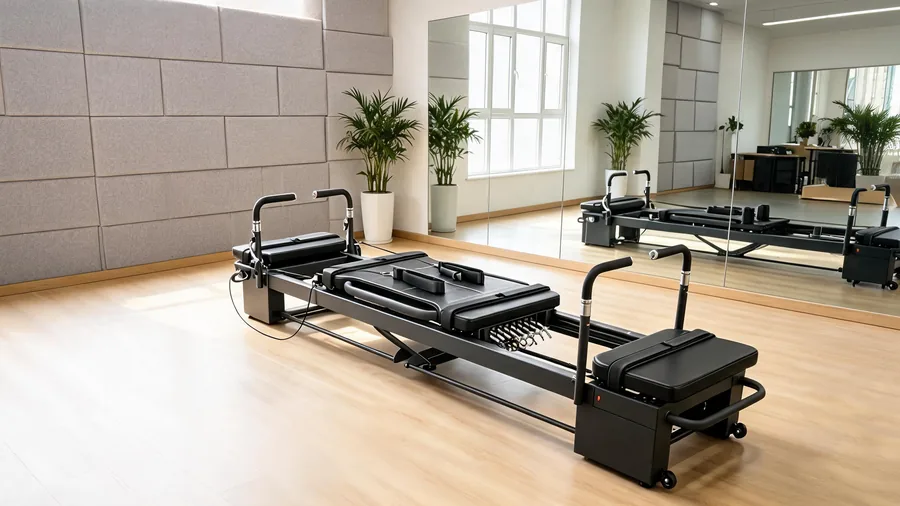
Pilates reformer noise levels affect studio ambiance. When you walk into a Pilates studio, the atmosphere matters. Soft lighting, calming music, and … the rhythmic clanking of metal springs. Some reformers whisper quietly through every movement. Others announce every transition with a metallic crash. If you are a studio owner, the difference between a 50 dB and a 65 dB reformer can define your clients’ entire experience—and your studio’s reputation.
Noise is more than an annoyance. In a commercial Pilates studio where multiple reformers run simultaneously, sound levels add up fast. Loud equipment disrupts verbal cueing, distracts clients during relaxation-focused exercises, and creates an unprofessional ambiance. This guide breaks down what reformer noise levels actually mean in practice, how to measure them, and what you can do to keep your studio peaceful and client-friendly.
1. Understanding Pilates Reformer Noise Levels: Decibel Ratings
Decibels (dB) measure sound intensity on a logarithmic scale. That means a 60 dB reformer is not slightly quieter than a 70 dB model—it is ten times quieter. A 10 dB increase represents a tenfold jump in sound energy, which the human ear perceives as roughly twice as loud.
To put this in real-world context:
- 30 dB — A quiet library or whispered conversation
- 40–50 dB — Light rainfall, moderate refrigerator hum
- 55–60 dB — Normal conversation at 3 feet, background office noise
- 65–70 dB — Vacuum cleaner, loud restaurant, average car interior at highway speed
- 75–80 dB — Heavy traffic, garbage disposal
A quality commercial Pilates reformer should operate in the 45–55 dB range during normal use. Top-tier models engineered with precision bearings and dampened spring systems can stay as low as 40–48 dB. Entry-level reformers frequently cross into the 60–68 dB range, which becomes disruptive in a class setting—especially when six or eight machines are moving at once.
2. Normal Pilates Reformer Noise Levels for Studios
There is no single industry standard for reformer noise, but experienced studio owners and equipment suppliers have developed practical benchmarks. A reformer that measures under 50 dB at a distance of one meter during a full range of motion is considered excellent. Reformers measuring 50–55 dB are acceptable for most commercial settings. Anything above 60 dB requires attention.
The table below compares noise levels across different reformer categories so you can benchmark your current or prospective equipment:
The quietest reformers on the market achieve their low noise through engineering choices that cost more to manufacture: sealed cartridge bearings instead of open roller systems, precision-ground stainless steel rails instead of extruded aluminum, spring-end dampeners, and vibration-dampening carriage padding. These details add up to a measurably quieter experience.
3. Common Sources of Pilates Reformer Noise Levels
Not all reformer noise comes from poor design. Even well-maintained machines can develop squeaks and rattles over time. Understanding where the noise originates helps you diagnose and fix issues before they drive clients away.
1. Spring Hook and Attachment Points
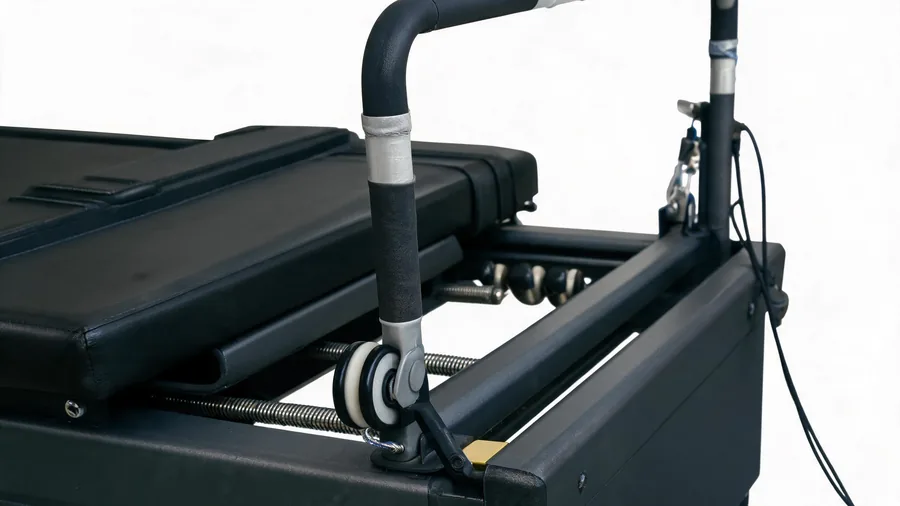
The most common noise source is the spring-to-hook interface. When springs rub against metal hooks without proper lubrication or a nylon bushing, they produce a high-pitched ringing or scraping sound. Premium reformers use rubber-gasketed spring attachment points or plastic-coated hooks to eliminate metal-on-metal contact.
2. Carriage Bearings and Rollers
Carriage bearings are the second most frequent culprit. Open roller systems accumulate dust and fibers from studio mats and towels, which creates friction and noise over time. Sealed cartridge bearings (like those used in Megacore reformers) prevent debris, meeting Pilates Yöntemi Birliği equipment standards ingress and maintain silent operation for years. If you hear grinding or a rough sound during carriage movement, bearings likely need cleaning or replacement. Learn more about carriage bearing types and maintenance.
3. Frame Flex and Loose Fasteners
A flexing frame produces creaking sounds that are amplified by the hardwood or metal structure. Commercial reformers built with thick-wall steel tubing and reinforced cross-bracing eliminate frame flex almost entirely. If a reformer creaks when a client lies down or transitions between exercises, tightening all bolts and checking the frame alignment usually resolves the issue.
4. Rope and Pulley Friction
Dry or misaligned pulleys create a squeaking sound that travels through the rope system directly to the client’s hands. Regular lubrication of pulley bearings and proper rope alignment keeps this noise source under control. High-quality nylon or Delrin pulleys are inherently quieter than metal alternatives.
5. Footbar Adjustment Mechanism
Adjustable footbars that use spring-loaded pins can rattle during vigorous movement. Magnetic locking mechanisms or cam-lock systems (common on premium reformers) eliminate this rattle entirely. Regular inspection of the footbar latch assembly helps catch wear before noise becomes a distraction.
4. Reducing Pilates Reformer Noise Levels in Your Studio
Equipment quality is only part of the equation. Even the quietest reformers can produce noticeable ambient sound in a room with hard floors, bare walls, and high ceilings. Acoustic treatment of your studio space amplifies or diminishes the noise your equipment makes.
Flooring and Matting
Hardwood or tile floors reflect sound and transmit vibration. Installing high-density foam matting under each reformer absorbs both airborne noise and structural vibration. A 10 mm thick rubber mat beneath each machine can reduce perceived noise by 3–5 dB—a noticeable improvement that costs very little. Check out our complete studio equipment checklist for flooring recommendations.
Wall and Ceiling Treatment
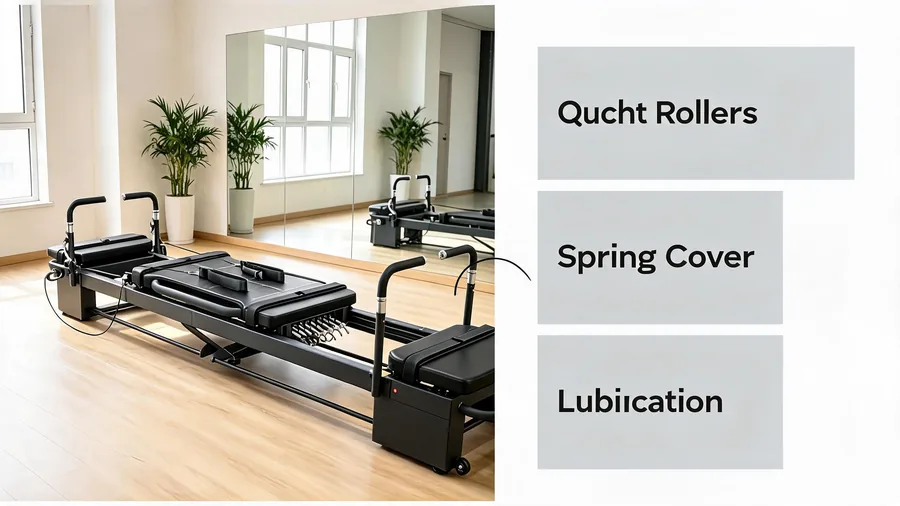
Acoustic panels placed on walls at ear level absorb mid- and high-frequency sounds—precisely the frequencies of spring noise. Fabric-wrapped fiberglass panels, acoustic foam tiles, or even heavy curtains can reduce reverberation time significantly. For studios with multiple reformers, ceiling-mounted baffles prevent sound from bouncing between machines.
Reformer Spacing
Spacing reformers at least 1.5 meters apart reduces sound carry between stations. When clients are close together, the noise from adjacent machines merges into a distracting blend. Wider spacing also improves instructor visibility and creates a more premium studio feel.
Scheduled Maintenance
A quarterly maintenance routine—lubricating springs, cleaning bearing tracks, tightening fasteners, checking pulley alignment—keeps noise levels consistent. Many studio owners wait until a machine becomes noisy before acting. Proactive maintenance prevents that gradual creep in decibel levels that clients notice before you do. Our spring replacement guide covers the maintenance schedule in detail.
5. How Pilates Reformer Noise Levels Affect Clients
Noise is not just a technical metric; it directly shapes how clients perceive your studio. In a 2025 survey of boutique fitness studio members, 67% of respondents said equipment noise negatively affected their relaxation during class. For rehabilitation and senior clients—who often have auditory sensitivity—this number was even higher.
Verbal cueing is the backbone of Pilates instruction. An instructor’s voice needs to cut through the ambient sound of moving equipment. When reformers run at 60 dB or above, instructors must raise their voices, strain their vocal cords, and repeat instructions. Over a full day of classes, this causes instructor fatigue and reduces teaching quality.
There is also a subconscious association between noise and quality. Clients implicitly connect smooth, quiet machinery with professionalism and premium service. A clanking reformer signals wear, poor maintenance, or low-quality construction—regardless of how well the equipment actually performs. Investing in quiet reformers signals that you care about every detail of the client’s experience.
Megacore commercial reformers are engineered specifically to minimize noise at every contact point: sealed roller bearings, nylon-dampened spring hooks, precision-machined stainless steel rails, and reinforced tubular steel frames. These choices result in measured operation of 42–48 dB during normal use—quieter than a typical office environment. Compare Megacore models in our full buying guide.
Pilates reformer noise levels: Frequently Asked Questions
What is the quietest type of Pilates reformer on the market?
Premium commercial reformers with sealed cartridge bearings, dampened spring attachment points, and steel-reinforced frames are the quietest. Megacore commercial reformers consistently measure 42–48 dB, placing them among the quietest available. Wooden reformers from certain brands can also be quiet, but their frames are more prone to flex and creak over time compared to welded steel frames.
Can I retrofit a noisy reformer to make it quieter?
Partially. Replacing open bearings with sealed cartridges, adding rubber washers to spring hooks, lubricating pulleys, and installing anti-vibration pads under the frame can reduce noise by 5–8 dB. However, fundamental noise sources like frame resonance and rail tolerances are baked into the design and cannot be retrofitted. Buying a quiet reformer from the start is almost always more cost-effective than trying to silence a loud one.
How do I measure my reformer’s noise level accurately?
Download a smartphone decibel meter app (like NIOSH SLM or Decibel X) and measure from one meter away during active use. Take readings during slow controlled movements and during vigorous transitions to capture the full range. Avoid measuring in a room with HVAC noise or outside traffic. For best accuracy, use a Type 2 sound level meter, which costs around $50–100 on Amazon.
Does spring tension affect noise levels?
Yes. Heavier springs and more springs in use produce more acoustic energy. During exercises that require multiple heavy springs, noise output increases by approximately 3–5 dB compared to single-light-spring movements. This is normal and consistent across all reformers. The key is that premium reformers keep even their maximum-load noise within a comfortable range.
Is there a legal noise limit for Pilates studios in commercial buildings?
Most commercial leases include a noise clause, typically limiting ambient noise to 55–65 dB at the property line. Local municipal codes may also impose limits. If your reformer fleet consistently operates at 60+ dB, you risk neighbor complaints, lease violations, and noise ordinance fines. Check your local regulations and measure your studio’s noise output with all reformers running during a typical class.
Pilates reformer noise levels: Conclusion
Reformer noise is not a cosmetic concern—it is a business-critical factor that affects client satisfaction, instructor well-being, and your studio’s professional image. By choosing equipment engineered for quiet operation, implementing sensible acoustic treatments, and maintaining your machines on a regular schedule, you can keep your studio a calm, focused environment where clients return week after week.
Megacore’s commercial reformer lineup is designed with every decibel in mind. From sealed bearings to dampened spring systems, every component is chosen to minimize sound without compromising durability or performance. Factory-direct pricing means you get premium engineering at prices that make sense for growing studios.