
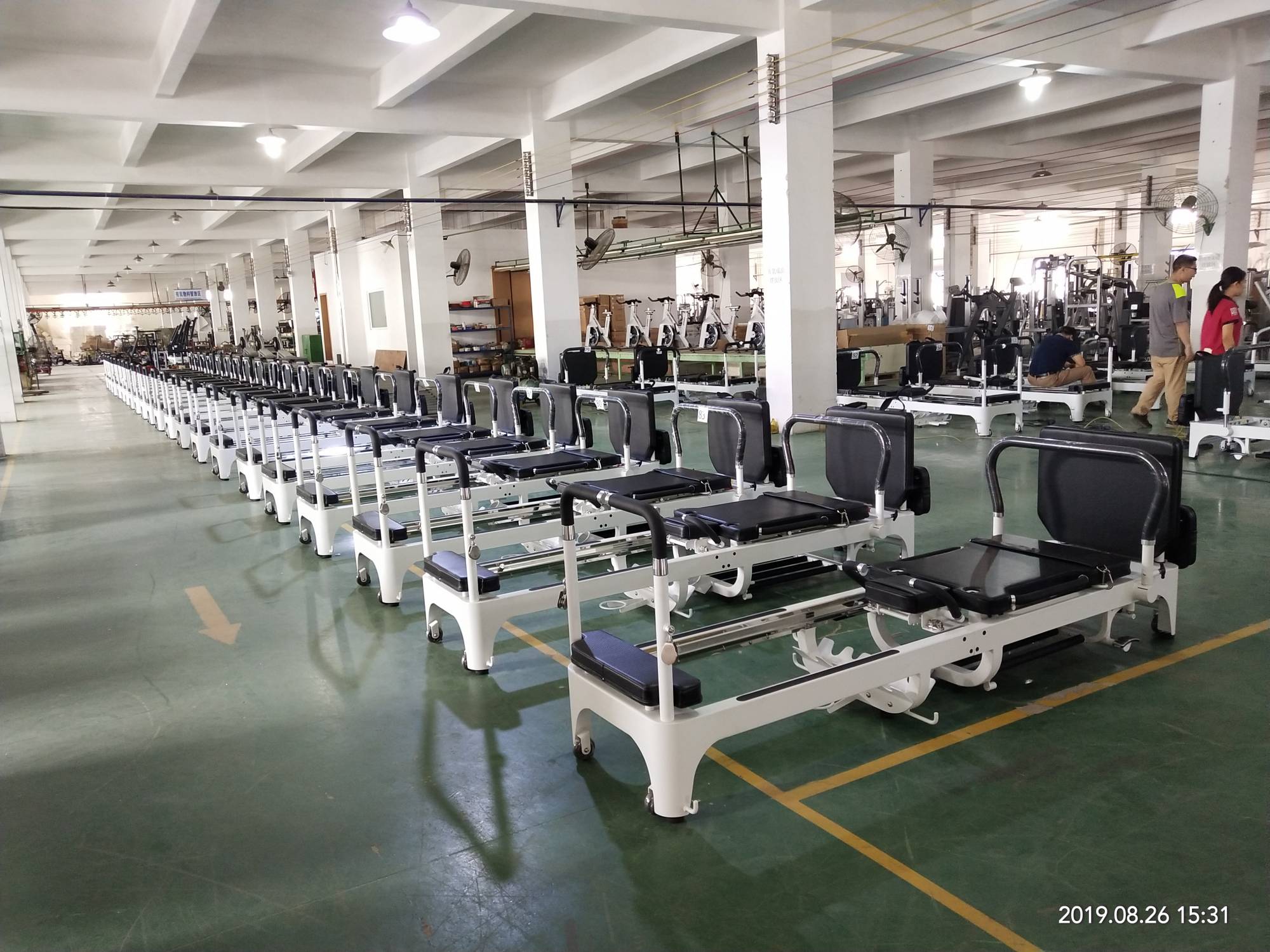
Quick Answer
A Pilates reformer is a exercise machine consisting of a wheeled carriage, springs, ropes, and a frame — designed to create variable resistance through spring tension rather than weights. Developed by Joseph Pilates in the 1920s, it enables hundreds of exercises for strength, flexibility, and rehabilitation. Commercial-grade steel reformers weigh 200–400 lbs and cost $3,000–$8,000; home models start at $500.
What Is a Pilates Reformer?
A Pilates reformer is a specialized resistance training machine that uses spring-loaded tension to create a smooth, controlled workout. It consists of a flat carriage (the “bed”) that glides along a steel or wooden frame, connected to springs at one end and ropes with handles at the other. By pushing or pulling against the spring resistance, users perform exercises that target every major muscle group.
How a Pilates Reformer Works
The reformer uses spring tension — not gravity — as its primary resistance mechanism. This means:
- Resistance is consistent throughout the full range of motion (unlike weights, where gravity changes the effective load)
- You can adjust tension by adding or removing springs (typically 4–8 springs per machine)
- The carriage glides on wheels or rollers, reducing friction and joint stress
- Ropes and pulleys allow exercises in multiple planes of motion
Key Components of a Reformer
- Carriage — the moving platform you lie/sit on
- Springs — provide variable resistance (typically 4–8 springs with different tensions)
- Frame — steel (commercial) or wood/aluminum (home), supports all components
- Ropes and handles — allow pulling exercises for upper body
- Footbar — adjustable bar for foot and hand placement during exercises
- Shoulder rests — padded brackets that keep you positioned on the carriage
- Headrest — adjustable support for neck and head during supine exercises
Types of Pilates Reformers
| Type | Material | Weight | Price Range | Best For |
|---|---|---|---|---|
| Commercial | Steel (14-gauge) | 300–400 lbs | $3,000–$8,000 | Studios, heavy daily use |
| Compact/Home | Steel or Aluminum | 80–250 lbs | $1,200–$3,000 | Home gyms, small spaces |
| Folding | Steel | 180–250 lbs | $1,500–$3,500 | Home users who need storage |
| Classical/Wooden | Birch, Maple | 60–120 lbs | $1,500–$6,000 | Classical Pilates studios |
Benefits of Using a Pilates Reformer
- Full-body workout: Targets every major muscle group in a single session
- Low-impact: No joint compression or impact stress
- Core-focused: Nearly every exercise requires core stabilization
- Rehabilitation: Adjustable resistance makes it ideal for injury recovery
- Versatility: 300+ possible exercises, each with multiple resistance levels
- Progressive: Start light and increase spring tension as you get stronger
Frequently Asked Questions
How much does a Pilates reformer cost?
Home reformers: $500–$3,000. Commercial-grade steel reformers: $3,000–$8,000. Factory-direct from China: $1,200–$5,000. Used: $1,000–$4,000.
Is a Pilates reformer worth the investment?
For studio owners — yes. Reformers are the most-used equipment in any Pilates studio and generate direct revenue. For home users — yes if you’ll use it 2+ times per week.
How long does a reformer last?
Commercial steel reformers: 15–20 years with proper maintenance. Home models: 5–10 years. Springs need replacement every 12–18 months for commercial use.
Can I lose weight with reformer Pilates?
Yes — a 60-minute session burns 300–500 calories while building lean muscle that increases metabolism.
What’s the difference between a reformer and a Megaformer?
Megaformers are longer, heavier, and designed for faster-paced Lagree-style workouts. Traditional reformers offer more versatility and rehabilitation options.
Find the Right Reformer for You
Whether you’re equipping a studio or buying your first home reformer, choosing the right machine matters. Megacore has manufactured reformers since 2002 and offers factory-direct pricing on steel-frame models. Contact us for recommendations, or browse our Buying Guides for detailed comparisons.