
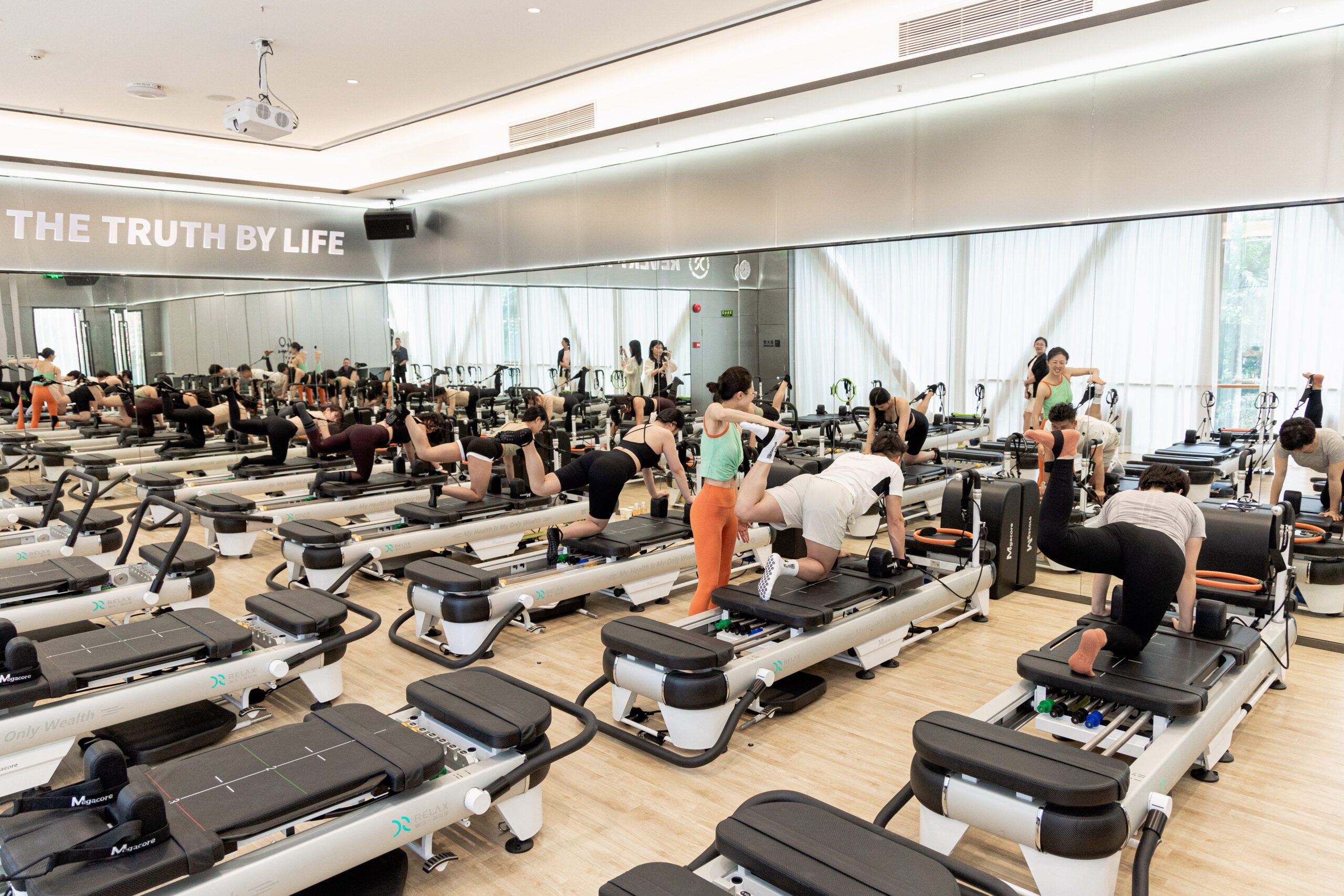
Client comfort on a Pilates reformer directly affects class retention, session quality, and the overall studio reputation. A reformer that feels hard, slippery, or unsupportive discourages clients from returning — especially those who are new to Pilates, recovering from injury, or booking premium private sessions. Foam padding and comfort upgrades are among the most cost-effective investments a studio owner can make to improve the client experience and extend equipment life.
This guide covers the types of foam padding used in Pilates reformers, comfort upgrade options for extended studio sessions, upholstery material considerations, and how to match padding specifications to your target client demographic.
Understanding Foam Density and Firmness
Reformer padding is typically made from polyurethane foam, and two specifications determine its performance: density and firmness (ILD rating). Density, measured in kilograms per cubic metre (kg/m³), indicates how much foam material is present per unit volume. Higher density foam contains more polymer material and is more durable — it resists permanent compression deformation over repeated loading cycles.
ILD (indentation load deflection) measures firmness — specifically, the force in pounds required to compress a foam sample by 25% of its thickness. A higher ILD number means firmer foam. The relationship between density and ILD is not direct — it is possible to have low-density firm foam or high-density soft foam, though certain combinations are more common in manufacturing.
Open-Cell vs Closed-Cell Foam
Memory Foam for Pressure Relief
High-Density Foam for Commercial Use
For commercial Pilates reformers, the recommended foam specifications are: carriage pad foam density of 50–60 kg/m³ with an ILD of 30–40 (medium-firm feel that supports most body types without feeling hard); shoulder rest foam density of 45–55 kg/m³ with an ILD of 25–35 (medium feel that accommodates broader and narrower shoulders); and footbar padding density of 40–50 kg/m³ with an ILD of 40–50 (firm feel that provides stable foot placement).
Foam with density below 40 kg/m³ will compress permanently within 6–12 months of daily studio use. The padding may look acceptable from the surface but provides inadequate support — clients will feel the carriage platform structure through the foam. This is one of the most common complaints in studios using budget-grade reformers and a frequent reason clients choose a competing studio.
Padding Upgrade Options
Memory Foam Toppers (¥200–400 per reformer):
A 2–3 cm viscoelastic (memory) foam layer bonded to the top of the standard foam pad. Memory foam conforms to the client’s body shape under heat and pressure, reducing peak pressure points on the hips, shoulders, and spine. Temperature-sensitive memory foam softens with body heat during the session, creating a customised feel. Memory foam toppers are particularly popular with prenatal clients, older adults, and rehabilitation patients who spend extended time in supine positions.
Gel-Infused Foam (¥300–600 per reformer):
Standard foam infused with cooling gel particles that dissipate heat faster than standard foam. Ideal for hot Pilates studios or high-intensity reformer classes where clients generate significant body heat. Gel-infused foam maintains a neutral surface temperature throughout the session — standard foam can increase by 3–5°C during a 50-minute class. Clients consistently rate gel-infused foam higher in comfort surveys, particularly in warmer climates.
High-Density Support Foam (¥150–300 per reformer):
Upgrading from standard density (40–45 kg/m³) to high-density foam (55–60 kg/m³) extends padding life from approximately 12 months to 36+ months in commercial use. The firmer feel provides better support for heavier clients and maintains its shape over thousands of loading cycles. For studios with a diverse client body type range, high-density foam is the most cost-effective long-term choice.
Bamboo Charcoal Foam (¥100–250 per reformer):
Foam infused with activated bamboo charcoal particles for natural odour absorption and moisture wicking. Bamboo charcoal foam is particularly popular in Asian markets where humidity and odour control are priority concerns. The charcoal particles absorb sweat odour molecules, reducing the need for chemical deodorizers between classes. Available from Guangzhou-based foam suppliers with custom thickness specifications.Upholstery Material Considerations
The upholstery cover is as important as the foam underneath. Commercial-grade reformer covers should be made from marine-grade vinyl (PVC or PU) with a minimum thickness of 1.2 mm for tear resistance, antimicrobial-treated to prevent bacterial growth from sweat absorption, flame-retardant rated meeting GB/T 5455 or equivalent international standard, and easy to clean with mild soap and water without degrading the material surface.
For premium studios, several cover upgrades are available. Perforated vinyl covers improve breathability and reduce sweat pooling on the carriage surface, costing ¥100–200 more per reformer. Textured vinyl provides additional grip surface, preventing the client from sliding during exercises. PU (polyurethane) vinyl is phthalate-free and considered more environmentally friendly than PVC — a consideration for eco-conscious studios.
Shoulder Rest Comfort Upgrades
Shoulder rests are the second most common comfort complaint after the carriage pad. Standard shoulder rests measure approximately 18 × 10 × 4 cm with medium-density foam. Common upgrade options include: extended shoulder rests (25–30 cm length) for broader-shouldered clients; contoured shoulder rests with a slight concave shape that cradles the shoulder girdle; and gel shoulder rest overlays that clip onto the existing rest for clients with shoulder sensitivity or previous injuries. Shoulder rest upgrades cost ¥50–150 per pair. Stock at least one set of extended and contoured shoulder rests per two reformers to accommodate client variability without dedicated assignment.
Matching Padding to Client Demographics
Rehabilitation clients benefit most from a medium-soft memory foam topper (2–3 cm) over high-density base foam (55+ kg/m³). Pressure point reduction is critical for clients with limited subcutaneous tissue or bony prominences. General fitness group classes work well with standard medium-firm foam (50 kg/m³, ILD 35) with a gel-infused topper for temperature regulation. Prenatal clients need extra-soft memory foam (3 cm) with additional lumbar support cushion — the lower back is under additional strain during supine exercises. Athletic and HIIT clients prefer firm high-density foam (55+ kg/m³, ILD 40) with minimal topper for a stable, responsive surface that does not compress excessively during explosive movements.
Summary
Foam padding and comfort upgrades are among the highest-return investments a Pilates studio can make. Upgrading from standard foam (40–45 kg/m³) to high-density foam (55–60 kg/m³) triples padding life and significantly improves client comfort across all body types. Memory foam toppers and gel-infused foam address specific client needs at a modest additional cost. When ordering reformers from your Guangzhou manufacturer, specify the foam density and cover material — most factories offer multiple padding grades at different price points, and the upgrade cost at the factory stage is far lower than retrofitting later. The Best Pilates Reformers for Commercia