
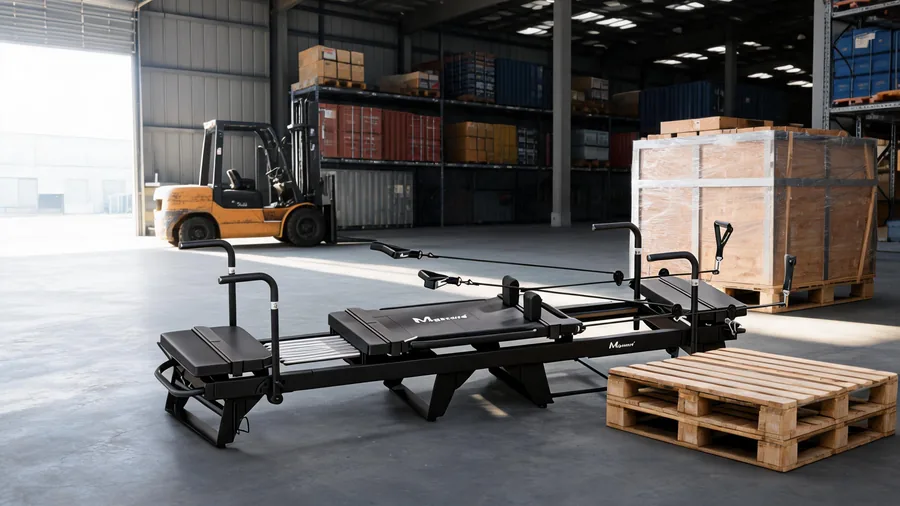
Изборът между въздушен и морски транспорт на Pilates реформери влияе на срока за доставка и общата цена. Това ръководство сравнява въздушния и морския транспорт при изпращане на професионални Pilates реформери от китайски производители до студиа по целия свят.
1. Pilates реформери: въздушен и морски транспорт — преглед
Международните купувачи на Pilates реформери са изправени пред важно логистично решение, следвайки Pilates Method Alliance насоките: въздушен или морски транспорт. Изборът влияе на срока за доставка, общата крайна цена и състоянието, в което пристига оборудването. Това ръководство представя практичните разлики между двата начина на доставка — сравнение на разходите, транзитни срокове, изисквания за опаковане и митнически особености, специфични за фитнес оборудването.
2. Pilates реформери: въздушен и морски транспорт — морски транспорт
Морският транспорт е стандартният начин за доставка при поръчки на професионални реформери и това е напълно логично. Ценовото предимство е значително — превозът на 20-футов контейнер с реформери (15–18 броя) от Шенжен до Лос Анджелис струва около $3,000–$5,000, или $170–$330 на реформер. До Сидни или Мелбърн същият контейнер излиза $2,500–$4,500. За Ротердам или Хамбург се очаква $4,000–$7,000 в зависимост от морския превозвач и сезона.
Контейнерният транспорт осигурява и по-добра защита на оборудването. Реформерите се опаковат в пяна и картон в затворен контейнер, защитени от атмосферни влияния, манипулации и кражби по време на целия преход. Контейнерът може да се натовари на платформа в пристанището на дестинацията и да се достави директно в студиото ви, което свежда до минимум междинните манипулации, криещи риск от повреди.
Основният недостатък е транзитното време. Морският транспорт от големите китайски пристанища до Западния бряг на Северна Америка отнема 14–18 дни; до Европа 25–32 дни; до Австралия 15–20 дни. Добавете 3–5 дни за вътрешен транспорт от пристанището до студиото. Общият срок от врата до врата обикновено е 30–45 дни от датата, на която контейнерът напуска фабриката.
За студиа, които планират доставка на Pilates реформери по въздух или море, конфигурацията на натоварване на контейнера влияе на общата цена. Подреждането на 15-18 реформера в 20-футов контейнер максимизира използването на пространството. Палетизираното натоварване за въздушен транспорт позволява 4-6 броя на палет в зависимост от размерите на реформера.
3. Pilates реформери: въздушен и морски транспорт — въздушен транспорт
Въздушният транспорт е изборът при спешни поръчки — когато предстои откриване на ново студио и контейнерът няма да пристигне навреме, или когато реформер се повреди и незабавно е необходим резервен комплект пружини или компонент от тапицерията. Въздушният транспорт от Шенжен или Гуанджоу до повечето международни дестинации отнема 3–7 дни от врата до врата и драстично съкращава логистичния график.
Ценовата надценка е значителна. Превозът на един реформер по въздух обикновено струва $600–$1,200 в зависимост от обемното тегло и дестинацията — около 4–6 пъти повече от цената за брой при морски транспорт. Частичен палет с компоненти, като комплекти пружини или подложки за каретата, е по-разумно решение — $50–$150 за пакет от 10 кг, което прави въздушния транспорт практичен избор за резервни части и аксесоари.
Въздушният транспорт има и ограничения по размери. Максималната височина на палет при повечето товарни самолети е 160 см, което означава, че напълно сглобен реформер (обикновено 50–60 см висок) се превозва лесно, но дължината (230–250 см) изисква реформерът да пътува разглобен или с тарифа за извънгабаритен товар. При повечето въздушни пратки реформерите се разглобяват частично — свалят се релсите и се прикачват отделно — което добавя време за сглобяване на дестинацията.
4. Pilates реформери: въздушен и морски транспорт — сравнение
Прагът за решение обикновено е 3–5 броя. Под това количество въздушният транспорт може да бъде конкурентен, след като се включат разходите за вътрешен камионен превоз и митническо оформяне при морския транспорт. Над 5 броя морският транспорт става все по-икономичен. При пълни контейнерни товари (15+ броя) морският транспорт е единственият икономически разумен избор.
Хибридният подход работи за много купувачи: изпратете основната поръчка по море, а няколко мостри или част от оборудването — по въздух, за да пристигнат 3–4 седмици по-рано. Така студиото може да започне монтаж, планиране на разположението и обучение на персонала с ранните бройки, докато основният контейнер е още в движение. Мострите, изпратени по въздух, служат и като база за сравнение с контейнерната пратка, когато тя пристигне.
5. Опаковане за въздушен и морски транспорт на Pilates реформери
Правилното опаковане е от решаващо значение при въздушен и морски транспорт на Pilates реформери.
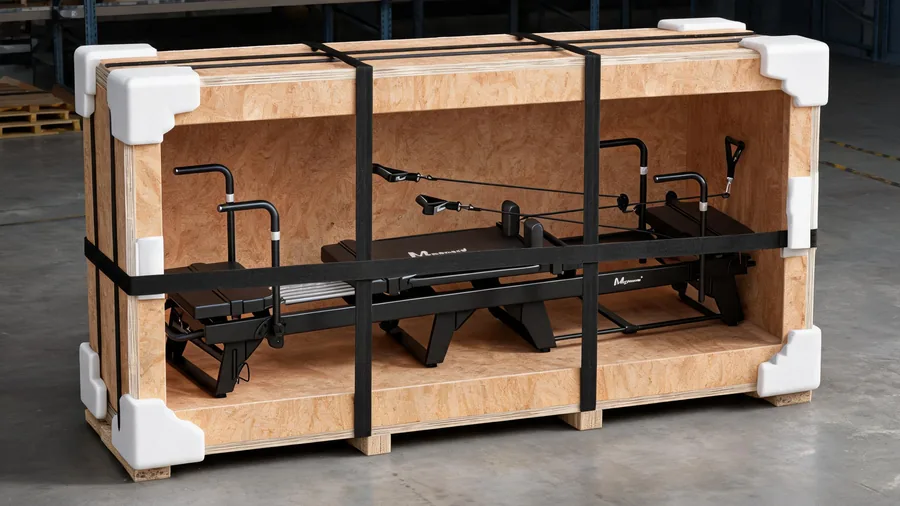
Опаковката за морски транспорт трябва да издържа на подреждане, движение на контейнера и евентуална влажност по време на прехода. Реформерите трябва да се увият в полиетиленова пяна (поне 5 см дебелина от всички страни), след това в гофриран картон и накрая в издръжлив полиетиленов плик за защита от влага. Всяка бройка трябва да се закрепи в контейнера с товарни колани или въздушни възглавници, за да не се измества при бурно море.
Опаковката за въздушен транспорт е по-лека. Един слой пяна от 3 см и гофриран картон са достатъчни, тъй като средата на манипулация е много по-щадяща. Общото транспортно тегло при въздушен транспорт се изчислява по обемно тегло — (дължина × ширина × височина в см) / 6000 — и превозвачът таксува по-голямото от реалното и обемното тегло. Намаляването на обема на опаковката с дори 10–15 процента при въздушна пратка може да донесе реални спестявания.
6. Мита при въздушен и морски транспорт на Pilates реформери
Пратките по море се омитняват в пристанището на дестинацията, което означава, че контейнерът може да престои там 2–5 дни, докато се обработват документите. Наемането на митнически брокер преди пристигането на пратката е задължително — той се занимава с класификацията, изчисляването на митата и необходимите проверки. Стандартният пакет документи включва: търговска фактура, опаковъчен лист, товарителница и сертификат за произход (ако е необходим за преференциални митнически ставки по търговското споразумение на вашата страна с Китай).
Въздушните пратки обикновено се омитняват на летището на дестинацията в рамките на 24 часа, особено ако стойността им е под $2,500. По-големите пратки може да бъдат насочени към формална митническа проверка, която отнема 2–3 дни. Изискванията към документите са същите като при морския транспорт, но ускореният график означава, че всички документи трябва да са готови преди излитането, за да се избегнат такси за престой в товарния терминал на летището.
7. Застраховка при въздушен и морски транспорт на Pilates реформери
Застраховката на товара е силно препоръчителна и при двата начина на доставка. При морския транспорт рискът от повреда на контейнера по време на бури, навлизане на солена вода или грубо манипулиране в претоварните пристанища е реален, макар и нисък (около 1–2 процента от контейнерите имат някаква степен на повреда). Застрахователните премии обикновено са 0.3–0.5 процента от стойността на товара при морски транспорт и 0.5–0.8 процента при въздушен, което отразява по-високата стойност за брой и по-бързия преход.
Повечето производители предлагат да уредят застраховката като част от CIF офертата (Cost, Insurance, Freight — цена, застраховка, навло), но условията на покритие трябва да се проверят — стандартната морска застраховка „all-risk“ покрива физическа загуба или повреда, но не закъснения или последващи загуби, като отлагане на откриването на студиото. За поръчки с висока стойност обмислете отделна полица за „забавяне при стартиране“ или проверете дали застраховката за прекъсване на дейността на студиото ви покрива закъснения при доставка на оборудване.
8. Логистичен график при въздушен и морски транспорт на Pilates реформери
Независимо дали изберете въздушен или морски транспорт, изградете логистичен график с буфер за променливите извън вашия контрол. Реалистичният график при морски транспорт от поръчка до доставка е: 15 дни производство, 5 дни вътрешен транспорт до пристанището, 18–25 дни морски преход, 5 дни митническо оформяне и 3 дни вътрешна доставка — общо 46–53 дни. Графикът при въздушен транспорт е: 10 дни производство (ускорено за въздушни поръчки), 2 дни до летището, 3–5 дни въздушен преход и митница и 2 дни финална доставка — общо 17–19 дни.
Megacore Pilates осигурява логистична координация и при двата начина на доставка, включително подготовка на документи, резервация на превозвач и съдействие при митническо оформяне. Нашият логистичен екип може да подготви сравнителни оферти за въздушен и морски транспорт до всяка дестинация и да ви посъветва кой подход е най-икономичен за размера на поръчката и сроковете ви. Как да набавите комерсиални Pilates реформери
Pilates реформер по въздух и море: често задавани въпроси
Какво отличава това Pilates оборудване от алтернативите от начален клас?
Разликата се свежда до материалите и изработката. Комерсиалното оборудване използва изцяло метални рамки, затворени лагери и калибрирани пружини. Моделите от начален клас използват по-леки материали, които се деградират по-бързо. Качественият реформер издържа 5-10+ години — реформер от начален клас често се нуждае от подмяна за 1-2 години.
Как да разбера дали това оборудване е подходящо за моите конкретни нужди?
Помислете за основното си приложение: студио или дом, профил на клиентите, обем на заниманията и финанси на студиото. Собствениците на студиа трябва да дадат приоритет на издръжливостта и достъпа за поддръжка. Домашните потребители трябва да дадат приоритет на ефективното използване на пространството и леснотата на употреба. Съобразете спецификациите на оборудването с конкретните си изисквания, вместо да купувате универсално решение.
Каква гаранция и поддръжка да очаквам от реномиран производител?
Комерсиалното оборудване трябва да има поне 2-годишна структурна гаранция и 1 година за компонентите. Производителите директно от фабриката, като Megacore, често предоставят разширено покритие и директна техническа поддръжка. Винаги изисквайте гаранционна документация в писмен вид преди покупка.
Pilates реформер по въздух и море: заключение
Изборът на подходящо оборудване прави значителна разлика в практиката ви по Pilates или в бизнеса ви. Независимо дали откривате студио, обновявате съществуващи машини или оборудвате домашна практика — инвестицията в качествено оборудване, съответстващо на конкретните ви нужди, е основата на дългосрочното удовлетворение и представяне.
Разгледайте професионалните ни реформери →
Планирайте доставката на вашите Pilates реформери
Разбирането на разликите между въздушния и морския транспорт на Pilates реформери помага на собствениците на студиа да вземат икономически изгодни решения за доставка на поръчките си.
Свържете се с нас, за да обсъдим вариантите за въздушен и морски транспорт на Pilates реформери за вашата поръчка. Нашият логистичен екип съдейства за доставка от Китай до вашето студио.
Това ръководство за въздушен и морски транспорт на Pilates реформери помага на собствениците на студиа да изберат правилния начин на доставка. Сравнете тарифите за въздушен и морски транспорт на Pilates реформери, преди да направите следващата си поръчка. Изборът между въздушен и морски транспорт влияе на срока за доставка до студиото ви.