
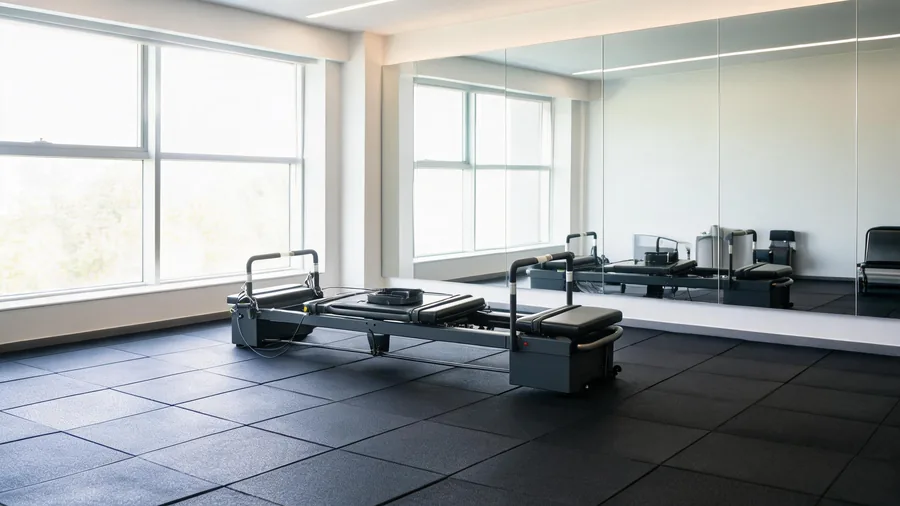
Has invertido miles en reformer de grado comercial, has contratado instructores cualificados y has diseñado la distribución de tu estudio. Pero, ¿te has planteado lo que hay debajo de todo ello? El suelo para estudios de Pilates adecuado afecta directamente a la estabilidad del equipo, los niveles de ruido, la comodidad del cliente e incluso a tus costes de mantenimiento. Esta guía analiza las opciones de suelo más habituales para que puedas elegir la superficie que más trabaje para tu negocio y tus clientes durante cada clase y sesión de entrenamiento.
Tanto si estás equipando un espacio nuevo como si renuevas uno ya existente, elegir la suelo para estudios de Pilates opción correcta desde el principio te ahorra tiempo, dinero y futuros dolores de cabeza. La superficie bajo tus reformer no es un detalle secundario: es un componente crítico del funcionamiento diario de tu estudio y de la experiencia del cliente que exige una cuidadosa consideración antes de la instalación.
1. Por qué el suelo para estudios de Pilates importa
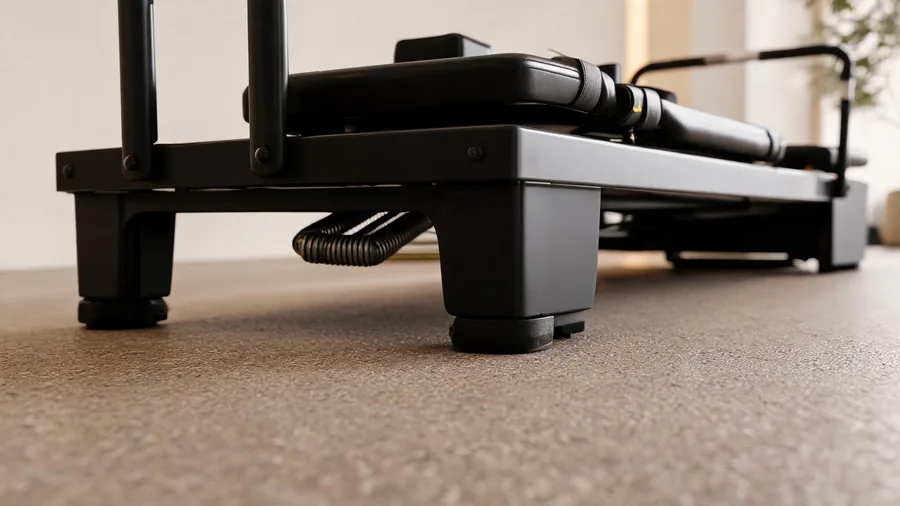
Un reformer solo es tan estable como la superficie sobre la que se apoya. Cuando un cliente empuja en las zancadas o trabaja contra la resistencia del muelle, cada movimiento se transmite desde el carro a través del bastidor hasta el suelo. Si ese suelo es demasiado blando, demasiado duro o irregular, el reformer se desplaza, las articulaciones crujen y la sesión pierde su precisión. Un suelo suelo para estudios de Pilates adecuado elimina estos problemas al proporcionar una base estable y nivelada para tu equipo.
Además de la estabilidad, el suelo desempeña un papel protagonista en la acústica. Las superficies finas y duras amplifican el traqueteo de los muelles y las correas, creando un entorno ruidoso que distrae tanto al cliente como al instructor. En un estudio boutique donde la experiencia es el producto, la calidad del sonido importa tanto como el propio equipo y la calidad de la enseñanza impartida en cada sesión a lo largo del día.
También está el aspecto higiénico. En los estudios de Pilates hay pies descalzos, esterillas, sudor y rotaciones de limpieza periódicas. Un material de suelo que absorbe la humedad o retiene el polvo se convierte en un caldo de cultivo para bacterias y olores. Elegir la superficie equivocada puede provocar mayores costes de limpieza, un desgaste más rápido e incluso problemas de responsabilidad con el tiempo, a medida que el suelo del estudio se degrada y exige una sustitución prematura o reparaciones costosas para mantener los estándares de seguridad.
2. Suelo de caucho — el estándar comercial
El suelo de caucho es la opción por defecto para entornos de fitness comerciales, y con razón. Ofrece alta densidad sin ser duro como una piedra, aportando suficiente elasticidad para absorber el impacto y manteniendo los reformer firmemente asentados. Las baldosas o rollos de caucho de alta calidad con un grosor de 6 mm a 10 mm ofrecen un equilibrio ideal entre absorción de impactos y estabilidad para el trabajo con reformer en entornos de estudio concurridos con un uso diario intenso.
Una de las mayores ventajas del caucho es su capacidad para amortiguar el ruido. Una esterilla de caucho de 6 mm bajo un reformer puede reducir el ruido transmitido de los muelles hasta un 40 por ciento en comparación con la madera desnuda o el hormigón, lo que hace que tu estudio sea más silencioso y profesional. El caucho también es naturalmente antideslizante, incluso cuando está mojado, algo que importa en las zonas de transición donde los clientes bajan del reformer al suelo durante los cambios de clase.
La limpieza es sencilla: un rápido repaso con la fregona y un desinfectante suave mantiene las superficies de caucho frescas y resistentes a los olores. La principal contrapartida es el peso y el coste. El suelo de caucho de grado comercial cuesta más por metro cuadrado que el vinilo o la moqueta y, una vez instalado, no es fácil de sustituir. Sin embargo, un suelo de caucho bien instalado puede durar una década o más en un estudio concurrido, lo que hace que la inversión inicial merezca la pena para las operaciones del estudio a largo plazo.
3. Suelo de corcho — amortiguación natural con beneficios acústicos
El suelo de corcho está ganando popularidad en los estudios de Pilates por su combinación única de amortiguación, absorción acústica y sostenibilidad medioambiental. El corcho es naturalmente antimicrobiano, lo que ayuda a prevenir el moho y el crecimiento bacteriano en entornos de estudio húmedos donde el sudor y las soluciones de limpieza están presentes a diario. La estructura celular del corcho proporciona un aislamiento natural tanto acústico como térmico, manteniendo el estudio más silencioso y cómodo a lo largo del día.
El corcho es más blando bajo los pies que el caucho, lo que puede resultar más cómodo para los clientes que caminan descalzos entre las estaciones de equipo. Sin embargo, esta blandura significa que el corcho puede comprimirse con el tiempo bajo el peso de reformer comerciales pesados, sobre todo en zonas de mucho tránsito donde el equipo se mueve o se recoloca con frecuencia. Se recomiendan tablones de corcho más gruesos (de 8 mm a 12 mm) con construcción de núcleo de alta densidad para aplicaciones de estudio, a fin de minimizar la compresión y prolongar la vida útil del suelo.
Una limitación del corcho es su susceptibilidad a los daños por humedad. Aunque el suelo de corcho sellado es resistente al agua, el agua estancada o la exposición prolongada a la humedad pueden hacer que el material se hinche o se deforme. Los estudios que utilicen suelo de corcho deben garantizar una ventilación adecuada y atender los derrames con prontitud para mantener la integridad de la superficie a lo largo de años de funcionamiento continuo en un entorno de fitness comercial con frecuentes necesidades de limpieza.
4. Opciones de suelo de vinilo e híbrido
El vinilo de lujo en lamas (LVP) y el vinilo de lujo en baldosas (LVT) son opciones cada vez más populares para los estudios de Pilates que quieren el aspecto de la madera o la piedra sin el coste y el mantenimiento de los materiales naturales. El suelo de vinilo moderno está disponible en grosores de 4 mm a 8 mm, con capas de desgaste que resisten los roces de los raíles del reformer y los productos químicos de limpieza utilizados en los protocolos diarios de saneamiento y las rutinas de mantenimiento del estudio.
El vinilo ofrece varias ventajas para suelo para estudios de Pilates. Es completamente impermeable, lo que elimina los problemas de humedad asociados al corcho y la madera maciza. También es uno de los materiales de suelo más fáciles de limpiar: una fregona húmeda con un limpiador neutro basta para el mantenimiento diario. La superficie es lo bastante firme como para ofrecer un soporte estable a los reformer, a la vez que proporciona cierta comodidad bajo los pies a los clientes descalzos que se desplazan entre las estaciones de equipo.
El principal inconveniente del vinilo es su limitado rendimiento acústico. Sin una base acústica, los suelos de vinilo pueden amplificar el ruido de los muelles y las correas en comparación con el caucho o el corcho. Los propietarios de estudios que se planteen el vinilo deberían prever una base acústica de calidad (mínimo 3 mm) para reducir la transmisión del ruido y mejorar el entorno sonoro general del estudio durante las clases y las sesiones de entrenamiento personal que se celebran a lo largo del día.
5. Tabla comparativa de suelos
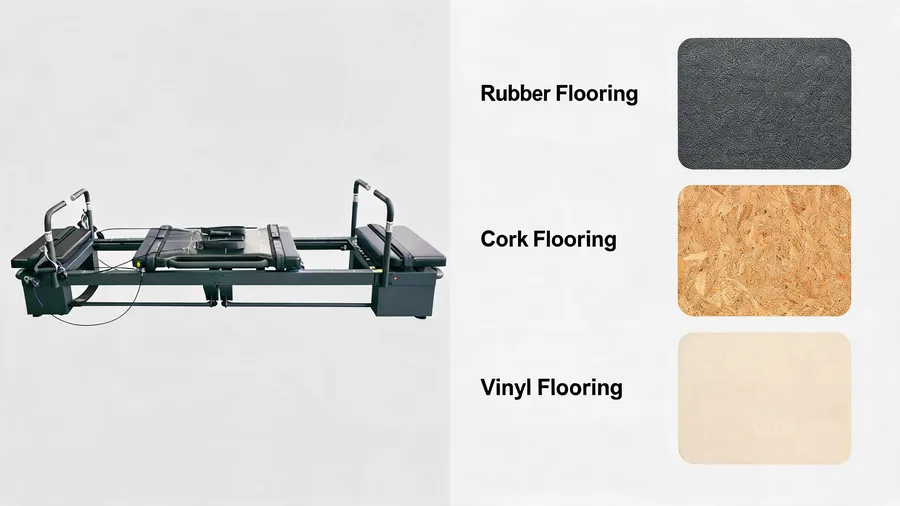
Cada material de suelo ofrece distintas contrapartidas. El caucho proporciona el mejor equilibrio entre estabilidad y reducción de ruido para los estudios comerciales. El corcho ofrece amortiguación natural y sostenibilidad. El vinilo aporta estética y rendimiento impermeable. La elección correcta depende de los requisitos específicos de tu estudio, tus limitaciones económicas y el volumen de sesiones diarias que prevés realizar en tus instalaciones.
6. Cómo afecta el suelo a la estabilidad del reformer
La estabilidad del reformer está directamente ligada a la densidad y la planitud de tu suelo para estudios de Pilates. Los materiales de suelo blandos, como una moqueta gruesa, permiten que el bastidor del reformer se hunda de forma desigual, lo que hace que el carro se mueva en ángulo en lugar de paralelo a los raíles. Esta desalineación aumenta el desgaste de los rodamientos y los raíles, lo que provoca fallos prematuros del equipo y una resistencia inconsistente a lo largo de todo el recorrido durante las sesiones de ejercicio de los clientes.
Las superficies duras y niveladas proporcionan la mejor base para el equipo de reformer. El caucho y el vinilo instalados sobre un subsuelo de hormigón nivelado crean una superficie ideal, ya que la combinación de densidad y planitud garantiza que el bastidor del reformer quede perfectamente nivelado. Incluso irregularidades mínimas en el suelo pueden hacer que los reformer se balanceen durante el uso, algo que los clientes perciben como una mala calidad del equipo, aunque el reformer esté en perfectas condiciones y cumpla todas las especificaciones del fabricante.
Para los estudios que instalan reformer en pisos superiores, ten en cuenta el peso combinado del equipo y los clientes. Una sala con 10 reformer y 10 clientes añade aproximadamente 3.000 kg (6.600 lbs) de carga viva. Asegúrate de que tu elección de suelo y la estructura del subsuelo puedan soportar este peso sin deformarse, ya que ello comprometería tanto la estabilidad del equipo como la seguridad de los clientes durante los ejercicios dinámicos de reformer realizados a lo largo de cada clase.
7. Consideraciones de instalación para propietarios de estudios
Se recomienda encarecidamente la instalación profesional para el suelo de estudios de Pilates comerciales. A diferencia de los suelos residenciales, el suelo de un estudio debe mantener superficies perfectamente niveladas en toda la sala, porque los reformer no pueden ajustarse para compensar suelos irregulares. Una diferencia de tan solo 3 mm en la base de apoyo de un reformer puede provocar un balanceo perceptible durante el uso, lo que genera una mala experiencia para el cliente y posibles problemas de seguridad que hay que resolver.
La base acústica es una consideración importante independientemente de tu material de suelo principal. Una base de calidad reduce el ruido de impacto del tránsito de personas y del movimiento del equipo, lo que importa especialmente en edificios de varias plantas donde los inquilinos de abajo u otros negocios comparten la misma estructura. La Pilates Method Alliance recomienda consultar con un especialista en acústica al diseñar espacios de estudio en edificios comerciales con ocupación compartida, para garantizar que se implementen medidas adecuadas de aislamiento acústico.
Ten en cuenta las zonas de transición entre los distintos materiales de suelo de tu estudio. Las áreas donde los clientes caminan desde la recepción hasta la sala del estudio, o desde las zonas de esterillas hasta las de reformer, deben usar transiciones suaves para evitar riesgos de tropiezo. Las tiras de transición y los perfiles de borde deben quedar a ras de ambas superficies del suelo para mantener un aspecto profesional y cumplir los requisitos de accesibilidad de las instalaciones de fitness comerciales que operan en tu región.
¿Planificando el suelo de tu estudio?
Contáctanos para obtener especificaciones del equipo y recomendaciones de planificación del espacio. Nuestro equipo puede ayudarte a elegir los reformer adecuados para la distribución de tu estudio y tu tipo de suelo.
Correo: [email protected] • WhatsApp: +86 189 0238 9454
Guías relacionadas
- Prepara tu espacio para un reformer de Pilates
- Lista de verificación del equipamiento del estudio
- Guía sobre los niveles de ruido del reformer
- Dimensiones del reformer y requisitos de espacio
- Guía para montar un estudio de Pilates
8. Preguntas frecuentes
¿Cuál es el mejor suelo para un estudio de Pilates con reformer?
El suelo de caucho (grosor de 6-10 mm) es el suelo para estudios de Pilates más recomendado para estudios comerciales. Ofrece una excelente estabilidad, reducción de ruido y durabilidad. El corcho es una buena alternativa para estudios boutique que priorizan los materiales naturales.
¿Puedo instalar reformer sobre moqueta?
No se recomienda la moqueta para estudios de Pilates comerciales. La superficie blanda hace que los reformer se desplacen y se balanceen durante el uso, acelera el desgaste de los rodamientos y atrapa polvo y humedad. La moqueta puede ser aceptable para uso doméstico con equipos más ligeros, pero conviene evitarla en entornos de estudio profesionales.
¿Qué grosor debería tener el suelo de mi estudio de Pilates?
Para uso comercial, el suelo de caucho debe tener 6-10 mm de grosor. El corcho, 8-12 mm. El vinilo, 4-8 mm con una base acústica de 3 mm. Los materiales más gruesos ofrecen una mejor reducción de ruido, pero pueden aumentar la complejidad de la instalación y los costes del material por metro cuadrado.
¿Afecta el suelo a la garantía del reformer?
La mayoría de los fabricantes de reformer exigen que el equipo se instale sobre una superficie nivelada y estable. Un suelo que permita que el reformer se balancee o se desplace puede anular la garantía. Comprueba siempre los requisitos de instalación del fabricante de tu reformer antes de elegir los materiales del suelo.
¿Cuánto cuesta el suelo para un estudio de Pilates?
Los costes varían según el material: caucho 30-60 $ por metro cuadrado, corcho 25-50, vinilo de lujo 20-45, moqueta comercial 15-35, madera maciza 40-80. Los costes de instalación añaden 10-25 $ por metro cuadrado según la complejidad de la instalación y la preparación del subsuelo necesaria.
¿Puedo usar esterillas de gimnasio bajo cada reformer?
Las esterillas de gimnasio individuales bajo los reformer son una solución rentable, pero no proporcionan el mismo nivel de estabilidad que un suelo de sala completa. Las esterillas pueden desplazarse durante el uso y crear riesgos de tropiezo. Para instalaciones de estudio permanentes, se recomienda un suelo de sala completa por seguridad y aspecto profesional.
¿Cómo limpio el suelo de un estudio de Pilates?
El suelo de caucho y vinilo puede limpiarse a diario con una fregona húmeda y un desinfectante suave. El corcho requiere limpiadores especiales de pH neutro y no debe fregarse con agua. Evita los limpiadores abrasivos o los cepillos que puedan dañar el acabado de la superficie y anular la garantía del suelo con el tiempo.
If you are still choosing machines, the commercial reformer lineup lists footprint and weight per model.