
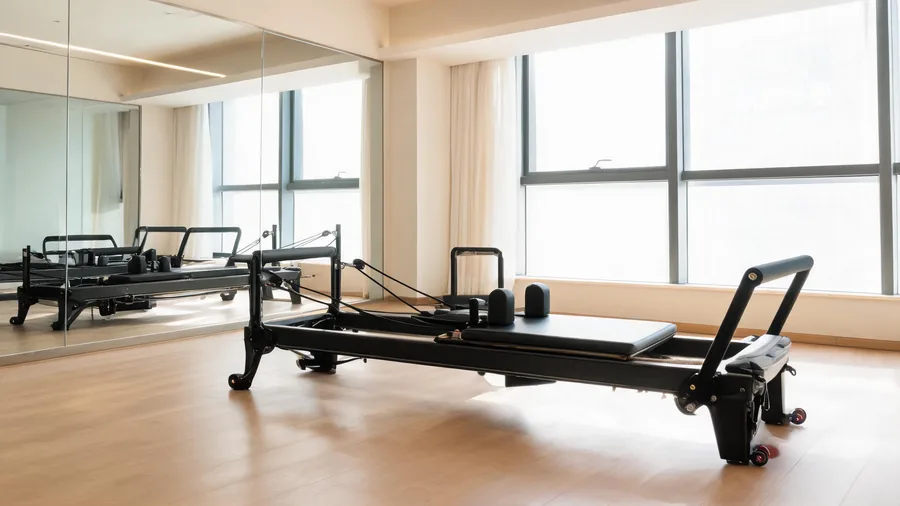
Enseñar una clase de reformer con varios niveles no consiste en memorizar 50 ejercicios, sino en dominar un pequeño conjunto de variables de modificación y aplicarlas de forma sistemática. Cambia la carga del muelle, la base de apoyo, el tempo o el rango de movimiento, y el mismo ejercicio pasa a ser seguro para principiantes o todo un reto para avanzados. Esta guía te ofrece el marco que los instructores utilizan de verdad para modificar y secuenciar ejercicios de reformer: las variables, la escalera de progresión y plantillas de clase listas para usar con grupos de niveles mixtos.
1. Las cinco variables de modificación
Cada ejercicio de reformer se puede ajustar según cinco ejes independientes. Cambia una sola variable a la vez para que los clientes sepan exactamente qué se les pide:
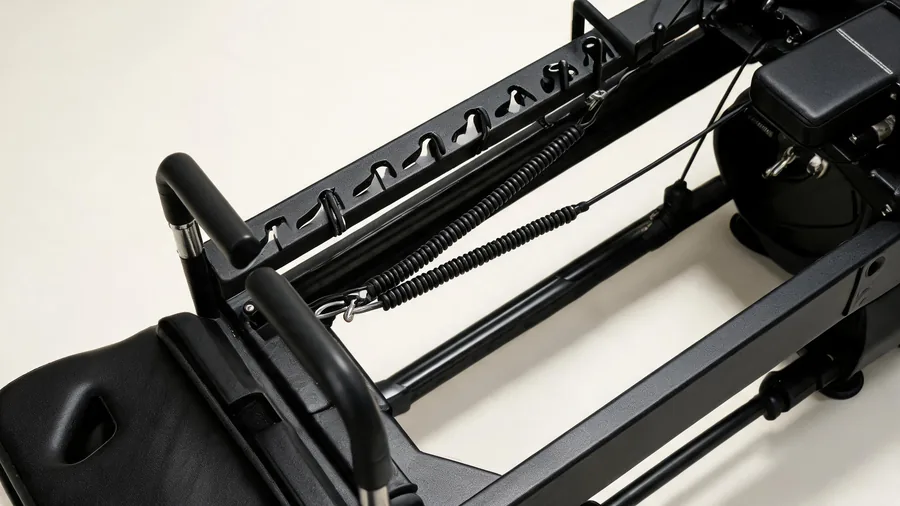
Usa esta tabla como un panel de diales: cuando a un cliente le cueste, baja un dial; cuando le resulte fácil, súbelo. Nunca cambies dos variables a la vez mientras enseñas: no sabrás cuál provocó el cambio.
2. La escalera de progresión: de la base al reto
Secuencia los ejercicios de modo que cada uno prepare el cuerpo para el siguiente. Una escalera fiable para clases mixtas:
- Base (supino, estable): footwork, pelvis neutra, trabajo de brazos en supino: establece la respiración y la conciencia del muelle
- Activación del core: variación del hundreds, preparación abdominal, roll-ups asistidos: recluta los estabilizadores profundos con el carro como retroalimentación
- Transferencia de carga: footwork a una pierna, zancadas, puente: enseña el cambio de peso a través de los muelles
- Patrones inestables: trabajo en cuadrupedia, en decúbito lateral y de equilibrio sentado: pone a prueba el control sin añadir velocidad
- Integración: flujos de cuerpo completo (long stretch, short spine, control balance): lo combina todo bajo fatiga
Este orden importa por dos razones: avanza de lo estable a lo inestable (seguridad) y reserva los patrones más exigentes para cuando el cuerpo está caliente (calidad).
3. Plantillas de clase listas para usar
3.1 Plantilla de 45 minutos para principiantes
- 0-5 min: trabajo de respiración, colocación de la barra de pies, revisión de seguridad de los muelles
- 5-15 min: serie de footwork (todo en supino, 2 muelles ligeros)
- 15-25 min: preparación del core (pelvic curl, hundreds con rodillas flexionadas)
- 25-35 min: tren superior (muelles de brazos sentado, chest expansion)
- 35-45 min: footwork de vuelta a la calma + estiramientos
3.2 Plantilla de 50 minutos multinivel (la que hay que conservar)
- 0-5 min: preparación + respiración + control de nivel (pregunta a cada cliente su objetivo de hoy)
- 5-15 min: footwork — principiantes: ambos pies/2 muelles; avanzados: una pierna/3 muelles
- 15-25 min: core — principiantes: preparación en supino; avanzados: roll-up completo + preparación del teaser
- 25-35 min: piernas/glúteos — principiantes: puente; avanzados: zancada a una pierna sobre muelles
- 35-45 min: tren superior + equilibrio — principiantes: brazos sentado; avanzados: patrones de pie/rolling
- 45-50 min: vuelta a la calma, un estiramiento por estación
El truco en las clases multinivel: mismo ejercicio, distintas variables. Todos hacen footwork; la diferencia de nivel está en los muelles y en la base de apoyo, no en una lista de ejercicios distinta.
3.3 Chuleta de modificación ejercicio por ejercicio
La forma más rápida de enseñar a niveles mixtos es tener una referencia lista de los seis ejercicios de reformer más habituales. Imprímela para tu carpeta:
Ten esta hoja a la vista mientras enseñas. En seis semanas la habrás interiorizado, pero tenerla en la carpeta evita el error clásico de poner a todos en el mismo nivel porque olvidaste la regresión bajo presión.
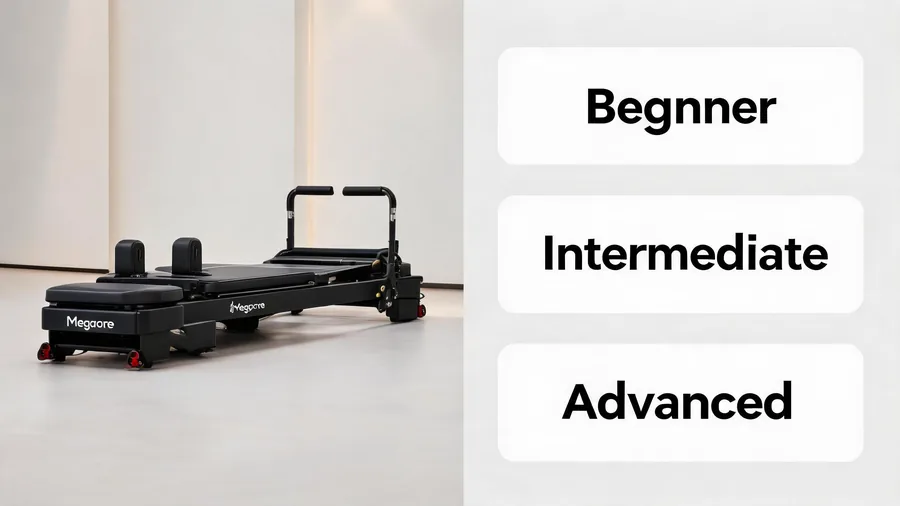
4. Gestionar un grupo de niveles mixtos sin caos
- Indica primero la regresión y después la progresión. Give the beginner option, then add “for those ready for more.” New clients hear the safe version; experienced clients hear the upgrade.
- Asigna las posiciones de reformer según el nivel. Put beginners near the instructor’s sightline, advanced clients at the far end — you see the risky clients first.
- Usa el mismo compás musical para todos. Un tempo distinto por nivel confunde; mantén un solo tempo y diferencia por muelles y rango de movimiento.
- Prepara de antemano una modificación por ejercicio. No improvises bajo presión: escribe tu plan antes de la clase, incluida la alternativa para cada ejercicio.
- Limita la diferencia de niveles. Si en una clase hay principiantes absolutos y clientes muy avanzados, divide la sala en dos zonas con ajustes de muelles distintos, enseña para el nivel intermedio y ve pasando por cada zona.
5. Errores frecuentes al secuenciar (y sus soluciones)
| Error | Por qué perjudica | Corrección |
|---|---|---|
| Jump board al principio de la clase | Pico de cardio antes del calentamiento, mala técnica bajo fatiga | Colócalo a partir del minuto 25 y solo para clientes autorizados |
| Dos variables nuevas a la vez | Los clientes no pueden aislar qué cambió; las lesiones pasan desapercibidas | Un dial a la vez |
| La misma secuencia cada semana | Estancamiento; la clase resulta monótona | Rota el orden de la escalera cada semana |
| Ejercicio avanzado para toda la clase | Los principiantes compensan con mala técnica | Primero la regresión, siempre |
| Sin footwork de vuelta a la calma | Los clientes se van con los flexores de cadera tensos | Termina cada clase con 3-5 min de footwork suave |
6. Progresar a los clientes semana a semana (no solo dentro de una clase)
Modification is also a long game. Track each client’s default springs and the hardest variable they managed. When a client completes three consecutive classes at a level without cues, progress one variable. When they miss cues twice, regress one. This simple rule prevents both stagnation and over-reaching — and it gives you objective data for selling private sessions or level-up programs.
7. Preguntas frecuentes
¿Cómo modifico los ejercicios de reformer de Pilates para principiantes?
Empieza con cada principiante en posiciones en supino con 1-2 muelles ligeros, ambos pies en la barra de pies y tempo lento. Reduce primero el rango de movimiento (sube la barra de pies) y añade muelles solo cuando la técnica sea constante. Nunca pongas a un cliente nuevo en patrones a una pierna o en cuadrupedia durante su primera sesión.
¿Cuál es la mejor secuencia para una clase de reformer?
De lo estable a lo inestable, de lo simple a lo complejo: footwork en supino → preparación del core → transferencia de carga (puente, zancadas) → equilibrio/coordinación → flujos de integración → footwork de vuelta a la calma. Reserva los patrones más exigentes para el tercio central de la clase, cuando el cuerpo está caliente pero no fatigado.
¿Cómo enseño una clase de reformer multinivel?
Usa una sola lista de ejercicios para todos y diferencia con las cinco variables: muelles, base de apoyo, tempo, rango de movimiento y complejidad. Indica primero la regresión, coloca a los principiantes cerca de ti y prepara una modificación por ejercicio antes de que empiece la clase.
¿Cuántos muelles debería usar un principiante?
One to two light springs for most beginner footwork and core work. The exact number depends on the reformer’s spring configuration and the client’s size — the test is 8-10 controlled repetitions without the pelvis moving. If the carriage slams or the client strains, reduce load.
¿Puedo dirigir con seguridad una clase de reformer con niveles de forma física mixtos?
Sí, con estructura: limita la diferencia entre niveles, diferencia por variables y no por ejercicios, y mantén la clase por debajo de 10 reformers (mejor 5-6 por instructor). Para grupos mixtos muy grandes, usa dos zonas con ajustes de muelles distintos.
8. Guías relacionadas
- Entrenamiento de boxeo con reformer de Pilates — crea un formato de clase característico
- Ejercicios de Tabla de Salto para Reformer de Pilates — añade cardio con progresiones estructuradas
- Tabla de tensión de muelles del reformer de Pilates — referencia de carga de muelles para enseñar
- Guía de rentabilidad del Pilates en grupos reducidos — equipamiento y economía de las clases
9. Equipamiento que facilita la enseñanza multinivel
¿Vas a equipar o ampliar un estudio con clases? Explora la gama de reformers comerciales — muelles codificados por color y barras de pies ajustables de serie en todos los bastidores Megacore.