
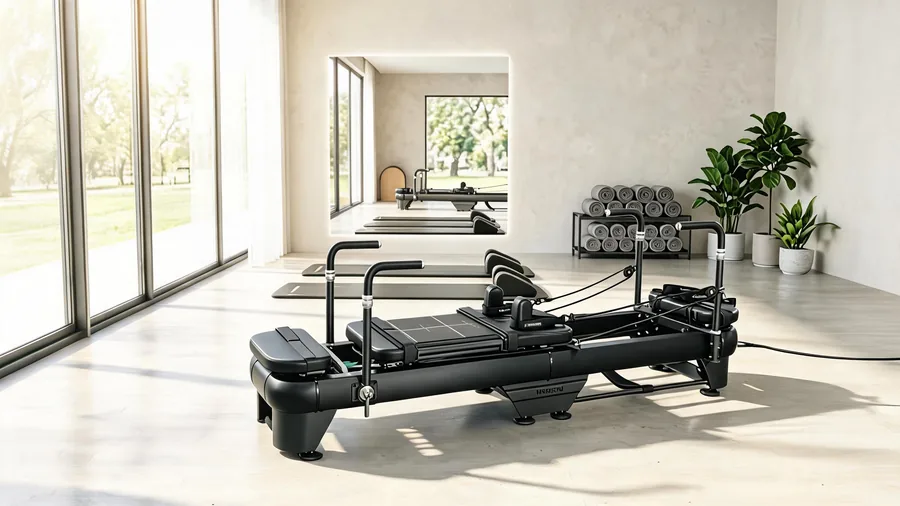
La diferencia entre los Reformers de Pilates de grado comercial y de grado residencial no es marketing: es ingeniería. Una comparación de Reformer de Pilates comercial vs residencial revela diferencias fundamentales en la construcción del bastidor, los sistemas de rodamientos, la durabilidad de los resortes, la calidad del tapizado y la cobertura de garantía. Los Reformers comerciales están diseñados para 15 a 25 sesiones al día, 6 a 7 días a la semana, año tras año. Los Reformers residenciales están diseñados para 1 a 2 sesiones al día, 3 a 5 días a la semana.
Comprender el comparación de Reformer de Pilates comercial vs residencial differences is essential for studio owners evaluating equipment for a new space. The upfront cost difference — typically $1,800 to $4,000 per commercial reformer versus $800 to $2,000 for residential — is justified by the commercial machine’s longer service life and lower per-session cost over 5 to 10 years of continuous operation in demanding studio environments.
1. Construcción del bastidor: el núcleo Reformer de Pilates comercial vs residencial Diferencia
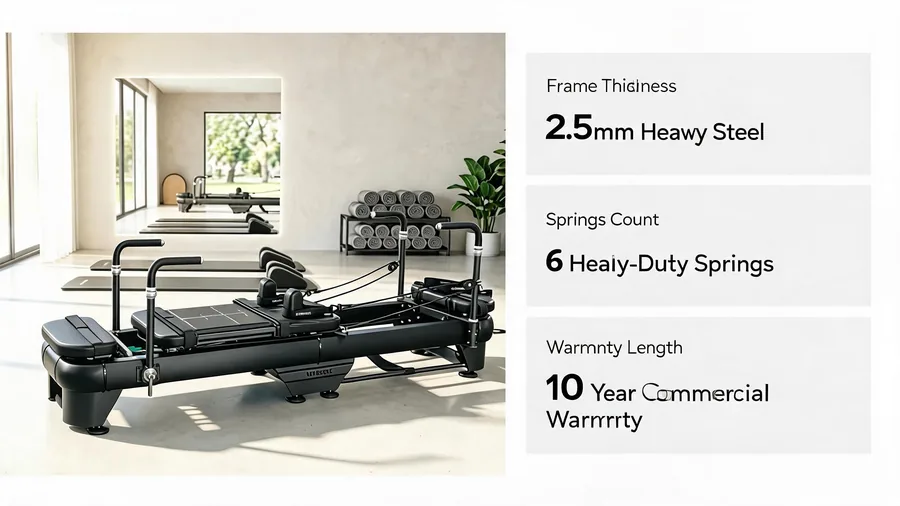
La diferencia más significativa en cualquier comparación de Reformer de Pilates comercial vs residencial comparación está en la construcción del bastidor. Los Reformers de grado comercial usan acero de mayor calibre (grosor de pared de 2.0 a 3.0 mm) diseñado para 10 o más años de uso diario. El bastidor se somete a soldadura robótica TIG para una calidad de junta uniforme y se recubre con pintura en polvo de más de 60 micras para resistir los golpes. Los Reformers residenciales usan materiales más ligeros (grosor de pared de 1.2 a 1.8 mm), adecuados para el uso doméstico semanal pero propensos a la fatiga y a la flexión del bastidor en condiciones de estudio diarias.
Cuando un bastidor residencial falla en un entorno comercial, normalmente hay que sustituir el Reformer completo. El reemplazo del bastidor rara vez es rentable en las unidades de precio más bajo, porque los costos de mano de obra y envío se acercan al valor de la propia máquina. Esto convierte la calidad del bastidor en la consideración más importante para los dueños de estudios que comparan Reformers de distintos rangos de precio y categorías de uso para su instalación.
Commercial reformers use structural steel (Q235 grade or equivalent) with reinforced cross-bracing at stress points including footbar mounts, rail attachment points, and spring post brackets. Residential reformers often use mild steel tubing without reinforcement, which develops frame play and squeaking within 6 to 12 months if used in a studio environment exceeding the manufacturer’s intended usage guidelines and duty cycle specifications.
2. Sistemas de rodamientos y calidad del carro
El sistema de rodamientos es donde la diferencia de rendimiento entre los Reformers comerciales y residenciales resulta más evidente durante el uso. Los Reformers comerciales usan rodamientos de cartucho sellados sobre rieles de acero inoxidable rectificados con precisión. Estos rodamientos están calificados para más de 500,000 metros de recorrido del carro, lo que equivale a 10 o más años en un estudio concurrido. Los Reformers residenciales usan rodamientos de rueda abiertos sobre rieles de aluminio o acero estándar que acumulan polvo y suciedad, desarrollando aspereza en un plazo de 6 a 12 meses de uso a nivel comercial.
Los rodamientos sellados eliminan la necesidad de lubricación periódica y de sustitución de rodamientos. Los rodamientos abiertos de los Reformers residenciales requieren limpieza y lubricación regulares, y permiten que el polvo y el pelo entren en la pista del rodamiento, causando un desgaste desigual que los clientes perciben como aspereza durante los ejercicios. La calidad del deslizamiento del carro afecta directamente a la percepción que el cliente tiene de la calidad de tu equipo, lo que convierte un rendimiento suave de los rodamientos en un factor crítico para la retención de clientes.
El material de los rieles también difiere de forma significativa. Los Reformers comerciales usan rieles de acero inoxidable (diámetro de 22 a 25 mm) que resisten la corrosión de los productos de limpieza y la humedad. Los Reformers residenciales suelen usar rieles de aluminio o de acero cincado que pueden desarrollar puntos de corrosión con el tiempo, sobre todo en entornos de estudio húmedos donde el control climático es limitado y los niveles de humedad fluctúan a lo largo del año.
3. Durabilidad de los resortes y sistemas de resistencia
En cualquier comparación de Reformer de Pilates comercial vs residencial comparación, la calidad de los resortes separa a los Reformers comerciales de las unidades residenciales tanto en rendimiento como en costos de mantenimiento continuo. Los Reformers comerciales usan resortes de acero al alto carbono calificados para más de 50,000 ciclos con una tensión constante durante toda su vida útil. Cada resorte se prueba individualmente y se empareja dentro de un rango de tolerancia para garantizar una resistencia uniforme en todos los Reformers de un estudio. Los Reformers residenciales usan resortes de menor calidad calificados para 10,000 a 20,000 ciclos que pierden tensión y requieren sustitución con más frecuencia.
La frecuencia de sustitución de los resortes repercute directamente en los costos operativos del estudio. Un estudio con 10 Reformers que use resortes de grado comercial sustituirá los resortes cada 18 a 24 meses, con un costo de aproximadamente $15 a $25 por resorte. Ese mismo estudio, si usara resortes de grado residencial, tendría que sustituirlos cada 6 a 12 meses, con resortes que pierden tensión de forma gradual y provocan una resistencia desigual que clientes e instructores notan durante los ejercicios.
Los Reformers comerciales también ofrecen mejores sistemas de fijación de los resortes. Los ganchos de cambio rápido que permiten cambiar los resortes sin herramientas reducen el tiempo de preparación entre clases. Los sistemas de resortes codificados por colores ayudan a los instructores a identificar y ajustar rápidamente los niveles de resistencia. Los Reformers residenciales suelen usar fijaciones de resortes fijas que requieren herramientas para sustituirlos y carecen de codificación por colores, lo que ralentiza las transiciones de clase y el flujo de trabajo de los instructores en entornos de estudio.
4. Capacidad de peso y estabilidad
La capacidad de peso es uno de los diferenciadores más claros en la comparación de Reformer de Pilates comercial vs residencial comparación. Los Reformers comerciales soportan de 150 a 225 kg (330 a 500 lb) frente a 100 a 135 kg (220 a 300 lb) de los modelos residenciales. Los Reformers comerciales tienen bases más anchas y patas estabilizadoras más grandes que evitan que vuelquen durante los ejercicios dinámicos. Los Reformers residenciales son intencionadamente más ligeros para facilitar el transporte, pero esa ligereza los hace menos estables para el uso enérgico en un estudio con clientes de complexiones variadas.
La geometría del bastidor también contribuye a la estabilidad. Los Reformers comerciales tienen centros de gravedad más bajos con dimensiones de apoyo más anchas. Los rieles del carro van montados sobre un subbastidor reforzado que distribuye el peso de manera uniforme sobre la base. Los Reformers residenciales suelen usar un diseño de bastidor más estrecho que ahorra costos de material, pero crea un centro de gravedad más alto que puede provocar balanceo o vuelco durante los ejercicios realizados cerca del borde del carro.
For studio owners, weight capacity and stability directly affect client safety and insurance liability. Commercial reformers with documented weight capacity testing provide peace of mind that your equipment can accommodate all clients safely. Residential reformers used in a commercial setting create potential liability exposure if a client exceeds the equipment’s rated capacity during an exercise session or training activity in your studio.
6. Garantía y costo total de propiedad
El comparación de Reformer de Pilates comercial vs residencial comparación de garantías de esta comparación de Reformer de Pilates comercial vs residencial evaluation reveals differences in manufacturer confidence. Commercial reformers carry comprehensive warranties covering frame, springs, bearings, and upholstery for 3 or more years. Residential reformers typically offer 1 to 2 year warranties with limitations on usage (stated in warranty terms as “home use only”). Using a residential reformer in a commercial setting voids the warranty, leaving the studio owner responsible for all repair and replacement costs.
Total cost of ownership calculations favor commercial reformers for studio applications despite the higher upfront price. To see what is actually on the market and what a listing will not tell you, read our Pilates reformer en venta guide. A commercial reformer at $2,500 with a 10-year lifespan costs $250 per year. A residential reformer at $1,200 with a 3-year lifespan in commercial use costs $400 per year plus higher maintenance costs for spring and bearing replacements that occur more frequently with lower-grade components.
La Pilates Method Alliance provides guidelines on commercial equipment standards that help studio owners verify manufacturers’ claims about commercial-grade construction. When comparing options, request specification documentation, warranty terms in writing, and independent quality inspection reports that verify the equipment meets commercial-grade standards before making your final purchasing decision for your studio investment.
Compara Reformers comerciales para tu estudio
Contacta con nuestro equipo para obtener especificaciones de Reformers de grado comercial, precios y solicitudes de muestras. Precios directos de fábrica desde $1,800 por unidad.
Correo: [email protected] • WhatsApp: +86 189 0238 9454
Guías relacionadas
- Guía de Reformers de Pilates comerciales
- El mejor Reformer de Pilates para uso en estudio
- Guía de capacidad de peso del Reformer
- Guía de materiales del bastidor del Reformer
- Guía de Compra de Reformers de Pilates 2026
7. Preguntas frecuentes
¿Cuál es la diferencia entre los Reformers de Pilates comerciales y residenciales?
Los Reformers comerciales usan bastidores de acero más gruesos (2.0-3.0 mm), rodamientos de cartucho sellados, rieles de acero inoxidable, resortes calificados para más de 50,000 ciclos y garantías de más de 3 años. Los Reformers residenciales usan materiales más ligeros y están diseñados solo para uso doméstico, con garantías de 1-2 años.
¿Puedo usar un Reformer residencial en mi estudio?
Técnicamente sí, pero no es recomendable. Los Reformers residenciales están diseñados para 1-2 sesiones al día. Usarlos de forma comercial anula la garantía, acelera el desgaste y genera problemas de responsabilidad debido a sus menores capacidades de peso y a una estabilidad del bastidor reducida.
¿Cuánto más cuesta un Reformer comercial frente a uno residencial?
Los Reformers comerciales suelen costar de $1,800 a $4,000, frente a $800 a $2,000 de los modelos residenciales. Sin embargo, el costo anual de propiedad es menor en los Reformers comerciales, porque duran de 8 a 15 años frente a los 3 a 5 años de las unidades residenciales en uso comercial.
¿Qué grosor de bastidor necesito para un Reformer de estudio?
Un grosor mínimo de pared de acero de 2.0 mm para uso comercial. Los Reformers con bastidores de 1.5 mm o menos son de grado residencial y desarrollaran flexión y holgura del bastidor en cuestión de meses de uso diario en un estudio. Busca acero estructural Q235 con soldadura robótica TIG para obtener los mejores resultados.
¿Tienen los Reformers comerciales mejor valor de reventa?
Sí. Los Reformers de grado comercial conservan del 40 al 60 por ciento de su valor tras 5 años y pueden venderse a otros estudios o a usuarios domésticos. Los Reformers residenciales tienen un valor de reventa mínimo, porque su vida útil más corta significa que el siguiente propietario hereda componentes que fallarán pronto.
¿Cuál es la vida útil de un Reformer comercial frente a uno residencial?
Los Reformers comerciales duran de 8 a 15 años en uso diario de estudio con un mantenimiento adecuado. Los Reformers residenciales duran de 3 a 5 años en las mismas condiciones, antes de que la fatiga del bastidor, el desgaste de los rodamientos y el fallo de los resortes obliguen a sustituir la unidad completa.
El commercial reformer line is the tier built for daily class load rather than home use.