
Pilates Reformer Storage Solutions: Complete Guide to Organizing Springs, Straps & Accessories
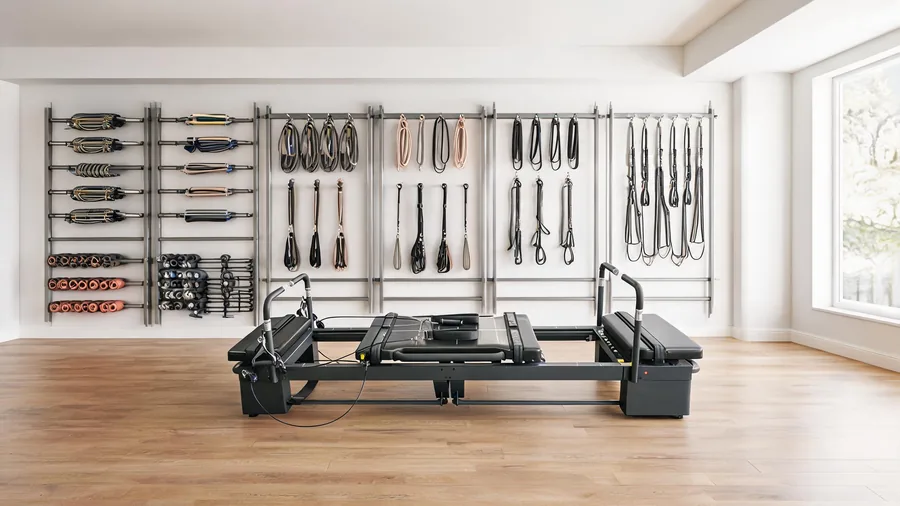
Un studio désorganisé envoie un message clair aux clients : nous ne nous soucions pas des détails. Des sangles emmêlées, des ressorts mélangés et des accessoires éparpillés créent un environnement encombré, ralentissent les transitions entre les cours et augmentent l'usure du matériel. Des solutions de rangement pour Reformer Pilates efficaces préservent l'image professionnelle du studio, protègent le matériel d'une usure prématurée et réduisent le temps que le personnel consacre aux tâches d'organisation.
Ce guide présente des solutions de rangement pratiques pour Reformer Pilates adaptées à chaque type d'accessoire — ressorts, sangles, cordes, barres et tapis — avec des recommandations d'aménagement de studio qui maximisent l'efficacité et réduisent l'encombrement. Que vous ouvriez un nouveau studio ou réorganisiez un espace existant, la mise en place de solutions de rangement dédiées améliore le quotidien opérationnel et la perception des clients.
1. Solutions de rangement des ressorts pour Reformer Pilates
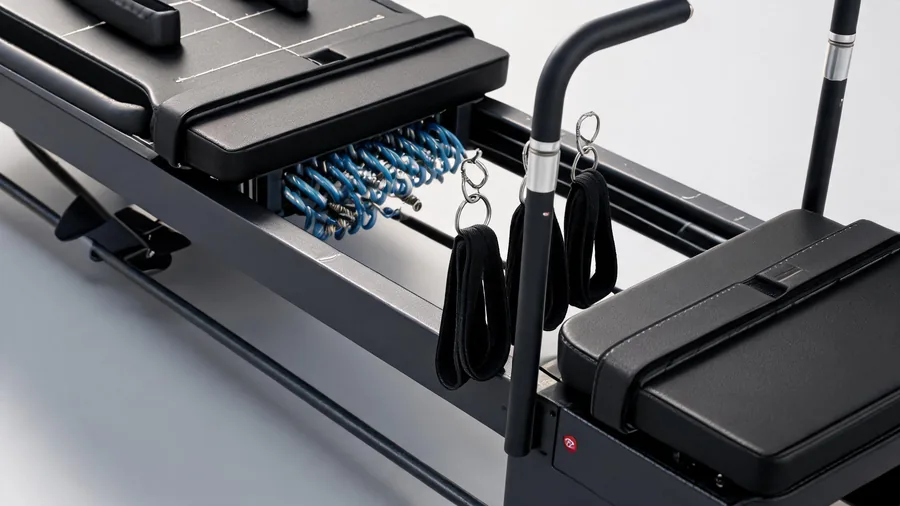
Les ressorts sont le composant le plus souvent remplacé sur un Reformer, et un rangement désorganisé entraîne des pièces perdues, des niveaux de tension mélangés et des conditions de cours dangereuses. Une solution de rangement pour Reformer Pilates adaptée aux ressorts commence par une organisation par code couleur. Chaque niveau de tension doit disposer de son propre crochet, bac ou compartiment de rack. Étiquetez clairement chaque section avec la couleur du ressort et le niveau de résistance.
Les racks à ressorts muraux sont l'option la plus économe en espace. Installez-les près des postes de Reformer afin que les instructeurs puissent prendre des remplacements rapidement entre deux cours. Pour les studios comptant 10 Reformers ou plus, investissez dans une armoire de rangement dédiée avec des compartiments individuels pour chaque niveau de tension. Cela évite le problème courant des ressorts mélangés qui créent une résistance irrégulière pendant les exercices.
Stockez les ressorts de rechange dans une zone à température contrôlée, à l'abri de la lumière directe du soleil. La chaleur et l'humidité accélèrent la fatigue et la corrosion des ressorts. Le certificat d'inspection qualité GZHL2601000020601SP documente les normes d'essai de fatigue des ressorts. Les recommandations de la Pilates Method Alliance (PMA) préconisent une inspection régulière du matériel et un rangement approprié comme pratiques de sécurité essentielles, confirmant que des ressorts correctement stockés conservent une tension constante pendant plus de 50 000 cycles.
2. Solutions de rangement des sangles et cordes pour Reformer Pilates
Les sangles, cordes et boucles nécessitent un rangement différent de celui des ressorts, car elles s'emmêlent facilement et s'usent en surface. Le rangement suspendu est la méthode la plus efficace pour les sangles — installez des crochets muraux à 1,5 m de hauteur et suspendez chaque jeu de sangles séparément. Cela évite les nœuds et les emmêlements qui se produisent lorsque les sangles sont entassées dans des bacs.
Pour les accessoires à corde comme les cordes à sauter et les élastiques de résistance, utilisez des bacs en acrylique transparent fixés au mur. Les contenants transparents permettent aux instructeurs de voir le contenu sans ouvrir chaque bac. Étiquetez chaque bac par type d'exercice — sangles de footwork, ressorts de bras, cordes à sauter — pour accélérer les transitions entre les cours.
Envisagez un système de panneau perforé derrière le poste de l'instructeur pour les accessoires fréquemment utilisés. Il offre un accès visuel à tous les articles en même temps et permet de repérer facilement les pièces manquantes avant le début du cours. Le rangement sur panneau perforé est particulièrement efficace dans les studios proposant plusieurs formats de cours nécessitant différentes configurations d'accessoires.
3. Rangement des grands accessoires et des tapis
Les tapis, boxes, barrels et autres grands accessoires nécessitent un espace au sol dédié qui ne gêne pas le déroulement des cours. Les racks muraux à tapis sont la solution la plus économe en espace — ils maintiennent les tapis roulés et hors du sol tout en leur permettant de sécher à l'air entre deux utilisations. Installez les racks à au moins 30 cm du mur pour permettre la circulation de l'air et éviter le développement de moisissures. Pour les tapis à revêtement vinyle, essuyez-les avec un désinfectant doux avant de les rouler afin d'éviter la prolifération bactérienne entre deux utilisations.
Pour les studios à surface limitée, envisagez des tours de rangement verticales combinant le stockage des tapis et des étagères pour les petits accessoires. Ces modules maximisent l'espace vertical et regroupent tout le rangement dans une seule zone. Placez la tour près de l'entrée du studio afin que les clients puissent prendre leur propre tapis sans perturber la zone de préparation des cours.
4. Aménagement du studio pour une organisation efficace
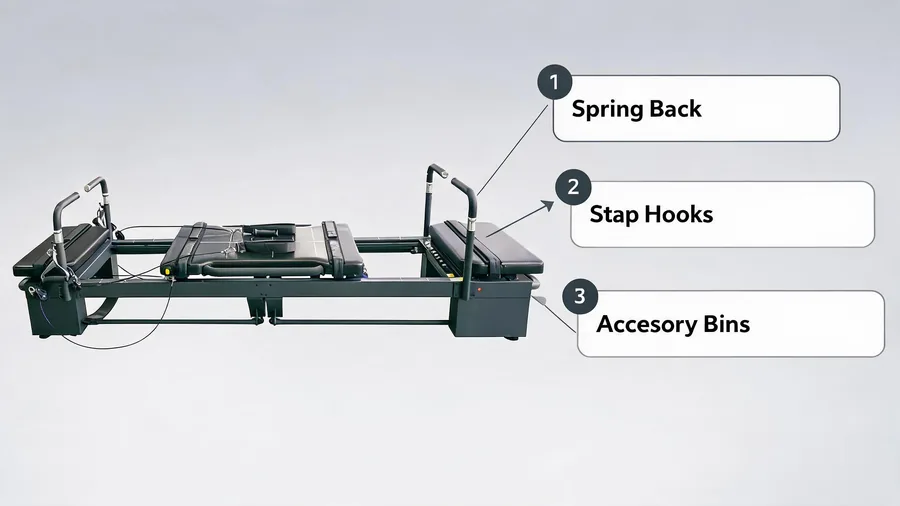
L'aménagement de votre studio Pilates influence directement l'efficacité avec laquelle vous gérez le matériel et les accessoires. Commencez par cartographier le parcours des cours — l'entrée des clients, l'endroit où ils prennent leur tapis, l'accès aux Reformers et le point où ils rangent les accessoires après le cours. Chaque solution de rangement doit être positionnée le long de ce parcours naturel plutôt que d'obliger le personnel et les clients à traverser le studio plusieurs fois lors de l'installation et du rangement.
Les solutions de rangement pour Reformer Pilates solutions les plus efficaces intègrent le rangement dans l'aménagement du studio plutôt que de le traiter comme un élément secondaire. Définissez des zones spécifiques pour les ressorts, les sangles et les tapis. Gardez les articles fréquemment utilisés à portée de main des postes de Reformer et rangez les accessoires saisonniers ou spécialisés dans des bacs étiquetés sur les étagères supérieures.
Mettez en place un système de prêt pour les accessoires à forte valeur dans le cadre de votre stratégie de rangement pour Reformer Pilates, comme les jump boards et les spine correctors. Utilisez une simple feuille d'émargement ou un suivi numérique. Les ressources d'organisation du matériel de l' ACE Fitness soulignent que les studios organisés réduisent le risque de blessure et améliorent le déroulement des cours, de sorte que chaque équipement peut être comptabilisé. Cela réduit les pertes et garantit que les accessoires sont replacés à leur emplacement désigné après chaque cours.
Réévaluez vos solutions de rangement pour Reformer Pilates chaque trimestre. À mesure que les formats de cours évoluent et que de nouveaux accessoires sont ajoutés, les besoins de rangement changent. Une réorganisation trimestrielle maintient l'efficacité du système et évite l'accumulation progressive de désordre qui nuit au professionnalisme du studio.
5. Questions fréquentes
Comment organiser les ressorts d'un Reformer Pilates ?
Codez les ressorts par couleur selon leur niveau de tension et rangez-les sur des racks muraux ou dans des armoires à compartiments. Étiquetez clairement chaque section. Conservez les ressorts de rechange dans une zone à température contrôlée, à l'abri de la lumière et de l'humidité.
Quelle est la meilleure façon de ranger les sangles de Pilates ?
Suspendez les sangles individuellement sur des crochets muraux à 1,5 m de hauteur. Cela évite les emmêlements. Pour les accessoires à corde, utilisez des bacs muraux en acrylique transparent afin que le contenu soit visible d'un coup d'œil.
Comment organiser un petit studio Pilates avec un espace de rangement limité ?
Utilisez des tours de rangement verticales combinant stockage des tapis et étagères. Installez des panneaux perforés derrière le poste de l'instructeur. Privilégiez les solutions murales au rangement au sol pour maximiser la surface utilisable pendant les cours.
6. Guides associés
- Guide de réglage de l’appui-tête du reformer Pilates
- Meilleur reformer Pilates pour usage en studio
- Guide d’achat de reformer Pilates 2026
Conclusion
La mise en place de solutions de rangement pour Reformer Pilates solutions de rangement adaptées transforme l'efficacité et l'image professionnelle de votre studio. Des racks à ressorts codés par couleur, un rangement suspendu pour les sangles et des racks à tapis dédiés réduisent le temps de transition entre les cours et prolongent la durée de vie du matériel. Les studios qui investissent dans des systèmes de rangement organisés fidélisent leurs clients plus longtemps, car des espaces ordonnés témoignent d'une attention aux détails et du souci de l'expérience client.
Storage footprint per model is listed on the reformer model pages.