

If you are planning to open or expand a Pilates studio, one question comes first: what does a commercial pilates reformer cost? The answer is not a single number. Commercial reformers range from roughly $1,500 to over $8,000 per unit, and the price depends on frame materials, spring quality, carriage systems, brand reputation, and where you buy from. This guide breaks down every price tier, explains what you get at each level, and helps you decide where to invest your equipment budget.
1. 2026 Commercial Reformer Price Tiers
Here is the realistic pricing landscape for commercial-grade Pilates reformers, based on factory pricing, distributor markups, and regional differences—the clearest way to understand commercial pilates reformer cost. Understanding the commercial pilates reformer cost structure starts with knowing what each tier actually delivers.
| Szint | Price Range | Typical Buyers | Key Features |
|---|---|---|---|
| Entry Commercial | $1,500 – $2,000 | Startup studios, high-usage home setups | Steel frame, standard springs, basic carriage |
| Mid-Range Commercial | $2,000 – $3,500 | Boutique studios, small chains | Q235 steel frame, 50k-cycle springs, roller bearing carriage |
| Premium Commercial | $3,500 – $5,500 | High-traffic studios, franchise locations | Heavy-duty steel, high-carbon springs, precision carriage |
| Ultra-Premium / Brand | $5,500 – $8,000+ | Flagship studios, luxury wellness centers | Established brand names, premium materials, full warranty |
Buying factory-direct from a manufacturer like Megacore places you in the mid-range to premium tier, with specifications comparable to established Western brands. The commercial pilates reformer cost difference between channels comes down to distribution layers, not build quality.
2. What Drives the Price of a Commercial Reformer
Not all reformers are built the same. These are the cost drivers that separate a $1,500 machine from a $6,000 machine, and they explain most of the commercial pilates reformer cost variation in the market.
Frame Material and Construction
The frame is the single most expensive component of a reformer and the first line item in any commercial pilates reformer cost breakdown. Commercial-grade Q235 steel frames rated for 300-350 kg cost more to manufacture than aluminum or thin-gauge steel frames, adding roughly $300-600 to production cost. That translates directly into durability: a steel-framed commercial reformer lasts 10-15 years in daily studio use, while a lighter frame may need replacement in 3-5 years.
Spring System Quality
Springs are the second biggest cost differentiator in commercial pilates reformer cost comparisons. High-carbon steel springs rated for 50,000+ cycles cost 2-3 times more than standard springs but last 4-5 times longer in commercial environments. On a 6-reformer studio, spring replacement with premium components every 5 years costs less overall than replacing standard springs every 2 years.
Carriage and Bearing System
The carriage system affects both smoothness and longevity. Roller bearing carriages provide silent, friction-free movement and cost more to manufacture than basic glide systems. Quality bearings add $150-300 to unit cost but eliminate the squeaking and sticking that appears in lower-tier machines after months of commercial use.
3. Total Cost of Ownership Beyond the Purchase Price
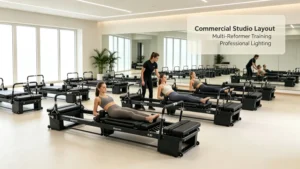
The purchase price is only part of the total cost picture, which is why smart buyers evaluate commercial pilates reformer cost over five years rather than at the register. These additional items can add 20-40% to your first-year equipment spending, and they belong in any realistic commercial pilates reformer cost plan.
- Shipping and logistics: sea freight from a factory runs approximately $200-400 per unit depending on destination port; air freight is faster but more expensive. Local distributor pricing usually folds shipping into the unit price.
- Import duties and taxes: vary by country—confirm current rates with a customs broker before finalizing a purchase.
- Maintenance and replacement parts: budget $100-300 per reformer per year; springs every 3-5 years, carriage pads every 2-3 years, ropes every 1-2 years.
- Accessories: jump boards, boxes, platform extenders, and extra spring sets typically add $300-700 per reformer for a full setup.
Factory-direct suppliers typically offer replacement parts at straightforward pricing, while branded parts from premium manufacturers can be significantly more expensive. When comparing quotes, compare total cost of ownership over five years, not just the unit price.
4. Commercial vs Home Reformer Pricing
A home-use reformer costs $300-1,000, while a commercial reformer starts around $1,500—the largest single factor in commercial pilates reformer cost is the usage rating behind the machine. The gap exists for clear reasons, and it explains why the commercial pilates reformer cost is justified for studio operators:
- Usage cycles: commercial reformers are tested for 50,000+ cycles (10+ daily classes for a decade); home reformers for 5,000-10,000.
- Weight capacity: commercial units support 250-350 kg; home units typically 120-180 kg.
- Warranty: commercial reformers carry 3-year frame and machine warranties; home units typically one year.
- Noise level: commercial reformers are engineered for quiet studio operation.
If you are opening a studio that will run 8-15 classes per day, home-grade equipment is not a substitute. The apparent savings disappear within months when frames flex, springs lose tension, or carriages start squeaking—and repair downtime costs more than the price difference.
5. How to Compare Reformer Quotes Properly
Getting the right commercial pilates reformer cost for your studio comes down to comparing like for like, and this checklist keeps the process honest. Use this checklist when evaluating manufacturers and distributors:
- Define your class schedule: calculate how many reformers you need based on target class size, then multiply by your chosen tier price.
- Compare with identical specifications: request quotes from 3-5 manufacturers using the same frame, spring, and carriage specs so the comparison is apples to apples.
- Factor total cost of ownership: a machine with longer-lasting components costs less over five years even when the sticker price is higher.
- Ask for quality documentation: request the quality inspection certificate and test report that accompany commercial units—for Megacore, report number GZHL2601000020601SP covers the commercial range.
- Verify warranty terms: confirm what the 3-year warranty covers—frame, machine, or both—and how claims are handled.
Specification-matched comparison is the only honest way to evaluate price. A lower quote on a machine with lighter springs or a thinner frame is not the same product at a better price—it is a different product.
6. Why Factory-Direct Delivers Strong Value
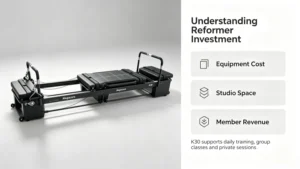
Factory-direct manufacturers like Megacore build commercial reformers with Q235 steel frames, which keeps commercial pilates reformer cost aligned with manufacturing value. rated for 350 kg, high-carbon steel springs with 50,000-cycle ratings, and precision roller bearing carriages—with a 3-year warranty on frame and machine. Because the factory sells directly to studios, the commercial pilates reformer cost reflects manufacturing rather than a chain of distribution markups.
The quality testing certification GZHL2601000020601SP applies to the commercial range, giving studio owners documented assurance that matches the build standard of established brands. For studios equipping multiple reformers, consistent factory-direct specification across the fleet simplifies parts, training, and warranty service.
7. Planning Your Equipment Investment
A typical boutique studio opening with 6 reformers in the mid-range tier should plan an equipment budget of roughly $12,000-21,000 before accessories and shipping—a realistic commercial pilates reformer cost baseline for a first location. That range reflects the commercial pilates reformer cost for machines built to run 8-15 daily classes for a decade.
| Studio Size | Reformer Count | Equipment Investment (Mid-Range) | Plus Accessories |
|---|---|---|---|
| Boutique (4-6 machines) | 6 | $12,000 – $21,000 | $2,000 – $4,000 |
| Mid-size (8-10 machines) | 10 | $20,000 – $35,000 | $3,000 – $7,000 |
| Large studio (12-15 machines) | 15 | $30,000 – $52,000 | $5,000 – $10,000 |
Use this table as a planning baseline, then adjust for tier choice and local shipping costs. The investment should be measured against projected class revenue: a reformer used in 8 daily classes generates revenue that recovers the equipment cost within the first months of full operation.
8. Making the Final Decision
The commercial pilates reformer cost sweet spot for most studio owners is the $2,000-3,500 range. At this level you get a heavy-duty steel frame, commercial-grade springs, and a smooth carriage system that will serve the studio reliably for a decade or more.
Avoid two extremes: overpaying for brand names without specification differences, and choosing machines whose price reflects lighter components that will not survive daily studio use. Verify certifications, inspect or request a sample, and confirm warranty terms before ordering.
Gyakran feltett kérdések
Q1: What is the average price of a commercial Pilates reformer?
The average commercial pilates reformer cost is $2,000-4,000 when purchased factory-direct, and $4,000-7,000 through Western brand distributors. The difference is distribution structure, not build quality.
Q2: Can I get a commercial reformer for under $1,500?
Machines under $1,500 are typically commercial-light or heavy-duty home models. For a studio running 8+ daily classes, plan $1,800-2,200 per reformer for a machine that will last 5+ years without major issues.
Q3: Are factory reformers as durable as established brands?
Reputable factories match established brands on frame durability and spring quality, backed by documented quality inspection. The main differences are brand recognition and local support networks—not build quality.
Q4: How much does shipping add to the cost?
Sea freight from a factory adds $200-400 per reformer; air freight adds $600-1,200. Local distributors typically include shipping within the unit price, which is one reason their pricing runs higher.
Q5: What is the ROI timeline for a commercial reformer?
A mid-range reformer used in 8 daily classes at typical session rates generates revenue that recovers the equipment investment within the first months of full operation in a well-booked studio.
Q6: What warranty comes with commercial reformers?
Commercial reformers from Megacore carry a 3-year warranty on frame and machine, backed by a quality inspection certificate and test report (report number GZHL2601000020601SP) with each unit.
Következtetés
Understanding the commercial pilates reformer cost means looking past the sticker price to specifications, total cost of ownership, and the quality documentation behind each machine. The right investment delivers a decade of reliable daily use, and it pays for itself through class revenue.
Compare quotes with identical specifications, verify the quality inspection certificate and warranty terms, and choose the tier that matches your class volume. A well-chosen reformer is one of the most reliable investments a studio makes.
Request a Commercial Reformer Quote From Megacore
Kapcsolódó útmutatók
- Commercial vs Residential Grade Reformers
- How Many Reformers Does a Studio Need?
- Pilates Reformer nagykereskedelmi útmutató
- A Pilates Reformer tisztítási útmutatója
- Pilates Reformer Price vs Quality: $800 vs $3,000
- How to Choose a Pilates Equipment Manufacturer
Ipari referenciák: A Pilates Method Alliance iparági szabványai és Az OSHA munkahelyi biztonsági irányelvei.