

A pilates reformer vs Lagree megaformer decision is one of the biggest equipment choices a studio owner makes in 2026. Both machines use spring resistance on a sliding carriage, but they serve different methods, different client expectations, and different revenue models. This guide compares the two apparatuses on the factors that actually determine studio success: workout style, client retention, cost, space, instructor training, and revenue per square foot — then gives a clear recommendation based on your business model.
1. Pilates Reformer vs Lagree Megaformer: What Each Machine Is
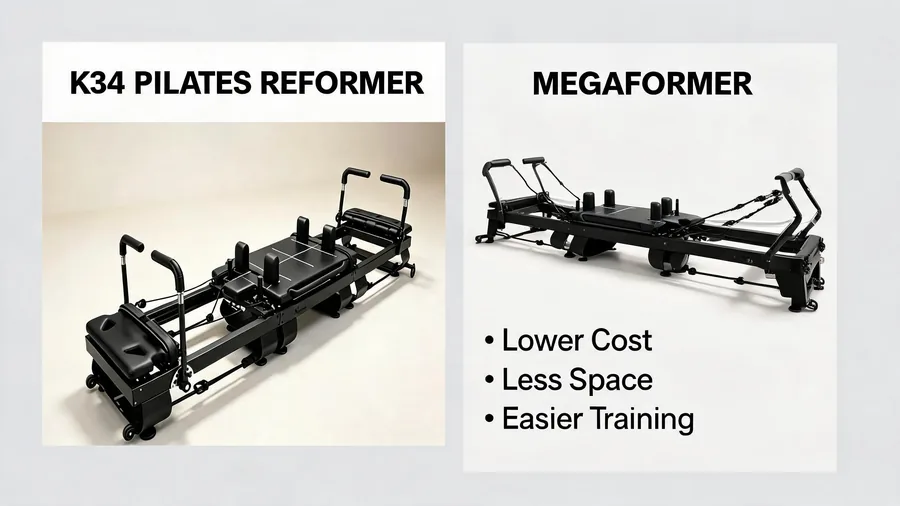
A classic pilates reformer is a low carriage on rails with a footbar, springs, and straps. It is the foundation of the classical and contemporary Pilates method, designed for controlled, precise movement with light to moderate resistance. The Lagree Megaformer — a trademarked machine — is longer, heavier, and built for the Lagree method: slow, high-tension movements with constant spring resistance and no rest between exercises.
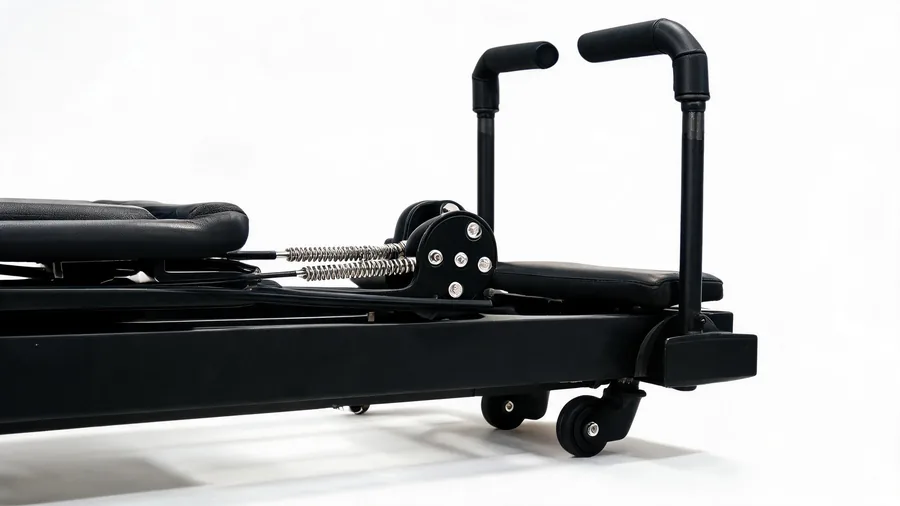
The distinction matters commercially in any pilates reformer vs Lagree megaformer analysis. Pilates is a registered method with instructor certifications and a century of clinical backing. Lagree is a branded workout format with its own certification system. When comparing pilates reformer vs Lagree megaformer, you are comparing two different products and two different customer bases.
2. Workout Differences: Method vs Intensity
Pilates on a reformer emphasizes precision, breath, and spinal articulation. Resistance is moderate, springs are often changed mid-session, and the pace allows for technical refinement. The Lagree method keeps the springs loaded and moves continuously — the signature “no rest” format that produces high muscle fatigue in a 45-minute session.
3. Cost: Pilates Reformer vs Lagree Megaformer
Cost is where the pilates reformer vs Lagree megaformer comparison diverges most sharply. A commercial pilates reformer from a factory-direct manufacturer ranges from $1,200 to $2,800 per unit — the reformer side of the pilates reformer vs Lagree megaformer cost gap. A genuine Lagree Megaformer retails between $8,000 and $15,000, and Lagree-certified studios must buy approved machines. Outfitting a 10-station studio costs roughly $15,000-$28,000 with reformers versus $80,000-$150,000 with Megaformers.
That five-to-eight-fold difference in the pilates reformer vs Lagree megaformer comparison changes your break-even math. A reformer studio needs fewer clients per machine to recover equipment cost, which lowers the barrier to opening and reduces financial risk in slow months. The Megaformer’s higher price buys a premium brand position, but it also demands premium pricing — typically $35-$50 per class versus $25-$40 for reformer classes.
4. Space and Studio Design
Megaformers are wider and heavier, requiring more floor area per machine and stronger subflooring. Reformers fit more stations per square foot and can be folded or stored in mixed-use spaces. For studios converting an existing retail space — the most common scenario for new owners — reformers offer far more layout flexibility than the Megaformer. For purpose-built spaces with a dedicated budget, Megaformers create a distinctive high-end look.
5. Client Retention and Class Programming
Reformer programming scales across skill levels — a major advantage in the pilates reformer vs Lagree megaformer comparison: intro classes, rehab-focused sessions, advanced apparatus work, and specialty formats like prenatal or athletic conditioning. That breadth keeps clients engaged over years and lets instructors teach a wide range of offerings. Lagree’s format is intentionally uniform — the same method, the same class structure — which builds consistency but narrows your programming range.
Retention data from both formats shows that intensity-driven workouts (Lagree) attract committed fitness clients quickly but see more burnout, while reformer clients typically stay longer because the method accommodates aging, injury, and evolving goals. A mixed model — reformers as the base, with a small number of Megaformer-style machines for high-intensity demand — is increasingly common in 2026.
6. Instructor Training and Availability
Pilates instructors are widely available through PMA-recognized training programs — an edge for reformers, and the certification pool is deep in most markets. Lagree instructors must complete Lagree-specific certification, a smaller talent pool that can constrain hiring and raise labor costs. If you plan to hire rather than teach yourself, instructor availability is a decisive factor in the pilates reformer vs Lagree megaformer choice.
7. Pilates Reformer vs Lagree Megaformer: Revenue per Square Foot
Run the numbers on a 1,500-square-foot studio. With reformers, you fit 12-15 machines and can run back-to-back reformer classes across multiple formats, serving 200-300 clients weekly. With Megaformers, you fit 8-10 machines in the same space, charge more per class, but serve fewer clients. For most markets, the reformer model generates comparable or higher total revenue with materially lower capital risk — which is why reformer studios outnumber Lagree studios roughly 10 to 1 worldwide.
8. Frequently Asked Questions
Is a Lagree Megaformer a pilates reformer?
No. The Megaformer was inspired by the reformer but is a distinct machine for the Lagree method. Lagree itself states the Megaformer is not a reformer and Lagree is not Pilates.
Which is better for weight loss: reformer or Megaformer?
Megaformer sessions burn more calories per minute due to continuous high-tension work, but reformer clients often sustain training longer, producing comparable long-term results. Both are effective; consistency matters more than the apparatus.
Can I teach Pilates on a Megaformer?
Technically the machine supports movement, but Pilates method work is designed around reformer mechanics. Mixing methods on a Megaformer confuses your brand positioning and certification requirements.
Which machine is cheaper to run?
Reformers cost less upfront, less to maintain, and need less specialist labor. Megaformers have higher replacement-part costs and require certified instructors, raising ongoing operating expenses.
Can a studio offer both reformer and Lagree classes?
Yes, and it is a growing model. Start with reformers as the base, add one or two Megaformer-style machines once demand justifies the capital, and market the two tracks separately.
Which has better resale value?
Commercial reformers hold value well because the market is deep and parts are standard. Megaformer resale depends on brand certification rules, which can restrict who may buy used machines.
Következtetés
For most studio owners in 2026, the pilates reformer vs Lagree megaformer decision comes down to capital and positioning. Reformers win on cost, flexibility, instructor availability, and client breadth; Megaformers win on intensity branding and per-class pricing. The lower-risk path is a reformer-first studio with a clear expansion plan — and if your market demands high-intensity formats, add Megaformer-style machines once you have proven demand.
Get Commercial Reformer Pricing
Kapcsolódó útmutatók
Külső források
The following industry resources provide authoritative guidance on this topic: