
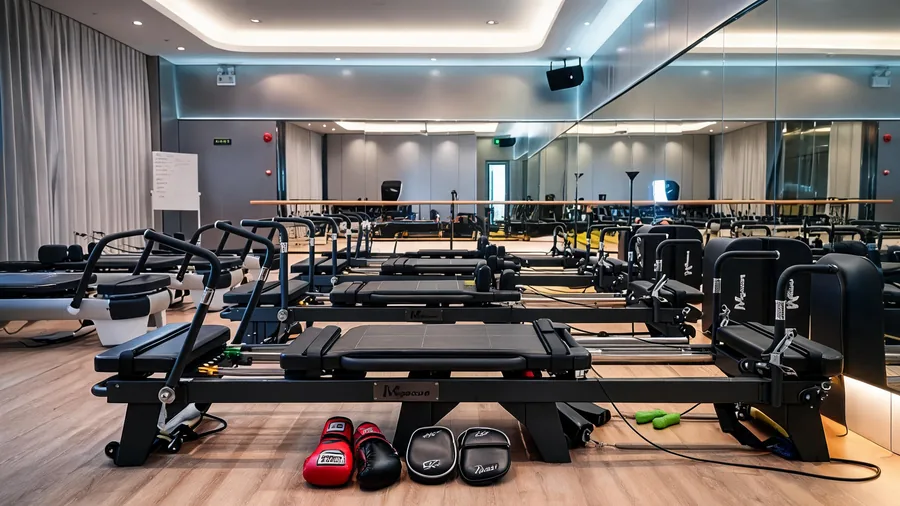
ボクシングの要素を取り入れたピラティスは、フィットネス業界で最も急速に成長しているトレンドのひとつであり、その理由は明らかです。ボクシングは有酸素性、協調性、ファンクショナルなパワーをもたらし、リフォーマーは体幹のコントロール、正確性、低衝撃の抵抗を加えます。この2つを組み合わせたピラティスリフォーマーボクシングワークアウトは、持続力のあるクラスを生み出します。両者の良いところを併せ持つことで、スタジオは新規会員を惹きつけ、既存会員を活性化させる看板クラスのフォーマットを得られます。
1. ピラティスリフォーマーボクシングワークアウトが効果的な理由
ボクシングは爆発的でエネルギー消費が大きく、リフォーマーの動きはコントロールされ正確です。この2つが組み合わさることで、打撃時のパワー発揮、リカバリー時のコントロール、そして終始続く体幹の働きというコントラストのあるトレーニングが生まれます。インストラクターはこの組み合わせを「テクニックを伴うファンクショナルフィットネス」と表現しており、サンドバッグ打ちの衝撃なしに強度を求める顧客に響きます。
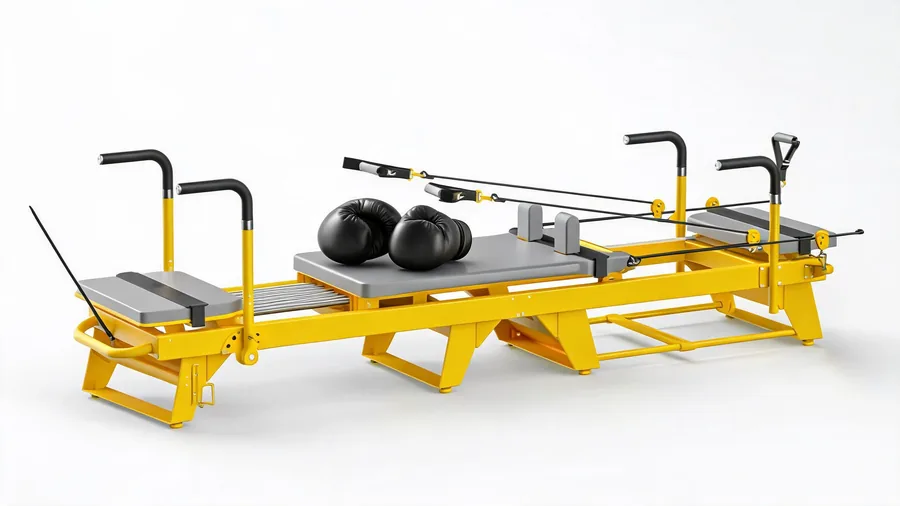
バイオメカニクスも自然に一致します。ボクシングは体幹と股関節からパワーを生み出し、それはリフォーマーがバネ抵抗を通じて鍛えるのと同じ筋群です。ピラティスリフォーマーボクシングワークアウトはこのつながりを強化します。顧客は腕ではなく体の中心からパワーを生み出すことを学び、それがボクシングの技術と全体的な動きの質の両方を高めます。
2. ボクシングリフォーマークラスに必要な設備
ボクシングリフォーマークラスでは、リフォーマー本体以外に必要な設備はごくわずかです。一般的な構成は次のとおりです。
- リフォーマー: 滑らかなローラーベアリング式キャリッジを備えた標準的な業務用リフォーマー。
- ボクシンググローブ: 軽量のバッググローブやラップが、シャドーやミット打ちの際に手を保護します。
- フォーカスミット: ペアでのミット打ちやインストラクター主導のコンビネーションに使用します。
- レジスタンスバンド: マシンから離れたシャドーボクシングの抵抗トレーニング用として任意で用意します。
- フロアスペース: フットワークドリル用に、リフォーマーの脇に小さなマットスペースを確保します。
スタジオは通常、ルームの一角をボクシングドリル用に、残りをリフォーマー用に割り当て、構成されたピラティスリフォーマーボクシングワークアウトのサーキットで顧客をステーション間で移動させます。このサーキット形式は機器の稼働率を最大化し、セッション全体を通じてクラスの熱気を高く保ちます。
3. 成果が出ているクラスフォーマット
ボクシングリフォーマープログラムを実施しているスタジオでは、いくつかのクラスフォーマットが成果を上げています。
最も人気のある導入形式はサーキット形式です。動きに変化をつけながら全身を鍛えられ、インストラクターにとっては安全とフォームを確認する自然な区切りにもなります。多くのスタジオはサーキットクラスでピラティスリフォーマーボクシングワークアウトのプログラムを開始し、会員のフィードバックをもとに形式を磨き上げています。
4. ピラティスリフォーマーボクシングワークアウトにおける体幹トレーニング
ピラティスリフォーマーボクシングワークアウトの体幹パートこそが、ジムのボクシングクラスとの違いを生みます。リフォーマーのエクササイズは、ボクシングが依拠する深層の体幹安定筋を鍛えます。腹横筋、腹斜筋、腸腰筋が、ボクシングの動作を反映した姿勢でバネ抵抗に抗して働きます。
一般的な体幹ブロックには、抵抗をかけたアブドミナルカール、バネを使った腹斜筋の動作、下半身から体幹へとパワーを伝える感覚を養う股関節中心の動きが含まれます。インストラクターはボクシングドリルの前にこれらのブロックを組み込み、コントロールされた体幹の動きと爆発的なパワーのつながりを顧客が体感できるようにします。
5. ボクシングリフォーマースタジオのスペース設計
ボクシングとリフォーマーの動きを組み合わせると、スペース設計が変わります。リフォーマーは1台につき標準の 8 x 3 フィートが必要で、さらにフットワーク、シャドーボクシング、ミット打ち用に約 100〜150 平方フィートのボクシングゾーンを確保します。スタジオはメインルームの一角を専用にするか、クラスの種類に応じて切り替えられる可変ゾーンを設けています。
Ventilation matters more in boxing classes because of higher cardio output. Confirm the room’s airflow handles intense sessions, and choose flooring for the boxing zone that supports footwork without damaging the studio surface.
6. ボクシングリフォーマークラスに向けたインストラクター研修
ピラティスリフォーマーボクシングワークアウトを指導するには、ピラティスの指導スキルと基本的なボクシングのコーチング能力の両方が必要であり、プログラムの成否はインストラクターの質で決まります。インストラクターは、回旋、ガードの位置、フットワークといった正しいパンチのメカニクスを指示しながら、同時にリフォーマーの安全とバネ抵抗の調整も指導する必要があります。
スタジオは通常、既存のリフォーマーインストラクターにボクシングの基礎を研修するか、両方のバックグラウンドを持つインストラクターを採用します。まずは研修を受けたインストラクター1名と週1回のクラス枠から始め、形式を磨き、集客状況に応じてスケジュールを拡大していきます。
7. 安全面の留意点
ボクシングはリフォーマースタジオに新たな安全上の配慮をもたらします。ミット打ちでは手の保護が不可欠で、初心者では手首と親指が最も多い故障部位です。パンチの動作は肩甲帯に負荷をかけるため、インストラクターは肩の不調を事前に確認し、それに応じて内容を調整すべきです。
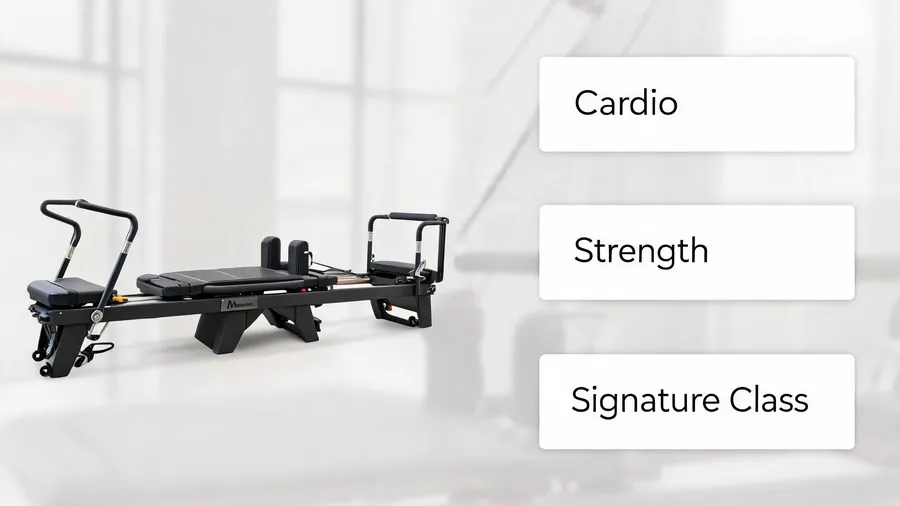
リフォーマーの安全基準は引き続き適用されます。耐荷重の上限、バネの点検、毎日の検査は日常業務の一部です。ボクシングゾーンでは、ペアでのミット打ちとパーソナルスペースに関する明確なルールを別途定める必要があります。
8. プログラム用設備の調達
ピラティスリフォーマーボクシングワークアウトのプログラムでは、リフォーマーが中核となる投資です。毎日の高強度使用に耐える業務用グレードのマシンを調達してください。Megacore のリフォーマーは、350 kg 対応の Q235 鋼フレーム、5万回サイクルの高炭素鋼バネ、ローラーベアリング式キャリッジを採用し、フレームと本体に3年間の保証、品質検査証明書と試験報告書(報告書番号 GZHL2601000020601SP)が付きます。
グローブ、ラップ、ミットといったボクシング用品は低コストで交換も容易です。投資すべきはリフォーマーであり、そしてインストラクターをしっかり育てることです。
よくあるご質問
Q1:ボクシングリフォーマークラスに参加するにはボクシング経験が必要ですか?
いいえ。クラスはすべてのレベル向けに設計されており、インストラクターが基本のパンチ動作とフットワークを指導します。初心者は軽量グローブやラップを使い、自分のペースで進められます。
Q2:ボクシングリフォーマークラスにはどのような設備が必要ですか?
業務用リフォーマーに加え、軽量のボクシンググローブ、ラップ、フォーカスミット、フットワークとミット打ち用の小さなフロアゾーンが必要です。バリエーションを増やすならレジスタンスバンドは任意です。
Q3:ボクシングリフォーマーは初心者にも安全ですか?
適切な指導があれば安全です。手の保護、肩のチェック、強度を調整したコンビネーションにより、フィットネスレベルの異なる方にも取り組みやすく安全な形式にできます。
Q4:プログラムにはどのくらいのスペースが必要ですか?
リフォーマーは標準の設置面積に加え、ボクシングゾーン用に約 100〜150 平方フィートが必要です。多くのスタジオは、可変的に使える1つのルームでサーキット形式を実施しています。
Q5:インストラクターにボクシングの資格は必要ですか?
実務上の基準は、基本的なボクシングのコーチング能力とリフォーマーの指導スキルの両方です。スタジオは既存のリフォーマーインストラクターにボクシングの基礎を研修するか、両方の資格を持つインストラクターを採用しています。
Q6:プログラムにはどのリフォーマーを購入すべきですか?
Commercial-grade reformers with durable frames and quiet carriages. Megacore’s range is built for daily high-energy use with a 3-year warranty on frame and machine.
まとめ
A pilates reformer boxing workout is a differentiator that draws new members, energizes the schedule, and showcases the reformer’s versatility. The format combines explosive power training with precise core work—something few studios offer.
まずはサーキット形式、研修を受けたインストラクター1名、業務用グレードのリフォーマーから始めましょう。出席状況と会員の声を測定し、需要の伸びに合わせてプログラムを拡大してください。
関連ガイド
業界参考情報: ピラティスメソッドアライアンスの業界標準, OSHA の職場安全ガイドライン、および CDC 環境感染管理ガイドライン.
Boxing-style classes need the right add-ons, covered in the studio equipment range.