
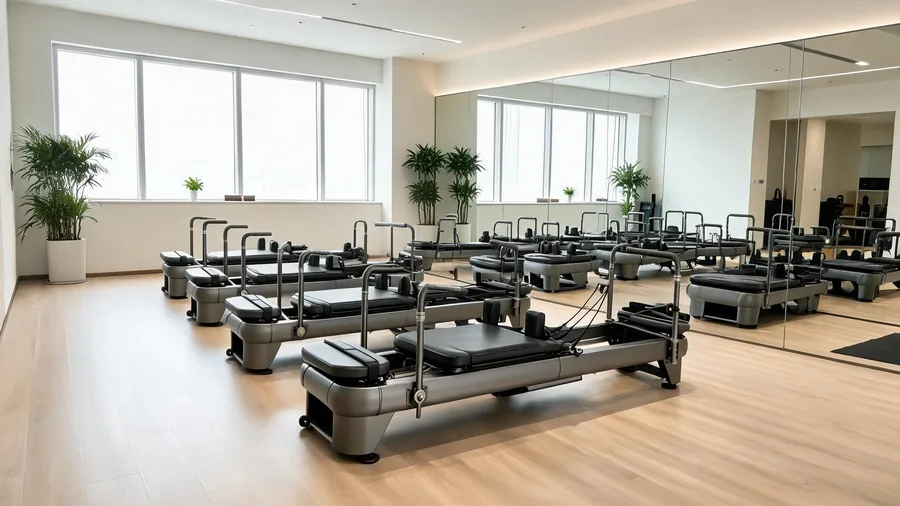
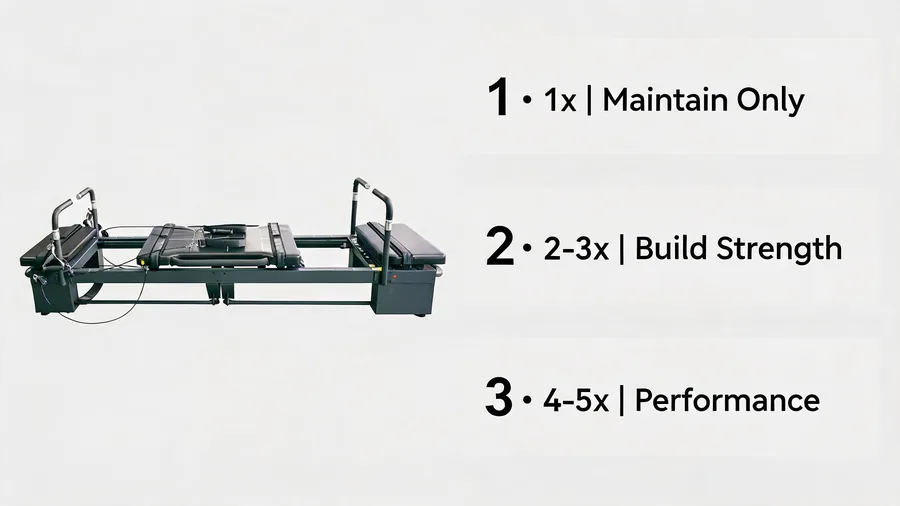
Most people start asking how often should you do reformer pilates around their third or fourth class, once the soreness has settled and they want to know what a normal week is supposed to look like. The short answer: two to three sessions a week for most people. One session a week will hold on to what you already have but rarely build more. Four or five is for people training for something specific, or working through a supervised rehabilitation plan.
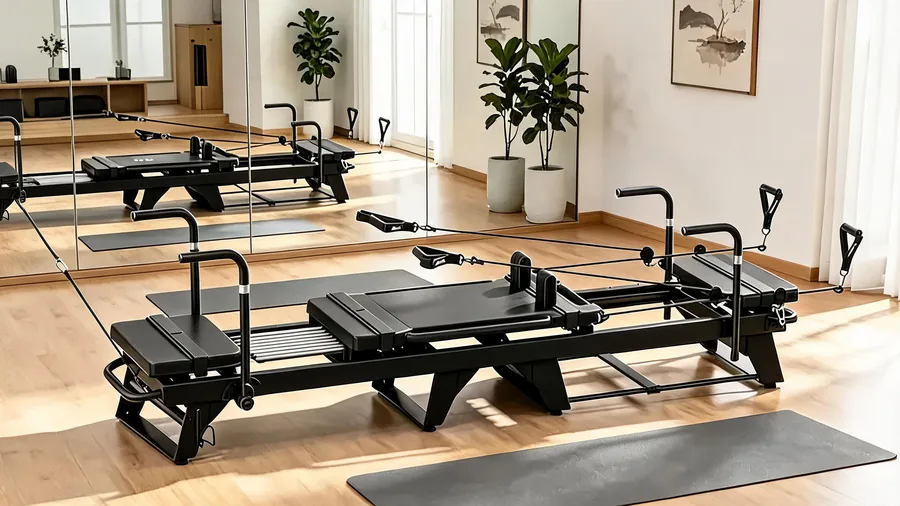
That is the summary. The rest of this guide is the reasoning behind it, because the number that fits you depends on what you are asking your body to do and how long you have been doing it.
If you only remember one idea from this page, make it this one: what you do between sessions matters as much as the sessions themselves. Frequency is a recovery question dressed up as a scheduling question.
1. How Often Should You Do Reformer Pilates? The Short Answer
Two to three sessions a week is the range where most people see steady progress without digging themselves into a hole. It gives you enough total load to build strength and control, and enough spacing for the tissue to actually adapt between sessions.
One session a week is a maintenance habit, not a training program. It keeps the movement patterns familiar and does keep you moving, but the stimulus is thin. If your goal is strength, better posture, or changing your body composition, once a week will plateau early.
Four to five sessions a week is a real training load, and it belongs to a specific group: dancers, athletes in a conditioning block, and anyone working through a structured rehab protocol where a clinician has set the frequency deliberately. It also carries a genuine recovery cost, and it usually comes with a coach watching the details.
Beginners should ignore the upper end of that range for the first month. Start at two sessions a week and let your body tell you what it can absorb.
2. What One Reformer Session Actually Does to Your Body
It helps to be clear about what reformer work is, because the name does it a disservice. It is not gentle stretching with a nice soundtrack. A reformer session is resistance training. Springs load you through a long range of motion while you hold your trunk in a fixed position, and you spend most of the class fighting the return rather than throwing the weight out.
A single class can include hundreds of controlled repetitions across footwork, core sequences, arms, and legs. Add the fact that you are holding posture against the carriage the whole time, and the total time under tension in one 50-minute session is higher than people expect from a low-impact class.
Two things follow from that. First, the muscles work hard enough that they need repair time afterwards, the same as they would after a weights session. Second, the coordination demand is itself a training stimulus. Finding the carriage, controlling the return, breathing on the right beat, keeping the ribs stacked while your legs move: that is a lot of nervous-system work, and it is why beginners often feel sore in unexpected places after a class that felt easy at the time.
3. The Recovery Window: Why 24 to 48 Hours Decides Your Next Session
Muscle protein synthesis stays elevated for roughly 24 to 48 hours after a resistance session. That window is where the adaptation happens. It is also the reason frequency and recovery cannot be planned separately.
Train again too soon and you are loading tissue that has not finished repairing. Do that often enough and you get the familiar pattern: sessions get harder, not easier, and progress stalls even though you are showing up more. Wait too long between sessions and the coordination work starts to fade before the next stimulus arrives. Two to three sessions a week sits comfortably inside the window for most people.
One practical detail matters more than any schedule on paper. Every session does not need to be a hard session. If you train three times a week, one of those can be a lighter, technique-focused class at reduced spring tension. That way you get the frequency benefit without stacking three maximum-effort days back to back. Since the springs are what set the load, it is worth understanding how tension is set before you decide your week, which is what our reformer spring tension guide covers.
4. Reformer Pilates Frequency by Goal
The number changes depending on what you actually want out of it. Here is the version I would give a client who asked me directly.
| 目標 | Sessions per week | Notes |
|---|---|---|
| General health and posture | 1 to 2 | Enough to feel better; the effect fades within a few days, so two keeps it continuous |
| Building strength and control | 3 | The sweet spot for most committed practitioners, with a rest day between sessions |
| リハビリテーション | 2 to 4, guided | Frequency matters, but load per session stays low and progression is deliberate |
| Sport-specific conditioning | 4 to 5 | Dancers and athletes in a training block, usually with a coach |
| Maintenance after hitting goals | 1 | Holds most of what you built, especially if you walk, cycle, or swim during the week |
The rehab row is the one to be careful with. More frequent sessions help there, but the load per session has to stay low and the progression has to be planned. This is the one category where you should not design your own schedule, and it overlaps heavily with clinical settings. If your sessions are part of a recovery plan, our guide to reformer pilates for physical therapy walks through how that programming is structured. It is also the category where the instructor matters most; the ピラティス・メソッド・アライアンス maintains a directory of certified teachers if you want to check credentials.
Age is worth a mention here. Older clients often do better on three shorter sessions than two long ones, because recovery capacity drops with age while the coordination benefit stays just as valuable. Fewer, shorter, and more frequent tends to beat longer sessions once recovery slows.
5. Your First Six Weeks: How to Schedule a Beginner
If you are new, ignore the higher numbers for a month. Two sessions a week, spaced out, with a lighter week every fourth week, is the structure that produces the fewest dropouts.
| Week | Sessions | Focus |
|---|---|---|
| 1 | 2 | Learning the setup: springs, straps, footbar, breathing |
| 2 | 2 | Same exercises, slightly less help from the instructor |
| 3 | 2 | Add a third short session only if everything feels manageable |
| 4 | 1 | Deload week. Light class, or a walk instead |
| 5 | 2 to 3 | Back to normal load with attention on control |
| 6 | 3 | Third session becomes permanent if recovery has been fine |
Your first sessions should feel like learning a language, not like a workout to survive. The coordination demands are real training, and they are what makes people sore in places they did not expect. Week five or six is usually when it clicks, and you stop thinking about where your feet go and start feeling where the work is. That is a good moment to make a third session permanent.
6. Weekly Training Templates: Two Sessions or Three
Scheduling is where good intentions die. Two clean templates, so you can pick one and stop negotiating with yourself.
| Day | Two-session week | Three-session week |
|---|---|---|
| Monday | リフォーマー | リフォーマー |
| Tuesday | Walk or rest | Walk or rest |
| Wednesday | Rest | リフォーマー |
| Thursday | リフォーマー | Walk or rest |
| Friday | Rest | Reformer, lighter tension |
| Saturday | Walk, swim, or mat work | Walk, swim, or mat work |
| Sunday | Rest | Rest |
Both templates leave a full day between strength-focused reformer days. In the three-session week, the Friday slot is deliberately lighter: lower resistance, slower tempo, attention on alignment rather than output. That single change is what lets people sustain three sessions a week instead of burning out at week four.
If you are splitting time between equipment and floor work, the trade-offs are covered in our comparison of reformer vs mat pilates.
7. Signs You Are Doing Too Much
Volume is not a virtue. Watch for these:
- Soreness that never fully clears between sessions
- Sleep getting worse rather than better
- Class performance dropping two weeks in a row
- Nagging lower-back or neck tightness that lasts past the day after
- Dreading class, rather than simply finding it hard
Any of those usually means pull back to two sessions, or reduce the spring resistance, before you reduce the number of days. Often the problem is not frequency at all. It is that every single session is at maximum effort, and there is no easy day in the week.
8. Signs You Can Add a Session
The green lights are easier to spot than people think:
- Sessions feel easy the next morning, with no lingering soreness
- You are progressing steadily in the harder exercises
- Your body feels better on class days than off days
- Sleep is consistent and you recover between sessions without effort
Add one session, hold it there for three or four weeks, then reassess. One at a time. Jumping straight from two to five is the most common way people talk themselves out of a routine that was working.
9. Frequency vs. Consistency: Why Two a Week for a Year Wins
Two sessions a week for a year will beat five sessions a week for six weeks, every time. The math is not close. The long, boring schedule wins because total quality practice is what drives adaptation, and a schedule you can keep produces far more of it than a heroic schedule you abandon in February.
This is where reformer work differs from a lot of fitness advice. The adaptations are coordination and control as much as they are muscle, and coordination is built through repetition spread over months. A skill you practice twice a week for a year gets more total reps than one you grind at for six weeks and then drop.
If your schedule is chaotic, a 30-minute session done properly still counts. Short and regular is a legitimate strategy, not a compromise. The same logic applies to how the studio you join structures its timetable; if the class times fit your real week, you will keep showing up.
10. How to Combine Reformer Pilates With Other Training
Reformer work sits well alongside most other exercise, as long as you respect what it already gives you. It is a full-body resistance session with a heavy core and stability demand, so stacking it directly on top of a hard leg day is asking for trouble.
Walking. The easiest pairing. Walking on your off days speeds recovery rather than interfering with it, and it costs you nothing in terms of soreness. It is the single best thing to put between two reformer sessions.
Swimming. Excellent low-impact option, and a good substitute for a walk on the day after a hard class. Keep an eye on shoulder volume if you also do a lot of arm work on the reformer.
Strength training. Compatible, provided you separate the sessions. Lift on days you are not doing reformer work, or use the reformer as your lighter day. Two heavy lower-body sessions in a row is where people usually go wrong.
Running. Fine for many people, but running plus three or four reformer sessions is a high total load on the hips and lower back. Build the running volume gradually, and use the reformer for control work rather than adding more intensity. The CDC physical activity guidelines are a useful baseline for how much total weekly movement you want across all of it.
Sleep is the other half of the picture. Recovery capacity sets how much frequency you can actually absorb, and the CDC sleep guidance is worth reading if you are adding sessions and wondering why progress has stalled.
11. Studio Owners: How Client Frequency Drives Retention and Equipment Load
Client frequency looks like a training question. It is also one of the clearest predictors of whether a client stays, and it shapes what your equipment has to survive.
Clients who come once a week churn quietly around month three. Progress feels invisible to them, the results do not match the effort, and they cancel without a dramatic reason. Clients who come two to three times a week stay, because they feel the change and it reinforces the habit. That difference shows up directly in your membership design. Packages that make a second weekly session the default, rather than a paid upgrade, hold better than punch cards, because the default is what most people actually do.
The equipment side matters just as much. Three sessions a week per client across a full timetable means your reformers run far more hours than a home unit ever will. Carriages take repeated load, springs lose tension, and footbar and shoulder-rest mechanisms cycle thousands of times a month. That is the regime commercial-grade machines are built for, and it is why the specification questions that matter in a studio are different from the ones that matter at home: carriage bearing systems, spring quality, frame rigidity, and how serviceable the unit is after three years of daily use.
If you are fitting out a studio, our commercial reformer range is built around exactly this kind of daily, high-hour use, and the heavy-duty reformer guide breaks down which components fail first under sustained load. If you are still deciding on your class mix and machine count, the studio startup guide and our notes on how many reformers a studio needs cover capacity planning. And once the timetable is running, it is worth modelling what a second weekly session per client does to your revenue per machine, which the reformer ROI calculator is designed for.
One last operational note: high-frequency timetables also mean high cleaning frequency, and the pad takes the worst of it. If you are running back-to-back classes with two or three visits per client each week, the material on the carriage is under load for hours every day.
よくある質問
Can I do reformer Pilates every day?
You can, and some advanced practitioners do. But daily reformer work is a serious training load if you are pushing resistance, and most people who try it after a few months either burn out or plateau quietly. If you want daily movement, alternate reformer days with walking, swimming, or mat work.
Is once a week enough?
To maintain, yes. To improve, usually not past a certain point. Once a week keeps the pattern familiar and the body moving, but the stimulus is thin if your goal is strength or changing your shape.
How long before I see results?
Most people feel a difference in posture and everyday movement within three to four weeks of twice-weekly practice. Visible strength changes take longer, usually somewhere around the eight to twelve week mark, if frequency and load have been consistent.
Should I take rest days between reformer sessions?
Yes for strength-focused work, and it does not have to be a day of doing nothing. Walking, light stretching, or a swim will not rob you of recovery. The point is to avoid loading the same patterns hard on consecutive days.
Does the number of sessions matter more than the resistance?
They trade off. Three sessions at moderate resistance will usually beat one session at maximum resistance, because you get more total practice at a quality you can control. Control is the thing you are actually training.
Is two sessions a week enough to lose weight?
Reformer training builds muscle and improves control, which helps, but weight change also depends on what happens outside the studio. Two or three sessions a week combined with regular walking and a sensible diet is a realistic starting structure. Our reformer pilates for weight loss guide covers how that fits together.
Can I do reformer Pilates while pregnant?
In many cases yes, with modifications and clearance from your care provider. Frequency usually stays similar to your pre-pregnancy routine rather than increasing, and the focus shifts toward breathing, stability, and positions that stay comfortable. Our prenatal and postnatal guide goes into the specifics.
Do I need extra rest days if I also lift weights?
You need separation, not necessarily more rest days. Put reformer work and heavy lifting on different days, and use the reformer as your lighter session when the week gets crowded. Two hard lower-body days back to back is where most people run into trouble.