A studio reformer needs to survive 8 to 12 classes a day, support clients at every ability level, and still feel tight and quiet five years in. That is a different standard from home equipment, and not everything labeled “commercial” actually meets it. Choosing the 스튜디오용으로 가장 적합한 필라테스 리포머 requires evaluating frame construction, spring systems, carriage quality, and warranty coverage against the specific demands of your studio environment.
This guide breaks down the specifications that separate commercial-grade reformers from residential equipment, the features that matter most for studio profitability, and the evaluation criteria that experienced studio owners use when investing in new equipment for their facilities and growing businesses.
1. What “Commercial-Grade” Actually Means for Studio Reformers
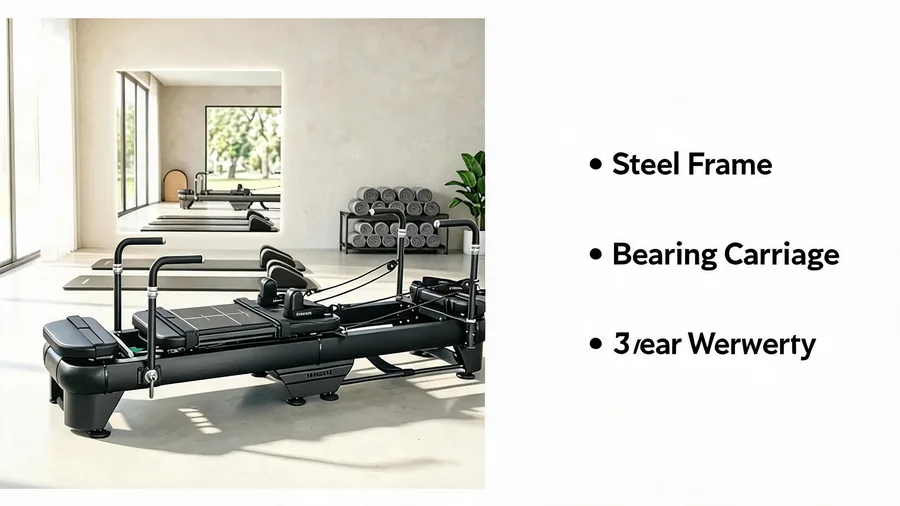
Manufacturers throw the term “commercial-grade” around loosely. For a reformer to genuinely work in a studio environment, it needs specific construction standards. The frame should use Q235 structural steel with wall thickness of at least 1.5 mm (2.0 mm preferred). Welding should use robotic TIG methods for consistent joint quality. Powder coating at 60+ microns resists chipping from daily cleaning and client use. These specifications determine whether a reformer will still perform well after five years of continuous studio operation.
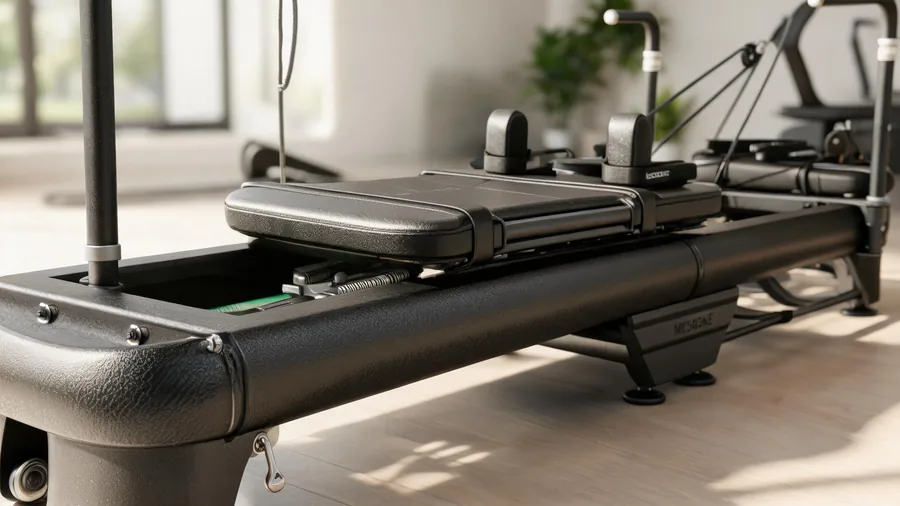
When evaluating the 스튜디오용으로 가장 적합한 필라테스 리포머, check these minimum specifications. Frame material should be structural steel, not thin tubular steel used in home equipment. Weight capacity should be at least 250 kg (550 lbs) to accommodate all body types safely. Spring cycle rating should be 30,000 cycles minimum, with 50,000+ preferred for commercial environments. Carriage system should have sealed bearings on precision-ground rails, not open bearings that collect dust and require frequent replacement.
Noise level is another important metric. A reformer operating at over 60 dB creates audible distraction during classes. Premium commercial reformers operate below 55 dB, allowing instructors to cue without competing with equipment noise. Warranty coverage — at least 3 years on frame and parts — indicates manufacturer confidence in their product’s commercial durability and long-term reliability in demanding studio environments.
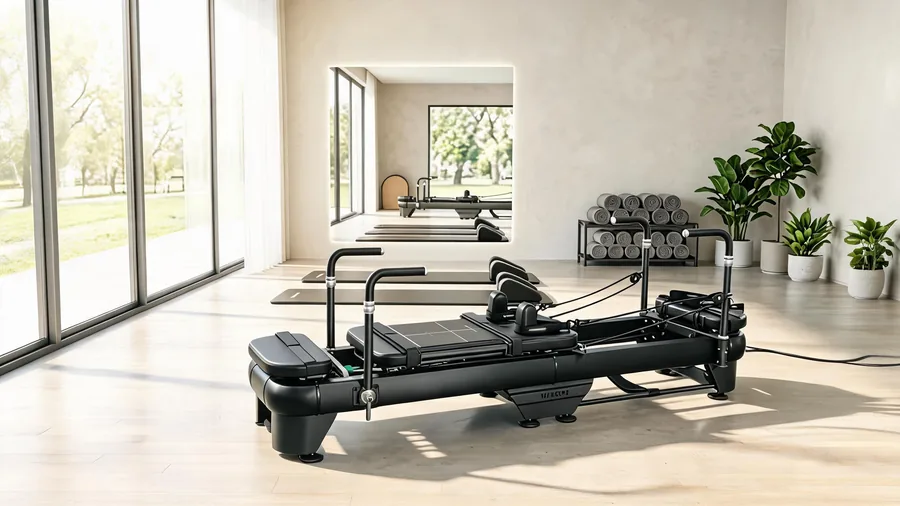
The best pilates reformer for studio use features commercial-grade frame construction, sealed bearings, and durable upholstery.
2. Frame Construction — The Foundation of Studio Durability
The frame is where lower-cost manufacturers cut corners, and it is the hardest component to upgrade after purchase. Q235 structural steel is the industry standard for commercial reformers because it handles repeated stress without developing microfractures. Wall thickness matters: 1.5 mm is the minimum for light commercial use, while 2.0 mm is what experienced studio owners specifically look for when purchasing new equipment for their facilities.
Welding quality separates premium reformers from mid-grade options. Robotic TIG welding produces consistent, full-penetration joints that withstand years of daily use. Hand-welded frames can have weak spots that develop play over time. When evaluating frames, look for smooth, even weld beads without slag or discoloration. The powder coating should be applied at 60+ microns thickness and properly cured to resist chipping from cleaning chemicals and repeated contact with client movement.
Frame geometry also matters. Reformers designed for studio use typically have wider bases and lower centers of gravity to prevent tipping during dynamic exercises. Reinforced cross-bracing at stress points — particularly where the footbar mounts and where the carriage rails attach — prevents the frame fatigue that causes reformers to develop squeaks and play after 18 to 24 months of daily commercial use in busy studio environments.
3. Spring System and Resistance Quality
The spring system is the heart of any reformer, and spring quality directly affects client experience and instructor satisfaction. Commercial-grade reformers should use high-carbon steel springs with consistent tension across their entire lifespan. Each spring should be individually tested for tension accuracy and matched within a tolerance range to ensure consistent resistance across all reformers in your studio. This consistency matters because clients expect the same feel from any machine in your studio.
Spring configuration affects versatility. The best reformers offer at least 5 spring options ranging from very light (for rehabilitation clients) to heavy (for advanced athletic training). Color-coded springs help instructors quickly identify and adjust tension levels during class transitions. Quick-change spring hooks that allow springs to be swapped without tools reduce setup time between classes and improve the flow of studio operations throughout the day.
The spring attachment points should be reinforced with welded brackets rather than bolted connections. Bolted brackets can loosen over time and require periodic retightening, which adds to maintenance costs. Welded brackets remain secure for the life of the frame and eliminate a common source of reformer noise and instability in commercial environments with high utilization rates and frequent client turnover.
Spring system quality determines whether a reformer qualifies as the best pilates reformer for studio use for your specific requirements.
4. Carriage and Rail System
The carriage and rail system determines how smooth and quiet your reformers operate. The most important specification is the bearing system. Sealed cartridge bearings outperform open wheel bearings because they prevent dust, hair, and debris from entering the bearing race. Open bearings in entry-level reformers collect debris and develop rough spots within 6 to 12 months of studio use, while sealed bearings maintain smooth operation for years with proper maintenance.
Rail material is equally important. Stainless steel rails resist corrosion from cleaning chemicals and humidity better than aluminum or standard steel rails. Rail diameter should be at least 22 mm, with 25 mm being the premium standard for commercial reformers. Thicker rails distribute carriage load more evenly and resist developing flat spots from repeated use in the same carriage position during classes and training sessions.
The carriage itself should use high-density foam (35 kg/m³ minimum) wrapped in marine-grade vinyl that resists sweat, cleaning chemicals, and daily wear. Foam that is too soft compresses permanently within months, creating uneven support that clients notice during exercises. The carriage frame should be reinforced at the attachment points for ropes and straps, as these areas experience the highest stress during pulling exercises and dynamic movements performed by clients.
5. Key Specs Comparison Table
사양
Entry Commercial
Premium Commercial
Why It Matters
Frame Steel
1.5mm Q235
2.0mm+ Q235
Prevents frame wobble after years of use
최대 적재 하중
250 kg
350 kg+
Accommodates all clients safely
Spring Cycles
30,000
50,000+
Less frequent spring replacement costs
Carriage Bearings
4 open wheels
4-6 sealed cartridge
Smoother glide, less maintenance
Rail Material
Aluminum
Stainless steel (25mm)
Corrosion resistance, longer life
Noise Level
<60 dB
<55 dB
Better class experience
Frame Warranty
1-2 years
3+ years
Confidence indicator from manufacturer
Parts Warranty
6 months-1 year
3 years
Lower ongoing ownership costs
Comparison table for best Pilates reformer for studio use showing commercial entry vs premium specifications.
6. Warranty and Support Considerations
Warranty coverage is one of the strongest indicators of reformer quality when looking for the 스튜디오용으로 가장 적합한 필라테스 리포머. Manufacturers willing to offer 3-year comprehensive warranties on both frame and parts demonstrate confidence in their product’s durability. Short warranties — particularly on springs and bearings — suggest the manufacturer expects these components to fail within the coverage period, which shifts replacement costs to you as the studio owner.
Compare warranty terms carefully. A “limited lifetime” warranty on the frame alone sounds impressive but may not cover springs, bearings, upholstery, or ropes — the components most likely to need replacement during the first three years of commercial use. A 3-year comprehensive warranty that covers the entire reformer provides more practical protection for your investment than a frame-only lifetime warranty with short parts coverage periods.
After-sales support matters as much as warranty terms. Ask potential suppliers about replacement parts availability, average response time for warranty claims, and whether they stock commonly replaced components like springs and ropes. Factory-direct manufacturers typically provide faster support because you communicate directly with the production team rather than going through a distributor or dealer network that adds layers to the support process.
7. Making the Final Decision: Choosing the Best Pilates Reformer for Studio Use
Choosing the 스튜디오용으로 가장 적합한 필라테스 리포머 ultimately comes down to matching equipment specifications to your studio’s specific needs. A boutique studio with 6 reformers and 12 daily classes has different requirements than a large franchise with 30 reformers operating 20 classes daily. Higher-volume studios need heavier-duty components and more comprehensive warranty coverage because their equipment experiences more cycles per day and accumulates wear faster.
Consider your total cost as a long-term investment of ownership calculation rather than upfront price alone. A reformer that costs $1,800 and lasts 8 years with minimal maintenance is more cost-effective than a $4,000 reformer that requires $500 annual maintenance and spring replacements every 18 months. Factor in parts replacement costs, potential downtime, and resale value when comparing options across different price points and brands.
The Pilates Method Alliance provides additional guidance on commercial equipment standards. Verify that your chosen reformer meets these industry benchmarks before making a final decision. Request specification documentation, quality inspection reports, and client references from the manufacturer to validate their claims about commercial-grade construction and long-term durability in studio environments.
Find the Right Reformer for Your Studio
Contact our team for equipment specifications, pricing, and sample requests. We help studio owners find the best Pilates reformer for their specific needs and financial plan.
스튜디오용으로 가장 적합한 필라테스 리포머는 두께가 최소 1.5mm인 강철 프레임, 밀폐형 카트리지 베어링, 스테인리스 스틸 레일, 50,000회 이상의 사이클을 견딜 수 있는 고탄소강 스프링을 갖추고 있으며, 프레임과 부품을 모두 포함하는 최소 3년의 포괄적 보증이 제공됩니다.
스튜디오용 리포머를 구입하려면 얼마 정도를 지출해야 할까요?
상업용 스튜디오 리포머의 가격은 대당 $1,800에서 $5,500까지 다양합니다. $1,800에서 $2,500 사이의 공장 직판 제품은 대부분의 스튜디오에 가장 뛰어난 가성비를 제공합니다. $4,000에서 $5,500 사이의 프리미엄 브랜드 제품은 브랜드 인지도를 갖추고 있지만, 견고하게 제작된 공장 직판 제품과 유사한 사양을 제공합니다.
스튜디오를 꾸미려면 리폼용 가구가 몇 개나 필요할까요?
대부분의 부티크 스튜디오는 4~8대의 리포머로 시작합니다. 각 리포머는 고객 출입 구역을 포함해 약 25~30제곱피트의 바닥 면적이 필요합니다. 활용도와 수익 잠재력을 극대화하려면 수업 블록당 강사 1명당 최소 1대의 리포머를 배치할 수 있도록 계획하십시오.
스튜디오용 리포머를 구매할 때 어떤 보증 조건을 확인해야 할까요?
프레임과 부품 모두에 대해 최소 3년 보증이 제공되는 제품을 선택하세요. 스프링, 베어링, 커버링이 제외된 프레임 전용 보증은 피하십시오. 이러한 부품들은 상업용 환경에서 가장 자주 교체해야 하는 부품들입니다.
스튜디오에서 가정용 리포머를 사용할 수 있나요?
가정용 리포머는 스튜디오 장비처럼 하루에 8~12회씩 사용되는 환경을 고려해 설계되지 않았습니다. 이 장비들은 더 가벼운 프레임, 개방형 베어링, 그리고 상업용으로 6~18개월 이내에 고장이 나는 저품질 스프링을 사용합니다. 처음부터 상업용 등급의 장비에 투자하는 것이 장기적으로 비용을 절약하는 방법입니다.
스튜디오용 리포머의 최대 하중은 얼마여야 하나요?
Minimum 250 kg (550 lbs) for a studio reformer. This ensures all clients can be accommodated safely. Premium reformers with 350 kg (770 lbs) capacity provide additional safety margin and are recommended for studios serving diverse client populations.