
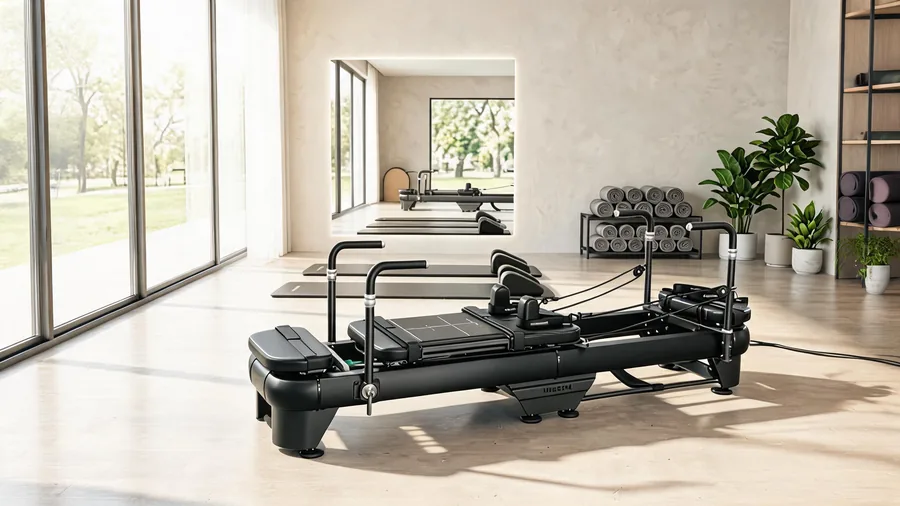
If you are a tall athlete, finding the right pilates reformers for tall athletes can be challenging. Standard reformers often do not provide enough legroom or allow for proper alignment, which can compromise both comfort and performance when using equipment that does not fit properly. A proper pilates reformers for tall athletes needs extended frame length, higher weight capacity, and adjustable components that accommodate longer limbs and greater range of motion during exercises.
Taller users may find themselves cramped on standard reformers, unable to achieve full extension, or struggling to maintain correct form during workouts. This guide covers the specific requirements for tall users — minimum frame length, extended rail systems, adjustable footbar positions, weight capacity considerations, and spring resistance ranges suited for athletic clients in both home and commercial studio environments.
1. Frame Length: The Key pilates reformers for tall athletes Vereiste
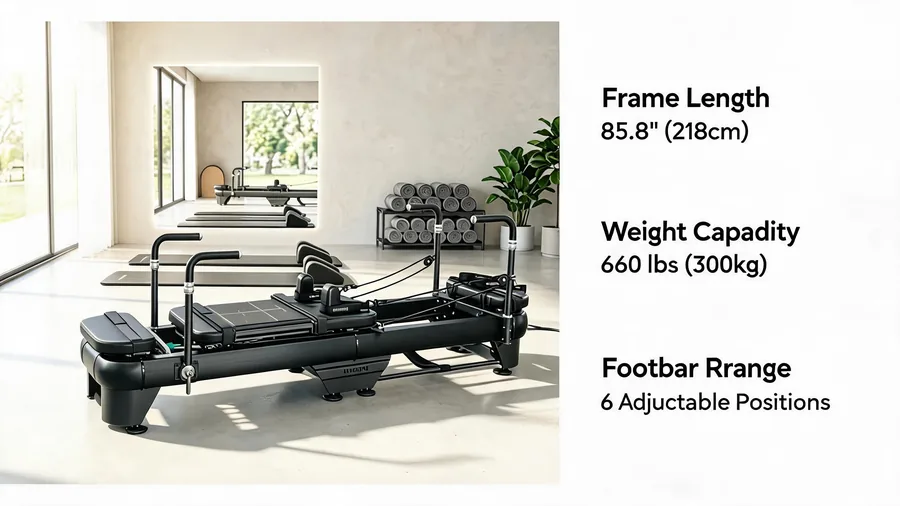
The most critical dimension when selecting the best pilates reformers for tall athletes is the frame length — specifically the distance between the shoulder rests and the footbar at full extension. Standard reformers typically offer 26 to 28 inches of carriage travel, which is sufficient for users up to about 5 feet 10 inches. Athletes 6 feet and taller need a minimum of 30 inches of carriage travel, and ideally 32 to 34 inches for full leg extension during footwork exercises and proper alignment throughout their workout sessions.
Extended frame reformers add 6 to 12 inches to the overall length, providing the additional rail space required for proper movement mechanics. When evaluating pilates reformers for tall athletes, measure from the back edge of the shoulder rests to the front edge of the footbar at its farthest position — this is the working length that matters most for comfort and exercise effectiveness during daily training sessions.
Frame geometry also affects how tall users interact with the equipment. Reformers with extended frames should maintain proportional width to prevent instability. A reformer that is longer but not wider may tip during dynamic exercises performed by taller athletes who have longer lever arms and generate more force through their extended range of motion during intense workouts.
2. Weight Capacity: A Critical Feature of pilates reformers for tall athletes
Tall athletes often exceed the standard weight limits of home-grade reformers. Commercial-grade reformers with a 350 lb plus weight capacity provide the necessary safety margin for taller, heavier users. The frame should use structural steel with 2.0 mm or greater wall thickness to handle the increased forces generated by taller athletes who have longer lever arms and produce greater momentum during exercises performed through their extended range of motion.
Frame stability is particularly important for tall athletes because their center of gravity is higher than average users. A reformer with a wider base and lower center of gravity prevents tipping during standing exercises and side-lying movements. The frame should be reinforced at all stress points, particularly where the carriage rails attach to the main frame structure, to prevent the flexing and frame fatigue that can develop over time during regular use by athletic clients.
Weight distribution is another factor. Tall athletes applying force through the footbar at full extension create leverage that lighter frames cannot handle. Commercial reformers designed for tall users use heavier-gauge steel and additional cross-bracing to distribute loads evenly across the frame, preventing the twisting forces that cause frames to develop play and squeaking over extended periods of daily use in studio environments.
3. Footbar Adjustments: A Key Pilates Reformers for Tall Athletes Functie
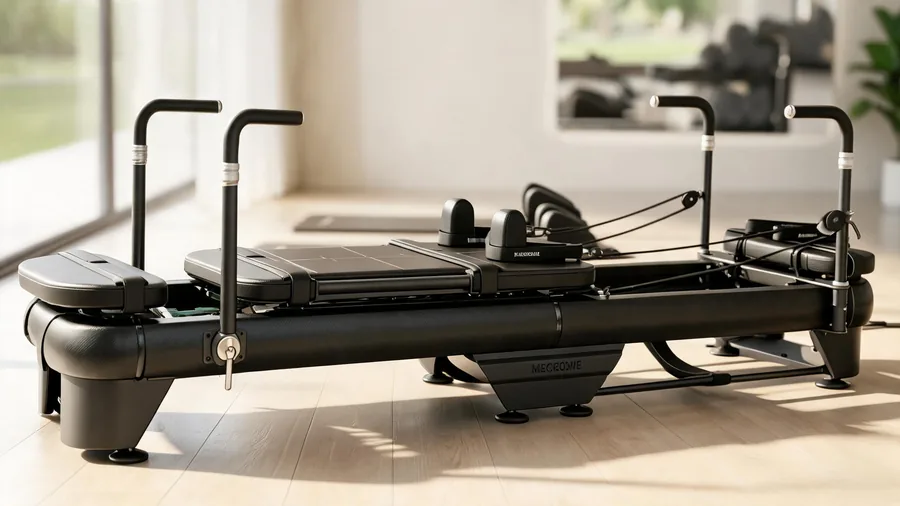
The footbar is one of the most important adjustment points on any pilates reformers for tall athletes. Standard footbars with 3 to 4 positions may not provide enough range for users with longer legs who need the footbar further from the carriage to achieve proper starting alignment. Reformers with 5 to 7 footbar positions offer the range needed to accommodate both tall and average-height users in the same studio environment without sacrificing comfort or performance.
Footbar height is equally important. Tall athletes typically need footbars that adjust higher off the carriage surface to maintain proper hip and knee angles during footwork. Adjustable footbar systems that offer both distance and height adjustments provide the most versatility for mixed-height client populations, allowing instructors to quickly customize setup for each user without manual adjustment of fixed-position components.
The footbar padding width also matters for tall athletes with broader shoulders and larger frames. A wider footbar pad distributes pressure more evenly across the foot surface, reducing discomfort during extended footwork sequences. Some commercial reformers offer extended-width footbars as an option for studios serving athletic populations, providing additional surface area for clients with larger feet during their training sessions.
4. Spring Resistance for Stronger Athletes
Tall athletes are often stronger than average users, requiring heavier spring resistance to achieve appropriate training loads. A pilates reformers for tall athletes should offer at least 5 spring resistance levels, including heavy springs that provide sufficient resistance for athletic clients performing strength-focused exercises. The spring system should include color-coded springs for easy identification and quick-change hooks for rapid adjustment between clients in studio settings.
Spring tension consistency matters more for athletic training than for general fitness. Athletes training for sport-specific conditioning need predictable resistance that progresses linearly through the range of motion. High-carbon steel springs with consistent tension curves provide this predictability, while lower-grade springs with inconsistent tension create unpredictable resistance that compromises training quality and exercise effectiveness.
For studios serving athletic populations, consider reformers with additional heavy spring options. Some manufacturers offer upgrade spring kits with heavier-gauge wire for clients requiring resistance beyond standard spring ranges. These upgrade options allow studios to serve both general clients and elite athletes with the same equipment platform, maximizing equipment utilization and revenue potential across diverse client populations.
5. Specs Comparison Table
6. Carriage Width for pilates reformers for tall athletes
Carriage width is often overlooked when selecting the right pilates reformers for tall athletes. Taller individuals frequently have broader shoulders and wider hip structures that require a wider carriage surface for comfortable positioning. Standard carriage widths of 16 to 18 inches may feel narrow for larger athletes, particularly during exercises that involve lateral movement or supine positioning where shoulder width determines comfort and stability during exercises.
Wider carriages (18 to 20 inches) provide additional surface area that accommodates larger body types while maintaining proper alignment. The carriage foam density should be at least 35 kg/m³ to prevent bottoming out under heavier users. Marine-grade vinyl upholstery with reinforced stitching at stress points prevents premature wear and maintains professional appearance through years of daily use by clients of varying sizes and training intensities.
Carriage roller bearings should be sealed cartridge type rated for 500,000 meters or more of travel. Tall athletes generate higher forces during exercises due to their longer lever arms, and open bearings cannot withstand these forces without developing flat spots and roughness. Sealed bearings maintain smooth carriage glide even under the increased loads generated by taller, stronger clients during dynamic movement patterns.
7. Rope and Strap Adjustments for Tall Users
Standard rope lengths on a pilates reformers for tall athletes are often designed for average-height users and may be too short for tall athletes performing exercises that require full arm extension. The Pilates Method Alliance recommends that commercial reformers offer adjustable rope lengths or extended strap options for users over 6 feet. Extended ropes add 6 to 12 inches of working length, allowing tall athletes to achieve full range of motion during pulling exercises without compromising form or limiting exercise effectiveness.
Handle design also matters for larger hands. Standard loop handles may be too small for tall athletes with larger hand sizes, causing discomfort during extended pulling sequences. Reformers offering multiple handle options — including padded loops, soft straps, and bar attachments — provide the versatility needed to accommodate clients of all sizes. Studios serving athletic populations should stock a range of handle options to ensure every client can exercise comfortably.
Rope and strap attachment points should be reinforced to handle the higher forces generated by stronger athletes. Pulleys should use sealed bearings with stainless steel axles that resist corrosion and maintain smooth operation under heavy use. Regular inspection of rope condition and attachment hardware is especially important for reformers used by athletic clients who generate higher forces during their training sessions throughout the day.
Find the Right Reformer for Tall Athletes
Contact our team for extended frame reformers with higher weight capacity, adjustable footbars, and enhanced spring systems suited for taller athletes and commercial studios.
E-mail: [email protected] • WhatsApp: +86 189 0238 9454
Gerelateerde handleidingen
- Heavy Duty Pilates Reformers Guide
- Gids voor het maximale draagvermogen van de Reformer
- Maattabel voor Pilates Reformers
- Pilates Reformer for Athletes
- Handleiding voor commerciële Pilates-reformers
8. Veelgestelde vragen
What is the best pilates reformers for tall athletes?
The best Pilates reformers for tall athletes features an extended frame (94-100 inches), 30-34 inches of carriage travel, weight capacity of 350+ lb, adjustable footbar with 5-7 positions, and 5-6 spring resistance levels for heavier training loads.
How long should a reformer be for a tall person?
A reformer for tall athletes (6 feet and above) should have a minimum frame length of 94 inches with at least 30 inches of carriage travel. Standard reformers at 88-92 inches with 26-28 inches of travel are typically too short for proper alignment.
What weight capacity do I need for tall athletes?
Minimum 350 lb (159 kg) weight capacity for tall athletes. Commercial-grade reformers supporting 400-500 lb provide additional safety margin and accommodate the higher forces generated by taller users with longer lever arms.
Can tall athletes use standard reformers?
Tall athletes can use standard reformers for basic exercises but will be limited in exercises requiring full leg extension. Compromised form due to insufficient frame length can lead to compensation patterns and reduced exercise effectiveness over time.
What footbar adjustments do tall athletes need?
Footbars with 5 to 7 positions that adjust both distance from the carriage and height off the carriage surface provide the range needed for tall athletes. Standard 3-4 position footbars may not offer enough extension for proper starting alignment.
Do tall athletes need heavier spring resistance?
Yes. Tall athletes are often stronger due to larger muscle mass and generate more force during exercises. Reformers with 5-6 spring levels including heavy options provide the resistance range needed for effective athletic training.
Are extended frame reformers available for home use?
Yes. Extended frame reformers are available for home use from factory-direct manufacturers. Extended frames require more floor space (approximately 12-18 additional inches), so measure your space before ordering to ensure proper fit and clearance.