
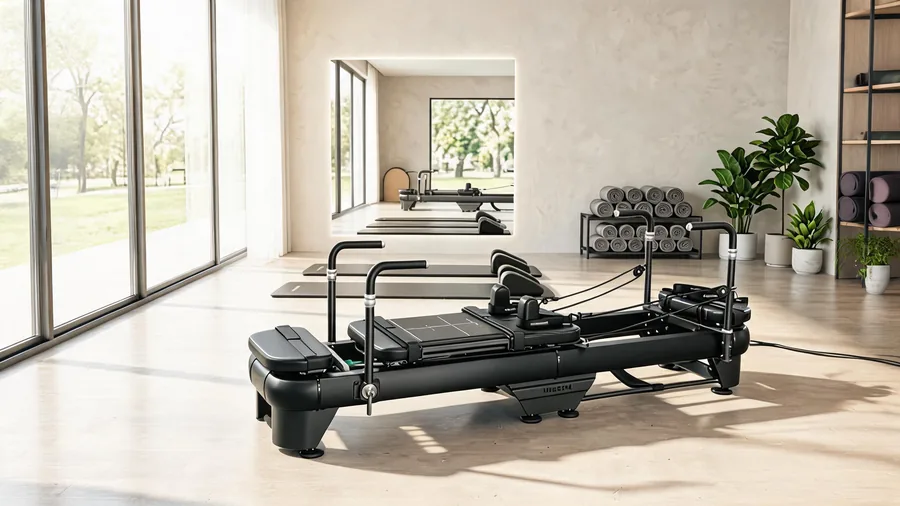
If you are a tall athlete, finding the right 背の高いアスリートのためのピラティス・リフォーマー can be challenging. Standard reformers often do not provide enough legroom or allow for proper alignment, which can compromise both comfort and performance when using equipment that does not fit properly. A proper 背の高いアスリートのためのピラティス・リフォーマー needs extended frame length, higher weight capacity, and adjustable components that accommodate longer limbs and greater range of motion during exercises.
Taller users may find themselves cramped on standard reformers, unable to achieve full extension, or struggling to maintain correct form during workouts. This guide covers the specific requirements for tall users — minimum frame length, extended rail systems, adjustable footbar positions, weight capacity considerations, and spring resistance ranges suited for athletic clients in both home and commercial studio environments.
1. Frame Length: The Key 背の高いアスリートのためのピラティス・リフォーマー 要件
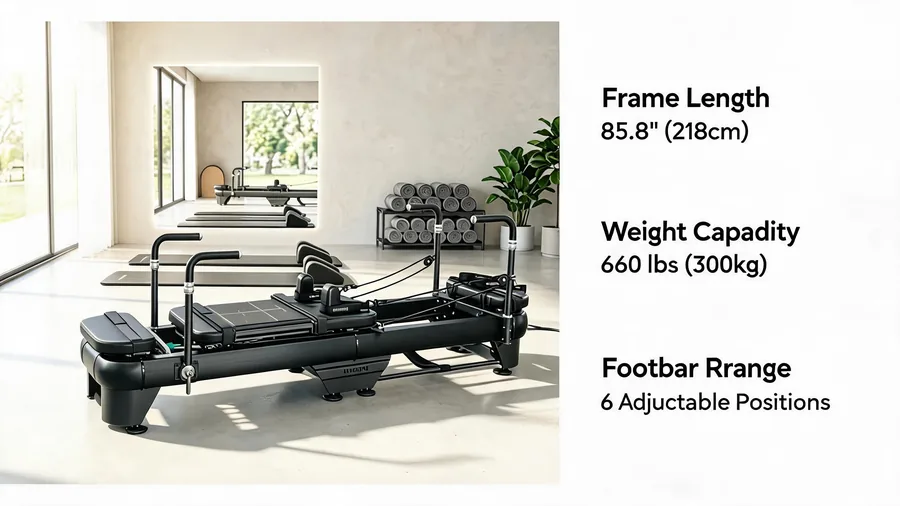
The most critical dimension when selecting the best 背の高いアスリートのためのピラティス・リフォーマー is the frame length — specifically the distance between the shoulder rests and the footbar at full extension. Standard reformers typically offer 26 to 28 inches of carriage travel, which is sufficient for users up to about 5 feet 10 inches. Athletes 6 feet and taller need a minimum of 30 inches of carriage travel, and ideally 32 to 34 inches for full leg extension during footwork exercises and proper alignment throughout their workout sessions.
Extended frame reformers add 6 to 12 inches to the overall length, providing the additional rail space required for proper movement mechanics. When evaluating pilates reformers for tall athletes, measure from the back edge of the shoulder rests to the front edge of the footbar at its farthest position — this is the working length that matters most for comfort and exercise effectiveness during daily training sessions.
Frame geometry also affects how tall users interact with the equipment. Reformers with extended frames should maintain proportional width to prevent instability. A reformer that is longer but not wider may tip during dynamic exercises performed by taller athletes who have longer lever arms and generate more force through their extended range of motion during intense workouts.
2. Weight Capacity: A Critical Feature of 背の高いアスリートのためのピラティス・リフォーマー
Tall athletes often exceed the standard weight limits of home-grade reformers. Commercial-grade reformers with a 350 lb plus weight capacity provide the necessary safety margin for taller, heavier users. The frame should use structural steel with 2.0 mm or greater wall thickness to handle the increased forces generated by taller athletes who have longer lever arms and produce greater momentum during exercises performed through their extended range of motion.
Frame stability is particularly important for tall athletes because their center of gravity is higher than average users. A reformer with a wider base and lower center of gravity prevents tipping during standing exercises and side-lying movements. The frame should be reinforced at all stress points, particularly where the carriage rails attach to the main frame structure, to prevent the flexing and frame fatigue that can develop over time during regular use by athletic clients.
Weight distribution is another factor. Tall athletes applying force through the footbar at full extension create leverage that lighter frames cannot handle. Commercial reformers designed for tall users use heavier-gauge steel and additional cross-bracing to distribute loads evenly across the frame, preventing the twisting forces that cause frames to develop play and squeaking over extended periods of daily use in studio environments.
3. Footbar Adjustments: A Key Pilates Reformers for Tall Athletes 特集
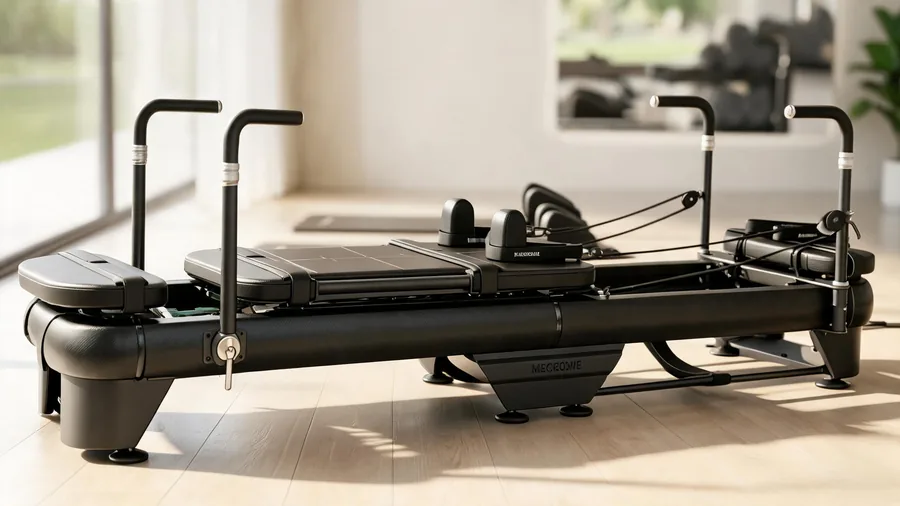
The footbar is one of the most important adjustment points on any 背の高いアスリートのためのピラティス・リフォーマー. Standard footbars with 3 to 4 positions may not provide enough range for users with longer legs who need the footbar further from the carriage to achieve proper starting alignment. Reformers with 5 to 7 footbar positions offer the range needed to accommodate both tall and average-height users in the same studio environment without sacrificing comfort or performance.
Footbar height is equally important. Tall athletes typically need footbars that adjust higher off the carriage surface to maintain proper hip and knee angles during footwork. Adjustable footbar systems that offer both distance and height adjustments provide the most versatility for mixed-height client populations, allowing instructors to quickly customize setup for each user without manual adjustment of fixed-position components.
The footbar padding width also matters for tall athletes with broader shoulders and larger frames. A wider footbar pad distributes pressure more evenly across the foot surface, reducing discomfort during extended footwork sequences. Some commercial reformers offer extended-width footbars as an option for studios serving athletic populations, providing additional surface area for clients with larger feet during their training sessions.
4. Spring Resistance for Stronger Athletes
Tall athletes are often stronger than average users, requiring heavier spring resistance to achieve appropriate training loads. A 背の高いアスリートのためのピラティス・リフォーマー should offer at least 5 spring resistance levels, including heavy springs that provide sufficient resistance for athletic clients performing strength-focused exercises. The spring system should include color-coded springs for easy identification and quick-change hooks for rapid adjustment between clients in studio settings.
Spring tension consistency matters more for athletic training than for general fitness. Athletes training for sport-specific conditioning need predictable resistance that progresses linearly through the range of motion. High-carbon steel springs with consistent tension curves provide this predictability, while lower-grade springs with inconsistent tension create unpredictable resistance that compromises training quality and exercise effectiveness.
For studios serving athletic populations, consider reformers with additional heavy spring options. Some manufacturers offer upgrade spring kits with heavier-gauge wire for clients requiring resistance beyond standard spring ranges. These upgrade options allow studios to serve both general clients and elite athletes with the same equipment platform, maximizing equipment utilization and revenue potential across diverse client populations.
5. Specs Comparison Table
6. Carriage Width for 背の高いアスリートのためのピラティス・リフォーマー
Carriage width is often overlooked when selecting the right 背の高いアスリートのためのピラティス・リフォーマー. Taller individuals frequently have broader shoulders and wider hip structures that require a wider carriage surface for comfortable positioning. Standard carriage widths of 16 to 18 inches may feel narrow for larger athletes, particularly during exercises that involve lateral movement or supine positioning where shoulder width determines comfort and stability during exercises.
Wider carriages (18 to 20 inches) provide additional surface area that accommodates larger body types while maintaining proper alignment. The carriage foam density should be at least 35 kg/m³ to prevent bottoming out under heavier users. Marine-grade vinyl upholstery with reinforced stitching at stress points prevents premature wear and maintains professional appearance through years of daily use by clients of varying sizes and training intensities.
Carriage roller bearings should be sealed cartridge type rated for 500,000 meters or more of travel. Tall athletes generate higher forces during exercises due to their longer lever arms, and open bearings cannot withstand these forces without developing flat spots and roughness. Sealed bearings maintain smooth carriage glide even under the increased loads generated by taller, stronger clients during dynamic movement patterns.
7. Rope and Strap Adjustments for Tall Users
Standard rope lengths on a 背の高いアスリートのためのピラティス・リフォーマー are often designed for average-height users and may be too short for tall athletes performing exercises that require full arm extension. The Pilates Method Alliance recommends that commercial reformers offer adjustable rope lengths or extended strap options for users over 6 feet. Extended ropes add 6 to 12 inches of working length, allowing tall athletes to achieve full range of motion during pulling exercises without compromising form or limiting exercise effectiveness.
Handle design also matters for larger hands. Standard loop handles may be too small for tall athletes with larger hand sizes, causing discomfort during extended pulling sequences. Reformers offering multiple handle options — including padded loops, soft straps, and bar attachments — provide the versatility needed to accommodate clients of all sizes. Studios serving athletic populations should stock a range of handle options to ensure every client can exercise comfortably.
Rope and strap attachment points should be reinforced to handle the higher forces generated by stronger athletes. Pulleys should use sealed bearings with stainless steel axles that resist corrosion and maintain smooth operation under heavy use. Regular inspection of rope condition and attachment hardware is especially important for reformers used by athletic clients who generate higher forces during their training sessions throughout the day.
Find the Right Reformer for Tall Athletes
Contact our team for extended frame reformers with higher weight capacity, adjustable footbars, and enhanced spring systems suited for taller athletes and commercial studios.
メールアドレス: [email protected] • WhatsApp: +86 189 0238 9454
関連ガイド
- Heavy Duty Pilates Reformers Guide
- Reformer Weight Capacity Guide
- ピラティス・リフォーマーのサイズガイド
- Pilates Reformer for Athletes
- Commercial Pilates Reformers Guide
8. よくある質問
What is the best pilates reformers for tall athletes?
背の高いアスリートに最適なピラティス・リフォーマーは、延長フレーム(94~100インチ)、30~34インチのキャリッジ移動距離、350+ポンドの耐荷重、5~7段階に調整可能なフットバー、そしてより高いトレーニング負荷に対応する5~6段階のスプリング抵抗レベルを備えています。.
背の高い人が使う場合、リフォーマーの長さはどれくらいが適切ですか?
背の高いアスリート(6フィート以上)向けのリフォーマーは、フレームの長さが最低94インチあり、キャリッジの可動範囲が少なくとも30インチあるべきです。フレームの長さが88~92インチ、可動範囲が26~28インチの標準的なリフォーマーは、通常、適切な姿勢を保つには短すぎます。.
背の高いアスリートには、どのくらいの耐荷重が必要ですか?
背の高いアスリートに対応するため、耐荷重は最低350ポンド(159 kg)が必要です。400~500ポンドの耐荷重を持つ業務用グレードのリフォーマーは、さらなる安全マージンを確保し、背が高くレバーアームが長いユーザーが発生させる大きな力にも対応できます。.
背の高いアスリートは、標準的なリフォーマーを使用できますか?
背の高いアスリートは、基本的なエクササイズには標準的なリフォーマーを使用できますが、脚を完全に伸ばす必要があるエクササイズでは制限が生じます。体幹の長さが不十分なためにフォームが崩れると、代償動作が生じ、長期的にはエクササイズの効果低下につながる可能性があります。.
背の高いアスリートには、フットバーのどのような調整が必要ですか?
キャリッジからの距離とキャリッジ表面からの高さの両方を調整できる、5~7段階のポジションを備えたフットバーは、背の高いアスリートに必要な調整範囲を提供します。標準的な3~4段階のフットバーでは、適切なスタート時の姿勢をとるのに十分な伸展が得られない場合があります。.
背の高いアスリートは、より強いスプリングの抵抗が必要なのでしょうか?
はい。背の高いアスリートは、筋肉量が多いため、多くの場合、より筋力が強く、エクササイズ中により大きな力を発揮します。高負荷設定を含む5~6段階のスプリングレベルを備えたリフォーマーは、効果的なアスリート向けトレーニングに必要な抵抗範囲を提供します。.
Are extended frame reformers available for home use?
Yes. Extended frame reformers are available for home use from factory-direct manufacturers. Extended frames require more floor space (approximately 12-18 additional inches), so measure your space before ordering to ensure proper fit and clearance.