
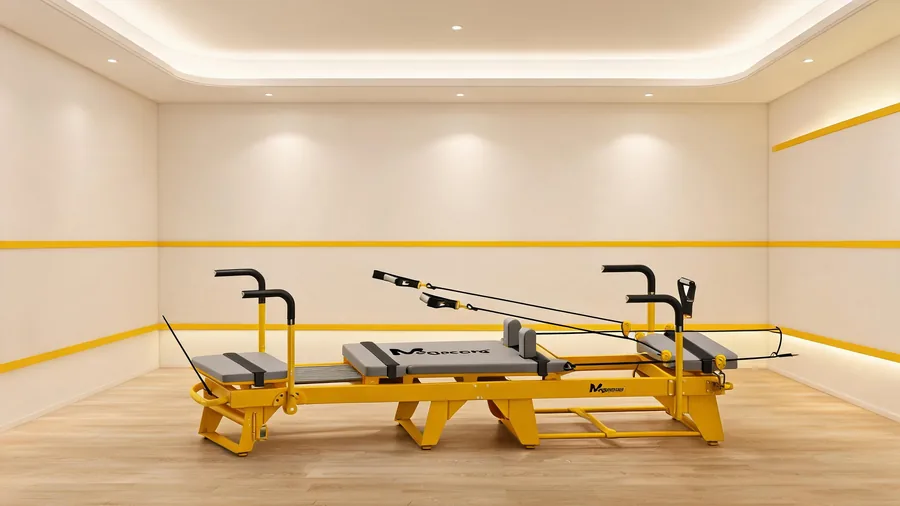
Your Pilates studio’s visual identity tells clients who you are before they take their first class. While many studio owners invest heavily in logo design, interior finishes, and branded merchandise, one of the most powerful branding tools sits right under their clients — the reformers themselves. A Pilates-reformer med egen färg transforms generic equipment into a signature brand asset that reinforces your studio’s identity with every session, every photo, and every social media share.
Den här guiden går igenom hur Pilates-reformers i egen färg kan lyfta studions varumärke, locka fler kunder genom visuell särprägel och skapa en enhetlig upplevelse i en eller flera anläggningar. Oavsett om du driver en boutique med ett enda rum eller en kedja med flera enheter gör rätt färgstrategi din utrustning till din starkaste marknadsföringstillgång.
1. Varför profilering av utrustningen spelar roll för din studio
Varumärket är varje visuell och upplevelsemässig kontaktpunkt kunden möter, och dina reformers dominerar den bilden mer än något annat inslag. En rad Pilates-reformers i egen färg in your studio’s signature palette sends a clear message: every detail has been considered, and quality is non-negotiable. This impression directly influences how clients perceive your pricing, your professionalism, and the overall experience you deliver.
Forskning visar gång på gång att visuellt enhetliga miljöer uppfattas ha högre värde. Studior med profilerad utrustning rapporterar starkare varumärkesigenkänning hos kunderna, högre engagemang på klassfoton i sociala medier och större benägenhet bland kunder att tipsa vänner. På en konkurrensutsatt marknad där kunder ofta provar flera studior innan de bestämmer sig kan den visuella effekten av profilerad utrustning bli avgörande.
Bortom kundernas uppfattning löser egna färger praktiska utmaningar i studion. Mörka ramar som antracit eller marinblått döljer slitage i miljöer med hög trafik, ljusa toner som kräm eller rosa vidgar små rum visuellt, och djärva signaturfärger skapar omedelbar igenkänning på klassfoton som delas i sociala medier. Det strategiska valet av ramfärg påverkar både estetiken och det dagliga underhållet i en livlig studiodrift.
2. Tillgängliga färgalternativ för kommersiella reformers
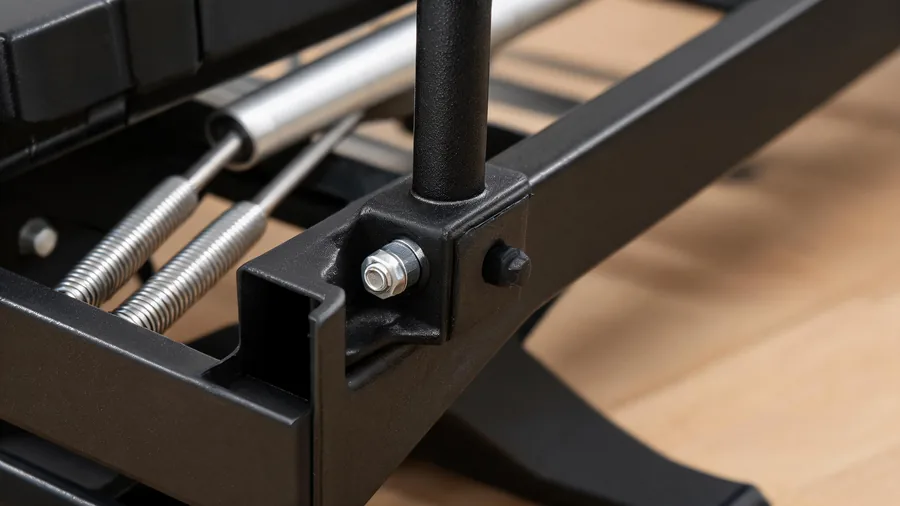
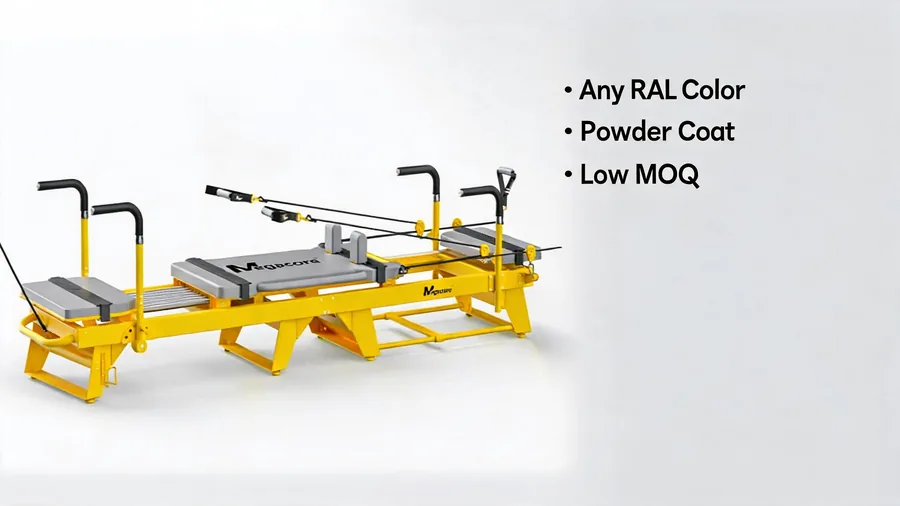
Kommersiell klass Pilates-reformers i egen färg finns i ett brett spektrum av ytfinisher genom pulverlackering och anodisering. Pulverlackering är den vanligaste metoden för stålramar och ger hundratals RAL-färger med en slitstark, reptålig yta som klarar daglig rengöring och kundernas användning. Aluminiumramar kan anodiseras i olika färger och får då en metallisk yta som står emot flagnande färg och korrosion bättre än målade ytor.
Standardfärger omfattar vanligen svart, vitt, silver och marinblått utan extra kostnad. Premium- och specialmatchade färger — inklusive metallic, matta och strukturerade ytor — kräver färgmatchning under tillverkningen. Ledtiden för ramar i egen färg beror på fabrikens pulverlackeringsschema, men lägger normalt till 5–10 arbetsdagar på produktionstiden för kvalitetssäkring och korrekt härdning.
Även stoppningens färg kan anpassas för att matcha eller komplettera ramfärgen. Marina vinylkvaliteter i kommersiell klass finns i dussintals färger, från neutrala toner som svart och grått till accentfärger som turkos, vinrött och senapsgult. Matchande ram- och stoppningsfärger ger ett polerat, medvetet utseende som lyfter hela studioestetiken och förstärker varumärket i all utrustning i lokalen.
3. OEM-profilering: logotyper och etiketter på reformerna
Utöver färg gör OEM-tjänsterna det möjligt för studioägare att sätta logotyper och etiketter direkt på reformerna under tillverkningen. De vanligaste metoderna är lasergravyr på metalldelar som ramens ändkåpor eller fjäderfästen, screentryck på stoppning och vagnsdynor samt självhäftande vinyldekaler på rampaneler för studior som vill kunna uppdatera profilen senare utan att lacka om.
Lasergravyr ger permanent, kontrastrik profilering som inte flagnar, bleknar eller slits bort. Metoden fungerar bäst på aluminiumskyltar eller stålpaneler där det graverade området inte utsätts för ständig kontakt. Screentryck på stoppning är idealiskt för logotyper på vagnsdynor, axelstöd och nackstöd, men kräver noggrant placerande för att undvika slitytor där kundernas rörelser kan nöta bort trycket vid långvarig daglig användning.
För studiofranchise och kedjor säkerställer OEM-profilering att utrustningen på den första anläggningen matchar utrustningen på senare anläggningar både i färg och logotypplacering. Den enhetligheten är svår att uppnå med eftermarknadslösningar som vinylfoliering eller självhäftande etiketter, som kan variera mellan batcher och mellan olika montörer. Fabriksapplicerad profilering garanterar enhetlighet i alla enheter i ditt växande studionätverk.
4. Färgpsykologi och studioatmosfär
Färgerna du väljer till dina reformers Pilates-reformers i egen färg påverkar hur kunderna känner sig under passen. Forskning om färgpsykologi visar att vissa färger väcker specifika känslomässiga reaktioner som kan förstärka eller försämra Pilatesupplevelsen. Svala toner som blått och grönt skapar lugna, fokuserade miljöer som passar kropp-och-själ-praktik. Varma toner som korall och terrakotta ger energi och främjar socialt umgänge i gruppklasser.
Neutrala paletter — svart, vitt, grått, beige — är tidlösa och maximalt flexibla för studior som byter inredning säsongsvis eller vill ha utrustning som fungerar i flera anläggningar med olika interiör. Vita och ljusgrå ramar ger en luftig, ren estetik som gör sig bra på bild i sociala medier, medan mörka ramar som antracit och svart döljer slitage och skapar en sofistikerad premiumkänsla som stöder högre prisnivåer.
Djärva signaturfärger som magenta, koboltblått eller smaragdgrönt skapar omedelbar visuell igenkänning. Studior som använder särpräglade färger rapporterar högre engagemang på Instagram och starkare varumärkesigenkänning bland potentiella kunder som söker Pilatesklasser i sitt område. Risken med djärva färger är att de kan begränsa andrahandsvärdet om du uppgraderar utrustningen senare, men det är sällan ett problem för växande studior som planerar att äga sin utrustning långsiktigt.
5. Kostnader för Pilates-reformers i egen färg
Kostnaden för Pilates-reformers i egen färg Pilates-reformers i egen färg varies depending on the type of customization and the manufacturer’s pricing structure. Standard color options (black, white, silver) typically cost the same as standard equipment pricing. Custom RAL color matching adds a modest premium to cover the powder coating setup and color matching process required to achieve the exact shade specified by the studio owner.
Kostnaden för OEM-profilering beror på komplexiteten och applikationsmetoden. Lasergraverade skyltar är det mest kostnadseffektiva permanenta profileringsalternativet, särskilt vid större ordrar där uppsättningskostnaden fördelas på flera enheter. Screentryckta logotyper på stoppningen ger en liten merkostnad per enhet men ett starkt visuellt intryck, eftersom logotypen sitter på reformerns mest synliga yta — vagnsdynan där kunderna sitter under passen.
När du jämför kostnader bör du ställa fabriksdirekt OEM-pris mot eftermarknadslösningar. Vinylfoliering för en hel reformerram kan kosta 200–500 USD per enhet beroende på komplexitet, och håller vanligen 1–3 år innan den behöver bytas. Fabriksapplicerad pulverlackering och screentryck håller utrustningens hela livslängd, vilket gör dem mer kostnadseffektiva för studior som planerar att använda utrustningen i 5–10 år.
6. Profilering på flera platser: enhetlighet mellan studior
För studior i kedja och franchiseverksamhet är enhetlig profilering över flera anläggningar ett av de starkaste argumenten för att investera i skräddarsydd utrustning Pilates-reformers i egen färg. När varje reformer på varje anläggning har samma ramfärg, stoppningsfärg och logotypplacering möter kunderna samma visuella miljö oavsett om de besöker flaggskeppsstudion eller en ny anläggning på andra sidan stan. Den enhetligheten bygger förtroende och igenkänning som driver kundlojalitet och rekommendationer.
OEM-tillverkning säkerställer att färgmatchningen mellan produktionsbatcher förblir konsekvent. Till skillnad från eftermarknadslösningar med färg eller folie, där variationer mellan batcher är vanliga, använder fabrikens pulverlackering spektrofotometriska mätningar för att verifiera att varje batch matchar den ursprungliga färgspecifikationen inom branschens toleransgränser. Det garanterar att en reformer som beställs tre år efter det första köpet matchar den första batchen exakt när de står sida vid sida i samma lokal.
Franchise operators particularly benefit from this consistency. When franchisees can order equipment that exactly matches the brand standard without managing their own customization process, the barrier to opening new locations decreases. The manufacturer handles all branding specifications, ensuring that every franchise location meets the brand’s visual standards without requiring individual franchisees to source and manage custom equipment orders on their own.
7. Fabriksdirekt anpassning kontra eftermarknadslösningar
Studioägare har två vägar till profilerad utrustning: fabriksdirekt OEM-anpassning från tillverkaren eller eftermarknadsanpassning via tredjepartsverkstäder. Fabriksdirekta lösningar Pilates-reformers i egen färg erbjuder flera fördelar, bland annat permanenta ytfinisher som omfattas av utrustningens garanti, enhetlig färgmatchning i alla enheter och snabbare ledtid eftersom profileringen sker under tillverkningen i stället för efter leverans till studion.
Aftermarket solutions — vinyl wraps, spray painting, adhesive logos — offer lower upfront costs and the ability to customize existing equipment. However, aftermarket modifications typically void the manufacturer’s warranty because the modification process can compromise the frame’s protective coating. Additionally, aftermarket finishes rarely match the durability of factory powder coating because they are applied in less controlled environments without the same surface preparation and curing processes used in industrial coating facilities.
För studior som köper ny utrustning är fabriksdirekt OEM-anpassning nästan alltid den bättre investeringen. Prisskillnaden mellan standard- och specialutrustning är måttlig jämfört med kostnaden för eftermarknadsanpassning efter leverans, och fabriksapplicerade ytfinisher omfattas av samma garanti som själva ramen. Det innebär att din profilerade utrustning är skyddad under hela garantiperioden, medan eftermarknadsändringar skulle lämna dig ansvarig för eventuella ytproblem som uppstår vid normal användning.
8. Att välja rätt tillverkare för egna färger
Inte alla tillverkare av Pilates-reformers erbjuder samma nivå av Pilates-reformer med egen färg tjänster. När du utvärderar tillverkare för specialutrustning bör du fråga om deras pulverlackeringsprocess, färgmatchningsförmåga och om de använder spektrofotometrisk verifiering för batchkonsekvens. Begär prover på tidigare arbeten i egen färg för att bedöma finishkvalitet, kanttäckning och det övergripande intrycket av deras profilerade utrustning.
The Pilates Method Alliance provides guidelines on commercial equipment specifications. When evaluating a manufacturer’s customization capabilities, request documentation of their quality control process, surface preparation, and warranty coverage for custom finishes. Factory-direct manufacturers with established OEM programs typically offer the most comprehensive customization services at the most competitive pricing because they control the entire production process from frame fabrication to final finishing.
Megacore erbjuder kompletta OEM- och ODM-tjänster för studioägare som vill ha skräddarsydd utrustning Pilates-reformers i egen färg. Anpassningsalternativen omfattar RAL-färgmatchning, lasergraverade logotypplåtar, screentryckt profilering på stoppning och skräddarsydda ramkonfigurationer. Varje specialbyggd reformer genomgår individuell kvalitetskontroll (rapport: GZHL2601000020601SP) för att verifiera att både strukturell integritet och utseende uppfyller kraven för kommersiell klass före leverans till studion.
Anpassa din studios reformers
Kontakta vårt team för att diskutera färgalternativ, logotypplacering och OEM-profilering för din studio eller kedja. Utan förpliktelse — gå igenom dina önskemål med vårt team.
E-post: [email protected] • WhatsApp: +86 189 0238 9454
Relaterade guider
- Guide: OEM-tillverkning av Pilatesreformers
- Guide för private label-reformers inom Pilates
- Guide till kommersiella pilatesreformrar
- Checklista för studions utrustning
- Guide till tillverkare av Pilates-reformers i Kina
9. Vanliga frågor
Vilka färger finns det för Pilates-reformers i egen färg?
Pilates-reformers i egen färg finns i hundratals RAL-färger genom pulverlackering för stålramar och anodisering för aluminiumramar. Standardalternativen omfattar svart, vitt, silver och marinblått utan extra kostnad. Specialmatchning är möjlig för vilken specifik varumärkesfärg som helst.
Vad kostar en Pilates-reformer i egen färg?
Standardfärger på ramen kostar inget extra. Specialmatchning av RAL-färg och OEM-profilering innebär ett måttligt påslag beroende på ytans komplexitet och antalet enheter i ordern. Fabriksdirekt pris för reformers i egen färg börjar på cirka 1 800 USD per enhet.
Kan jag sätta min studios logotyp på en Pilates-reformer?
Ja. OEM-profileringen omfattar lasergravyr på metallskyltar, screentryck på stoppning och självhäftande dekaler på rampaneler. Logotyperna appliceras under tillverkningen och omfattas av utrustningens garanti.
Hur lång tid tar produktionen av egen färg?
Custom color production typically adds 5 to 10 working days to standard production timelines. This includes color matching, powder coating setup, and quality verification. Rush orders may be available depending on the factory’s production schedule.
Bleknar ramar i egen färg med tiden?
Pulverlackering i kommersiell klass är UV-stabil och konstruerad för att behålla färgen under utrustningens hela livslängd. Undvik att placera reformers i direkt solljus under längre perioder för att bevara färgkonsekvensen och skydda pulverlacken från långvarig UV-exponering.
Kan jag matcha mina befintliga varumärkesfärger exakt?
Yes. Manufacturers use spectrophotometer color matching to match your brand’s exact PMS or RAL color specification. You can provide a physical color sample or digital color code, and the factory will match it within industry tolerance standards before production begins.
Vad är minsta order för reformers i egen färg?
Många fabriksdirekta tillverkare erbjuder egna färger från en enhet för utvärdering. Volymrabatter tillämpas vanligen vid ordrar på 10 enheter eller fler. Studioägare kan beställa ett provexemplar för att verifiera färgmatchning och finishkvalitet innan de lägger en full studioorder.
Colour and branding options sit alongside the commercial lineup, with MOQ and lead time per finish.