When you start a Pilates studio, it requires more than passion for the method. The market has matured. According to Pilates Method Alliance standards, clients expect commercial-grade equipment, flexible class formats, and a clean, professional environment. Studio owners who plan their equipment budget, floor layout, and client acquisition strategy before signing a lease.
This start a Pilates studio guide covers the practical steps — from choosing reformers and allocating floor space to budgeting for your first year of operations. Whether you are opening a boutique studio with six reformers or a large-format studio with twenty stations, the principles are the same. Understanding the complete start a Pilates studio process helps avoid costly mistakes and accelerates your path to profitability..
Step 1: Define Your start a Pilates studio Format
The format determines everything else — equipment count, staffing, class pricing, and square footage requirements. Three formats dominate the 2026 market:
Boutique Studio (4–8 reformers):
Targets the premium client willing to pay ¥300–500 per private session or ¥1,800–2,500 for a 10-class pack. Requires 60–100 m². Low equipment overhead but higher per-class revenue.
Mid-Size Studio (10–16 reformers):
Balances private sessions with group reformer classes (max 8:1 ratio). Requires 120–200 m². The sweet spot for return on investment in most Chinese tier-1 and tier-2 cities.
Large-Format / Franchise (20–30 reformers):
Group-class heavy. Requires 250–400 m². High equipment capital but lower per-client acquisition cost. Suitable for established brands expanding into new districts.
Step 2: Equipment Budgeting for start a Pilates studio
The reformer is your most significant single capital expense. Factory-direct pricing from Guangzhou manufacturers (2025–2026 pricing):
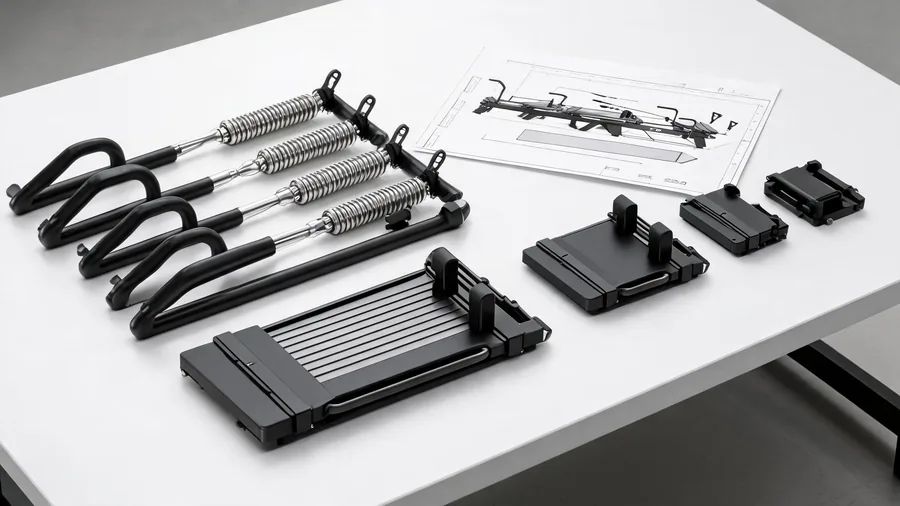
Commercial-grade reformer (standard): ¥4,500–8,000 per unit depending on frame material, spring count, and accessories included. Commercial-grade reformer with tower attachment: ¥8,000–14,000 per unit. Foldable reformer for small studios: ¥3,800–6,500 per unit. Reformer accessories (box, jump board, platform extender): ¥600–1,200 per set. Additional equipment budget items: mat stacks (¥200–400 each), small props (circles, rollers, bands — ¥50–150 each), storage racks and shelving (¥1,500–3,000).
Equipment Cost Breakdown
Budget Allocation Strategy
Financing Options for New Studios
A 10-reformer studio with full accessories and mats: approximately ¥65,000–95,000 in equipment costs. Add 15% for shipping, installation, and contingency. Import duties for non-China manufacturers add 8–12% to equipment cost.
Step 3: Floor Layout for start a Pilates studio
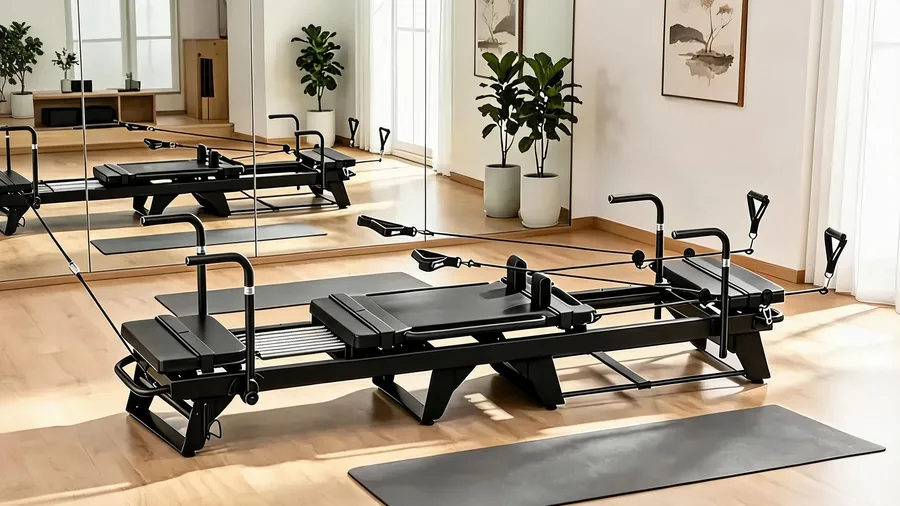
Studio layout affects class flow, instructor visibility, and safety. Minimum spacing recommendations:
Between reformer centre lines:
1.8 m minimum. This allows the instructor to walk between machines and spot clients safely.
End clearance (footbar to wall):
1.5 m minimum. Clients performing lunges and standing exercises need room behind the reformer.
End clearance (head side to wall):
0.8 m minimum for the carriage to travel fully.
Aisle width:
1.2 m minimum for client movement between classes.
Instructor zone:
2 m wide strip along one side of the room with a clear view of all carriages.
For a 10-reformer studio: arrange reformers in two rows of five, staggered. Total floor requirement: approximately 65 m² for the reformer area plus 20 m² for reception, changing, and storage.
Step 4: Year One Cost Breakdown for start a Pilates studio
Based on a 10-reformer mid-size studio in a tier-1 Chinese city:
Rent and deposit (3 months + 1 month deposit): ¥45,000–75,000 (assuming ¥150–250/m² in a commercial building). Renovation and interior fit-out: ¥40,000–80,000 (flooring, mirrors, lighting, changing rooms, reception desk). Equipment (reformers + accessories + props): ¥65,000–95,000. License and permits: ¥5,000–15,000 depending on city. Marketing and launch (website, social media, opening promotion): ¥10,000–25,000. Staff (2 full-time instructors + 1 reception, 3 months): ¥60,000–90,000. Insurance and utilities (12 months): ¥15,000–25,000. Contingency (10%): ¥25,000–40,000. Total estimated year-one investment: ¥265,000–445,000.
Revenue projection (conservative): 10 private sessions per day at ¥350 average = ¥126,000/month. Breakeven typically occurs between month 6 and month 10, depending on location and marketing effectiveness.
Step 5: Choosing Suppliers for start a Pilates studio
Not all reformer suppliers are equal. Key criteria for evaluating manufacturers:
Steel frame specification — wall thickness of 2.5 mm or greater for commercial use. Carriage bearing system — sealed roller bearings or friction-reducing polymer slides. Spring quality — shot-peened, fatigue-tested alloy steel with documented test cycles. Warranty — minimum 3 years on frame and welds, 1 year on springs and upholstery. After-sales support — replacement parts availability within 48 hours. Quality certification — request quality inspection certificate (reference GZHL2601000020601SP for compliance benchmarks).
A factory tour of Guangzhou-based manufacturers reveals the differences in welding precision, paint finishing, and spring assembly. Visiting in person or sending a quality inspector before placing a bulk order is recommended for first-time studio owners.
Step 6: Marketing Your start a Pilates studio
Local SEO remains the most cost-effective channel for studio acquisition. Optimise your Google Business Profile (or Baidu equivalent) with photos of your equipment, class schedule, and pricing. Encourage every client to leave a review after their first session. Partner with nearby premium residential complexes, corporate wellness programmes, and luxury hotels for referral arrangements.
WeChat and Xiaohongshu (Little Red Book) are essential platforms for the Chinese market. Post short-form video content showing reformer exercises, instructor introductions, and studio tours. Run targeted ads within a 3 km radius of your studio location. Budget ¥3,000–8,000 per month for digital ads during the first six months.
Summary
Starting a Pilates studio in 2026 is a realistic goal with proper planning. The equipment market offers reliable commercial-grade reformers at accessible factory-direct prices. Layout and budgeting are straightforward when you follow the spacing and revenue guidelines above. Focus on quality equipment in your start a Pilates studio, excellent instructor training, and consistent local marketing for your pilates studio launch plan. How Many Reformers Do You Need to Open a Preparing Your Space for a Pilates Refor Pilates Reformer Dimensions & Space
Related Guides
Reformer Pilates for Men: Why More Male Athletes Are Switching to Pilates
Pilates Reformer ROI Calculator: How Many Clients Needed to Break Even
Priser för Reformer Pilates-medlemskap: Så här fastställer du månadsavgifterna för din studio
The following industry resources provide authoritative guidance on this topic:
- NIH:s riktlinjer för fysisk aktivitet
- Internationella fitnessförbundet
- American Council on Exercise
Industry resources for further guidance on how to start a pilates studio in 2026:
- Internationella fitnessförbundet
- OSHA Sanitation Standards
- NIH:s riktlinjer för fysisk aktivitet
När det gäller säkerhets- och kvalitetsstandarder för utrustning hänvisas till branschriktlinjerna från Pilates Method Alliance. CDC:s miljöriktlinjer för träningsanläggningar innehåller ytterligare standarder för hygien och underhåll av kommersiell utrustning. OSHA:s hygienstandarder gäller även för kommersiella träningsstudior som hanterar gemensam utrustning.
Vanliga frågor
What makes this Pilates equipment different from budget alternatives?
The difference comes down to materials and construction. Commercial-grade equipment uses all-metal frames, sealed bearings, and calibrated springs. Budget alternatives use lighter materials that degrade faster. A quality reformer lasts 5-10+ years — a budget reformer often needs replacement in 1-2 years.
Hur vet jag om den här utrustningen passar just mina behov?
Consider your primary use case: studio vs home, client demographics, class volume, and budget. Studio owners should prioritize durability and maintenance access. Home users should prioritize space efficiency and ease of use. Match the equipment specifications to your specific requirements rather than buying general-purpose.
Vilken garanti och vilket stöd kan jag förvänta mig av en ansedd tillverkare?
Kommersiell utrustning bör omfattas av minst två års garanti på konstruktionen och ett års garanti på komponenterna. Tillverkare som säljer direkt från fabriken, såsom Megacore, erbjuder ofta utökad garantitäckning och direkt teknisk support. Begär alltid skriftlig garantidokumentation innan du köper.
Slutsats
Choosing the right equipment makes a significant difference in your Pilates practice or business. Whether you’re setting up a studio, upgrading existing machines, or outfitting a home practice — investing in quality equipment that matches your specific needs is the foundation of a successful start a Pilates studio. With proper planning, your studio can achieve profitability within the first year. of long-term satisfaction and performance.
Utforska våra reformer för kommersiellt bruk →
- Så här öppnar du en pilatesstudio utomlands: Import av reformers från Kina – guide för 2026
- Priser för Reformer Pilates-medlemskap: Så här fastställer du månadsavgifterna för din studio
- Private Label Pilates Reformers: A Step-by-Step Guide to Starting Your Own Equipment Brand
Bookmark this start a Pilates studio guide for reference throughout your studio launch journey.