
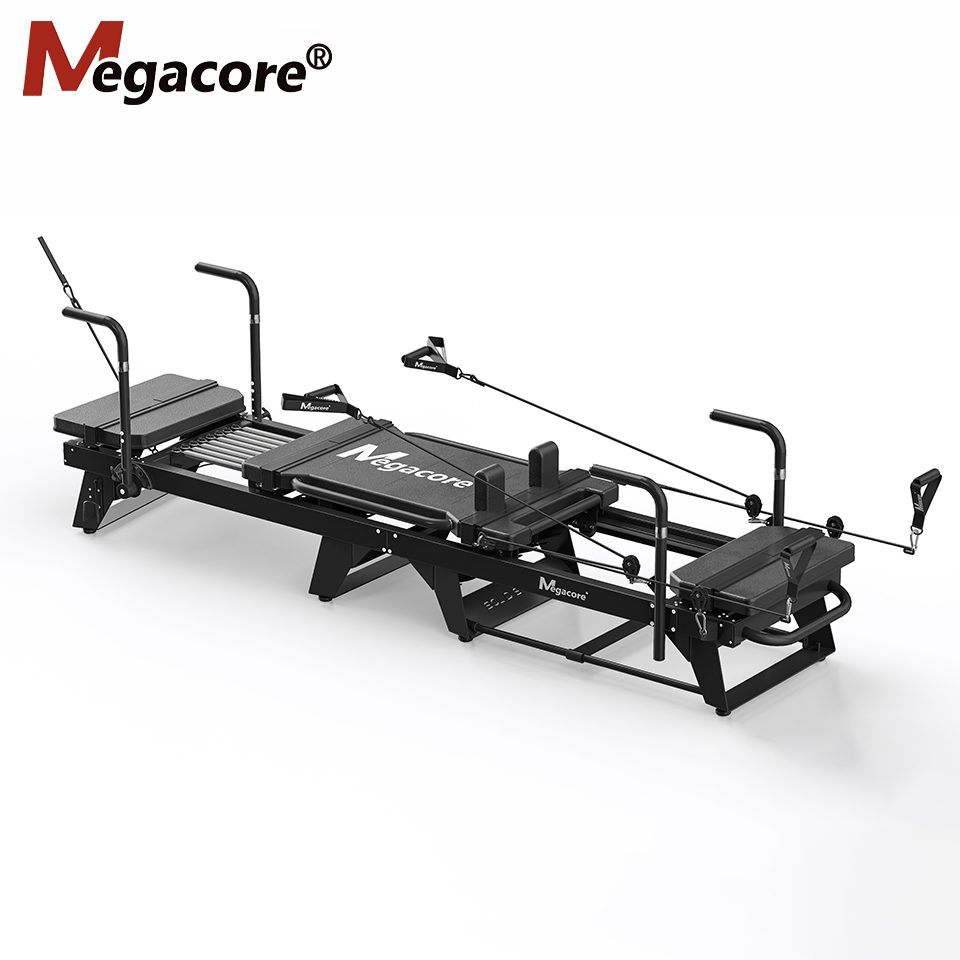
Searching “how to build your own Pilates reformer” usually means one of two things: you want to save money by building one yourself, or you want to build your own brand by sourcing reformers from a factory. If you’re reading this, you’re probably looking for the second option — and that’s where the real opportunity is.
This guide covers both paths honestly, then shows you why partnering with a manufacturer to build your branded reformer is the smarter long-term move. We’ll dive deep into every step of the OEM process, with real factory data, cost comparisons, and actionable advice.
The Two Meanings of “Build Your Own”
Before we dive in, let’s be clear about what “build your own” means in the Pilates reformer world:
| Approach | What It Means | En Uygun Olan |
|---|---|---|
| DIY Build | Buying lumber, springs, and wheels to build a reformer from scratch at home | Hobbyists with woodworking skills, light personal use |
| OEM / Private Label | Partnering with a factory to produce reformers under your own brand name | Studio owners, fitness entrepreneurs, dealers, distributors |
Most people who search “build your own Pilates reformer” are actually looking for the second option. They want to start a Pilates business or studio and need their own branded equipment — without paying inflated retail prices. Industry data shows that private-label Pilates equipment sales have grown 34% year-over-year since 2022, as boutique studio owners discover the margin advantages of direct factory sourcing.
Why DIY Is Not the Answer for Business
Building a reformer at home can be a fun weekend project. But if you’re planning to open a studio or sell equipment, DIY simply doesn’t scale. Here’s why:
- Safety and liability — A homemade reformer has no load testing, no quality certification, and no warranty. If a client gets injured, you’re personally liable. Commercial insurance policies typically require equipment that meets ASTM or CE safety standards — something no DIY build can provide.
- Inconsistent quality — Hand-built reformers vary from unit to unit. Studio equipment needs to feel identical across every machine. If you have 8 reformers, each one should respond identically — that’s impossible with handmade builds.
- No scalability — Building one reformer takes 20-40 hours. Building 10 takes 200-400 hours. The labor cost alone exceeds $3,000 for a set of 10 machines — more than factory-direct pricing.
- No brand value — A DIY reformer has no logo, no brand story, and zero resale value. Branded equipment can be sold for 50-70% of retail on the secondary market.
- Materials waste — First-time builders typically over-order materials by 20-30%, and mistakes during assembly can ruin key components, adding to the effective cost.
The OEM Advantage: Real Numbers
Let’s look at a real-world comparison. Sarah, a studio owner in Austin, Texas, initially planned to build 6 reformers herself. After pricing materials ($450 per unit) and estimating 30 hours of labor per unit, she realized the true cost was closer to $1,050 per reformer when accounting for her time and tool purchases. Instead, she partnered with an OEM factory for $1,800 per unit — receiving commercial-grade, certified, branded equipment delivered to her door. She opened her studio 3 months ahead of schedule.
For a 10-reformer studio, the numbers tell the story clearly:
| Cost Factor | DIY (10 units) | OEM Factory (10 units) |
|---|---|---|
| Materials | $3,000 – $8,000 | $12,000 – $25,000 |
| Tools and equipment | $500 – $2,000 | $0 |
| Labor (your time) | $3,000 – $12,000+ | $0 |
| Testing and certification | None (risky) | Included |
| Shipping | Fragmented, $200+ | Bulk, included |
| Time to completion | 4-8 months | 30-60 days |
| Resale value after 3 years | Near zero | $3,000 – $6,000 |
The Right Way: OEM Private Label — Step by Step
Step 1: Research and Choose a Factory Partner
Not all factories are created equal. Look for manufacturers with at least 5-10 years of experience producing commercial-grade reformers. China’s Guangdong province — particularly Guangzhou, Foshan, and Jiangmen — is home to the world’s largest Pilates equipment manufacturing cluster. Many factories in this region produce 5,000+ reformers annually for global brands.
What to look for in a factory:
- Production capacity: Can they handle your order size? Small-batch factories (20-100 units/month) are ideal for startups.
- Quality certifications: ISO 9001:2015, CE marking, and ASTM testing reports indicate a serious manufacturer.
- Showroom and samples: Reputable factories have physical showrooms. Schedule a visit or request a video tour.
- Client references: Ask for 3-5 existing OEM clients you can contact.
- Communication: English-speaking sales and engineering teams save weeks of back-and-forth.
Step 2: Select Your Base Model
Most factories offer several base designs. Your choice depends on your target market:
- Commercial Steel (heavy-duty): 400+ lb capacity, thick steel frame, 8-spring system — ideal for high-traffic studios. Typically weighs 180-250 lbs.
- Stainless Steel (premium): Corrosion-resistant, sleek aesthetic — best for luxury studios or humid environments. 20-30% more expensive than painted steel.
- Aluminum (mid-range): Lighter (90-140 lbs), portable — good for mobile instructors or home-to-studio hybrid use.
- Compact/Folding (space-saving): Foldable steel frame, smaller footprint — perfect for boutique studios with limited square footage.
For commercial studios just starting out, the heavy-duty steel reformer is the most common choice. It offers the best combination of durability, performance, and price point for daily 15-20 class schedules.
Step 3: Customize Your Branding and Design
One of the biggest advantages of OEM is full control over your brand identity. Most factories offer these customization options:
- Logo placement: Laser-engraved on the frame, printed on upholstery, embossed on straps
- Color options: Custom powder coating (any RAL color) for the frame — typical minimum is 10-20 units per color
- Döşeme: Choose from standard black, white, or custom colors in PU leather or high-grade vinyl
- Ambalaj: Branded boxes, foam inserts, instruction manuals with your logo
- Serial numbers: Each unit gets a unique branded serial for warranty tracking
- Accessories: Add your logo to jump boards, boxes, and other add-ons
Most factories provide a design mockup within 3-5 business days after you select your base model and customization options.
Step 4: Set Quality Standards and Testing
Before production begins, establish clear quality standards:
- Load testing: Each reformer must pass a static load test at 150% of rated capacity
- Spring calibration: Springs should have no more than +/- 5% variance in tension between units
- Weld inspection: All welds must pass visual and dye-penetrant inspection
- Carriage smoothness: Carriage should glide with less than 1 kg of resistance at zero spring tension
- Paint adhesion: Cross-hatch tape test to ensure coating durability
- Warranty terms: Minimum 3-year warranty on the frame, 1 year on springs and upholstery
Reputable factories provide testing reports and quality inspection certificates before shipment. Megacore Pilates, for example, subjects every reformer to a 17-point quality check before it leaves the factory floor.
Step 5: Place Your First Order and Manage Production
Minimum Order Quantities (MOQs): MOQs for OEM reformers typically start at 5-20 units. Some factories now offer “OEM Lite” programs with MOQs as low as 2-5 units for startups — though per-unit pricing will be higher.
Factory-direct pricing breakdown:
| Order Quantity | Price per Unit (Steel Commercial) | Teslim Süresi |
|---|---|---|
| 5-10 units | $2,000 – $2,500 | 30-45 days |
| 10-20 units | $1,600 – $2,200 | 30-45 days |
| 20-50 units | $1,400 – $1,800 | 25-35 days |
| 50-100 units | $1,200 – $1,500 | 20-30 days |
| 100+ units | $1,000 – $1,300 | 15-25 days |
Compare that to brand-name retail pricing of $5,000-$12,000 per unit — and you can see why OEM is the preferred route for savvy studio owners.
Step 6: Shipping, Customs, and Delivery
Most OEM factories ship via sea freight (FOB or CIF terms). Key logistics considerations:
- Sea freight: 20-40 days depending on route (China to US West Coast ~15 days, East Coast ~25 days)
- Port handling: You’ll need a customs broker at the destination port
- Last-mile delivery: Reformers are heavy. Expect $100-300 per unit for ground delivery from port to your studio
- Import duties: Pilates equipment typically falls under HTS code 9506.91.0030 (5.3% duty for the US)
- Total landed cost: Add 15-25% to the FOB price for shipping, duties, and inland freight
DIY vs OEM: Side-by-Side Comparison
| Faktör | DIY Build | OEM Private Label |
|---|---|---|
| Cost per unit | $300 – $800 (materials only) | $1,200 – $2,500 |
| Total cost (10 units, incl. labor) | $6,000 – $20,000 | $12,000 – $25,000 |
| Labor per unit | 20-40 hours | Zero |
| Safety certification | None | Factory testing, CE/ASTM certs |
| Garanti | None | 3 years or more |
| Scalability | Not scalable | Unlimited |
| Brand building | None | Your own brand |
| Time to market (10 units) | 4-8 months | 30-60 days |
| Insurance approval | Unlikely | Fully insurable |
The upfront cost per unit is higher with OEM, but the total cost of ownership — factoring in your time, liability risk, and brand value — strongly favors factory production for any commercial application.
Case Study: From Home Builder to Brand Owner
Mike, a Pilates instructor in Portland, Oregon, built his first reformer in his garage for personal use. When students started asking where to buy one like it, he realized there was demand. He tried building 5 more for friends but quickly hit production limits.
In 2024, Mike connected with an OEM factory through an industry trade show. He ordered 10 units with his own logo and custom blue upholstery. Total investment: $18,000. He sells them through his studio at $3,999 each — grossing $39,900 on his first batch. His brand, “Rose City Reformers,” now has 40+ machines in 8 studios across the Pacific Northwest.
“Building them myself taught me what matters — smooth carriage glide, consistent spring tension, solid welds,” Mike says. “OEM let me take everything I learned and scale it. I couldn’t have done it any other way.”
FAQs About Building Your Own Pilates Reformer
Can I build a Pilates reformer myself?
Yes, if you have advanced woodworking or metalworking skills and proper tools. However, building a reformer that is safe for client use requires precision that most hobbyists cannot achieve consistently.
What’s the cheapest way to get branded reformers?
Factory-direct OEM. Expect $1,200-$2,500 per unit with 5-20 unit minimum. This is 60-80% less than retail brand-name prices.
Do Chinese factories offer OEM for small orders?
Many factories in Guangzhou, Foshan, and Jiangmen accept small-batch OEM orders starting at 5-10 units. Some offer pilot runs of 2-3 units at $2,500-$3,500 per unit.
How to verify factory quality before ordering?
Ask for testing reports (load, weld, spring calibration), request a factory video tour, check quality inspection certificates, and ask for client references. Use third-party inspection services like SGS or Bureau Veritas if needed.
Is a DIY Pilates reformer safe for commercial use?
No. A poorly built reformer carries serious risks — spring snap, frame collapse, carriage derailment. Factory-built reformers undergo load testing, spring calibration, and weld inspection that DIY builds cannot replicate.
How long does OEM production take?
After design approval, production takes 20-45 days depending on order size. Add 15-30 days for sea freight.
What if I want to change the design later?
Most factories allow design modifications between production runs. Some changes (like frame dimensions) require new tooling ($500-$5,000 one-time cost).
Ready to Build Your Brand?
Building your own Pilates reformer is a great goal — but building a brand is even better. OEM private labeling lets you skip the 200-hour build process and go straight to selling professional-grade equipment under your own name.
Contact Megacore Pilates to discuss your OEM requirements. We work with studio owners and fitness entrepreneurs worldwide to create custom branded reformers — from small-batch startups to large-scale commercial deployments.